Traveling by car with your dog can be one of life’s great joys—windows down, tails wagging, and new adventures ahead. But without the right preparation, a car trip can quickly turn stressful or even dangerous. Dogs can be injured in sudden stops, become anxious in unfamiliar environments, or distract drivers if not properly secured.
This comprehensive guide covers everything you need to know to keep your dog safe, comfortable, and calm during car travel, whether you’re heading across town or embarking on a long road trip.
Why Car Safety for Dogs Matters
Many pet parents let dogs ride freely in the back seat or even on their lap, not realizing the risks. In the event of a sudden stop or collision, an unrestrained dog can be thrown forward with tremendous force—endangering both the pet and passengers. Even minor distractions, like a dog climbing onto the driver, can increase the risk of accidents.
Car safety isn’t just about preventing injuries; it’s also about reducing stress and making travel enjoyable for everyone involved.
1. Choose the Right Restraint System
One of the most important steps in safe car travel is proper restraint. Never allow your dog to roam freely in a moving vehicle.
Common restraint options include:
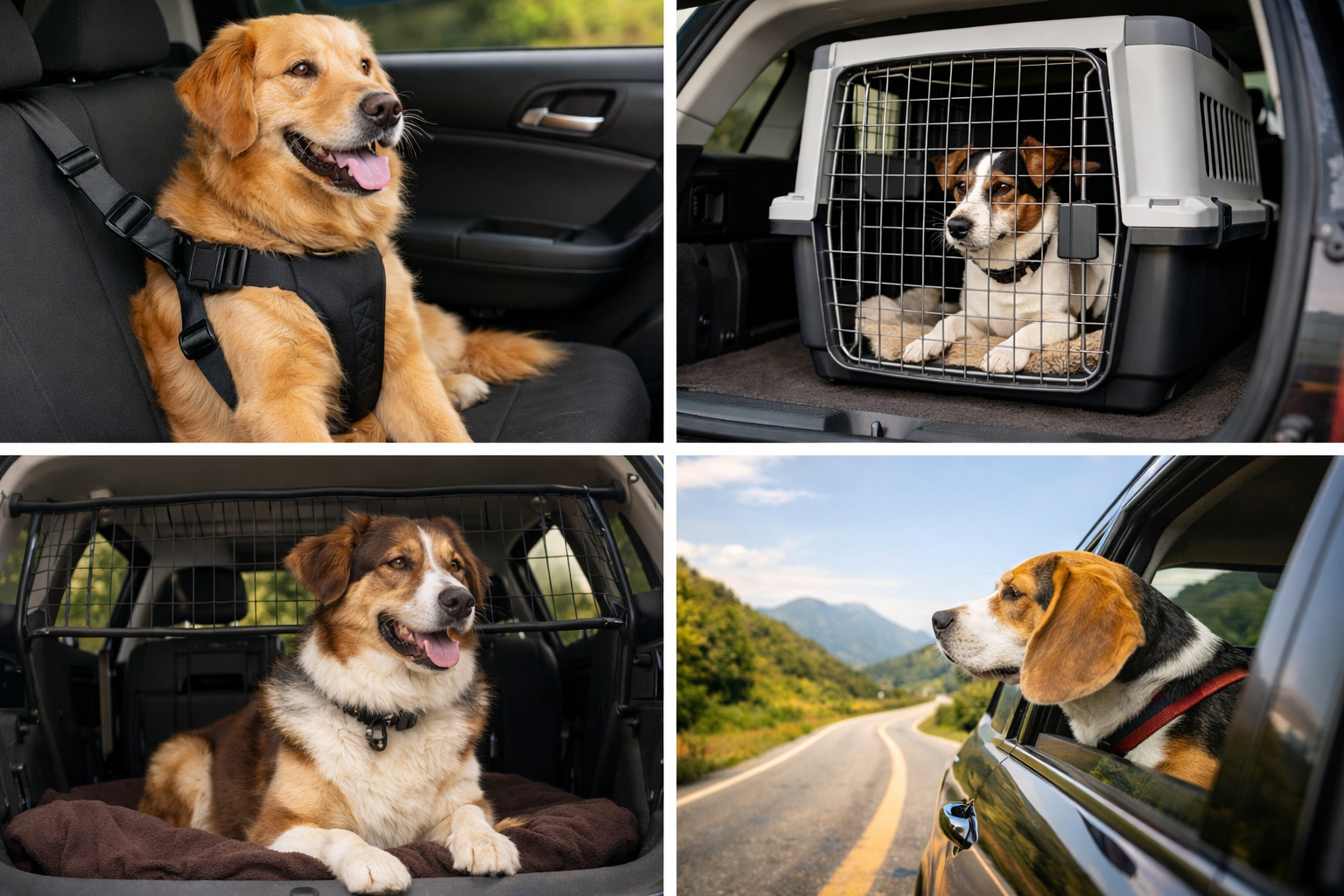
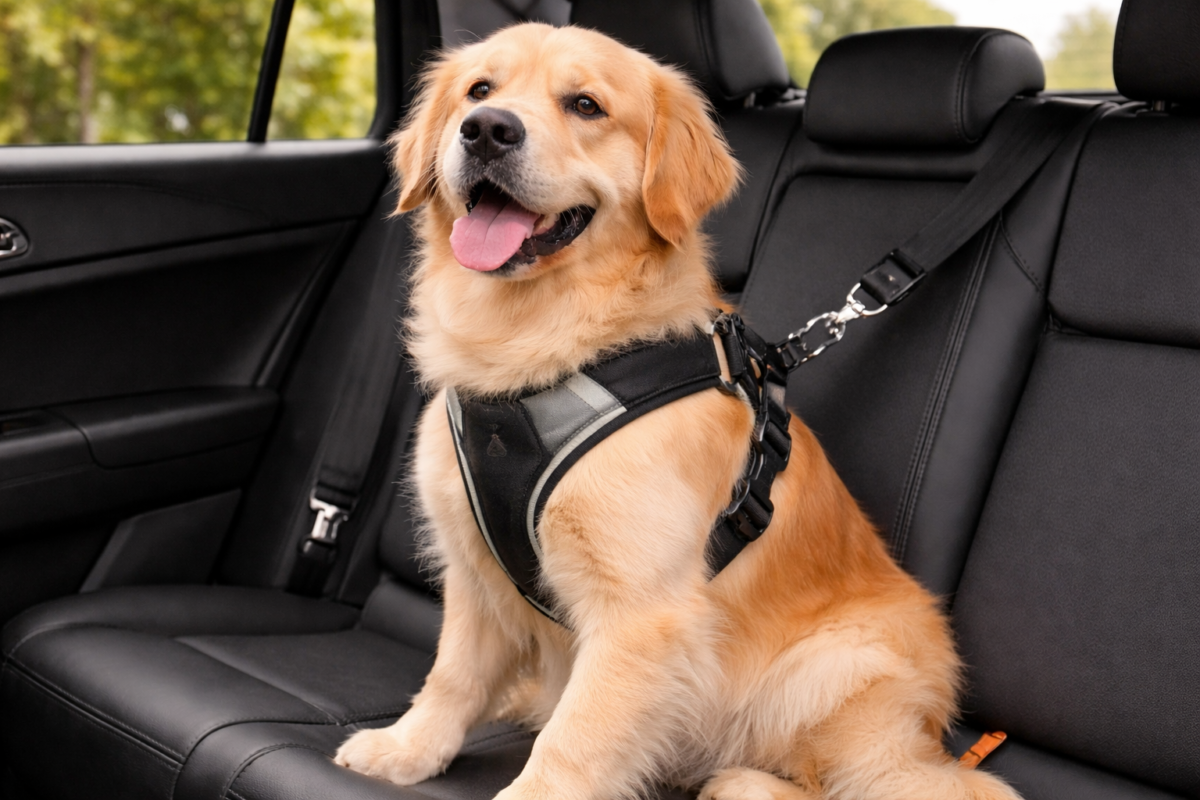
- Crash-tested dog seat belts or harnesses: These attach to your car’s seat belt system and keep your dog secure in the back seat. Make sure the harness fits snugly without restricting movement or breathing.
- Travel crates or carriers: Ideal for small to medium dogs. The crate should be well-ventilated, padded, and secured so it doesn’t slide.
- Car barriers: Best for SUVs and hatchbacks. They prevent dogs from entering the front seat but should still be used alongside a harness or crate.
Tip: Always place your dog in the back seat—airbags in the front seat can seriously injure pets.
2. Prepare Your Dog Before the Trip
Preparation reduces anxiety and motion sickness, especially for dogs new to car travel.
- Practice short drives: Gradually increase trip length to help your dog associate car rides with positive experiences.
- Exercise beforehand: A long walk or play session helps burn off excess energy and encourages calm behavior during the drive.
- Avoid heavy meals: Feed your dog at least 3–4 hours before departure to prevent nausea.
If your dog gets anxious or carsick, talk to your vet about natural calming supplements or motion sickness remedies—never medicate without professional advice.
3. Pack a Dog Travel Kit
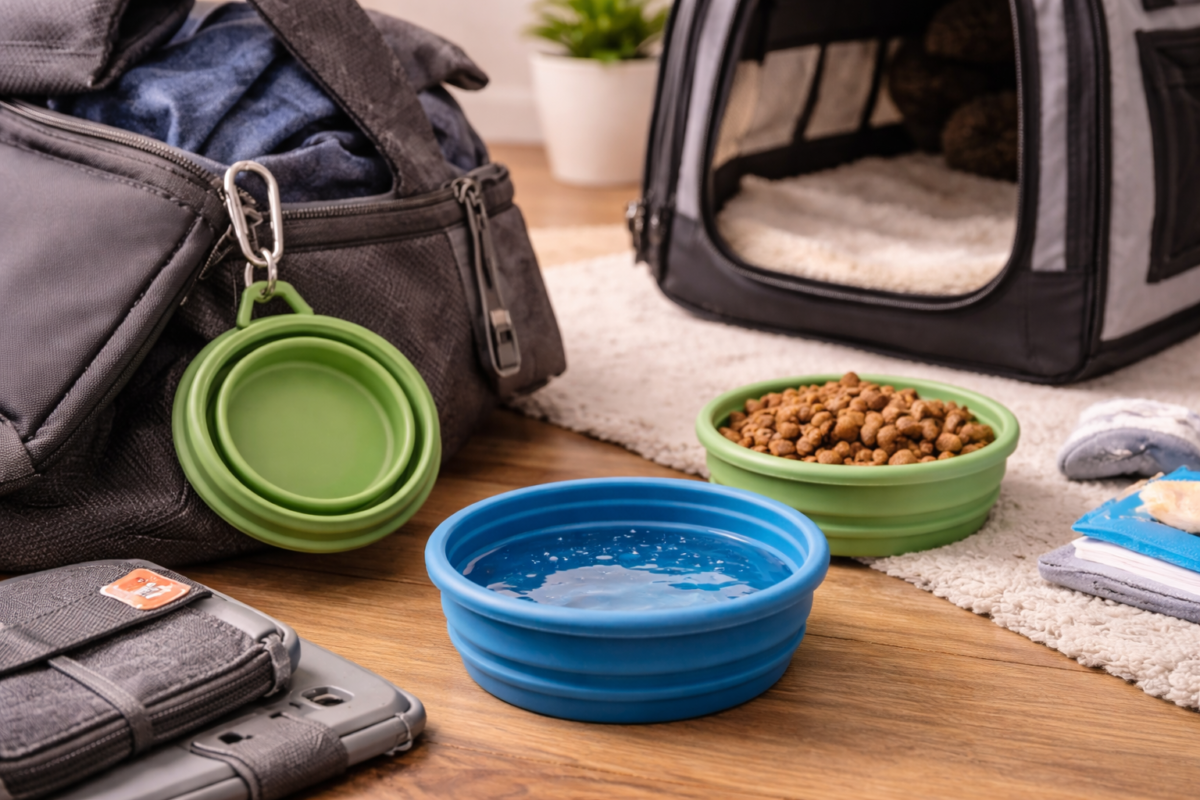
Just like humans, dogs need essentials on the road. A well-prepared travel kit ensures comfort and readiness for unexpected situations.
Include the following:
- Fresh water and a spill-proof bowl
- Dog food and treats
- Leash and waste bags
- Favorite toy or blanket (familiar smells reduce stress)
- Basic first-aid supplies
- Updated ID tags and vaccination records
Having these items within reach saves time and keeps your dog relaxed.
4. Maintain Comfort and Temperature Control
Dogs are sensitive to heat and cold, especially in enclosed spaces.
- Keep the car well-ventilated: Use air conditioning or cracked windows (never wide enough for your dog to jump out).
- Never leave your dog alone in a parked car: Even mild temperatures can become deadly within minutes.
- Provide proper bedding: Soft padding helps prevent joint stiffness, especially for senior dogs.
On long trips, check your dog’s comfort often—panting, whining, or restlessness can signal discomfort.
5. Plan Regular Breaks
Dogs need frequent stops to stretch, hydrate, and relieve themselves.
- Stop every 2–3 hours on long journeys
- Always use a leash when exiting the car
- Offer water and a chance to walk around
Breaks aren’t just good for your dog—they help the driver stay alert and refreshed too.
6. Minimize Distractions While Driving
Even the most well-behaved dog can become a distraction.
- Don’t allow your dog to sit on your lap or lean out of windows
- Secure toys so they don’t roll under pedals
- Keep calming music or white noise if it helps your dog relax
A calm dog means a focused driver—and a safer trip for everyone.
7. Prepare for Emergencies
Unexpected situations can happen, so preparation is key.
- Ensure your dog wears ID tags with up-to-date contact info
- Consider a microchip as backup identification
- Know the location of emergency veterinary clinics along your route
In case of an accident, a restrained dog is less likely to run away or be injured.


 Accessories & Others
 Apparel
 Beds & Furniture
 Cages & Accessories
 Carriers & Strollers
 Doors, Gates & Ramps
 Flea & Tick Control
 Grooming
 Litter & Housebreaking
 Memorials & Funerary
 Accessories & Others
 Apparel
 Beds & Furniture
 Cages & Accessories
 Carriers & Strollers
 Cat Doors,Steps, Nets.
 Collars, Harnesses & leashes
 Flea & Tick Control
 Grooming
 Cages& Accessories
 Cow Mastitis Detectors
 Ear Tags
 Aquarium Accessories
 Aquarium Cleaners
 Aquarium Decor
 Aquarium Lights
 Aquarium Pumps & Filter
 Aquariums & Fish Bowls
 Automatic Feeders