Cats may seem spontaneous, but deep down, they thrive on routine. In the wild, a cat’s life follows a predictable cycle: hunt, eat, groom, rest—repeat. When domestic cats lack structure, they can become anxious, bored, or develop unwanted behaviors. A well-balanced daily routine gives your cat a sense of security, mental stimulation, and emotional well-being.
In this guide, you’ll learn how to build a daily routine that keeps your cat happy, even if you have a busy lifestyle.
Why Routine Is So Important for Cats
Cats are creatures of habit. A predictable routine helps:
- Reduce stress and anxiety
- Prevent destructive behavior
- Improve sleep patterns
- Strengthen your bond
- Support overall health
Sudden changes—like irregular feeding or playtimes—can leave cats feeling unsettled. Consistency builds confidence.
The Ideal Daily Cat Routine (Overview)
A happy cat’s day generally follows this flow:
Play → Eat → Groom → Rest
Repeating this natural rhythm throughout the day satisfies instinctual needs and promotes calm behavior.
Morning Routine: Start the Day Right
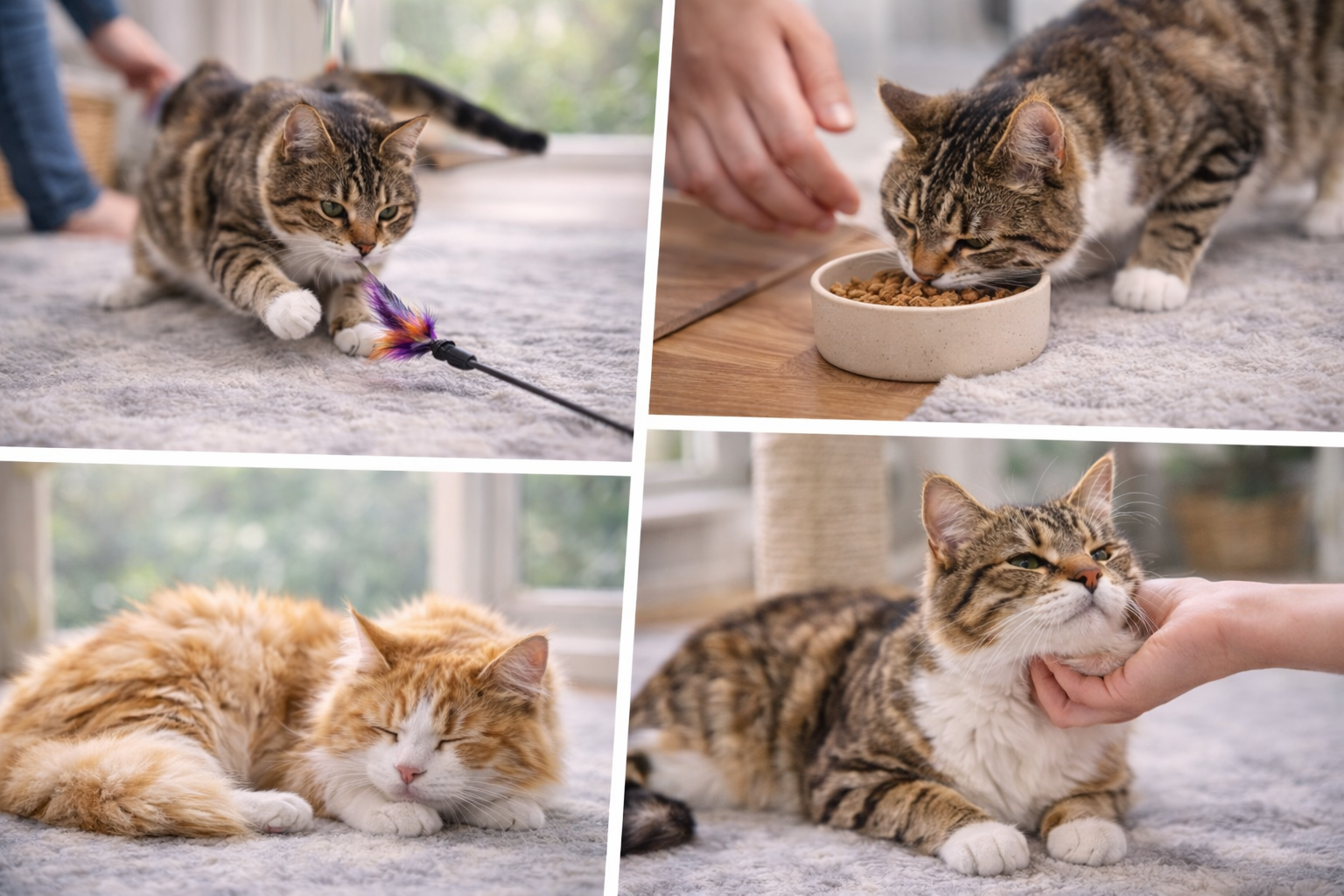
1. Morning Play Session
Cats often wake up energetic and alert.
Why it matters:
- Burns excess energy
- Prevents early-morning mischief
- Mimics hunting behavior
Spend 10–15 minutes using interactive toys like wand toys or feather teasers. Let your cat stalk, chase, and “catch” the toy.
2. Breakfast on a Schedule
After play, it’s time to eat.
Tips:
- Feed at the same time each morning
- Use measured portions
- Consider puzzle feeders for mental stimulation
Predictable meals help regulate digestion and reduce food-related anxiety.
3. Short Grooming or Check-In
Not every cat needs daily grooming, but a quick check builds trust.
This can include:
- Gentle brushing
- Checking eyes, ears, and coat
- Calm petting time
This reinforces bonding and helps you spot health issues early.
Midday Routine: Independent Enrichment
If you’re away during the day, your cat still needs stimulation.
4. Set Up Solo Entertainment
Before leaving, make the environment engaging.
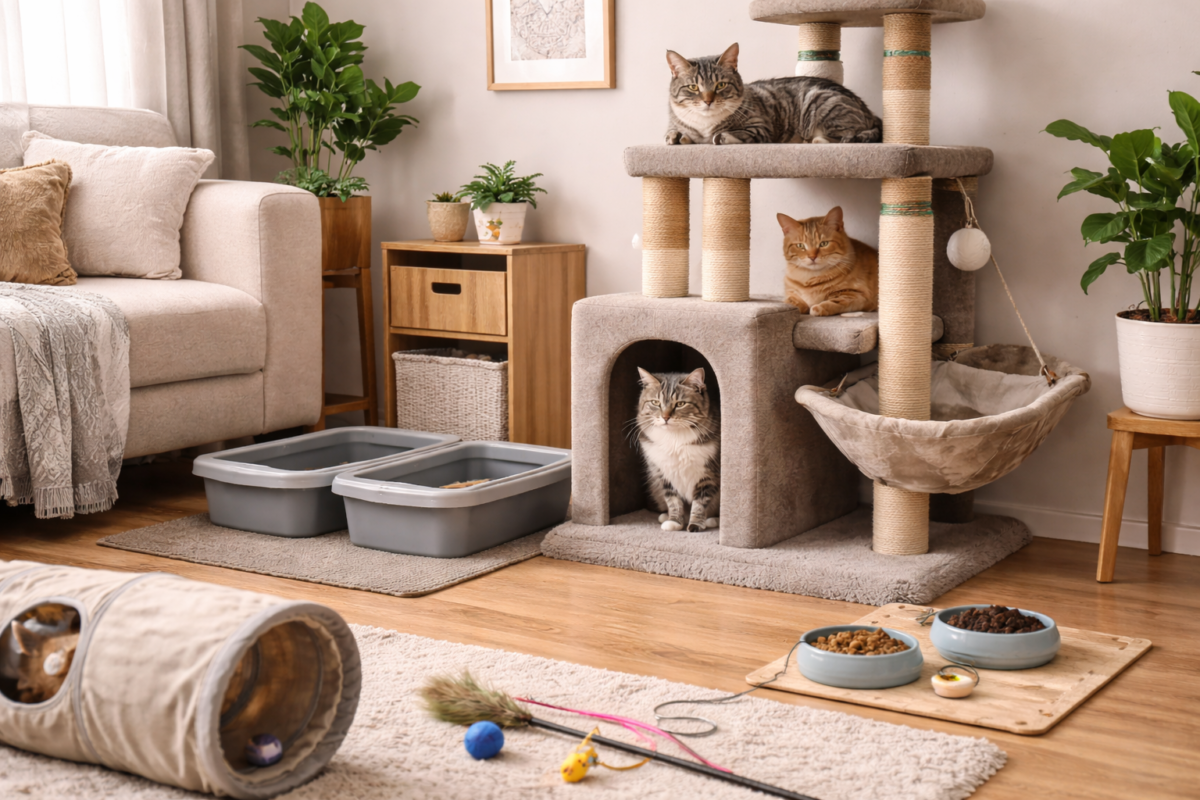
Good options include:
- Puzzle toys or treat balls
- Window perches with outdoor views
- Rotating toys
- Cat trees or tunnels
Independent enrichment prevents boredom and stress.
5. Quiet Rest Time
Cats sleep a lot—often 12–18 hours per day.
Provide:
- Multiple cozy sleeping spots
- Quiet areas away from noise
- Warm sunlit spaces
Rest is just as important as play in your cat’s routine.
Evening Routine: Reconnect and Release Energy
6. Evening Playtime
Cats are naturally more active in the evening.
Why it’s essential:
- Reduces nighttime zoomies
- Strengthens your bond
- Improves sleep quality
Aim for another 10–20 minutes of active play.
7. Dinner Time
Feed dinner shortly after playtime.
Benefits:
- Reinforces the hunt–eat cycle
- Encourages relaxation afterward
- Reduces begging behavior
Stick to consistent timing whenever possible.
8. Calm Social Time
After dinner, cats often enjoy low-energy interaction.
This can include:
- Cuddling
- Gentle petting
- Sitting near you
Let your cat choose the level of interaction—respecting boundaries builds trust.
Night Routine: Encourage Better Sleep
9. Wind-Down Environment
Help your cat transition into rest mode.
Helpful habits:
- Dim lights
- Reduce loud noises
- Offer a comfortable sleeping area
Some cats enjoy soft background sounds or familiar bedtime routines.
10. Final Litter Box & Water Check
Before bed:
- Scoop litter boxes
- Refresh water bowls
Clean resources encourage consistent use and comfort.
Adjusting the Routine for Your Lifestyle
Busy Schedules
If your schedule varies:
- Anchor key activities (feeding & play) to consistent times
- Use automatic feeders if needed
- Keep enrichment available during absences
Multi-Cat Homes
Ensure:
- Separate feeding stations
- Multiple litter boxes
- Individual playtime when possible
Routine reduces competition and stress.
Signs Your Routine Is Working
You’ll know your routine is effective if your cat:
- Eats calmly and regularly
- Sleeps well
- Shows less destructive behavior
- Appears relaxed and confident
- Seeks positive interaction
Small improvements often appear within days.
Common Routine Mistakes to Avoid
- Inconsistent feeding times
- Skipping play sessions
- Overstimulating before bedtime
- Ignoring changes in behavior
- Forcing interaction
Flexibility is fine—chaos is not.
Final Thoughts
A happy cat isn’t created by expensive toys or constant attention—it’s built through predictability, balance, and understanding. By creating a daily routine that includes play, meals, rest, and connection, you give your cat the structure they instinctively crave.
Consistency doesn’t limit your cat—it sets them free to feel safe, confident, and content 🐾


 Accessories & Others
 Apparel
 Beds & Furniture
 Cages & Accessories
 Carriers & Strollers
 Doors, Gates & Ramps
 Flea & Tick Control
 Grooming
 Litter & Housebreaking
 Memorials & Funerary
 Accessories & Others
 Apparel
 Beds & Furniture
 Cages & Accessories
 Carriers & Strollers
 Cat Doors,Steps, Nets.
 Collars, Harnesses & leashes
 Flea & Tick Control
 Grooming
 Cages& Accessories
 Cow Mastitis Detectors
 Ear Tags
 Aquarium Accessories
 Aquarium Cleaners
 Aquarium Decor
 Aquarium Lights
 Aquarium Pumps & Filter
 Aquariums & Fish Bowls
 Automatic Feeders