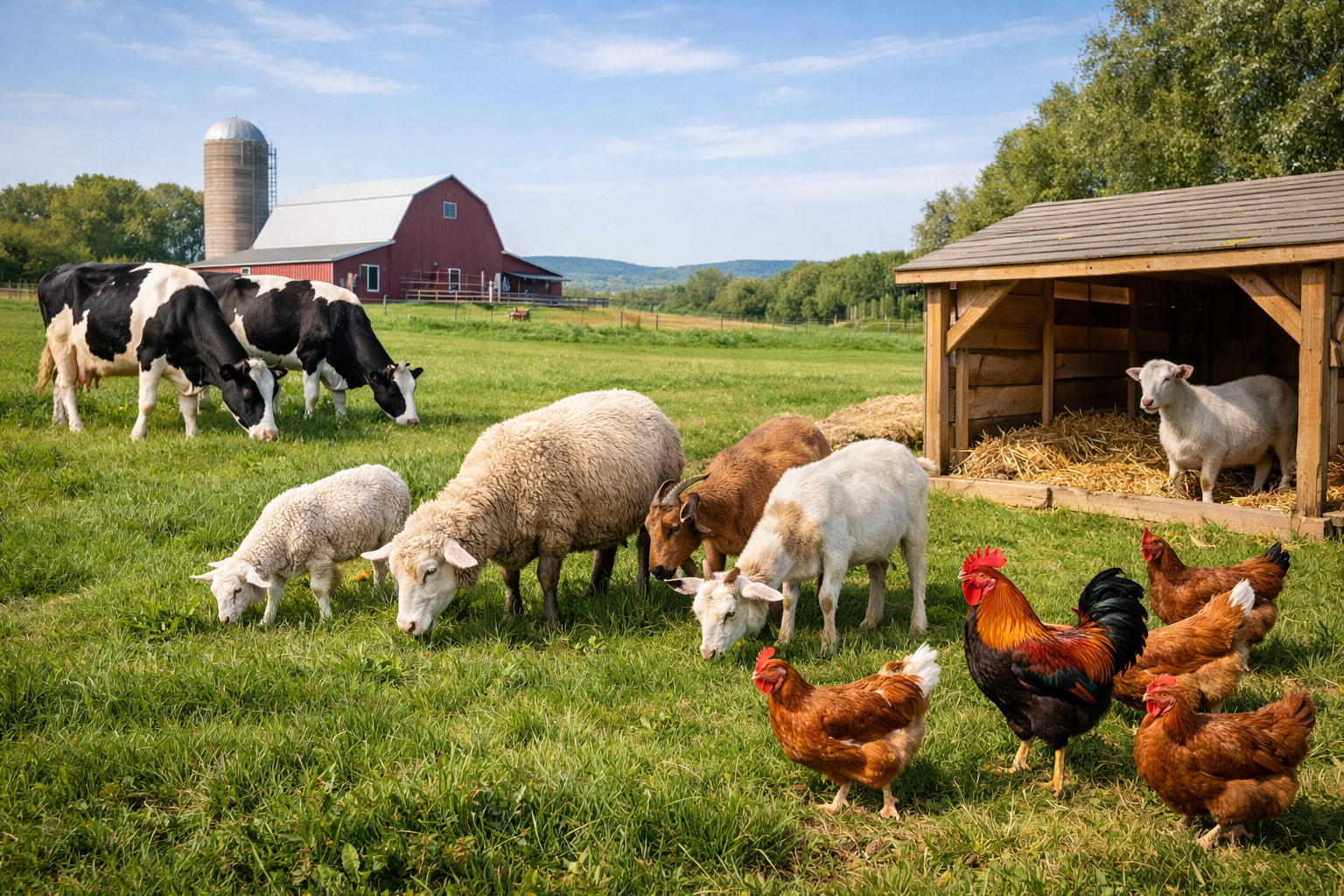
Caring for farm animals is a daily commitment that directly affects their health, productivity, and overall well-being. Whether you raise cows, goats, sheep, poultry, or mixed livestock, consistent daily care helps prevent illness, reduces stress, and ensures animals live comfortable, healthy lives. Proper routines also make farm management smoother and more cost-effective in the long run.
In this guide, we’ll cover essential daily care tips for farm animals that every farmer—small or large—should follow.
1. Provide Fresh Food and Clean Water Daily
Nutrition is the foundation of animal health. Every farm animal has specific dietary needs, but all share two basic requirements: fresh feed and constant access to clean water.
- Balanced feed: Ensure animals receive the right mix of grains, forage, minerals, and supplements based on species, age, and purpose (milk, meat, eggs, or breeding).
- Fresh water supply: Water containers should be cleaned daily to prevent algae, bacteria, and contamination. Dehydration can quickly lead to reduced productivity and serious health problems.
- Consistent feeding schedule: Feeding animals at the same time each day reduces stress and supports healthy digestion.
2. Maintain Clean and Comfortable Living Spaces
A clean environment is crucial for preventing disease and keeping animals comfortable.
- Daily waste removal: Manure and soiled bedding should be removed regularly to reduce odors, flies, and harmful bacteria.
- Dry bedding: Replace wet or dirty bedding with clean, dry material such as straw or wood shavings.
- Proper ventilation: Good airflow reduces moisture buildup and respiratory issues, especially in barns and coops.
Clean shelters not only protect animal health but also improve overall farm hygiene.
3. Perform Daily Health Checks
Daily observation is one of the most effective ways to catch health issues early.
- Check behavior: Watch for changes in appetite, movement, or social interaction. Lethargy or isolation can be early signs of illness.
- Inspect body condition: Look for wounds, swelling, limping, or unusual discharge from eyes or nose.
- Monitor temperature and coat condition: Dull coats, excessive scratching, or fever may indicate parasites or infection.
Early detection often means simpler treatment and lower veterinary costs.
4. Grooming and Hygiene Matter
Regular grooming keeps animals comfortable and helps prevent skin problems.
- Brushing: Removes dirt, loose hair, and parasites while improving circulation.
- Hoof and foot care: Check hooves daily for cracks, overgrowth, or infection, especially in cattle, goats, and sheep.
- Feather and coat care: Poultry and livestock benefit from clean feathers or coats, reducing the risk of mites and lice.
Grooming also strengthens the bond between farmers and animals, making handling easier.
5. Ensure Safe and Secure Housing
A safe living area protects animals from predators, harsh weather, and injuries.
- Strong fencing: Inspect fences daily for breaks or weak spots to prevent escapes and predator entry.
- Weather protection: Provide shade during hot weather and wind or rain protection during cold or wet conditions.
- Adequate space: Overcrowding leads to stress, aggression, and faster spread of disease.
Comfortable housing directly supports animal health and productivity.
6. Practice Daily Biosecurity Measures
Biosecurity helps prevent the spread of diseases on your farm.
- Limit outside contact: Reduce unnecessary visitors and isolate new or sick animals.
- Clean equipment: Tools, boots, and feeding equipment should be cleaned regularly.
- Hand hygiene: Washing hands before and after handling animals reduces cross-contamination.
Simple daily habits can prevent costly outbreaks.
7. Provide Mental Stimulation and Social Interaction
Farm animals are social creatures and need mental engagement.
- Group housing: When appropriate, allow animals to live in compatible groups to reduce loneliness and stress.
- Enrichment: Simple items like scratching posts, hanging objects, or varied grazing areas keep animals mentally stimulated.
- Gentle handling: Calm, regular interaction helps animals feel safe and reduces fear.
Happy animals are healthier and easier to manage.
8. Keep Records and Stay Consistent
Consistency is key in daily animal care.
- Daily logs: Record feeding amounts, health observations, and unusual behavior.
- Routine schedules: Animals thrive on predictable routines for feeding, cleaning, and handling.
- Review regularly: Records help identify patterns and improve long-term care decisions.
Final Thoughts
Daily care for farm animals goes beyond feeding and shelter—it’s about building healthy routines that support physical health, mental well-being, and long-term productivity. By providing clean water, balanced nutrition, safe housing, regular health checks, and a clean environment, you create the foundation for a successful and humane farming operation.
Consistent daily attention not only keeps your livestock healthy but also makes farming more rewarding and sustainable. With the right care, your animals will thrive—and so will your farm. 🐄🐓🐑