Feeding farm animals properly is one of the most important decisions a farmer makes. Nutrition directly affects animal health, growth, reproduction, and productivity. With so many options available today, one common question many farmers ask is: Organic vs commercial feed—what’s better for farm animals?
Both feeding approaches have advantages and limitations. The best choice often depends on your farm goals, budget, animal type, and management style. In this guide, we’ll break down the differences between organic and commercial feed, compare their benefits, and help you decide what works best for your livestock.
Understanding Organic Feed
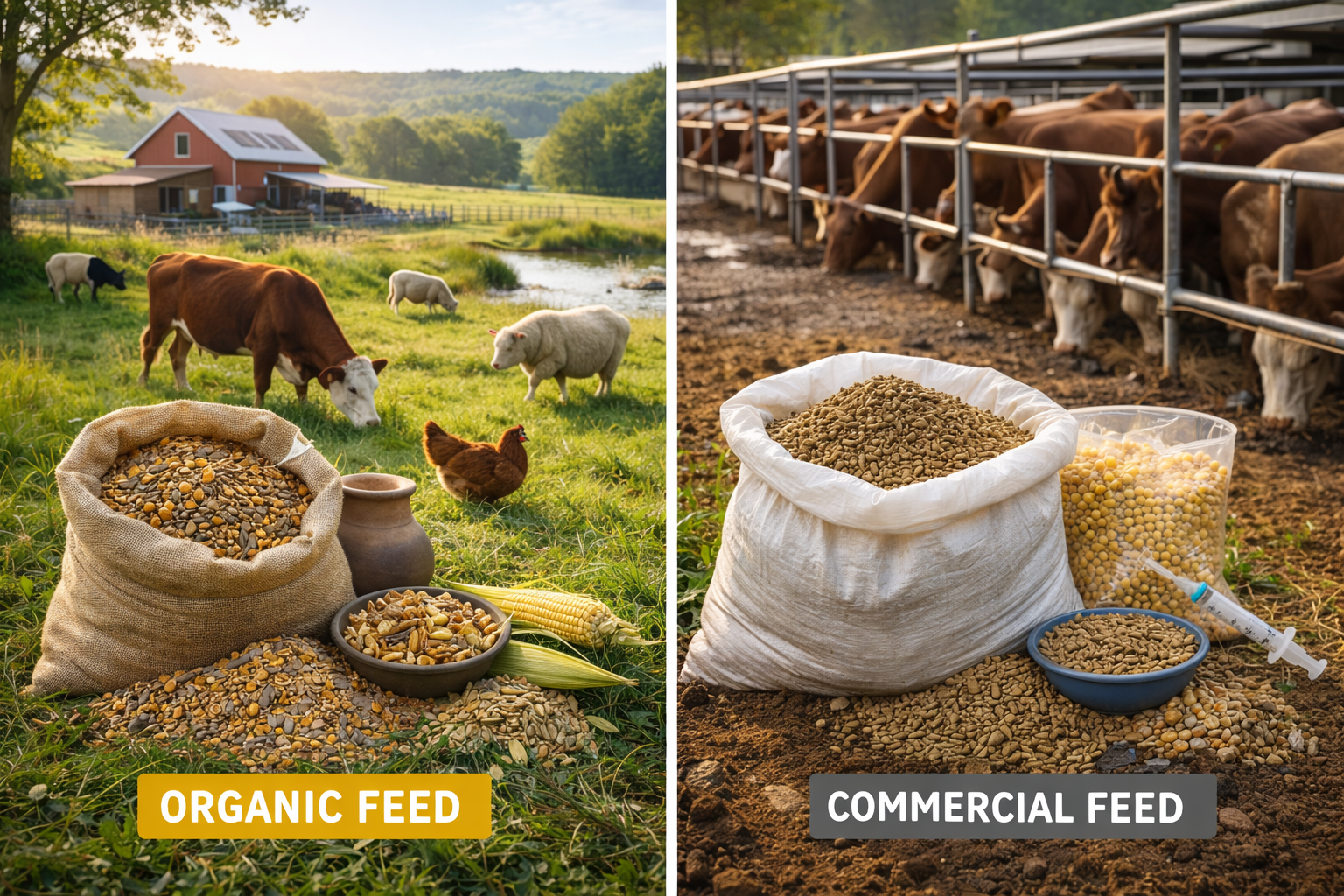
Organic feed is produced using ingredients grown without synthetic pesticides, chemical fertilizers, genetically modified organisms (GMOs), antibiotics, or artificial growth enhancers.
Key Characteristics of Organic Feed:
- Made from certified organic crops
- Free from synthetic additives
- Often includes natural grains, legumes, and forages
- Follows strict production and processing standards
Organic feed is commonly used by farmers focused on sustainability, animal welfare, and organic certification.
Benefits of Organic Feed for Farm Animals
1. Fewer Chemicals and Additives
Organic feed reduces animals’ exposure to synthetic chemicals, which may support long-term health and immune function.
2. Supports Natural Digestion
Many farmers report improved digestion and fewer digestive upsets when animals consume organic feed with simpler ingredient lists.
3. Aligns With Organic Farming Standards
For farms seeking organic certification, organic feed is a requirement and supports premium product markets.
4. Environmentally Friendly
Organic farming practices promote soil health, biodiversity, and reduced chemical runoff.
Limitations of Organic Feed
Despite its benefits, organic feed is not perfect for every situation.
- Higher cost: Organic feed is often significantly more expensive
- Limited availability: Not always accessible in all regions
- Variable nutrient consistency: Nutrient levels may vary depending on crop quality
- Slower growth rates: Animals may grow or produce slightly less compared to commercial feed
For some farms, these challenges can impact profitability.
Understanding Commercial Feed
Commercial feed is formulated using conventional agricultural methods and often includes supplements designed to maximize growth, milk production, or egg yield.
Key Characteristics of Commercial Feed:
- Carefully balanced nutrient profiles
- Often includes vitamins, minerals, and protein boosters
- Widely available and affordable
- Designed for specific species and production stages
Commercial feed is widely used in both small and large-scale farming operations.
Benefits of Commercial Feed for Farm Animals
1. Consistent Nutrition
Commercial feed is scientifically formulated to meet precise nutritional requirements, reducing the risk of deficiencies.
2. Cost-Effective
It is generally more affordable than organic feed, making it accessible for most farmers.
3. Faster Growth and Higher Production
Animals fed commercial feed often show higher milk yield, faster weight gain, and increased egg production.
4. Easy Availability
Commercial feed is widely available in multiple formulations for different animals and life stages.
Limitations of Commercial Feed
Commercial feed also has potential downsides.
- May contain synthetic additives
- Possible reliance on GMOs
- Overuse can contribute to digestive or metabolic issues if mismanaged
- Some consumers prefer products raised without conventional feed
Proper management and responsible use are essential to avoid health problems.
Comparing Organic and Commercial Feed
Animal Health
Both feeds can support healthy animals when balanced correctly. Organic feed may reduce chemical exposure, while commercial feed ensures consistent nutrient delivery.
Productivity
Commercial feed typically supports higher production levels. Organic feed may produce slightly lower yields but can still maintain good health and quality.
Cost and Profitability
Commercial feed is usually more economical. Organic feed may increase costs but can be offset by higher market prices for organic products.
Sustainability
Organic feed supports environmentally friendly practices, while commercial feed emphasizes efficiency and scalability.
Which Feed Is Better for Different Farm Animals?
Dairy Animals
- Commercial feed may boost milk yield
- Organic feed may improve milk quality perception and market value
Meat Animals
- Commercial feed supports faster weight gain
- Organic feed aligns with natural and pasture-based systems
Goats and Sheep
- Often thrive on forage-based diets with minimal supplementation
- Both feed types can work depending on pasture quality
Poultry
- Commercial feed supports rapid growth and egg production
- Organic feed supports natural behaviors and organic egg markets
Can You Combine Organic and Commercial Feed?
Many farmers choose a hybrid approach.
- High-quality forage as the main diet
- Organic supplements when available
- Commercial feed during high-demand periods (growth, lactation, winter)
This flexible strategy balances cost, health, and productivity.
How to Choose the Right Feed for Your Farm
Ask yourself:
- What are my production goals?
- Do I plan to sell organic products?
- What is my feed budget?
- What does my pasture quality provide naturally?
There is no universal answer—successful feeding programs are tailored to each farm.
Final Thoughts
When comparing organic vs commercial feed, the best option for farm animals depends on your priorities. Organic feed supports sustainability and reduced chemical exposure, while commercial feed offers consistency, affordability, and higher production efficiency. Both can support healthy animals when used responsibly.
The most important factor is not the label on the feed but how well it meets your animals’ nutritional needs. Thoughtful feeding decisions, quality forage, clean water, and attentive care will always matter more than choosing one feed type over the other. 🌾🐄🐐🐑