Reptiles make fascinating and rewarding pets, but choosing the right species is essential—especially for beginners. While reptiles are often seen as low-maintenance, they still require proper habitats, temperature control, and consistent care. Some species are far more forgiving and beginner-friendly than others.
This guide explores the best starter reptiles for first-time owners, focusing on temperament, care requirements, and ease of handling to help you make a confident and responsible choice.
What Makes a Reptile Beginner-Friendly?
Not all reptiles are suitable for new keepers. The best starter reptiles share a few key traits:
- Calm and tolerant temperament
- Simple and affordable enclosure needs
- Easy-to-source diet
- Strong resistance to minor husbandry mistakes
- Availability of captive-bred individuals
Avoid reptiles that grow extremely large, require specialized diets, or need highly precise environmental control.
1. Leopard Gecko
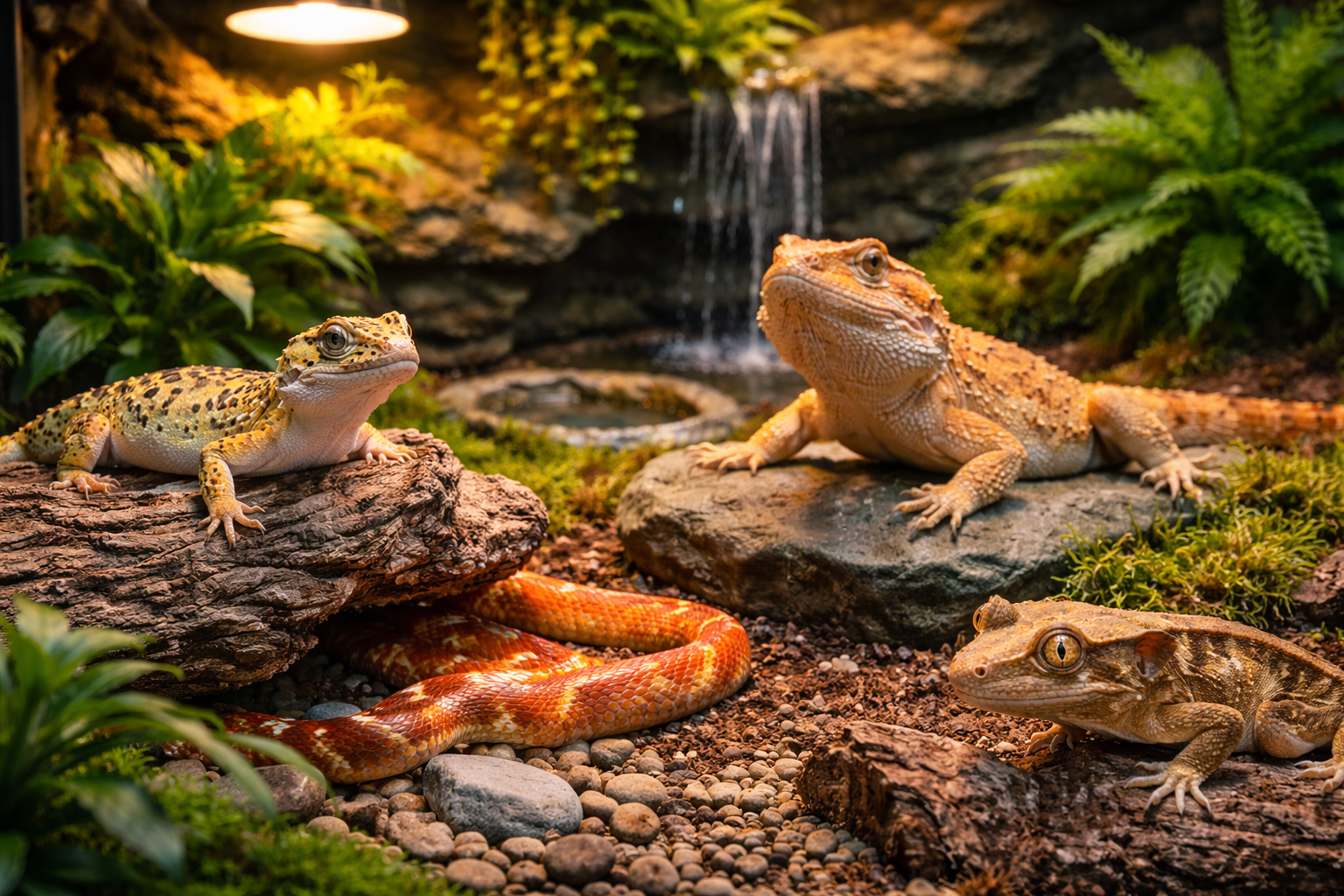
Leopard geckos are one of the most popular beginner reptiles, and for good reason.
Why They’re Great for Beginners
- Docile and easy to handle
- Small adult size
- Simple heating and lighting needs
- Hardy and long-lived
Basic Care Overview
Leopard geckos thrive in dry, warm enclosures with hiding spots and a gentle heat source. They eat live insects such as crickets and mealworms, making feeding straightforward.
2. Bearded Dragon
Bearded dragons are friendly, intelligent, and often described as the “puppy dogs” of the reptile world.
Why They’re Great for Beginners
- Social and interactive
- Easy to tame
- Active during the day
- Strong appetite and clear feeding cues
Basic Care Overview
They require a larger enclosure than geckos, with proper UVB lighting and a temperature gradient. Their omnivorous diet includes insects and leafy greens, making nutrition flexible and engaging.
3. Corn Snake
For beginners interested in snakes, corn snakes are an excellent choice.
Why They’re Great for Beginners
- Calm and rarely aggressive
- Simple feeding schedule
- Manageable adult size
- Minimal odor and noise
Basic Care Overview
Corn snakes need a secure enclosure with proper heating and hiding areas. They eat frozen-thawed rodents, which simplifies feeding and avoids live prey risks.
4. Crested Gecko
Crested geckos are ideal for beginners who prefer a low-maintenance reptile without live insect feeding at every meal.
Why They’re Great for Beginners
- No need for UVB in most cases
- Thrive at room temperature
- Eat prepared commercial diets
- Gentle and lightweight
Basic Care Overview
They require vertical enclosures with plants for climbing and moderate humidity. Their powdered diet mixed with water makes feeding simple and mess-free.
5. Ball Python (With Commitment)
While slightly more demanding, ball pythons can be suitable for beginners who are ready for responsibility.
Why They Can Work for Beginners
- Calm and slow-moving
- Handle stress well
- Predictable behavior
Important Considerations
Ball pythons can be picky eaters and live for decades. Owners must be prepared for long-term care and occasional feeding challenges.
Reptiles Beginners Should Avoid
Some reptiles may look appealing but are not ideal for first-time owners, including:
- Chameleons (highly sensitive and fragile)
- Iguanas (large size and aggression)
- Monitor lizards (complex needs and strength)
- Wild-caught reptiles (health and parasite risks)
Starting with a manageable species builds confidence and prevents avoidable mistakes.
Essential Setup Tips for New Reptile Owners
Regardless of species, every beginner should focus on these fundamentals:
- Research species-specific needs before purchase
- Invest in quality thermometers and hygrometers
- Set up the enclosure before bringing the reptile home
- Locate an exotic veterinarian in advance
Preparation is the key to long-term success.
Handling and Bonding Expectations
Reptiles are not cuddly pets, but many tolerate gentle handling well.
- Handle only after the reptile has settled in
- Keep sessions short and calm
- Always support the full body
- Avoid handling during shedding or after feeding
Respecting boundaries helps reduce stress and build trust.
Final Thoughts
Choosing the right starter reptile can make your first experience both enjoyable and educational. Species like leopard geckos, bearded dragons, corn snakes, and crested geckos offer a perfect balance of manageability and fascination.
With proper research, preparation, and patience, reptiles can become long-term companions that are endlessly interesting to observe and care for. Starting small and simple is the smartest path to becoming a confident reptile owner.


 Accessories & Others
 Apparel
 Beds & Furniture
 Cages & Accessories
 Carriers & Strollers
 Doors, Gates & Ramps
 Flea & Tick Control
 Grooming
 Litter & Housebreaking
 Memorials & Funerary
 Accessories & Others
 Apparel
 Beds & Furniture
 Cages & Accessories
 Carriers & Strollers
 Cat Doors,Steps, Nets.
 Collars, Harnesses & leashes
 Flea & Tick Control
 Grooming
 Cages& Accessories
 Cow Mastitis Detectors
 Ear Tags
 Aquarium Accessories
 Aquarium Cleaners
 Aquarium Decor
 Aquarium Lights
 Aquarium Pumps & Filter
 Aquariums & Fish Bowls
 Automatic Feeders