Feeding reptiles properly is one of the most important—and most misunderstood—parts of reptile care. Unlike dogs or cats, reptiles have highly species-specific diets, and feeding the wrong foods can quickly lead to malnutrition, illness, or even death.
This complete guide explains what reptiles eat, how diets differ by species, and how to feed reptiles safely and responsibly for long-term health.
Understanding Reptile Diet Types
Reptiles fall into three main dietary categories. Knowing which group your reptile belongs to is essential before planning meals.
Carnivorous Reptiles
These reptiles eat only animal-based foods.
Common examples:
- Snakes
- Monitor lizards
- Many geckos
Their diets consist primarily of insects, rodents, fish, or other animals.
Herbivorous Reptiles
These reptiles eat plant-based diets.
Common examples:
They require leafy greens, vegetables, and occasional fruits. Feeding animal protein to herbivores can cause severe health problems.
Omnivorous Reptiles
These reptiles eat a mix of plants and animal protein.
Common examples:
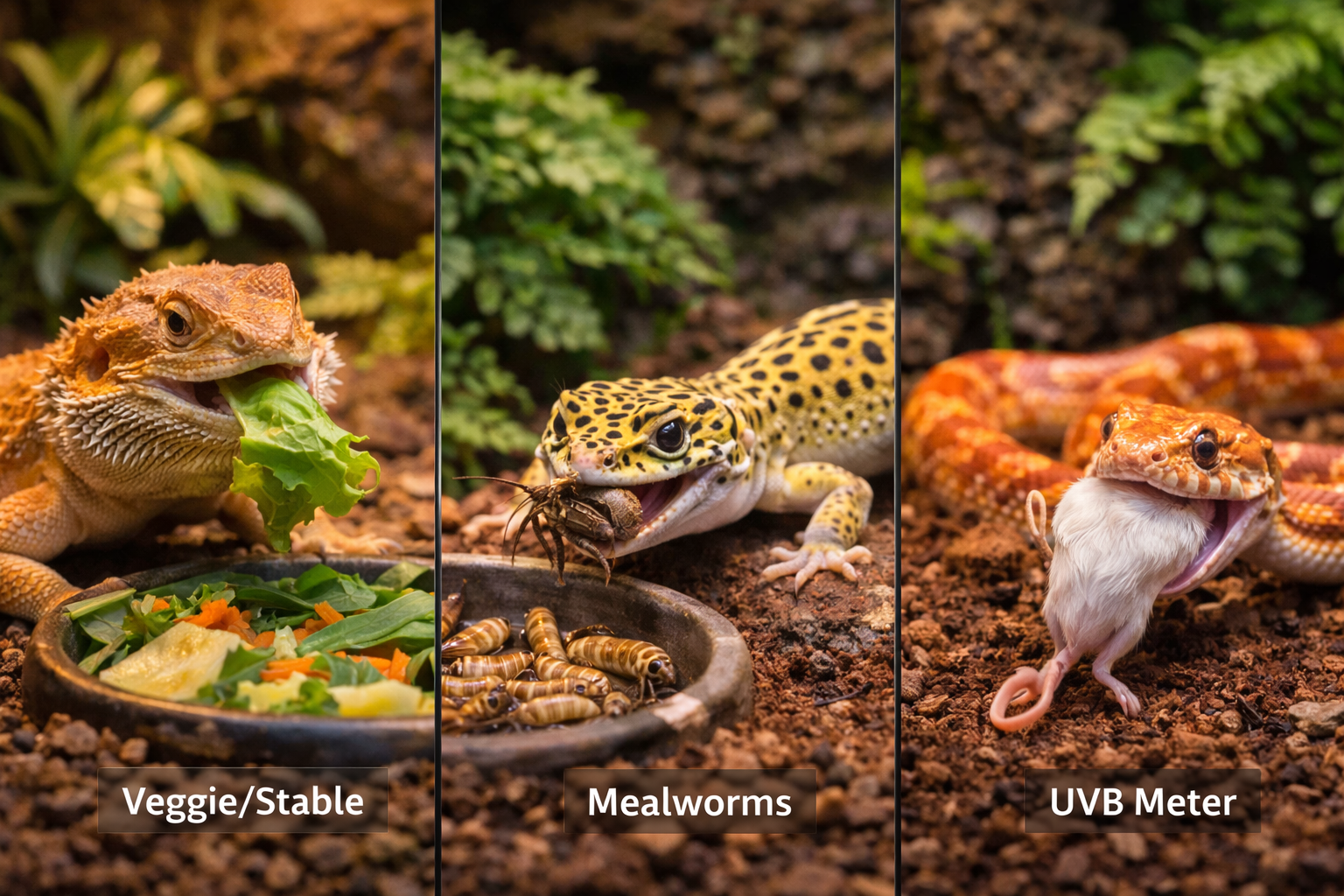
- Bearded dragons
- Blue-tongue skinks
Their diet changes with age—juveniles often need more protein, while adults need more plant matter.
What Carnivorous Reptiles Eat
Insects
Many small reptiles rely on insects as their primary food source.
Common feeder insects:
- Crickets
- Dubia roaches
- Mealworms
- Superworms
- Black soldier fly larvae
Insects should be gut-loaded (fed nutritious foods) before being offered to reptiles.
Rodents
Snakes and large carnivorous reptiles eat rodents.
Best practices:
- Use frozen-thawed rodents instead of live prey
- Match prey size to the reptile’s body width
- Feed on a regular but species-appropriate schedule
Frozen-thawed feeding is safer and more humane.
Fish and Other Protein
Some aquatic or semi-aquatic reptiles eat fish or invertebrates.
Always research species-specific needs, as some fish contain enzymes that interfere with nutrient absorption.
What Herbivorous Reptiles Eat
Leafy Greens (Staples)
These should make up the majority of the diet.
Best options:
- Collard greens
- Mustard greens
- Dandelion greens
- Turnip greens
Avoid iceberg lettuce—it offers little nutrition.
Vegetables
Vegetables add variety and nutrients.
Good choices:
- Squash
- Bell peppers
- Green beans
- Carrots (in moderation)
Chop food into manageable pieces to prevent choking.
Fruits (Occasional Treats)
Fruits are high in sugar and should be limited.
Examples:
Too much fruit can cause digestive issues.
What Omnivorous Reptiles Eat
Omnivores require a balanced mix of insects and plant matter.
A typical diet includes:
- Insects (crickets, roaches, worms)
- Leafy greens
- Vegetables
- Occasional fruit
As reptiles mature, plant matter should make up a larger portion of the diet.
Feeding Frequency by Age
Juveniles
- Eat more frequently
- Require higher protein intake
- Often fed daily
Adults
- Eat less often
- Require more balanced nutrition
- Feeding ranges from every other day to weekly
Overfeeding is a common beginner mistake.
Supplements: Calcium and Vitamins
Most captive reptiles need supplements to prevent deficiencies.
Calcium
- Prevents metabolic bone disease
- Especially important for reptiles requiring UVB lighting
Vitamins
- Provide essential micronutrients
- Use only as directed—over-supplementation can be harmful
Dust insects lightly with supplements according to species needs.
Water and Hydration
All reptiles need access to clean water, even desert species.
Hydration methods include:
- Water bowls
- Misting
- Soaking (species-dependent)
Dehydration can occur even if a reptile appears healthy.
Foods Reptiles Should Never Eat
Avoid these common dangers:
- Processed human food
- Dairy products
- Wild-caught insects (pesticide risk)
- Toxic plants
- Oversized prey
When in doubt, don’t feed it.
Common Feeding Mistakes
New reptile owners often make these errors:
- Feeding the wrong diet type
- Skipping supplements
- Overfeeding due to begging behavior
- Feeding prey that’s too large
- Poor feeder insect nutrition
Correct feeding prevents most long-term health issues.
Signs of Poor Nutrition
Watch for warning signs:
- Weight loss or obesity
- Lethargy
- Weak limbs or tremors
- Poor shedding
- Loss of appetite
Diet-related problems often develop slowly but can be severe.
Final Thoughts
Feeding reptiles correctly is about precision, balance, and consistency. There is no universal reptile diet—each species has evolved to eat specific foods in specific ways.
By understanding your reptile’s natural diet, choosing high-quality foods, and supplementing responsibly, you’ll support:
- Strong bones
- Healthy digestion
- Normal growth
- Long lifespan
A proper feeding routine is one of the greatest gifts you can give your reptile.


 Accessories & Others
 Apparel
 Beds & Furniture
 Cages & Accessories
 Carriers & Strollers
 Doors, Gates & Ramps
 Flea & Tick Control
 Grooming
 Litter & Housebreaking
 Memorials & Funerary
 Accessories & Others
 Apparel
 Beds & Furniture
 Cages & Accessories
 Carriers & Strollers
 Cat Doors,Steps, Nets.
 Collars, Harnesses & leashes
 Flea & Tick Control
 Grooming
 Cages& Accessories
 Cow Mastitis Detectors
 Ear Tags
 Aquarium Accessories
 Aquarium Cleaners
 Aquarium Decor
 Aquarium Lights
 Aquarium Pumps & Filter
 Aquariums & Fish Bowls
 Automatic Feeders