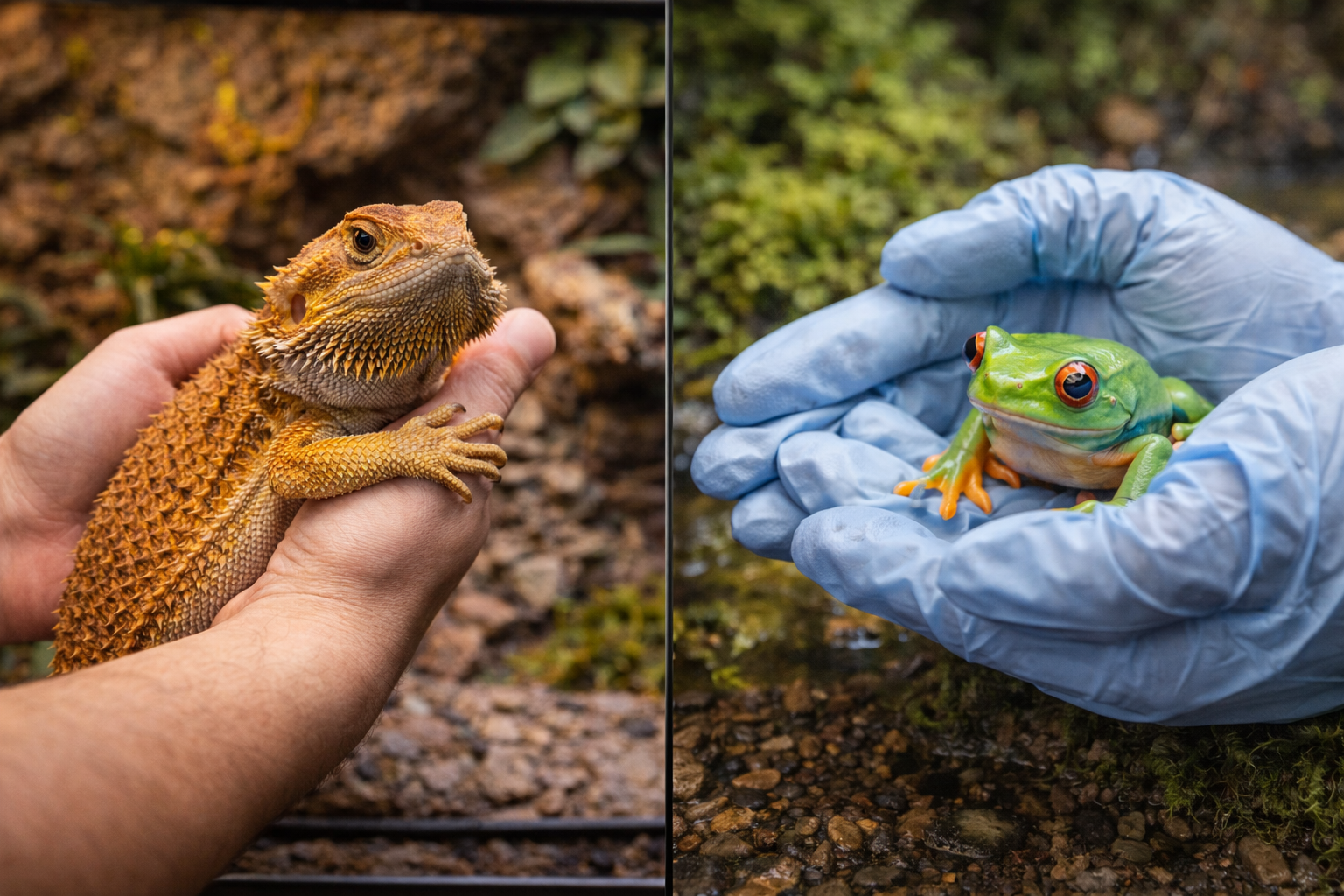
Reptiles and amphibians are fascinating animals, but they are not built for frequent or rough handling. Unlike dogs or cats, these creatures can become stressed very easily, and improper handling can lead to injury, illness, or long-term behavioral problems.
Safe handling is about minimizing stress, supporting the animal properly, and knowing when not to handle at all. This guide explains how to safely handle reptiles and amphibians, common mistakes to avoid, and how to protect both your pet and yourself.
Why Proper Handling Matters
Handling affects more than just comfort. Incorrect handling can cause:
- Physical injury (broken tails, limbs, internal damage)
- Chronic stress and weakened immunity
- Refusal to eat
- Aggressive or defensive behavior
- Skin damage (especially in amphibians)
In many cases, reptiles and amphibians tolerate handling rather than enjoy it. The goal is safety—not interaction for entertainment.
General Rules Before Handling Any Reptile or Amphibian
Before picking up any animal, follow these universal guidelines:
- Wash and dry your hands thoroughly
- Move slowly and calmly
- Avoid sudden movements or loud noises
- Never grab from above like a predator
- Handle over a soft, low surface
A calm environment reduces fear and defensive reactions.
Safe Handling Tips for Reptiles
1. Support the Entire Body
Reptiles need full-body support at all times.
- Use both hands when possible
- Support the chest and hindquarters
- Never let limbs dangle
Poor support can cause spinal stress or panic.
2. Keep Handling Sessions Short
Especially for beginners, handling should be brief.
- Start with 2–5 minutes
- Gradually increase only if the reptile remains calm
- End the session at the first sign of stress
Frequent short sessions are better than long ones.
3. Avoid Handling During Sensitive Times
Never handle reptiles when they are:
- Shedding
- Digesting a meal
- Sleeping
- Newly introduced to a new enclosure
Handling during these times can cause regurgitation, injury, or prolonged stress.
4. Watch for Stress Signals
Stop handling immediately if you notice:
- Rapid breathing
- Tail whipping
- Hissing or puffing
- Sudden attempts to escape
Stress escalates quickly in reptiles.
5. Be Extra Careful with Tails
Some reptiles can drop their tails as a defense mechanism.
- Never grab or restrain by the tail
- Support the body instead
- Avoid sudden movements behind the animal
Tail loss is traumatic and takes time to heal.
Safe Handling Tips for Amphibians
Amphibians require extra caution due to their sensitive, permeable skin.
6. Handle Amphibians as Little as Possible
Unlike reptiles, most amphibians should not be handled regularly.
- Handling is stressful and unnecessary
- Oils, soaps, and chemicals on skin can be absorbed
- Excessive handling can damage protective skin layers
Observation is usually the best interaction.
7. Use Clean, Moist Hands or Gloves
If handling is necessary:
- Rinse hands with dechlorinated water
- Do not use soap or sanitizer
- Use powder-free nitrile gloves when possible
Dry hands can remove essential skin moisture.
8. Keep Handling Time Extremely Short
Amphibians should only be handled when required:
- Health checks
- Enclosure cleaning
- Veterinary care
Return them to their habitat as quickly as possible.
Protecting Yourself While Handling
Handling safety goes both ways.
9. Prevent Bites and Scratches
Even calm animals may bite if frightened.
- Avoid handling near the face
- Keep fingers away from mouths
- Use gentle restraint, never force
Most bites are defensive, not aggressive.
10. Practice Proper Hygiene
Some reptiles and amphibians can carry bacteria.
Always:
- Wash hands after handling
- Clean surfaces the animal touched
- Never touch your face or food during handling
This protects both humans and animals.
Handling Children and Reptiles
Children should always be supervised.
Rules for kids:
- Sit down while holding animals
- Use calm voices and slow movements
- No squeezing or sudden grabs
- Return the animal if it shows stress
Teaching respect early prevents accidents.
When You Should NOT Handle Your Pet
Do not handle if your animal is:
- Sick or injured
- Newly arrived (first 1–2 weeks)
- Acting unusually aggressive
- Extremely stressed
In these cases, handling may worsen the situation.
Building Trust Without Handling
Handling is not the only way to build familiarity.
Alternatives include:
- Hand-feeding (species-appropriate)
- Sitting near the enclosure
- Speaking softly during maintenance
- Consistent care routines
Many reptiles become calmer simply through predictable environments.
Common Handling Mistakes to Avoid
New owners often make these errors:
- Over-handling for social media or display
- Grabbing suddenly or from above
- Handling during feeding or shedding
- Letting reptiles climb freely without support
Avoiding these mistakes improves long-term behavior.
Final Thoughts
Safe handling is about respecting the animal’s natural instincts and limitations. Reptiles and amphibians are not toys or cuddly pets—they are delicate, highly specialized creatures that rely on calm, thoughtful care.
Handled correctly and only when appropriate, reptiles and amphibians can tolerate interaction without fear or harm. Handled poorly, even briefly, they can suffer lasting physical or emotional stress.
When in doubt, handle less—and observe more. A calm, healthy animal is the true sign of responsible ownership.


 Accessories & Others
 Apparel
 Beds & Furniture
 Cages & Accessories
 Carriers & Strollers
 Doors, Gates & Ramps
 Flea & Tick Control
 Grooming
 Litter & Housebreaking
 Memorials & Funerary
 Accessories & Others
 Apparel
 Beds & Furniture
 Cages & Accessories
 Carriers & Strollers
 Cat Doors,Steps, Nets.
 Collars, Harnesses & leashes
 Flea & Tick Control
 Grooming
 Cages& Accessories
 Cow Mastitis Detectors
 Ear Tags
 Aquarium Accessories
 Aquarium Cleaners
 Aquarium Decor
 Aquarium Lights
 Aquarium Pumps & Filter
 Aquariums & Fish Bowls
 Automatic Feeders