Traveling with reptiles requires planning, precision, and an understanding of reptile biology. Unlike dogs or cats, reptiles are ectothermic, easily stressed, and highly dependent on stable environmental conditions. Even short trips can become dangerous if proper precautions aren’t taken.
Whether you’re moving homes, visiting a veterinarian, or relocating long-distance, this guide explains how to travel safely with reptiles, minimize stress, and keep your pet healthy every step of the way.
Is It Safe to Travel with Reptiles?
Yes—when done correctly. Reptiles can tolerate travel well if:
- Temperature is kept stable
- Stress is minimized
- Travel time is reasonable
- The container is secure and species-appropriate
Unnecessary travel should always be avoided, but sometimes it’s unavoidable.
When You Should (and Shouldn’t) Travel
Safe Reasons to Travel
- Veterinary visits
- Permanent relocation
- Emergency evacuation
Avoid Travel If Your Reptile Is:
- Sick or injured
- Actively shedding
- Digesting a large meal
- Newly acquired and still acclimating
Timing matters just as much as preparation.
Choosing the Right Travel Container
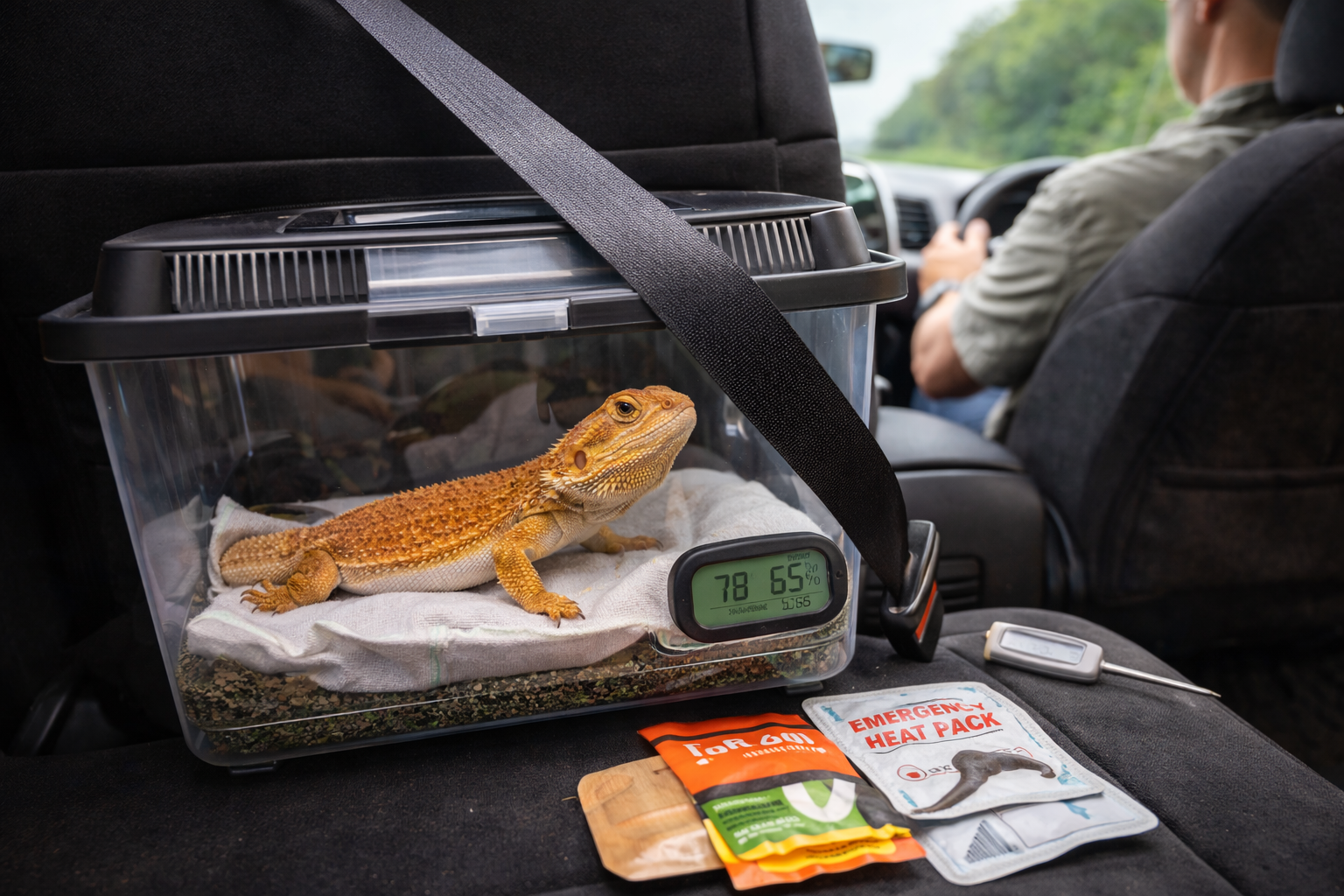
Ideal Reptile Travel Containers
The container should be:
- Escape-proof
- Well-ventilated
- Dark or semi-dark to reduce stress
- Appropriately sized (snug, not cramped)
Common options include:
- Plastic critter keepers
- Secure tubs with air holes
- Insulated reptile travel boxes
Avoid glass tanks during travel—they’re heavy and unsafe.
Lining the Container
Use soft, absorbent materials:
- Paper towels
- Soft cloths
- Non-slip liners
Loose substrates should be avoided during travel to prevent ingestion or mess.
Temperature Control During Travel
Temperature stability is the most critical factor when traveling with reptiles.
Cold Weather Travel
- Use insulated carriers
- Add heat packs (wrapped, never in direct contact)
- Monitor temperature frequently
Warm Weather Travel
- Avoid direct sunlight
- Ensure ventilation
- Never leave reptiles in parked vehicles
Ideal travel temperatures vary by species, but moderate, stable warmth is always safer than extremes.
How Long Can Reptiles Travel Safely?
Short trips (under 2–3 hours) are generally safe with minimal preparation.
For longer trips:
- Plan rest stops
- Check temperature regularly
- Minimize noise and vibration
Most healthy reptiles can tolerate longer travel if conditions remain stable.
Feeding and Hydration Before Travel
Feeding Guidelines
- Do not feed 24–48 hours before travel (species-dependent)
- Traveling with a full stomach increases risk of regurgitation
Hydration Tips
- Ensure the reptile is well-hydrated beforehand
- Light misting (species-appropriate) before departure
- Do not place open water bowls in travel containers
Hydration should be managed before and after, not during transit.
Reducing Stress During Transport
Stress weakens the immune system and can trigger illness.
Stress-Reduction Tips
- Keep the container dark
- Limit handling
- Avoid loud music or vibration
- Secure the container so it doesn’t slide
Calm, quiet environments are best.
Traveling by Car vs. Plane
Car Travel (Recommended)
- Easier temperature control
- Less handling and screening
- Lower stress
Always secure the container with seat belts or non-slip mats.
Air Travel (Advanced & Risky)
- Airline restrictions vary widely
- Cargo holds are dangerous for reptiles
- Temperature and pressure changes add risk
Air travel should only be considered when absolutely necessary and with airline approval.
Special Considerations by Reptile Type
Lizards
- Benefit from slightly warmer conditions
- Require firm body support
- Arboreal species need extra stability
Snakes
- Travel best in snug containers
- Less prone to motion stress
- Avoid feeding before travel
Amphibians
- Extremely sensitive to temperature and dehydration
- Require moist (not wet) environments
- Short travel only, when unavoidable
Setting Up After Arrival
Once you reach your destination:
- Place the reptile directly into a pre-prepared enclosure
- Restore correct heat, humidity, and lighting
- Allow quiet rest time (24–48 hours)
- Resume feeding only after normal behavior returns
Avoid handling immediately after travel.
Common Travel Mistakes to Avoid
- Leaving reptiles in hot or cold cars
- Using glass enclosures for transport
- Feeding too close to travel time
- Overhandling during stops
- Poor ventilation
Most travel-related injuries are preventable.
Emergency Travel Kit Checklist
Always bring:
- Backup heat packs
- Thermometer
- Paper towels
- Extra container
- Species care notes
Preparedness reduces panic in unexpected situations.
Final Thoughts
Traveling with reptiles can be done safely—but only with planning, patience, and respect for their unique needs. Reptiles don’t adapt quickly to change, so every effort should be made to keep conditions as stable and calm as possible.
By choosing the right carrier, managing temperature carefully, reducing stress, and avoiding unnecessary handling, you can transport your reptile without compromising its health. When in doubt, remember: quiet, dark, stable, and secure is the goal.
If you prepare properly, your reptile can arrive safely and settle back into normal routine with minimal disruption.