Feeding mistakes are one of the leading causes of illness and death in reptiles and amphibians. Unlike mammals, these animals have highly specialized digestive systems, and foods that seem harmless—or even healthy—to humans can be extremely dangerous for them.
This guide explains what NOT to feed reptiles and amphibians, why these foods are harmful, and how to avoid the most common feeding mistakes made by pet owners.
Why Feeding the Wrong Foods Is So Dangerous
Reptiles and amphibians evolved to eat very specific diets. Feeding inappropriate foods can result in:
- Toxic reactions
- Digestive blockages (impaction)
- Organ failure
- Nutritional deficiencies
- Long-term health complications
Many feeding-related illnesses develop slowly, making them difficult to detect until serious damage has already occurred.
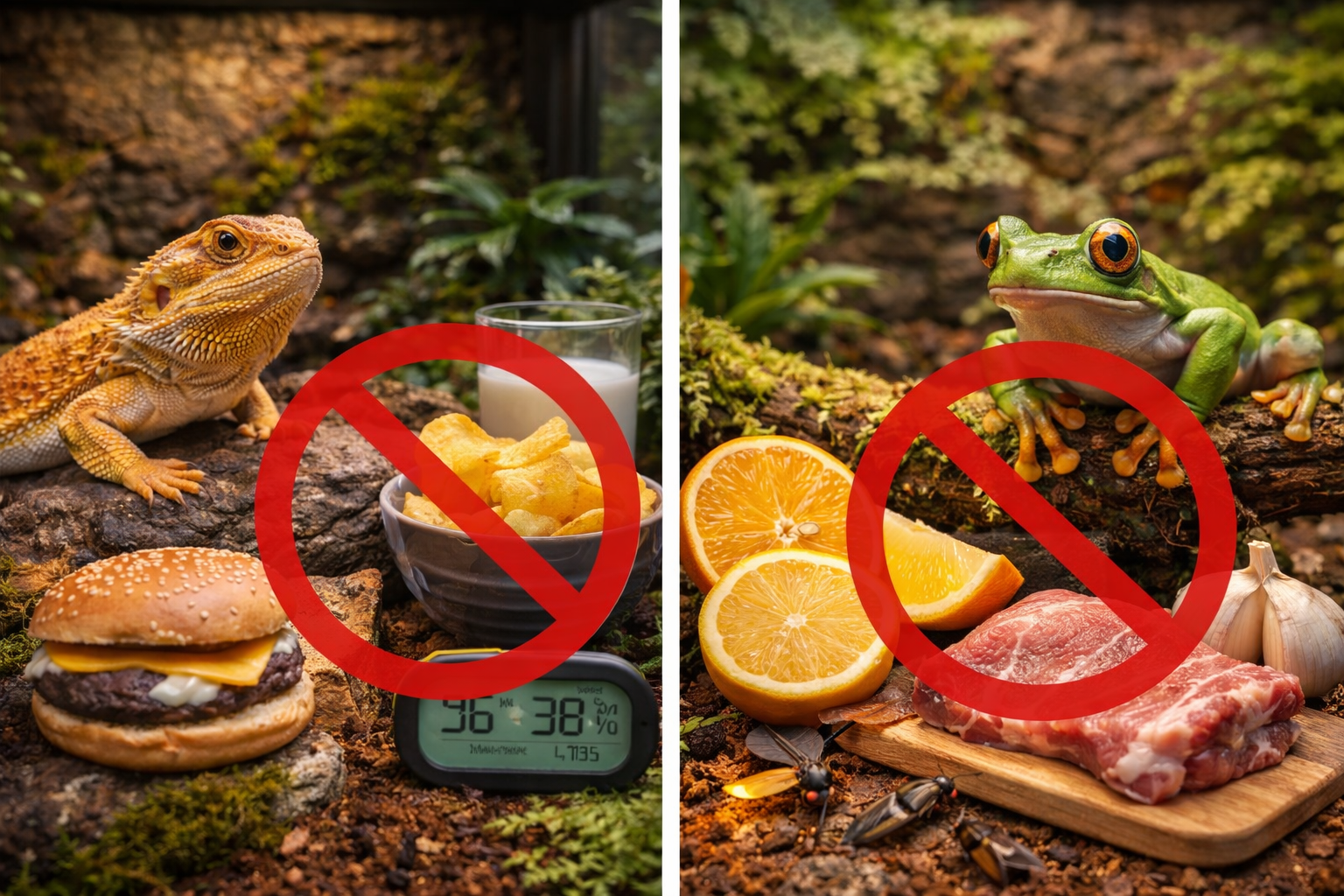
1. Human Foods (Biggest Mistake)
Human food should never be fed to reptiles or amphibians.
Dangerous Human Foods Include:
- Bread and baked goods
- Chips, crackers, and snacks
- Processed meats
- Sugary foods and desserts
- Fried or seasoned foods
These foods:
- Contain salt, sugar, and preservatives
- Disrupt digestion
- Can cause organ damage
Even small amounts can be harmful.
2. Dairy Products
Reptiles and amphibians cannot digest dairy.
Avoid:
- Milk
- Cheese
- Yogurt
- Butter
Dairy causes:
- Severe digestive upset
- Bacterial overgrowth
- Dehydration
There is no safe amount of dairy for reptiles or amphibians.
3. Toxic Fruits and Vegetables
Not all fruits and vegetables are safe—even for herbivorous or omnivorous species.
Vegetables to Avoid:
- Onion
- Garlic
- Avocado
- Rhubarb
Fruits to Avoid:
- Citrus fruits (orange, lemon, lime)
- Grapes and raisins
These foods can cause:
- Organ toxicity
- Digestive irritation
- Neurological symptoms
Always verify plant safety before feeding.
4. Wild-Caught Insects
Catching insects outdoors may seem natural, but it’s extremely risky.
Why Wild Insects Are Dangerous:
- Pesticide exposure
- Parasites
- Toxic insect species
Fireflies, for example, are deadly to many reptiles. Only use captive-bred feeder insects from trusted sources.
5. Insects That Are Too Large or Hard
Feeding prey that is too large is a common beginner mistake.
Avoid:
- Oversized crickets
- Large beetles
- Hard-shelled insects for small reptiles
This can cause:
- Choking
- Digestive blockages
- Internal injury
A general rule: prey should be no larger than the width of the reptile’s head.
6. Calcium Sand and Loose Food Substitutes
Some products marketed as “digestible” are still dangerous.
Avoid:
- Calcium sand
- Gravel
- Pebbles mixed with food
Ingesting these materials can cause fatal impaction, especially in juveniles.
7. Raw Meat and Fish (For Most Species)
Raw meat is not appropriate for most reptiles.
Problems include:
- Bacterial contamination
- Nutritional imbalance
- Excess fat
Fish can also contain enzymes that interfere with vitamin absorption. Only feed animal protein if it is species-appropriate and properly sourced.
8. Insects with Low Nutritional Value (As Staples)
Some insects are safe occasionally but harmful as a primary diet.
Limit or avoid:
- Mealworms (as sole food)
- Waxworms (high fat)
Overreliance can cause:
- Obesity
- Nutritional deficiencies
Variety is essential.
9. Toxic Plants in Enclosures
Reptiles and amphibians may nibble on enclosure plants.
Avoid plants like:
- Ivy
- Dieffenbachia
- Oleander
- Philodendron
Always research plant safety before adding live plants to enclosures.
10. Over-Supplementation
Too many supplements can be just as harmful as too few.
Avoid:
- Excess vitamin powders
- Daily high-dose supplements
This can lead to:
- Vitamin toxicity
- Organ damage
Supplements should be used sparingly and species-appropriately.
Special Warning for Amphibians
Amphibians absorb substances directly through their skin.
Never feed amphibians:
- Chemically treated insects
- Foods handled with bare, soapy, or sanitizer-covered hands
- Insects dusted with excessive supplements
Amphibians are far more sensitive than reptiles.
Common Feeding Myths (Debunked)
❌ “They eat it in the wild, so it’s safe”
→ Wild diets don’t translate safely to captivity.
❌ “A small bite won’t hurt”
→ Some toxins are fatal in tiny amounts.
❌ “Pet store sold it, so it must be safe”
→ Not all marketed products are appropriate.
Signs of Feeding-Related Illness
Watch for:
- Loss of appetite
- Lethargy
- Abnormal stools
- Regurgitation
- Swelling or bloating
If symptoms appear, consult an exotic veterinarian immediately.
How to Feed Safely Instead
To prevent feeding mistakes:
- Research species-specific diets
- Use reputable feeder sources
- Offer variety
- Follow proper prey size rules
- Supplement carefully
When unsure, don’t feed it.
Quick “Do Not Feed” Checklist
❌ Human food
❌ Dairy products
❌ Citrus fruits
❌ Wild-caught insects
❌ Oversized prey
❌ Toxic plants
❌ Raw meat (most species)
❌ Excess supplements
Final Thoughts
Knowing what not to feed reptiles and amphibians is just as important as knowing what to feed them. Most feeding-related illnesses are completely preventable with education and caution.
A safe diet supports:
- Healthy digestion
- Strong immunity
- Normal growth
- Long lifespan
When in doubt, research first and feed second. Responsible feeding is one of the most powerful ways to protect your reptile or amphibian from unnecessary suffering.


 Accessories & Others
 Apparel
 Beds & Furniture
 Cages & Accessories
 Carriers & Strollers
 Doors, Gates & Ramps
 Flea & Tick Control
 Grooming
 Litter & Housebreaking
 Memorials & Funerary
 Accessories & Others
 Apparel
 Beds & Furniture
 Cages & Accessories
 Carriers & Strollers
 Cat Doors,Steps, Nets.
 Collars, Harnesses & leashes
 Flea & Tick Control
 Grooming
 Cages& Accessories
 Cow Mastitis Detectors
 Ear Tags
 Aquarium Accessories
 Aquarium Cleaners
 Aquarium Decor
 Aquarium Lights
 Aquarium Pumps & Filter
 Aquariums & Fish Bowls
 Automatic Feeders