Reptiles may live indoors, but they are still deeply affected by seasonal changes. Shifts in temperature, daylight, humidity, and household conditions can influence a reptile’s appetite, behavior, metabolism, and overall health. Ignoring seasonal adjustments is one of the most common reasons reptiles experience stress or illness throughout the year.
This guide provides seasonal care tips for reptile pets, helping you adapt enclosure conditions, feeding routines, and daily care practices from spring through winter.
Why Seasonal Care Matters for Reptiles
Reptiles are ectothermic, meaning their bodies respond directly to environmental changes. Even indoor enclosures are influenced by:
- Seasonal temperature fluctuations
- Changes in daylight hours
- Household heating and cooling systems
- Humidity shifts
Without adjustments, reptiles may experience:
- Appetite loss
- Lethargy
- Poor shedding
- Weakened immune systems
Seasonal care ensures stability when the outside world changes.
Spring: Transition and Increased Activity
Spring often triggers increased activity in reptiles as daylight increases and temperatures stabilize.
Key Spring Care Tips
1. Check and Adjust Temperatures
As ambient temperatures rise, enclosure heat may increase unintentionally.
- Recheck basking and cool-side temperatures
- Adjust thermostats if needed
2. Monitor Appetite Changes
Many reptiles eat more in spring.
- Gradually increase feeding if appetite improves
- Avoid sudden overfeeding
3. Inspect Lighting Equipment
Spring is a good time to:
- Replace aging UVB bulbs
- Clean light fixtures
- Confirm proper UVB distance
Spring is ideal for routine enclosure evaluations and upgrades.
Summer: Heat Management and Hydration
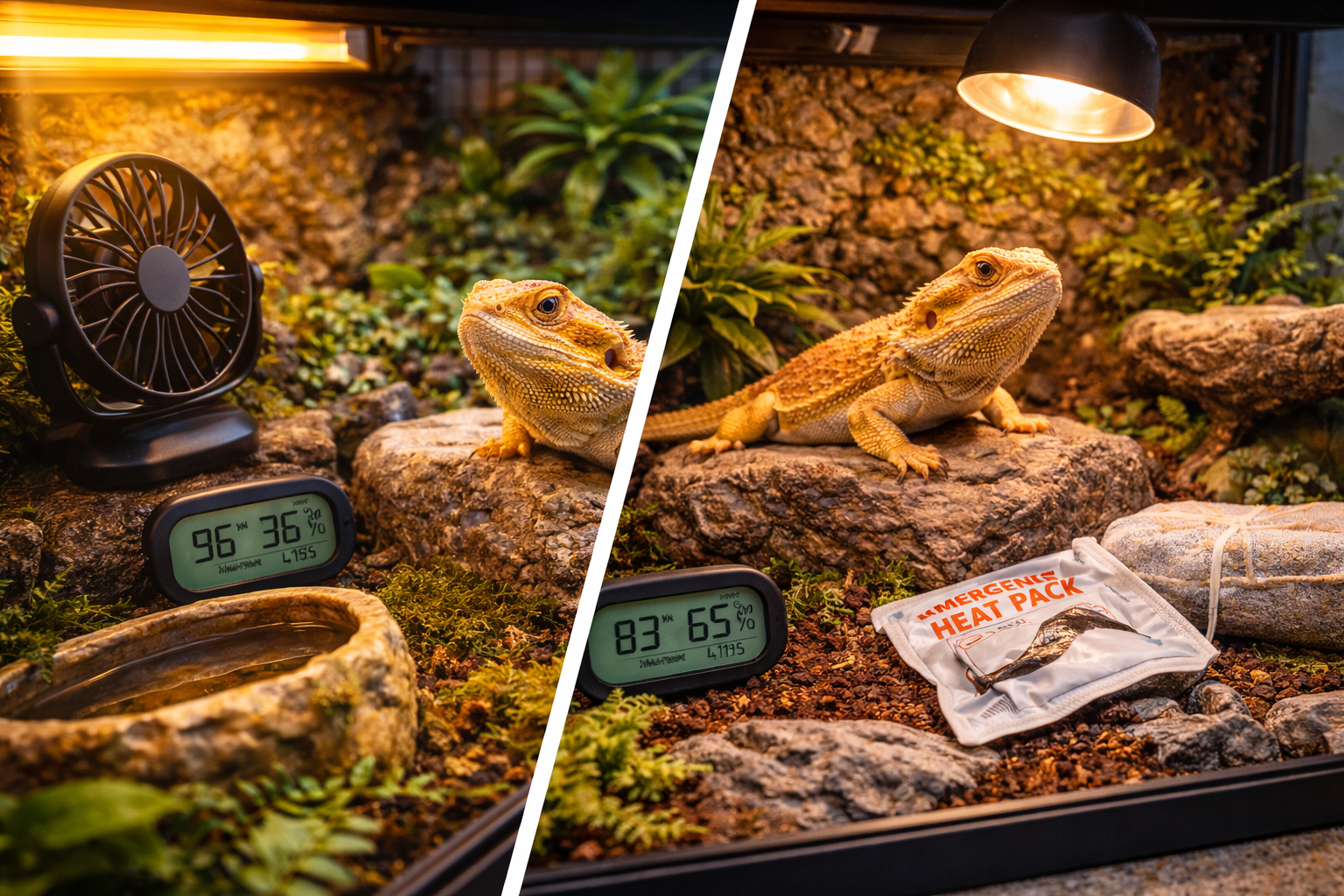
Summer brings the highest risk of overheating.
Common Summer Risks
- Overheated enclosures
- Dehydration
- Reduced oxygen flow
Summer Care Tips
4. Prevent Overheating
- Never rely on room temperature alone
- Monitor enclosures daily
- Increase ventilation if necessary
Never place enclosures in direct sunlight.
5. Maintain Hydration
Hot weather increases water loss.
- Refresh water bowls daily
- Mist species that require higher humidity
- Watch for sunken eyes or dry skin
Hydration is critical during warmer months.
6. Avoid Heat Traps
- Avoid covering enclosures excessively
- Use thermostats on all heat sources
- Remove unnecessary heat elements if room temperatures rise
Summer heat can become dangerous quickly.
Fall: Preparing for Seasonal Shifts
Fall is a transition period when temperatures and daylight begin to drop.
Fall Care Tips
7. Gradually Adjust Light Cycles
- Maintain consistent day/night schedules
- Avoid sudden lighting changes
Consistency reduces stress during seasonal shifts.
8. Watch for Behavioral Changes
Some reptiles naturally become less active.
- Slight appetite reduction can be normal
- Sudden or extreme changes are not
Keep detailed observations.
9. Inspect Heating Equipment
Before colder months arrive:
- Test heat lamps and ceramic heaters
- Replace faulty equipment
- Prepare backup heat sources
Fall preparation prevents winter emergencies.
Winter: Heat Stability and Energy Conservation
Winter is the most challenging season for reptile care.
Winter-Specific Risks
- Cold drafts
- Dry air from heaters
- Power outages
Winter Care Tips
10. Maintain Stable Temperatures
- Increase monitoring frequency
- Ensure enclosures stay within safe ranges
- Block drafts near windows or doors
Cold stress is a major cause of illness.
11. Manage Low Humidity
Indoor heating dries the air.
- Increase misting for tropical species
- Add humidity-retaining substrates
- Use humid hides when appropriate
Low humidity often causes shedding problems.
12. Adjust Feeding If Needed
Some reptiles eat less during winter.
- Reduce feeding slightly if appetite drops
- Never force-feed unless advised by a veterinarian
Always monitor weight to ensure health.
Seasonal Shedding Considerations
Seasonal changes often affect shedding cycles.
Healthy Seasonal Shedding
- Occurs more frequently during growth periods
- Often increases in spring and summer
Preventing Shedding Issues
- Maintain proper humidity
- Provide rough surfaces for shedding
- Ensure hydration
Stuck shed is usually an environmental issue, not a skin problem.
Seasonal Brumation: What You Should Know
Some reptiles naturally slow down during colder months.
Important Notes
- Brumation is species-specific
- Not all pet reptiles should brumate
- Improper brumation can be dangerous
Never attempt brumation without proper research and veterinary guidance.
Adjusting Care for Power Outages and Weather Events
Seasonal storms can disrupt care routines.
Emergency Preparedness
- Keep backup heat packs
- Have insulated transport containers ready
- Monitor temperatures manually
Preparedness is essential during winter and storm seasons.
Seasonal Health Checks
Each season is an opportunity to assess your reptile’s health.
Check for:
- Weight changes
- Appetite consistency
- Skin and eye clarity
- Activity levels
Early detection prevents long-term problems.
Common Seasonal Mistakes to Avoid
- Assuming indoor enclosures don’t need adjustments
- Ignoring humidity changes
- Overheating during summer
- Letting temperatures drop too low in winter
- Making sudden, drastic changes
Reptiles thrive on gradual, consistent adjustments.
Simple Seasonal Care Checklist
Spring
- Replace UVB bulbs
- Adjust feeding gradually
Summer
- Prevent overheating
- Increase hydration checks
Fall
- Inspect heating equipment
- Prepare for colder temperatures
Winter
- Monitor heat and humidity closely
- Reduce drafts and dryness
Final Thoughts
Seasonal care is a vital part of responsible reptile ownership. While reptiles may live indoors, they still feel the effects of changing seasons through temperature, humidity, and light shifts. By making small, thoughtful adjustments throughout the year, you protect your reptile from stress, illness, and environmental shock.
Consistency, observation, and preparation are the keys to year-round reptile health. When seasonal care is done correctly, reptiles remain active, comfortable, and healthy—no matter what the weather is doing outside.


 Accessories & Others
 Apparel
 Beds & Furniture
 Cages & Accessories
 Carriers & Strollers
 Doors, Gates & Ramps
 Flea & Tick Control
 Grooming
 Litter & Housebreaking
 Memorials & Funerary
 Accessories & Others
 Apparel
 Beds & Furniture
 Cages & Accessories
 Carriers & Strollers
 Cat Doors,Steps, Nets.
 Collars, Harnesses & leashes
 Flea & Tick Control
 Grooming
 Cages& Accessories
 Cow Mastitis Detectors
 Ear Tags
 Aquarium Accessories
 Aquarium Cleaners
 Aquarium Decor
 Aquarium Lights
 Aquarium Pumps & Filter
 Aquariums & Fish Bowls
 Automatic Feeders