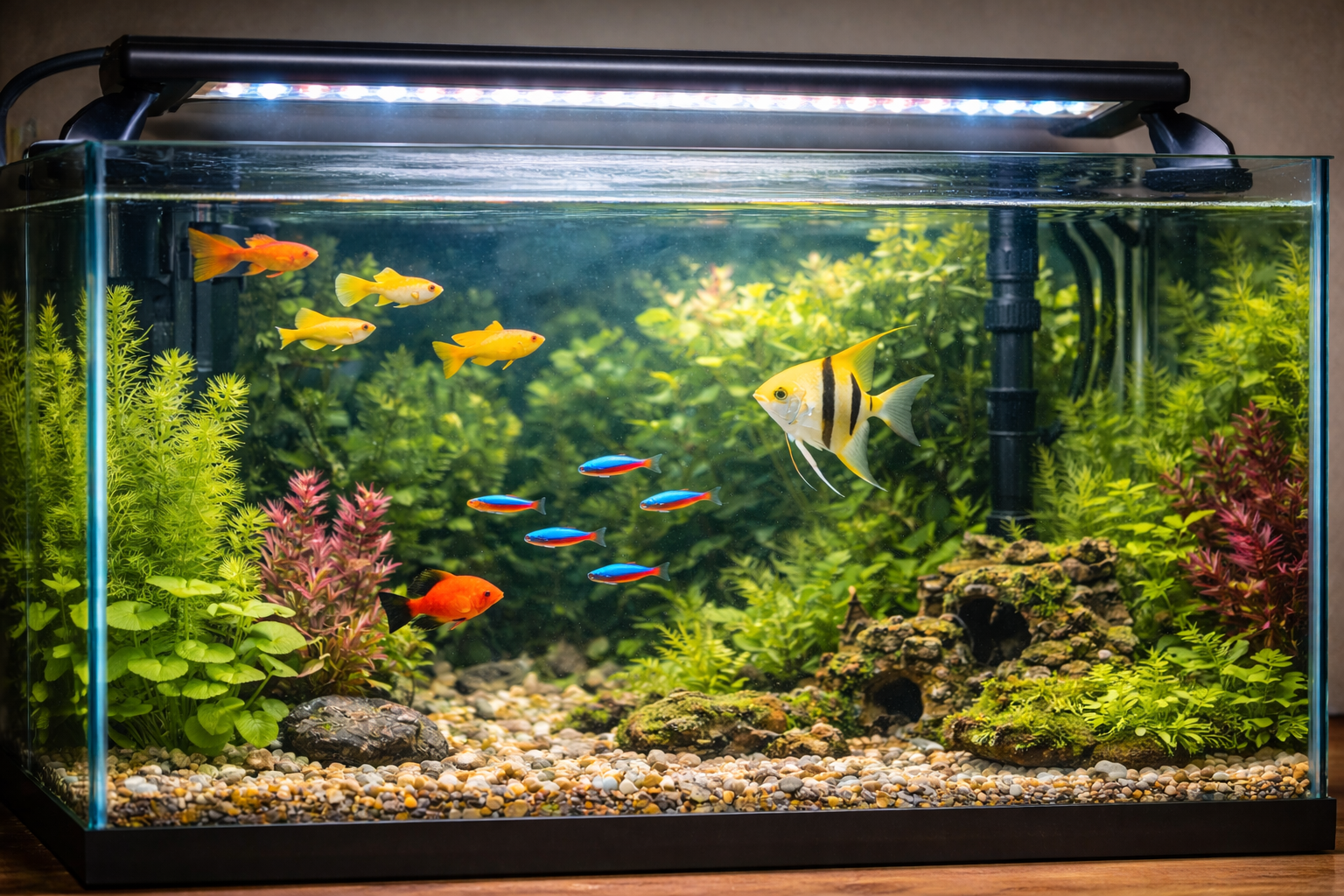
Aquarium lighting does far more than make your tank look beautiful. The right lighting supports fish health, encourages natural behavior, promotes plant growth, and helps maintain a balanced ecosystem. Choosing the wrong lighting, however, can lead to algae problems, stressed fish, or dying plants.
In this guide, we’ll explore the best lighting options for aquariums, explain how each type works, and help you choose the perfect lighting setup for your fish tank—whether you’re a beginner or an experienced aquarist.
Why Aquarium Lighting Matters
Lighting plays a crucial role in an aquarium’s overall health. Fish rely on light to regulate their natural day–night cycles, while plants depend on it for photosynthesis.
Proper aquarium lighting helps:
- Enhance fish colors
- Reduce fish stress
- Support live plant growth
- Prevent excessive algae growth
- Create a natural environment
Good lighting is about balance—not brightness alone.
Understanding Aquarium Lighting Basics
Before choosing a light, it’s important to understand a few basic concepts.
Light Spectrum
Aquarium lights are measured in Kelvin (K):
- 5,000K–6,500K: Ideal for freshwater tanks
- 6,500K–7,000K: Best for planted aquariums
- Higher Kelvin (10,000K+): Mainly for marine tanks
For most freshwater aquariums, 6,500K closely mimics natural daylight.
Photoperiod (Lighting Duration)
Most aquariums need 8–10 hours of light per day. More than that often leads to algae problems.
1. LED Aquarium Lights (Best Overall Choice)
LED lights are currently the most popular and recommended aquarium lighting option.
Why LEDs Are the Best:
- Energy-efficient
- Long lifespan
- Low heat output
- Adjustable brightness and color
- Sleek and modern design
LED lights are suitable for fish-only tanks, planted tanks, and even advanced aquascapes.
Best For:
- Beginners and experienced hobbyists
- Freshwater and planted aquariums
- Long-term cost savings
2. Fluorescent Aquarium Lights
Fluorescent lights were once the standard for aquariums and are still used today.
Common Types:
- T5 fluorescent lights
- T8 fluorescent lights
Pros:
- Good light spread
- Affordable
- Suitable for low to medium plant growth
Cons:
- Shorter lifespan than LEDs
- Higher energy consumption
- Produce more heat
Fluorescent lighting is a solid option for budget-conscious aquarists.
3. Incandescent Aquarium Lights (Not Recommended)
Incandescent lights are outdated and rarely used today.
Drawbacks:
- Very inefficient
- Produce excessive heat
- Poor light spectrum for plants
- Can raise water temperature
These lights are best avoided for modern aquariums.
4. Full-Spectrum Aquarium Lights
Full-spectrum lights mimic natural sunlight and support both fish and plants.
Benefits:
- Enhances natural fish colors
- Promotes plant photosynthesis
- Creates a realistic underwater look
Most modern LED aquarium lights are full-spectrum, making them an excellent all-in-one choice.
5. Planted Aquarium Lighting
Planted tanks have higher lighting requirements than fish-only tanks.
Key Features to Look For:
- Strong PAR (Photosynthetically Active Radiation)
- 6,500K–7,000K color temperature
- Adjustable brightness
- Even light distribution
Too much light can cause algae, so balance is critical—even in planted aquariums.
6. Freshwater vs Saltwater Lighting
While this guide focuses on freshwater aquariums, it’s worth noting the difference.
Freshwater Tanks:
- Moderate lighting intensity
- Focus on plant growth and fish comfort
Saltwater/Reef Tanks:
- High-intensity lighting
- Specialized spectrums for corals
Never use reef lighting on a freshwater tank unless specifically designed for it.
7. Using Timers for Aquarium Lighting
Timers are one of the most overlooked but valuable accessories.
Benefits of Timers:
- Consistent day–night cycles
- Reduced algae growth
- Less stress for fish
- Hands-free operation
Automatic timers ensure your aquarium lighting stays consistent—even when you’re busy.
8. How Lighting Affects Algae Growth
Too much light is one of the biggest causes of algae outbreaks.
To Prevent Algae:
- Limit lighting to 8–10 hours
- Avoid direct sunlight
- Use balanced lighting intensity
- Perform regular water changes
Lighting should support plants and fish—not algae.
9. Choosing the Right Light for Your Tank
Ask yourself these questions before buying:
- Is my tank fish-only or planted?
- What size is my aquarium?
- Do I want adjustable brightness and color?
- What is my budget?
For most aquarists, a full-spectrum LED light with a timer is the safest and most effective option.
Common Aquarium Lighting Mistakes
- Leaving lights on too long
- Using lights that are too bright
- Ignoring light spectrum
- Not using a timer
- Choosing cheap, low-quality fixtures
Avoiding these mistakes saves time, money, and frustration.
Final Thoughts
Choosing the best lighting options for aquariums doesn’t have to be complicated. The right lighting enhances fish health, supports plant growth, and transforms your aquarium into a stunning underwater display. For most beginners and hobbyists, LED full-spectrum aquarium lights offer the perfect balance of performance, efficiency, and ease of use.