Bringing home your first cat is exciting, heartwarming, and sometimes a little overwhelming. Whether you’re adopting a playful kitten or welcoming an adult rescue cat, preparation is key to ensuring a smooth transition.
Cats are independent creatures, but they still need the right environment, tools, and care to thrive. This complete starter checklist will guide you through the essential accessories every first-time cat owner should have before (or immediately after) bringing their feline friend home.
1. Litter Box & Litter
A litter box is one of the most important essentials for your cat.
Choosing the Right Litter Box
There are several types available:
- Open litter boxes
- Covered litter boxes
- Self-cleaning litter boxes
For first-time owners, a simple open litter box is often best. It’s easier to clean and allows your cat to feel less confined.
Choosing Cat Litter
Options include:
- Clumping litter
- Non-clumping litter
- Natural or biodegradable litter
Most cats prefer fine-grain clumping litter because it mimics sand. Try to avoid heavily scented litter, as strong smells can discourage use.
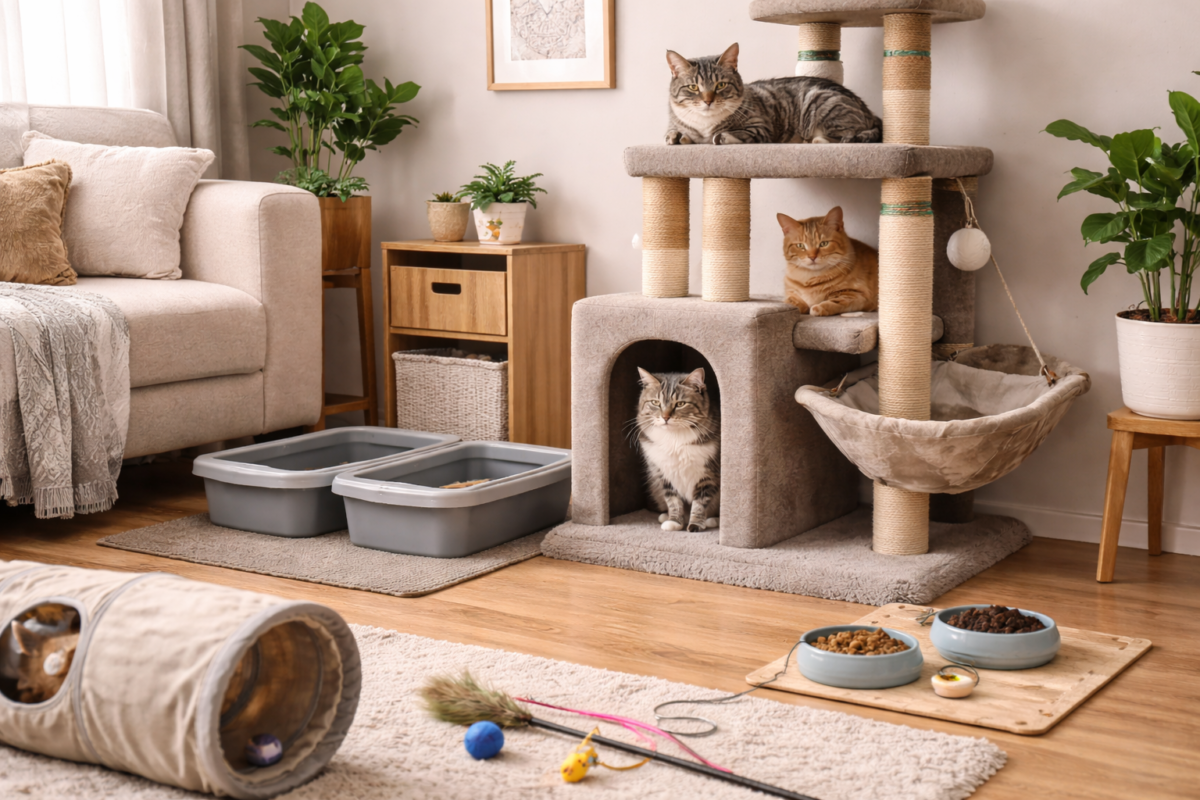
Pro Tip: The general rule is one litter box per cat, plus one extra.
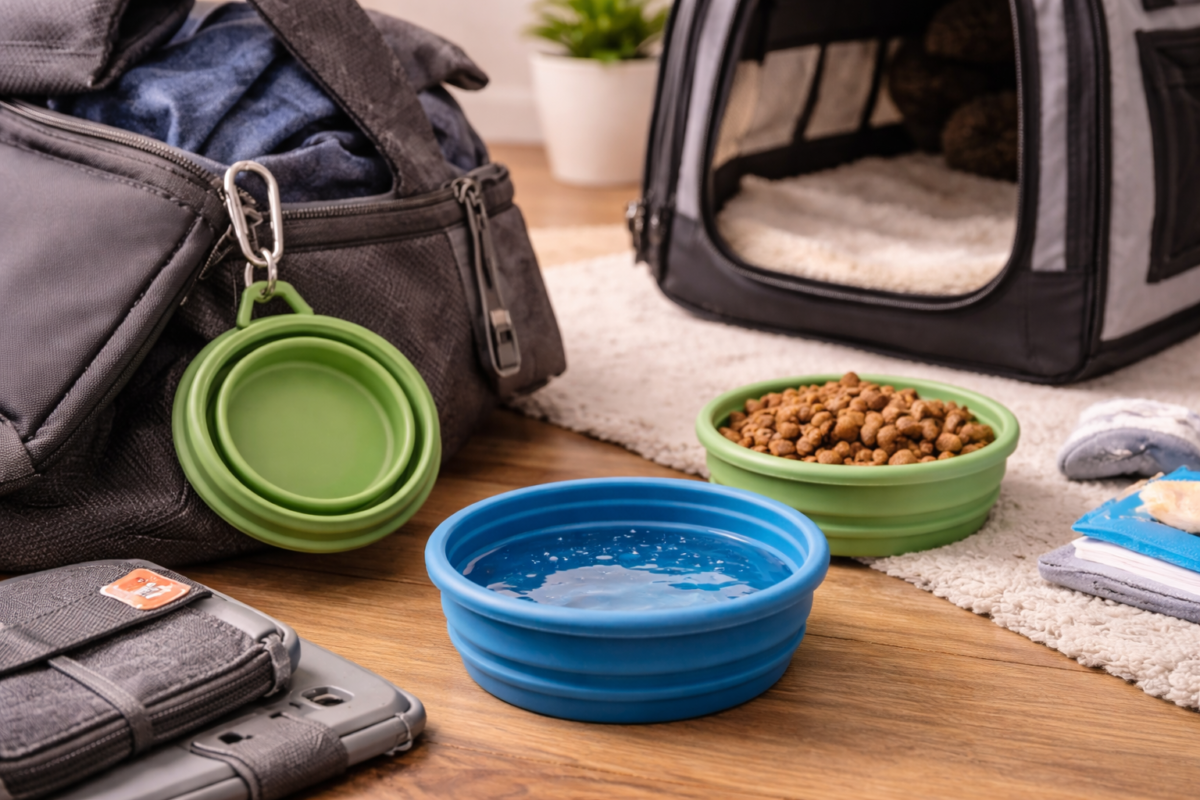
2. Food and Water Bowls
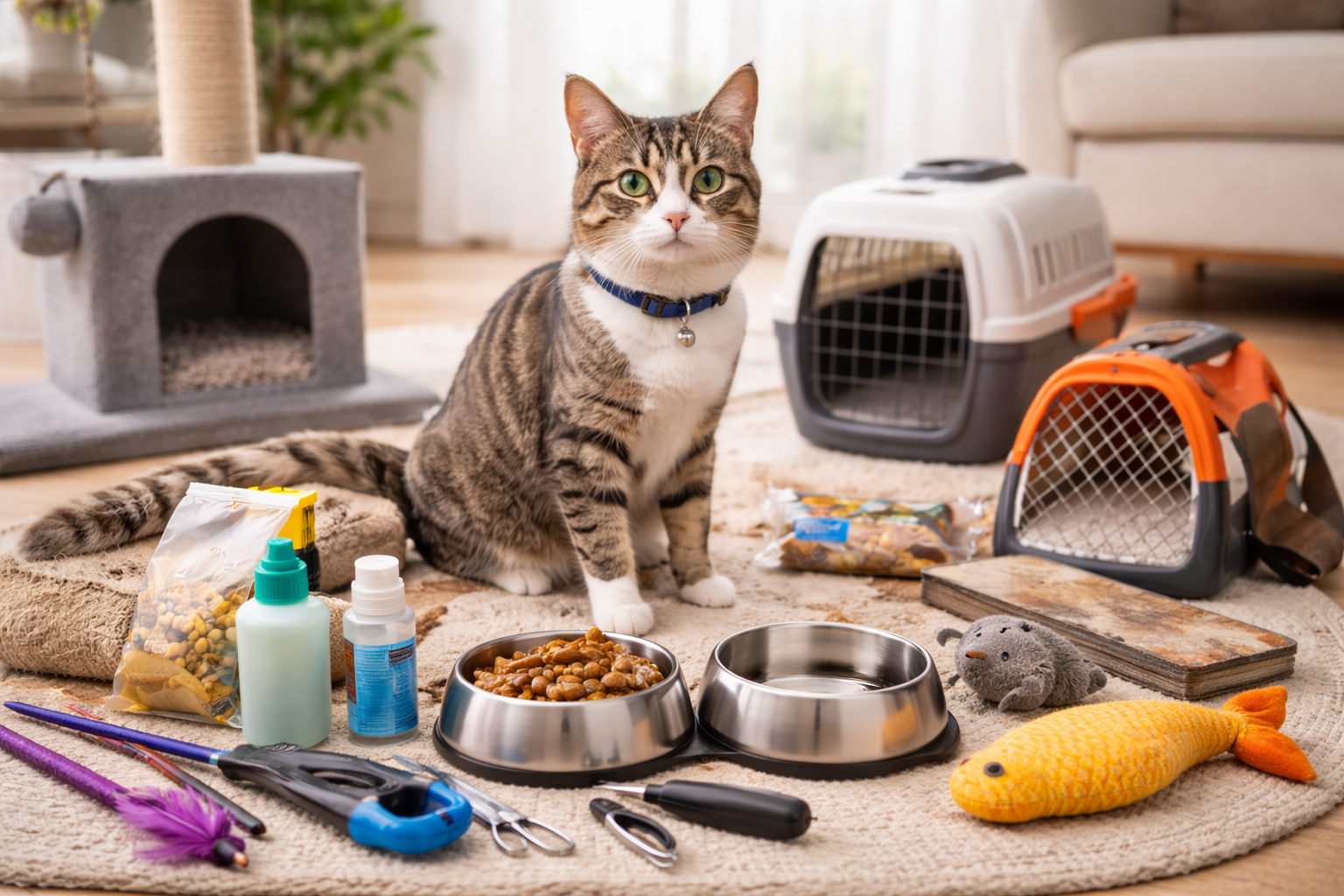
Cats need separate bowls for food and water.
Best Bowl Types:
- Stainless steel (durable and hygienic)
- Ceramic (heavy and stable)
- BPA-free plastic (budget-friendly)
Stainless steel is often recommended because it’s easy to clean and resistant to bacteria buildup.
Consider placing water away from the food bowl. Many cats naturally prefer drinking water in a different location from where they eat.
3. High-Quality Cat Food
Nutrition plays a vital role in your cat’s overall health.
Options to Consider:
- Dry kibble
- Wet food
- Mixed feeding
Kittens require specially formulated kitten food, while adult cats need age-appropriate formulas. Consult your veterinarian for recommendations based on breed, age, and health condition.
Always provide fresh water daily.
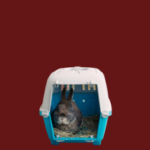
4. Cat Carrier
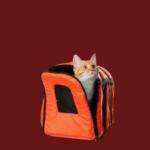
A sturdy cat carrier is essential for vet visits, travel, or emergencies.
Look for:
- Secure locking doors
- Good ventilation
- Easy-to-clean material
Hard-sided carriers offer more protection, while soft-sided ones are lightweight and convenient for short trips.
Make the carrier comfortable by adding a soft blanket so your cat associates it with safety rather than stress.
5. Scratching Post or Scratching Pad
Scratching is a natural behavior. Without proper outlets, your furniture may suffer.
Types of Scratching Surfaces:
- Vertical scratching posts
- Horizontal scratch pads
- Cardboard scratchers
- Sisal rope posts
Place scratching posts near sleeping areas or favorite lounging spots. Encouraging proper scratching from day one prevents bad habits.
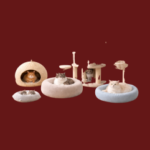
6. Comfortable Bed
Cats sleep 12–16 hours a day, sometimes even more.
Provide:
- A soft, cushioned bed
- A quiet and warm location
- Elevated spots if possible
Some cats prefer enclosed beds, while others like open cushions. You may need to experiment to see what your cat prefers.
7. Toys for Mental Stimulation
Toys are essential for preventing boredom and encouraging exercise.
Must-Have Toy Types:
- Wand toys
- Interactive toys
- Ball toys
- Catnip toys
- Puzzle feeders
Interactive play strengthens your bond and helps burn excess energy. Even adult cats benefit from daily play sessions.
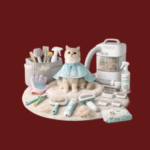
8. Grooming Supplies
Even short-haired cats need grooming.
Basic Grooming Kit:
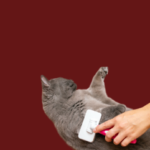
- Cat brush or comb
- Nail clippers
- Pet-safe wipes
- Cat shampoo (for emergencies only)
Regular brushing reduces shedding and hairballs. Nail trimming every few weeks prevents scratches and furniture damage.
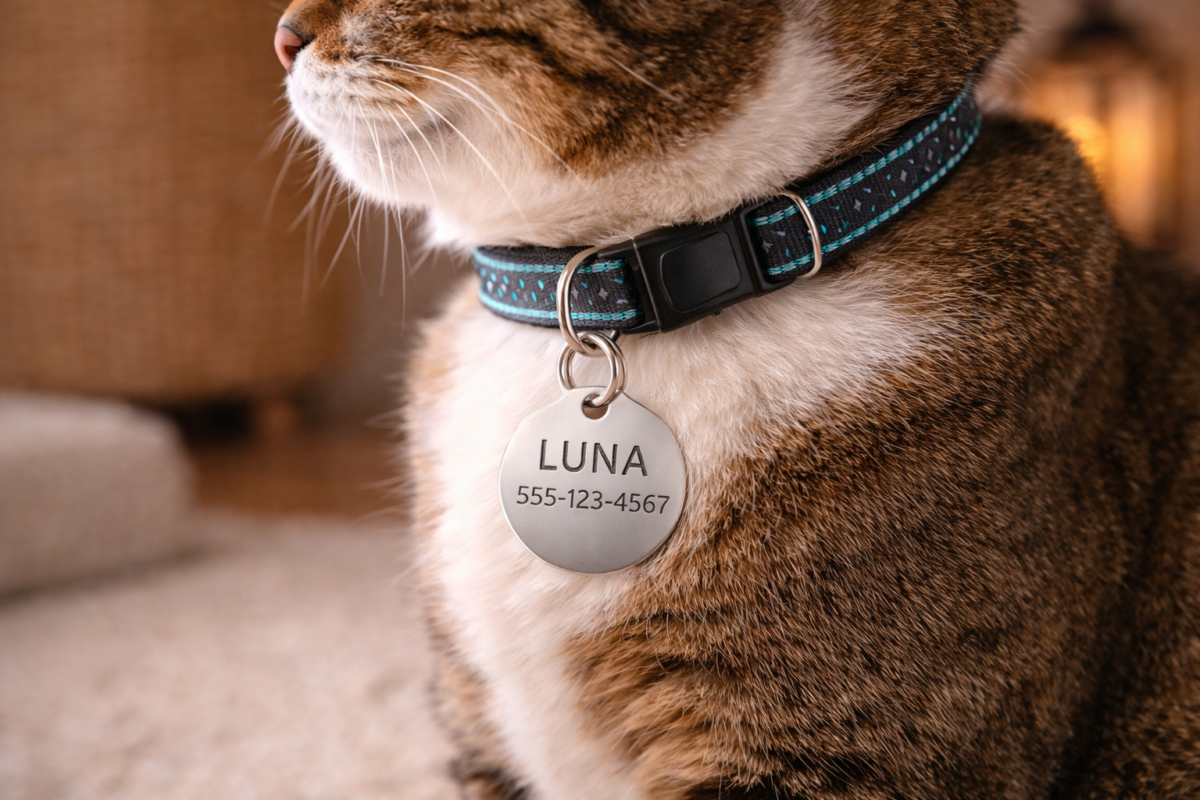
9. ID Tag & Collar
Safety should always come first.
Choose:
- Breakaway collar
- Lightweight design
- ID tag with contact details
Breakaway collars are crucial because they automatically release if caught on something.
Even indoor cats should wear identification in case they escape accidentally.
10. Cat Tree or Climbing Structure
Cats love vertical space. A cat tree provides:
- Exercise
- Climbing opportunities
- A sense of security
- Scratching surfaces
If space allows, invest in a sturdy multi-level cat tree. It gives your cat a personal territory within your home.
11. Cleaning Supplies
Accidents happen, especially in the beginning.
Keep on hand:
- Enzyme cleaner (removes odor completely)
- Litter scoop
- Disposable gloves
- Trash bags
Cleaning accidents properly prevents repeat marking in the same spot.
12. Health Essentials
While not accessories in the traditional sense, these are necessary items:
- Flea prevention treatment
- Deworming schedule
- Vaccination records
- Contact details of a local veterinarian
Schedule a vet visit soon after bringing your cat home to ensure everything is in order.
Preparing Your Home Before Arrival
Before your cat arrives:
- Remove toxic plants
- Hide loose wires
- Secure windows and balconies
- Store chemicals safely
Creating a safe environment reduces stress for both you and your new pet.
Optional But Helpful Extras
Once you have the basics, you might consider:
- Water fountain (encourages hydration)
- Automatic feeder
- Window perch
- Calming spray for anxious cats
- Travel litter box
These extras can improve comfort and convenience but aren’t mandatory at the beginning.
Common Mistakes First-Time Owners Make
- Buying too many items at once
- Ignoring vertical space
- Choosing scented litter
- Skipping interactive play
- Forgetting routine vet visits
Start with the essentials and adjust based on your cat’s preferences and personality.
Final Thoughts
Becoming a first-time cat owner is a rewarding experience. With the right accessories and preparation, you can create a safe, comfortable, and enriching environment for your new feline companion.


 Accessories & Others
 Apparel
 Beds & Furniture
 Cages & Accessories
 Carriers & Strollers
 Doors, Gates & Ramps
 Flea & Tick Control
 Grooming
 Litter & Housebreaking
 Memorials & Funerary
 Accessories & Others
 Apparel
 Beds & Furniture
 Cages & Accessories
 Carriers & Strollers
 Cat Doors,Steps, Nets.
 Collars, Harnesses & leashes
 Flea & Tick Control
 Grooming
 Cages& Accessories
 Cow Mastitis Detectors
 Ear Tags
 Aquarium Accessories
 Aquarium Cleaners
 Aquarium Decor
 Aquarium Lights
 Aquarium Pumps & Filter
 Aquariums & Fish Bowls
 Automatic Feeders