Indoor cats live safer lives compared to outdoor cats, but they can also face a hidden challenge: boredom. Without natural hunting opportunities, climbing trees, or exploring new environments, indoor cats may become restless, overweight, anxious, or destructive. The good news? The right interactive toys can transform your home into a stimulating playground.
In this complete guide, we’ll explore the best interactive cat toys that prevent boredom indoors, how they benefit your feline friend, and how to choose the right options for your cat’s personality and energy level.
Why Interactive Toys Are Essential for Indoor Cats
Cats are natural hunters. Even the laziest house cat has instincts wired for stalking, chasing, and pouncing. Without stimulation, they may:
- Overeat or gain weight
- Scratch furniture excessively
- Meow constantly for attention
- Develop anxiety or depression
- Sleep excessively without real activity
Interactive toys mimic real prey behavior, engage their senses, and encourage both mental and physical exercise. A few well-chosen toys can dramatically improve your cat’s quality of life.
1. Puzzle Feeders and Treat Dispensers
Why They Work
Puzzle toys turn mealtime into a challenge. Instead of simply eating from a bowl, your cat must think and work for their food.
Benefits
- Stimulates mental activity
- Slows down fast eaters
- Reduces boredom-related overeating
- Mimics hunting behavior
Best For
- Food-motivated cats
- Overweight cats
- Highly intelligent or curious cats
Start with simple puzzle designs and gradually increase difficulty as your cat learns.
2. Interactive Laser Toys (Used Correctly)
Laser toys are incredibly popular — and for good reason. They trigger a cat’s natural chase instinct like few other toys can.
Benefits
- Encourages high-intensity exercise
- Great for small apartments
- Excellent for bonding time
Important Tip
Always end laser sessions with a physical toy your cat can “catch.” This prevents frustration since lasers can’t be physically captured.
Automated laser toys are available for solo play, but supervised play sessions are ideal.
3. Motion-Activated Toys
These toys move unpredictably when touched or when they detect motion, simulating real prey behavior.
Popular Options Include:
- Fluttering butterfly toys
- Rolling robotic mice
- Self-moving balls
Benefits
- Encourages independent play
- Great for working pet parents
- Stimulates curiosity
Look for durable designs with quiet motors so your cat isn’t startled.
4. Wand Toys for Bonding Time
Wand toys with feathers, strings, or plush attachments are classic interactive tools.
Why They’re So Effective
You control the movement, which allows you to mimic realistic prey behavior — hiding, darting, pausing, and escaping.
Benefits
- Strengthens your bond
- Provides full-body exercise
- Encourages jumping and agility
Rotate attachments regularly to maintain excitement.
5. Cat Tunnels and Hide-and-Seek Toys
Cats love hiding and ambushing. Tunnels tap directly into that instinct.
Benefits
- Encourages exploration
- Provides exercise space
- Reduces anxiety by offering safe hiding spots
Some tunnels include crinkle material or dangling toys for extra stimulation.
6. Electronic Interactive Toys
Battery-operated toys that wiggle, chirp, or spin randomly are becoming increasingly advanced.
What to Look For:
- Automatic shut-off features
- Replaceable parts
- Rechargeable batteries
- Safe, durable materials
These toys are ideal for high-energy cats who need more than static toys.
7. Catnip-Infused Interactive Toys
Catnip can turn a simple toy into an exciting experience.
Benefits
- Stimulates playful behavior
- Encourages exercise
- Relieves stress
Not all cats respond to catnip (about 30% don’t), so test your cat’s reaction before investing heavily in catnip-based toys.
8. Climbing Trees with Interactive Elements
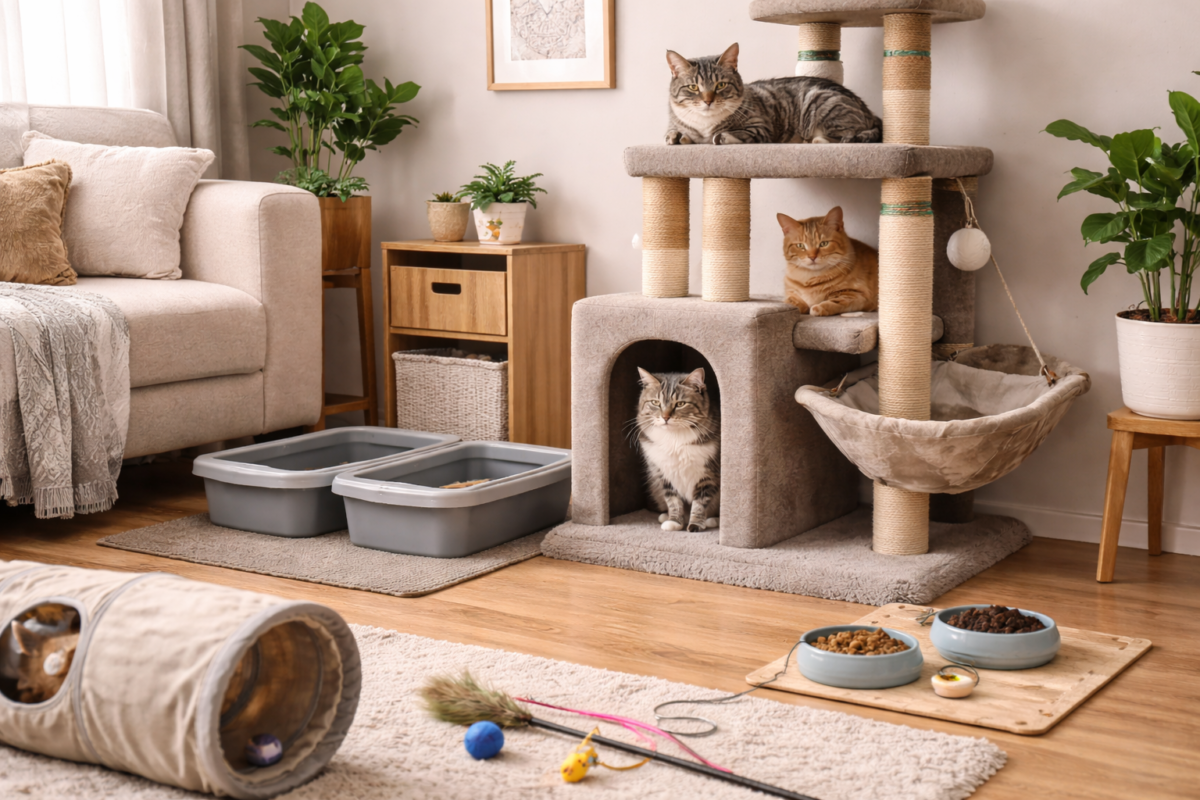
A cat tree with dangling toys, scratch posts, and multiple levels combines exercise with stimulation.
Why It’s Important
Cats need vertical space. Climbing satisfies their instinct to observe from high vantage points.
Look for:
- Sturdy construction
- Sisal scratching posts
- Built-in hanging toys
- Multiple platforms
9. Smart App-Controlled Toys
Technology has entered the pet world. Some toys now connect to apps and allow remote control movement.
Benefits
- Perfect for busy owners
- Adds unpredictability
- Allows playtime even when you’re not home
While convenient, these should supplement — not replace — direct interaction.
How to Choose the Right Interactive Toy
Not all cats are the same. Consider these factors before purchasing:
1. Energy Level
High-energy cats need active toys like lasers and robotic mice. Low-energy cats may prefer puzzles or slower-moving toys.
2. Age
- Kittens: Need soft, safe, lightweight toys.
- Adults: Enjoy high-energy and challenging toys.
- Senior Cats: Prefer gentle stimulation without excessive jumping.
3. Personality
- Curious cats love puzzles.
- Shy cats prefer tunnels and hideaways.
- Athletic cats enjoy climbing and jumping toys.
4. Safety
Always check for:
- Small detachable parts
- Sharp edges
- Toxic materials
- Loose strings (supervise string-based toys)
Durability is especially important for strong chewers.
How Often Should You Rotate Toys?
Cats get bored quickly if toys are always available.
Smart Strategy:
- Keep only 3–5 toys out at a time
- Rotate weekly
- Store unused toys out of sight
- Reintroduce them like they’re “new”
This simple trick keeps engagement high without buying more toys constantly.
Signs Your Cat Is Bored
Interactive toys aren’t just fun — they’re preventive care. Watch for these boredom signs:
- Excessive grooming
- Aggressive behavior
- Knocking items off shelves
- Overeating
- Sleeping more than usual
If you notice these behaviors, increase play sessions and add new stimulation options.
Creating a Daily Play Routine
Consistency matters. Aim for:
- 10–15 minutes of interactive play
- At least twice per day
- Ideally before meals (mimics hunt-eat-sleep cycle)
Even short sessions significantly improve behavior and mental health.
Final Thoughts
Indoor cats thrive when their minds and bodies are engaged. Interactive toys aren’t just entertainment — they’re essential tools for preventing boredom, anxiety, and destructive behavior.
The key is variety. Combine puzzle feeders, motion toys, wand sessions, climbing spaces, and occasional tech-based toys for a balanced enrichment plan.
When you match toys to your cat’s personality and rotate them regularly, you’ll see a happier, healthier, and more content companion.
A stimulated cat is a satisfied cat — and that means a more peaceful home for you, too.


 Accessories & Others
 Apparel
 Beds & Furniture
 Cages & Accessories
 Carriers & Strollers
 Doors, Gates & Ramps
 Flea & Tick Control
 Grooming
 Litter & Housebreaking
 Memorials & Funerary
 Accessories & Others
 Apparel
 Beds & Furniture
 Cages & Accessories
 Carriers & Strollers
 Cat Doors,Steps, Nets.
 Collars, Harnesses & leashes
 Flea & Tick Control
 Grooming
 Cages& Accessories
 Cow Mastitis Detectors
 Ear Tags
 Aquarium Accessories
 Aquarium Cleaners
 Aquarium Decor
 Aquarium Lights
 Aquarium Pumps & Filter
 Aquariums & Fish Bowls
 Automatic Feeders