If you’re setting up a new aquarium or upgrading your current tank, choosing the right filter is one of the most important decisions you’ll make. A filter isn’t just an accessory — it’s the heart of your aquarium. Without proper filtration, harmful toxins can build up quickly, putting your fish at serious risk.
With so many filter types available, beginners often feel confused. Hang-on-back, canister, sponge, internal — which one is right for you?
This guide will walk you through everything you need to know about choosing the right aquarium filter for your tank.
Why Aquarium Filtration Is Essential
Fish produce waste constantly. Uneaten food, plant debris, and fish waste break down into ammonia — a toxic substance.
A good filter performs three critical jobs:
1. Mechanical Filtration
Removes visible debris like leftover food and waste particles.
2. Biological Filtration
Supports beneficial bacteria that convert ammonia into less harmful compounds (nitrite → nitrate).
3. Chemical Filtration
Removes dissolved impurities using activated carbon or other media.
Together, these processes maintain clear, healthy water.
Step 1: Match the Filter to Your Tank Size
The first rule is simple: always choose a filter rated for your tank size — or slightly larger.
Flow Rate Rule
Your filter should process the entire tank volume 4–6 times per hour.
Example:
For a 20-gallon tank, choose a filter with a flow rate of at least 80–120 gallons per hour (GPH).
Oversizing slightly is usually safer than undersizing.
Step 2: Understand the Different Types of Filters
Each filter type has unique benefits.
Hang-On-Back (HOB) Filters
These attach to the back of the tank and hang over the edge.
Best For:
- Small to medium tanks
- Beginner aquarists
Pros:
- Easy installation
- Affordable
- Good mechanical & biological filtration
Cons:
- Visible from outside
- Can create water noise
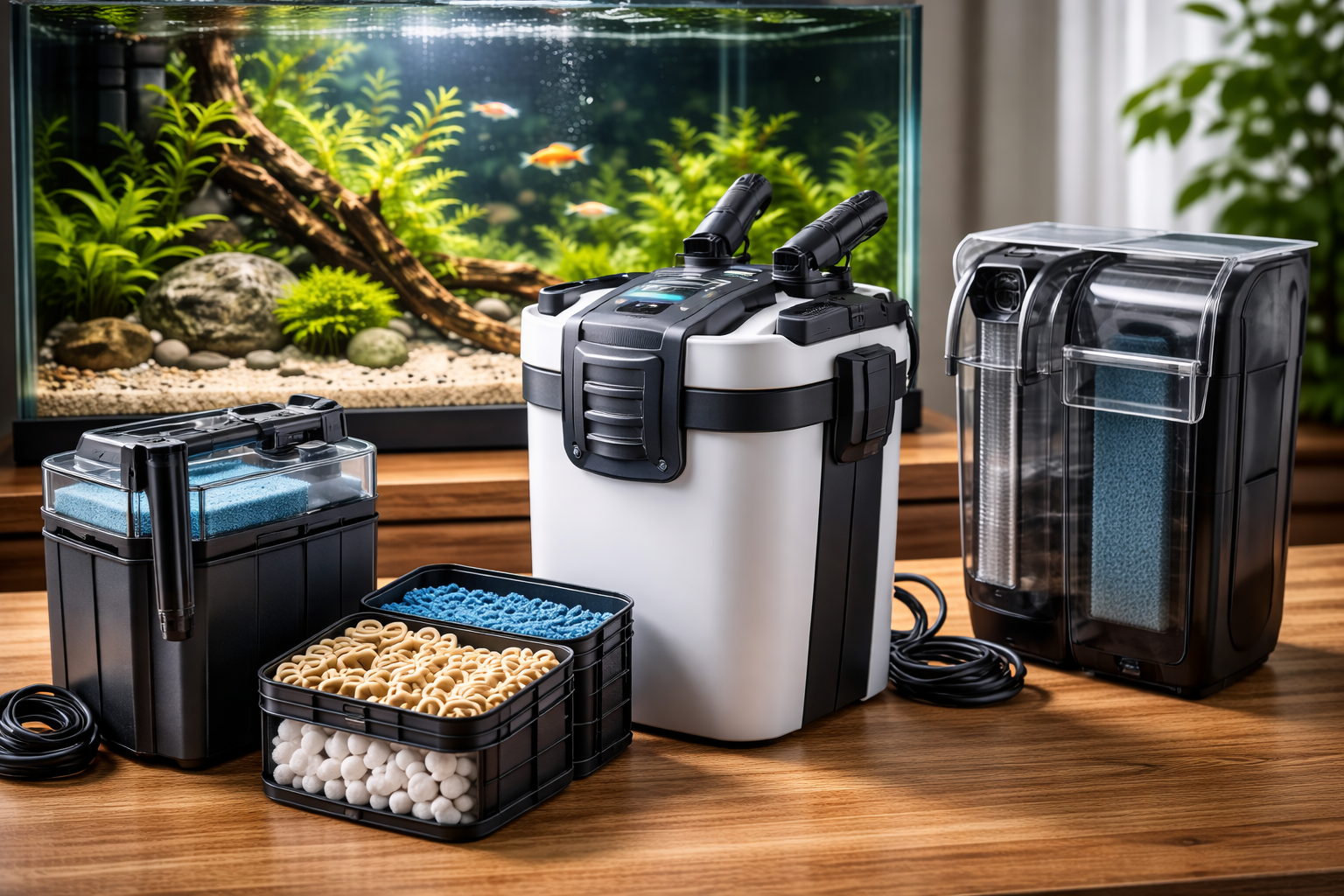
Canister Filters
These sit outside the tank and connect with intake and output tubes.
Best For:
- Large tanks
- Heavily stocked aquariums
Pros:
- Powerful filtration
- Large media capacity
- Quiet operation
Cons:
- Higher cost
- More complex maintenance
Internal Filters
Placed inside the aquarium.
Best For:
- Small tanks
- Quarantine tanks
Pros:
Cons:
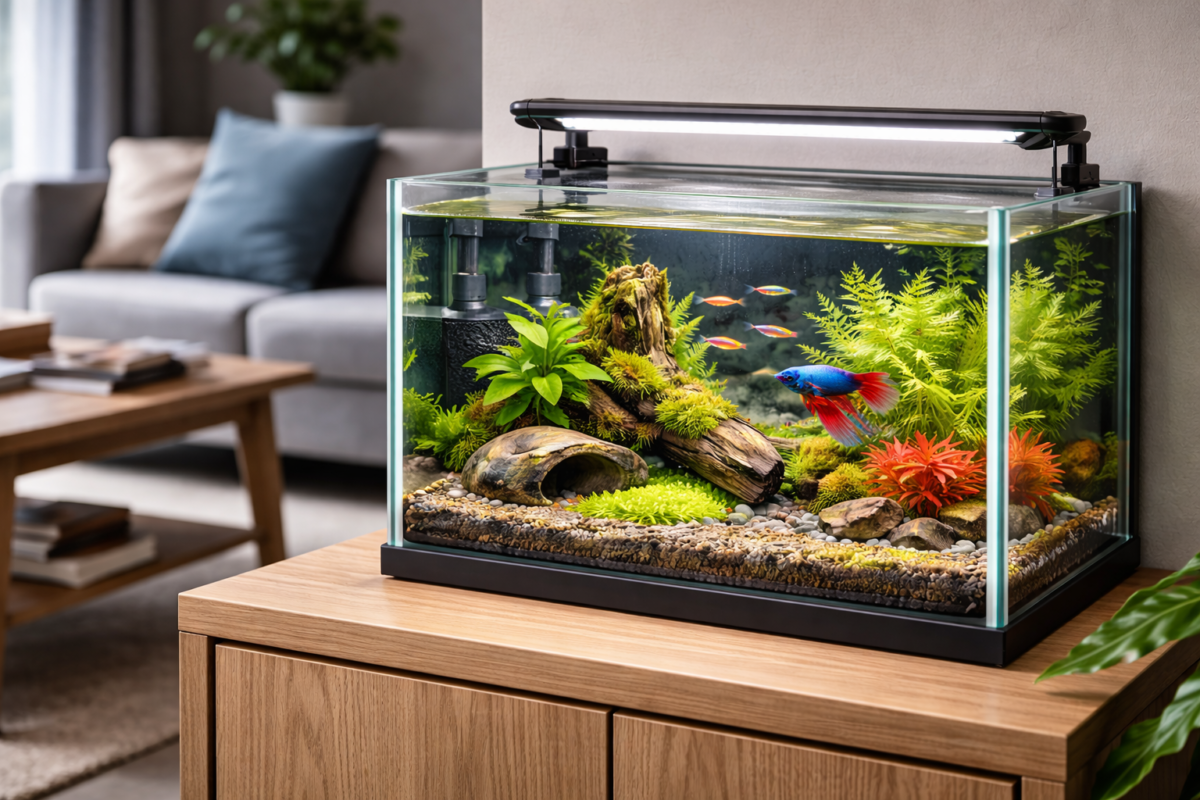
Sponge Filters
Air-driven filters that use foam to trap debris and support bacteria.
Best For:
- Fry tanks
- Betta tanks
- Shrimp tanks
Pros:
- Gentle flow
- Excellent biological filtration
- Budget-friendly
Cons:
- Limited mechanical filtration
Step 3: Consider Your Fish Species
Not all fish like strong currents.
Fish That Prefer Low Flow
Fish That Prefer Higher Flow
- Goldfish
- Cichlids
- Active schooling fish
Match the filter’s output to your fish’s natural habitat.
Step 4: Freshwater vs. Saltwater
Saltwater tanks require stronger filtration and often additional equipment.
Saltwater setups may need:
- Protein skimmers
- Stronger mechanical filtration
- Advanced media
Freshwater tanks are generally easier and more forgiving for beginners.
Step 5: Noise Level
If your aquarium is in a bedroom or living area, noise matters.
- Canister filters are usually quieter.
- HOB filters may create waterfall sounds.
- Sponge filters produce soft bubbling noise.
Choose accordingly based on your home setup.
Step 6: Ease of Maintenance
A filter is only effective if maintained properly.
Maintenance Tips
- Rinse mechanical media monthly
- Never replace all biological media at once
- Clean intake tubes regularly
Look for filters with easy-access media compartments.
Step 7: Media Capacity
More media means better filtration.
Canister filters typically hold more:
- Sponges
- Bio rings
- Carbon
- Ceramic media
If you plan to heavily stock your tank, choose a filter with larger media capacity.
Step 8: Budget Considerations
Filters range widely in price.
Budget Option
- Sponge filter
- Basic HOB filter
Mid-Range
- Adjustable HOB filters
- Internal power filters
Premium
- Canister filters
- Smart filtration systems
Remember: investing in a good filter protects your fish and reduces long-term problems.
Signs Your Filter Is Not Adequate
Watch for:
- Cloudy water
- Ammonia spikes
- Strong odors
- Fish gasping at surface
- Frequent algae blooms
These may indicate insufficient filtration.
Common Beginner Mistakes
- Choosing a filter too small
- Replacing all filter media at once
- Turning filter off for long periods
- Overcleaning biological media
Beneficial bacteria are fragile — protect them.
Do You Need More Than One Filter?
In large tanks (75+ gallons), running two filters can:
- Improve circulation
- Provide backup
- Enhance biological stability
It’s not required but can be beneficial.
Final Thoughts
Choosing the right aquarium filter is essential for maintaining a healthy aquatic environment. Focus on:
- Proper tank size rating
- Suitable filter type
- Correct flow rate
- Ease of maintenance
- Fish species needs
A strong filtration system keeps water clear, toxins low, and fish thriving.
When in doubt, choose slightly more filtration than you think you need — your fish will thank you. 🐠


 Accessories & Others
 Apparel
 Beds & Furniture
 Cages & Accessories
 Carriers & Strollers
 Doors, Gates & Ramps
 Flea & Tick Control
 Grooming
 Litter & Housebreaking
 Memorials & Funerary
 Accessories & Others
 Apparel
 Beds & Furniture
 Cages & Accessories
 Carriers & Strollers
 Cat Doors,Steps, Nets.
 Collars, Harnesses & leashes
 Flea & Tick Control
 Grooming
 Cages& Accessories
 Cow Mastitis Detectors
 Ear Tags
 Aquarium Accessories
 Aquarium Cleaners
 Aquarium Decor
 Aquarium Lights
 Aquarium Pumps & Filter
 Aquariums & Fish Bowls
 Automatic Feeders