Proper storage of animal supplies is essential for maintaining farm efficiency, animal health, and overall safety. From feed and medicines to grooming tools and cleaning chemicals, every item on a farm must be stored correctly to prevent contamination, spoilage, theft, and accidents.
Poor storage practices can lead to wasted resources, reduced animal productivity, pest infestations, and even serious health risks. Implementing safe storage solutions helps farmers maintain organization, improve workflow, and ensure compliance with agricultural safety standards.
This guide explores the most effective storage solutions for modern farms, whether small-scale operations or large commercial livestock facilities.
Why Safe Storage Matters on Farms
Animal supplies often include:
- Livestock feed
- Veterinary medicines
- Supplements and minerals
- Cleaning chemicals
- Equipment and tools
- Bedding materials
Improper storage can cause:
- Mold growth in feed
- Medication contamination
- Rodent infestation
- Chemical exposure risks
- Financial losses
Safe storage protects both animals and farm workers while preserving the quality of supplies.
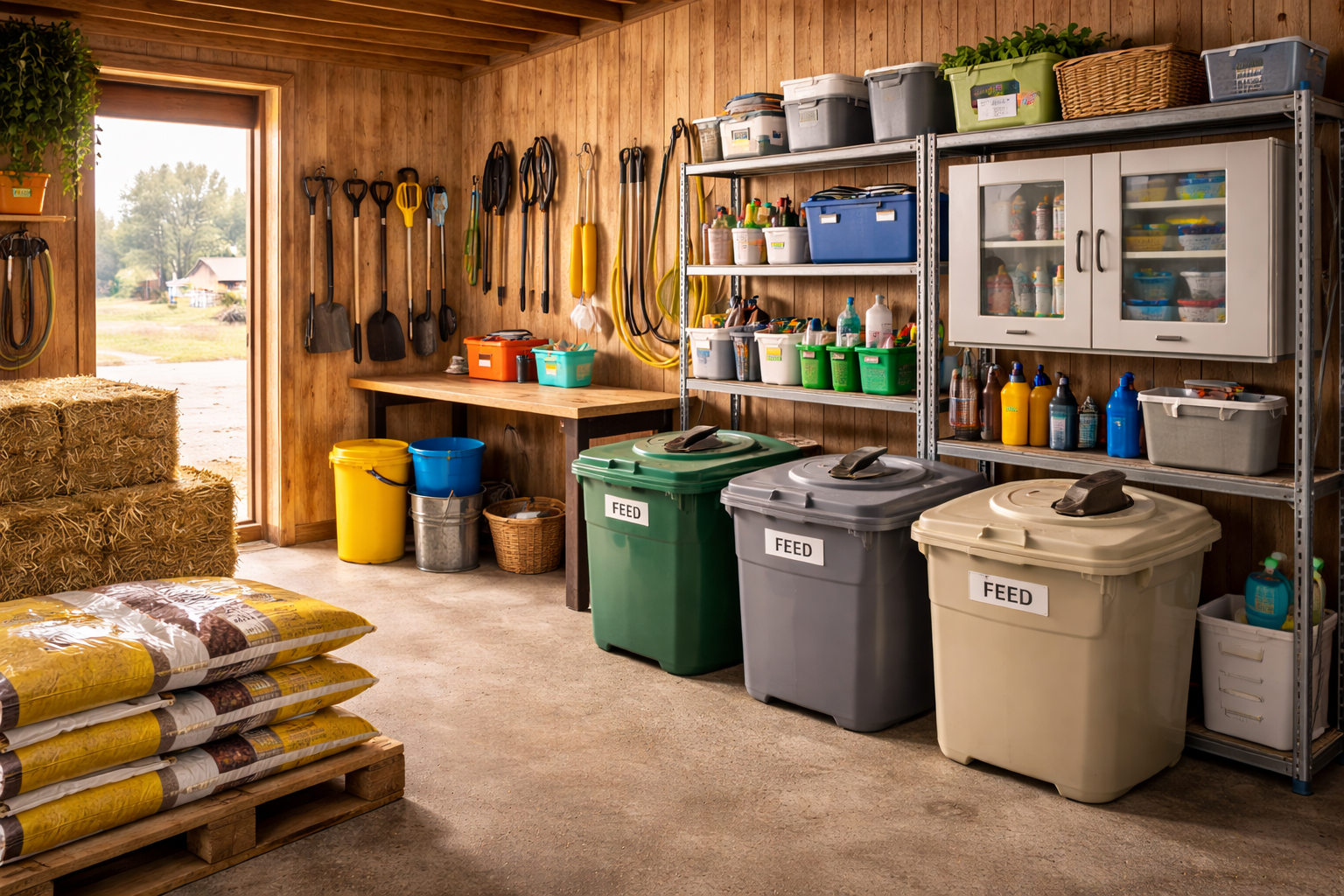
1. Airtight Feed Storage Bins
Feed is one of the most valuable resources on any farm. Exposure to moisture and pests can quickly ruin stored feed.
Benefits:
- Prevent mold growth
- Protect against rodents
- Maintain feed freshness
- Reduce waste
Metal or heavy-duty plastic containers with secure lids are ideal. Elevated bins help avoid moisture from ground contact.
2. Climate-Controlled Storage Rooms
Certain supplies, especially veterinary medicines and vaccines, require temperature control.
Ideal For:
- Vaccines
- Antibiotics
- Dewormers
- Supplements
Maintaining recommended temperature levels preserves medication effectiveness and prevents costly spoilage.
3. Lockable Medicine Cabinets
Medicines must be stored safely and securely to prevent accidental misuse.
Key Features:
- Lockable doors
- Clear labeling
- Segmented compartments
- Easy inventory tracking
This reduces the risk of unauthorized access and dosing errors.
4. Chemical Storage Units
Cleaning chemicals, disinfectants, and pesticides require strict storage procedures.
Safety Tips:
- Store separately from feed
- Use sealed containers
- Maintain ventilation
- Clearly label all products
Chemical storage areas should be well-marked and inaccessible to animals.
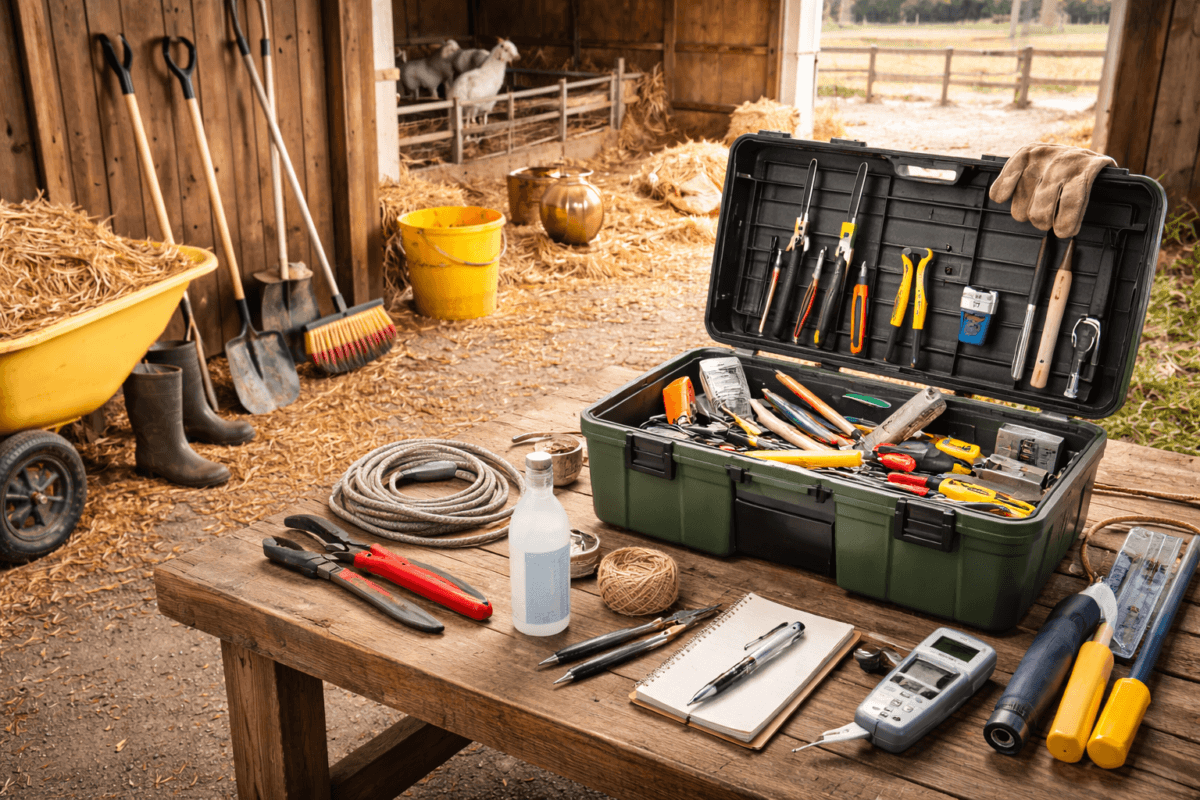
5. Tool Racks and Equipment Shelving
Disorganized tools slow down farm operations.
Benefits:
- Faster workflow
- Reduced equipment damage
- Improved safety
- Easy inventory management
Wall-mounted racks and heavy-duty shelving units maximize space and keep pathways clear.
6. Rodent-Proof Storage Solutions
Rodents are one of the biggest threats to stored feed.
Prevention Methods:
- Sealed metal bins
- Elevated platforms
- Regular inspections
- Pest control programs
Rodent-proof storage reduces contamination and feed loss.
7. Fire-Safe Storage for Flammable Materials
Fuels and flammable materials must be stored carefully.
Best Practices:
- Use fire-resistant cabinets
- Keep away from animal housing
- Install fire extinguishers nearby
- Follow local safety regulations
Proper storage reduces the risk of fire accidents.
Best Practices for Organizing Animal Supplies
1. Label Everything Clearly
Clear labels prevent confusion and ensure proper usage.
2. Follow FIFO (First In, First Out)
Use older supplies before new ones to reduce expiration waste.
3. Keep Storage Areas Dry and Ventilated
Moisture causes mold and structural damage.
4. Maintain Inventory Records
Track expiration dates and supply levels regularly.
5. Separate Categories
Never mix feed, medicines, and chemicals in the same storage space.
Storage Solutions for Different Farm Sizes
Small Farms
- Plastic airtight containers
- Basic shelving units
- Portable storage sheds
Medium Farms
- Dedicated storage rooms
- Lockable cabinets
- Larger feed bins
Large Commercial Farms
- Climate-controlled warehouses
- Automated inventory systems
- Large silos
- Security monitoring systems
Choosing the right solution depends on farm size, livestock type, and budget.
Common Storage Mistakes to Avoid
- Storing feed directly on the floor
- Mixing chemicals with animal supplements
- Ignoring expiration dates
- Poor ventilation
- Lack of pest control
Avoiding these mistakes improves long-term farm sustainability.
Long-Term Benefits of Safe Storage
Investing in proper storage solutions provides:
- Reduced feed waste
- Improved medication effectiveness
- Lower pest damage
- Better farm organization
- Increased operational efficiency
- Enhanced safety for workers and animals
Well-organized storage directly supports productivity and profitability.
Sustainable Storage Practices
Modern farms are increasingly adopting eco-friendly solutions such as:
- Solar-powered storage ventilation
- Recyclable storage bins
- Rainproof insulated sheds
- Smart inventory management systems
Sustainable storage helps reduce environmental impact while maintaining efficiency.
Conclusion
Safe storage solutions for animal supplies are essential for maintaining hygiene, protecting investments, and ensuring animal health. From airtight feed bins and climate-controlled medicine rooms to fire-safe cabinets and organized tool racks, each solution plays a critical role in farm management.
By implementing structured storage systems and following best practices, farmers can minimize waste, prevent contamination, and create a safer working environment. Organized storage is not just about neatness—it is about protecting your farm’s productivity and long-term success.


 Accessories & Others
 Apparel
 Beds & Furniture
 Cages & Accessories
 Carriers & Strollers
 Doors, Gates & Ramps
 Flea & Tick Control
 Grooming
 Litter & Housebreaking
 Memorials & Funerary
 Accessories & Others
 Apparel
 Beds & Furniture
 Cages & Accessories
 Carriers & Strollers
 Cat Doors,Steps, Nets.
 Collars, Harnesses & leashes
 Flea & Tick Control
 Grooming
 Cages& Accessories
 Cow Mastitis Detectors
 Ear Tags
 Aquarium Accessories
 Aquarium Cleaners
 Aquarium Decor
 Aquarium Lights
 Aquarium Pumps & Filter
 Aquariums & Fish Bowls
 Automatic Feeders