Indoor cats may live safer lives than outdoor cats, but they still have strong natural instincts to climb, scratch, perch, and observe from above. Without proper enrichment, indoor cats can become bored, anxious, or destructive.
A cat tree is one of the best investments you can make for your indoor feline. It provides vertical space, scratching surfaces, cozy hideouts, and exercise—all in one structure.
In this complete guide, we’ll explore the best cat trees for indoor cats, what features to look for, and how to choose the perfect one for your home.
Why Indoor Cats Need a Cat Tree
Cats are natural climbers and hunters. In the wild, they climb trees to:
- Observe surroundings
- Escape threats
- Rest safely
- Sharpen claws
Indoor environments lack these natural opportunities. A cat tree fulfills these instincts.
Benefits of Cat Trees
1. Encourages Exercise
Climbing and jumping between levels helps:
- Maintain healthy weight
- Improve muscle tone
- Prevent obesity
Especially important for indoor cats.
2. Provides Vertical Territory
Cats feel safer when elevated. Vertical space reduces stress and promotes confidence.
Multi-cat households benefit greatly from vertical territory separation.
3. Protects Furniture
Cat trees include scratching posts that:
- Satisfy scratching instincts
- Reduce damage to sofas and carpets
Look for sisal-wrapped posts.
4. Reduces Boredom
Cat trees provide:
- Perches
- Hideouts
- Hanging toys
- Platforms
Mental stimulation keeps cats happy and calm.
Types of Cat Trees
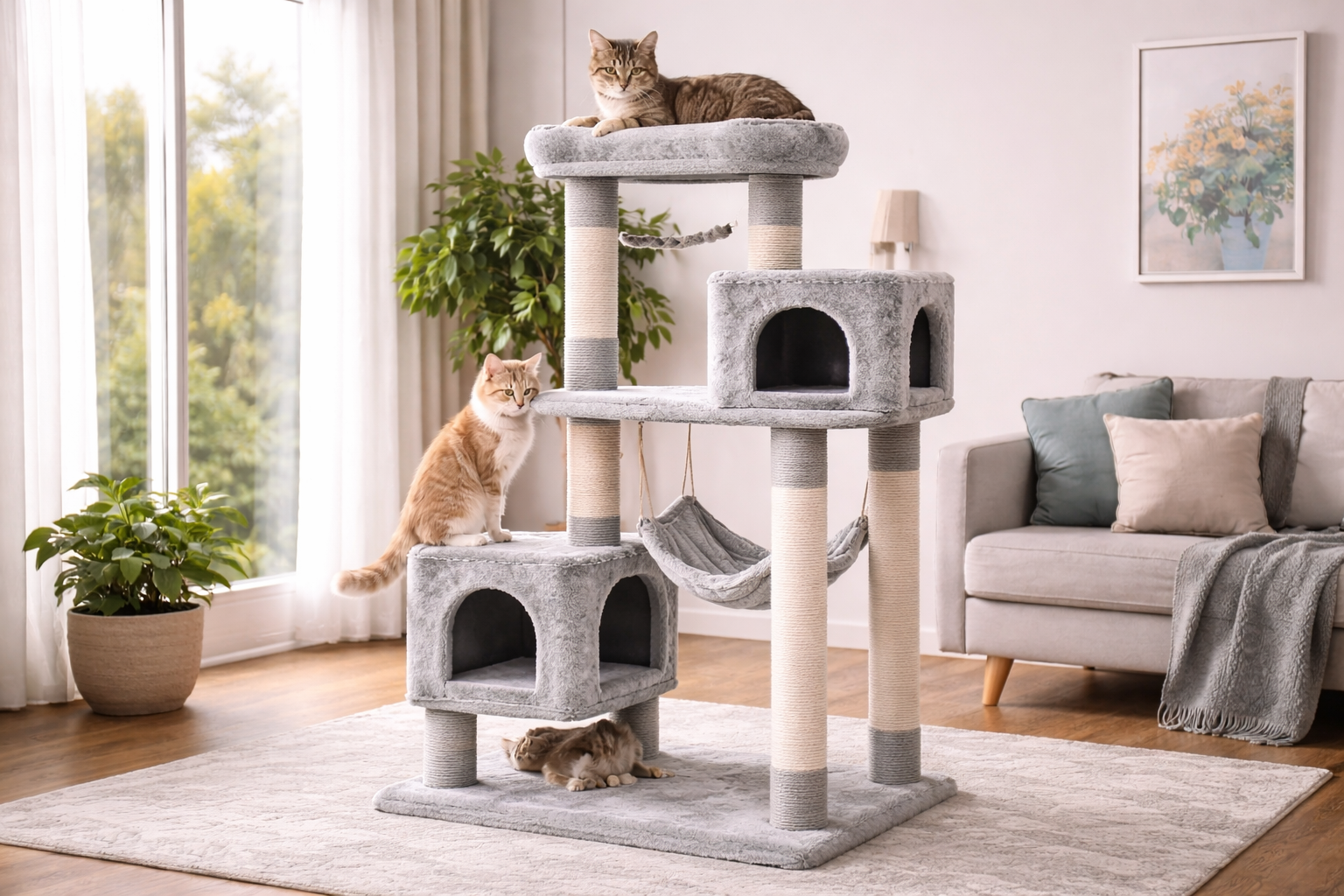
1. Multi-Level Cat Trees
These include:
- Several platforms
- Scratching posts
- Condos or cubbies
Ideal for active cats who love climbing.
2. Compact Cat Trees
Perfect for:
- Small apartments
- Single cats
- Limited space
Compact but functional.
3. Floor-to-Ceiling Cat Trees
Tall designs that anchor between floor and ceiling.
Best for:
- Highly energetic cats
- Homes with limited floor space
4. Wall-Mounted Cat Trees
Minimalist and modern option.
Advantages:
- Space-saving
- Customizable
- Stylish appearance
Requires secure wall installation.
5. Window Perch Cat Trees
Cats love watching outside.
Window-mounted trees provide:
- Sunbathing spots
- Entertainment
- Natural stimulation
Key Features to Look For
1. Stability
A cat tree must be sturdy.
Look for:
- Wide base
- Solid wood construction
- Anti-tip hardware
Unstable trees can cause injuries.
2. Height
Most cats prefer elevated perches.
Ideal height:
- 4–6 feet for active cats
- Taller options for large spaces
3. Scratching Material
Best materials:
- Natural sisal rope
- Thick carpet
- Durable fabric
Avoid flimsy cardboard-only posts.
4. Comfort
Perches should include:
- Soft padding
- Cozy hideouts
- Hammocks
Cats nap up to 16 hours daily.
5. Size Suitability
Large cats need:
- Wider platforms
- Reinforced posts
- Extra stability
Small cats can use more compact trees.
Best Cat Trees for Small Apartments
If space is limited:
- Choose vertical designs
- Consider corner placement
- Look for slim profiles
- Opt for wall-mounted shelves
Vertical space maximizes small rooms.
Best Cat Trees for Large Cats
Breeds like Maine Coons require:
- Extra-wide perches
- Thicker scratching posts
- Heavy-duty construction
Always check weight capacity.
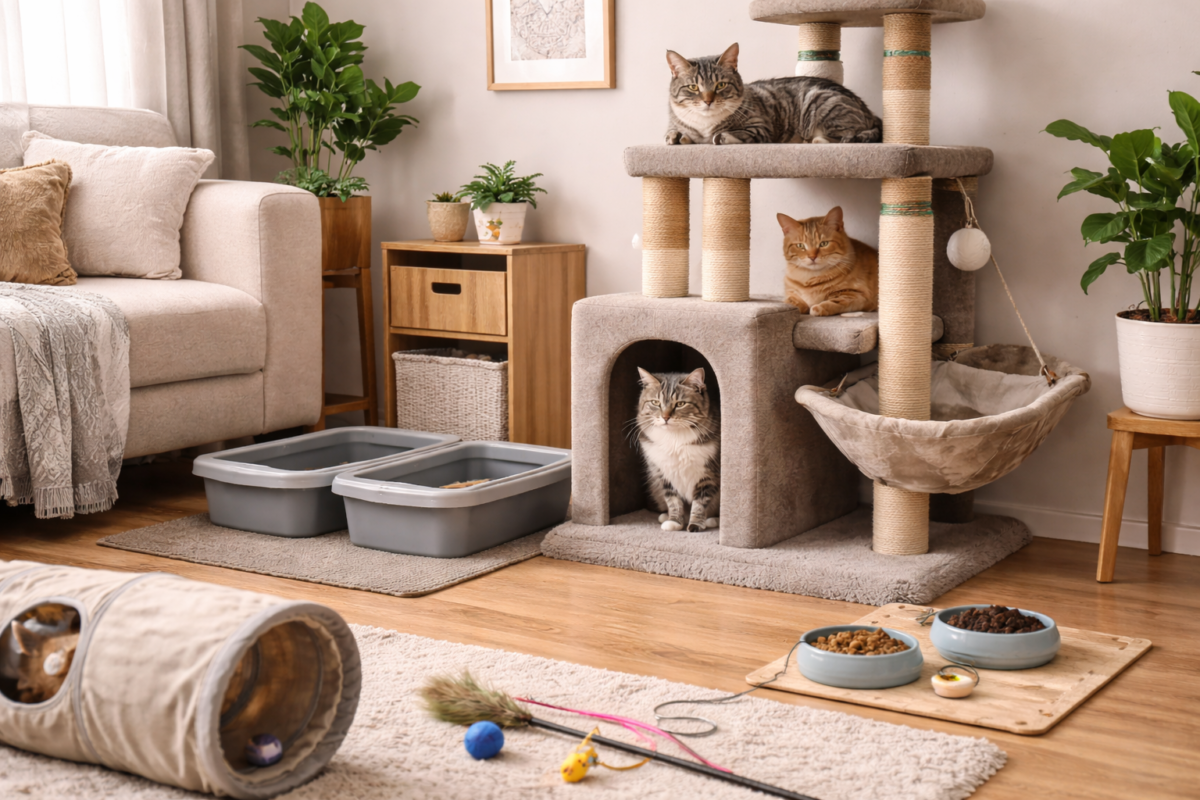
Best Cat Trees for Multi-Cat Homes
Multi-cat households need:
- Multiple platforms
- Separate hideouts
- Several scratching posts
This reduces territorial disputes.
Where to Place a Cat Tree
Best locations:
- Near a window
- In living room corner
- Close to family activity
Avoid isolating the cat tree in unused rooms.
Cats enjoy observing their environment.
How to Encourage Your Cat to Use a Cat Tree
Some cats hesitate initially.
Tips:
- Place treats on platforms
- Sprinkle catnip
- Use interactive toys
- Reward positive behavior
Patience is key.
How Often Should You Replace a Cat Tree?
Replace when you notice:
- Worn-out scratching posts
- Loose platforms
- Unstable base
- Torn fabric
High-quality trees can last several years.
Are Expensive Cat Trees Worth It?
Premium cat trees:
- Offer better durability
- Use higher-quality materials
- Last longer
- Provide more stability
Cheap trees may wobble and wear quickly.
Investing once often saves money long-term.
Cleaning and Maintenance Tips
- Vacuum weekly
- Tighten screws regularly
- Spot clean fabric
- Replace scratching rope when worn
Maintenance extends lifespan.
Alternatives to Traditional Cat Trees
If a full tree isn’t possible:
- Cat shelves
- Scratching posts
- Window hammocks
- Cat towers
However, full cat trees offer the most enrichment.
Signs Your Cat Needs More Vertical Space
- Climbing furniture
- Scratching walls
- Restlessness
- Aggressive behavior
- Excess weight
A cat tree can address many behavioral issues.
Final Thoughts
Indoor cats thrive when their natural instincts are supported. The best cat trees provide climbing opportunities, scratching surfaces, cozy resting spots, and vertical territory.
When choosing a cat tree, focus on stability, height, comfort, and durability. Whether you live in a small apartment or a large home, there’s a perfect cat tree to fit your space and your cat’s personality.
A well-chosen cat tree keeps your indoor cat active, happy, and mentally stimulated—making it one of the most valuable additions to your home.


 Accessories & Others
 Apparel
 Beds & Furniture
 Cages & Accessories
 Carriers & Strollers
 Doors, Gates & Ramps
 Flea & Tick Control
 Grooming
 Litter & Housebreaking
 Memorials & Funerary
 Accessories & Others
 Apparel
 Beds & Furniture
 Cages & Accessories
 Carriers & Strollers
 Cat Doors,Steps, Nets.
 Collars, Harnesses & leashes
 Flea & Tick Control
 Grooming
 Cages& Accessories
 Cow Mastitis Detectors
 Ear Tags
 Aquarium Accessories
 Aquarium Cleaners
 Aquarium Decor
 Aquarium Lights
 Aquarium Pumps & Filter
 Aquariums & Fish Bowls
 Automatic Feeders