Modern pet technology has made life easier for both cats and their owners. One of the most popular innovations in recent years is the automatic cat feeder. Designed to dispense food at scheduled times, these devices promise convenience, portion control, and consistent feeding routines.
But are automatic cat feeders really worth it? Do they improve your cat’s health, or can they cause new problems?
In this complete guide, we’ll break down how automatic cat feeders work, their advantages and disadvantages, and whether they’re the right choice for your feline companion.
What Is an Automatic Cat Feeder?
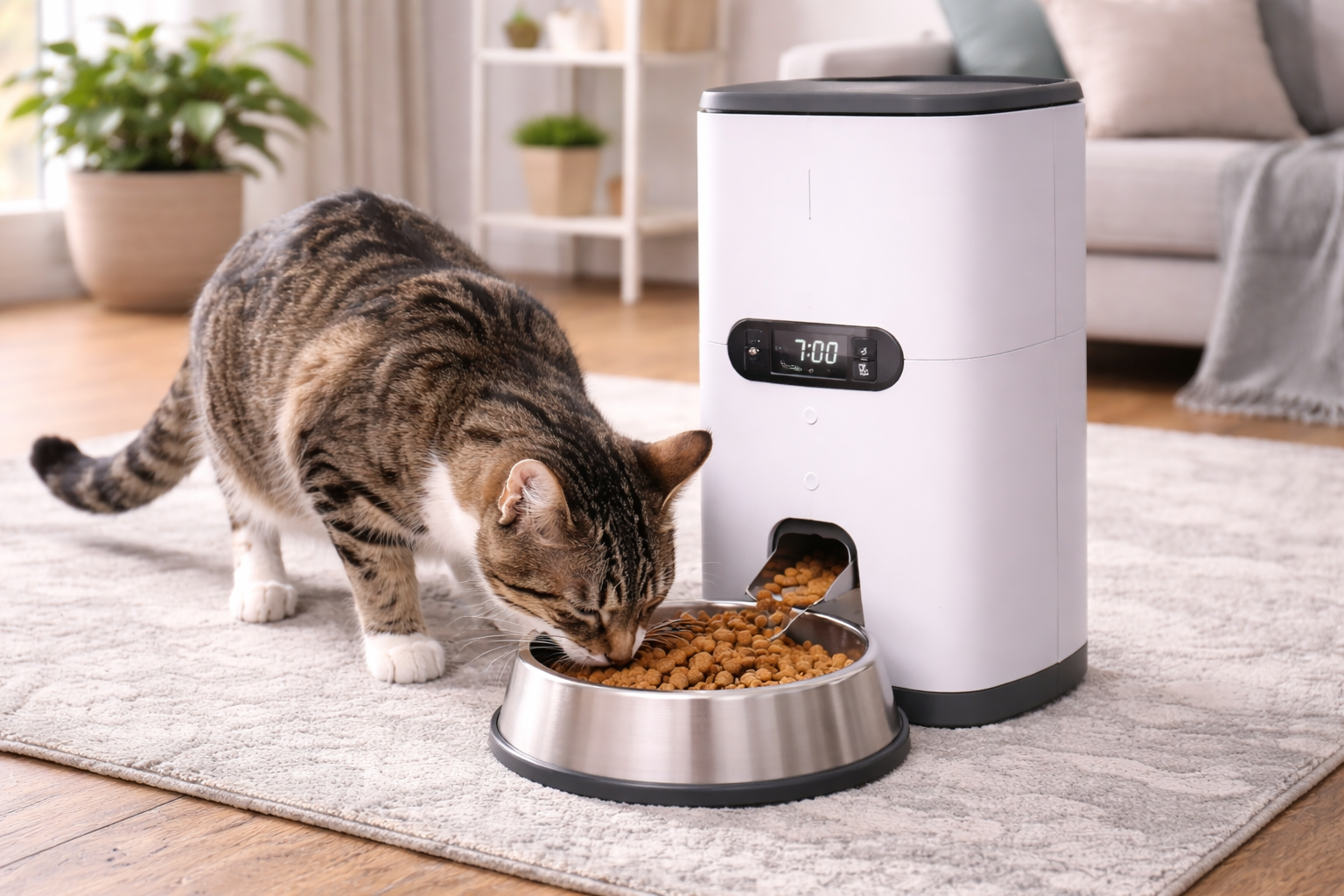
An automatic cat feeder is a device that dispenses pre-measured portions of food at scheduled times. Most models are designed for dry kibble, though some advanced feeders support wet food.
Common features include:
- Programmable timers
- Portion control settings
- Digital display
- Voice recording
- Smartphone app integration
- Backup battery power
They’re especially useful for busy pet owners or multi-cat households.
How Do Automatic Cat Feeders Work?
Most feeders operate using:
- A motorized dispenser
- Pre-set timer
- Measured food compartments
You fill the hopper with kibble, set feeding times, and the feeder releases food at scheduled intervals.
Smart feeders connect to Wi-Fi and allow control through mobile apps.
Pros of Automatic Cat Feeders
1. Consistent Feeding Schedule
Cats thrive on routine. Automatic feeders ensure meals are delivered at the same time every day—even when you’re not home.
This consistency can reduce anxiety and behavioral issues.
2. Portion Control
Overfeeding is a major cause of feline obesity. Automatic feeders allow precise portion measurement, which helps:
- Prevent overeating
- Maintain healthy weight
- Control calorie intake
Especially helpful for cats on diet plans.
3. Ideal for Busy Owners
If you work long hours or travel frequently, automatic feeders ensure your cat never misses a meal.
They’re perfect for:
- Early morning feedings
- Late-night schedules
- Short trips away
4. Reduces Begging Behavior
When food comes from a machine rather than directly from you, cats may stop associating you with mealtime.
This can reduce constant meowing for food.
5. Supports Multi-Meal Feeding
Cats benefit from smaller, frequent meals rather than one large feeding.
Automatic feeders make multiple daily portions easy.
Cons of Automatic Cat Feeders
1. Limited to Dry Food (Mostly)
Most automatic feeders are designed for kibble. Wet food models exist but require refrigeration and more maintenance.
Cats on wet or raw diets may not benefit as much.
2. Mechanical Malfunctions
Like any device, feeders can:
- Jam
- Malfunction
- Lose power
- Dispense incorrect portions
Battery backup is essential.
3. Less Human Interaction
Feeding time can be bonding time. Automatic feeders reduce direct interaction during meals.
While convenient, they shouldn’t replace quality time with your cat.
4. Initial Cost
Basic feeders are affordable, but smart models with Wi-Fi and cameras can be expensive.
However, the investment may be worthwhile for convenience.
5. Not Ideal for All Cats
Some cats:
- Break into feeders
- Tip them over
- Become frustrated
Very food-motivated cats may try to access extra portions.
Types of Automatic Cat Feeders
1. Gravity Feeders
Food refills automatically as bowl empties.
Pros:
- No electricity required
- Budget-friendly
Cons:
- No portion control
- Risk of overeating
Best for free-feeding cats.
2. Programmable Feeders
- Timed feeding schedule
- Portion measurement
- Battery-powered
Most popular option.
3. Smart Wi-Fi Feeders
- App-controlled
- Remote feeding
- Feeding history tracking
- Built-in cameras (some models)
Ideal for tech-savvy pet owners.
4. Wet Food Automatic Feeders
- Sealed compartments
- Ice packs
- Timed rotation
More complex but suitable for wet diets.
Are Automatic Feeders Good for Weight Management?
Yes.
When used correctly, they:
- Prevent overfeeding
- Maintain strict portion control
- Support weight-loss plans
However, feeding amounts must still align with veterinary recommendations.
Best Situations to Use Automatic Feeders
- Long workdays
- Shift work schedules
- Vacation backup feeding
- Multi-cat homes
- Early morning feeding
They offer flexibility and reliability.
Situations Where Automatic Feeders May Not Be Ideal
- Cats on prescription wet food
- Cats with special medical needs
- Extremely food-aggressive cats
- Homes with unreliable power supply
Always assess your cat’s individual needs.
Key Features to Look For
1. Portion Accuracy
Choose feeders with adjustable portion sizes.
2. Secure Lid
Prevents clever cats from opening the food hopper.
3. Anti-Jam Design
Reduces mechanical issues.
4. Backup Power
Battery backup ensures feeding continues during power outages.
5. Easy Cleaning
Removable bowls and washable components improve hygiene.
Tips for Introducing an Automatic Feeder
- Gradually transition
- Keep feeder in familiar feeding spot
- Monitor first few meals
- Continue bonding time
Cats adapt quickly with positive experiences.
Are Automatic Feeders Safe?
Yes—when high-quality models are used and properly maintained.
Always:
- Clean regularly
- Check battery levels
- Monitor food freshness
- Inspect for damage
Safety depends on maintenance.
Final Verdict: Are Automatic Cat Feeders Worth It?
Automatic cat feeders offer convenience, consistency, and portion control—making them highly beneficial for many cat owners.
However, they’re not a replacement for attention, care, and monitoring. They work best as a supplement to responsible pet ownership.
If you have a busy schedule, need structured feeding times, or want better portion control, an automatic feeder can be a smart investment.
When chosen carefully, automatic cat feeders help maintain routine, prevent overeating, and provide peace of mind—making mealtime easier for both you and your cat.


 Accessories & Others
 Apparel
 Beds & Furniture
 Cages & Accessories
 Carriers & Strollers
 Doors, Gates & Ramps
 Flea & Tick Control
 Grooming
 Litter & Housebreaking
 Memorials & Funerary
 Accessories & Others
 Apparel
 Beds & Furniture
 Cages & Accessories
 Carriers & Strollers
 Cat Doors,Steps, Nets.
 Collars, Harnesses & leashes
 Flea & Tick Control
 Grooming
 Cages& Accessories
 Cow Mastitis Detectors
 Ear Tags
 Aquarium Accessories
 Aquarium Cleaners
 Aquarium Decor
 Aquarium Lights
 Aquarium Pumps & Filter
 Aquariums & Fish Bowls
 Automatic Feeders