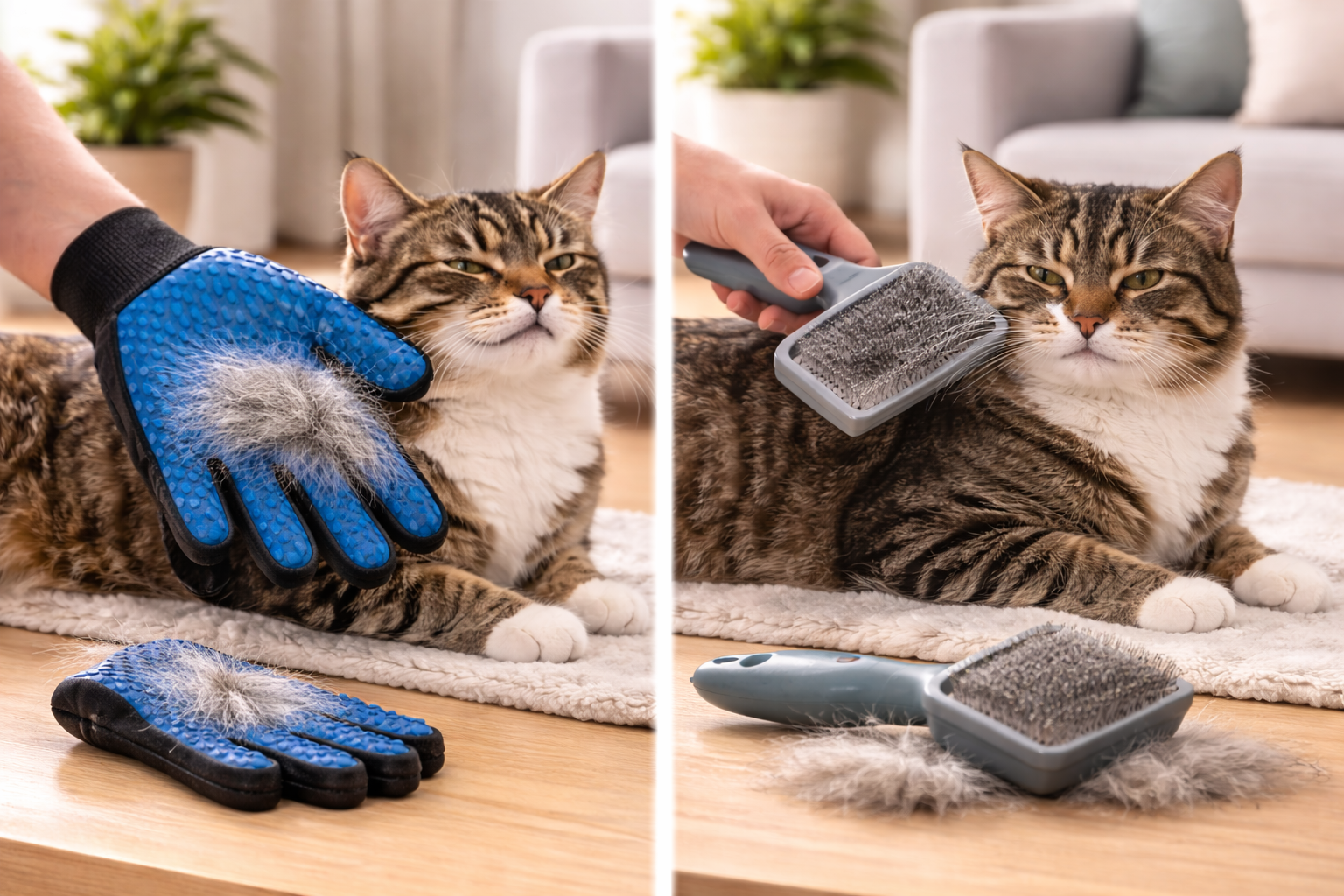
Grooming is an essential part of cat care. Regular brushing helps reduce shedding, prevent hairballs, improve coat health, and strengthen the bond between you and your feline friend. But when it comes to grooming tools, many cat owners wonder:
Should you choose grooming gloves or traditional brushes?
Both options have advantages and drawbacks depending on your cat’s coat type, temperament, and grooming needs. In this complete guide, we’ll compare cat grooming gloves vs brushes to help you decide which tool works best for your cat.
Why Regular Grooming Matters
Grooming provides multiple benefits:
Reduces loose fur
Minimizes hairballs
Distributes natural oils
Improves skin circulation
Prevents matting
Strengthens bonding
Even short-haired cats benefit from weekly grooming sessions.
What Are Cat Grooming Gloves?
Grooming gloves look like regular gloves but have rubber or silicone bristles on the palm side. When you pet your cat, the bristles collect loose fur.
They’re designed to feel like natural petting.
Pros of Cat Grooming Gloves
1. Gentle and Comfortable
Many cats tolerate gloves better than brushes because it feels like being petted rather than groomed.
Gloves mostly remove top-layer fur and may not reach dense undercoats.
2. Not Ideal for Severe Matting
Long-haired cats with tangles require more specialized tools.
3. May Require More Time
You may need multiple passes to remove significant shedding.
What Are Cat Grooming Brushes?
Traditional grooming brushes come in various types:
Slicker brushes
Bristle brushes
Deshedding tools
Pin brushes
Each serves a specific purpose depending on coat type.
Pros of Cat Grooming Brushes
1. More Effective for Heavy Shedding
Slicker brushes and deshedding tools remove:
Loose undercoat
Deep shedding
Thick fur buildup
Ideal during seasonal shedding.
2. Prevents Matting
Long-haired cats benefit greatly from brushes that:
Detangle fur
Remove knots
Prevent mats
3. Faster Fur Removal
Brushes can remove large amounts of fur quickly.
4. Coat-Specific Options
Different brushes suit different coat types:
Short hair
Long hair
Double coat
Curly coat
Cons of Cat Grooming Brushes
1. Some Cats Dislike Them
Sensitive cats may find brushes uncomfortable.
2. Risk of Over-Brushing
Incorrect technique can cause skin irritation.
3. Requires Proper Technique
Unlike gloves, brushes require gentle strokes in the correct direction.
Gloves vs Brushes: Side-by-Side Comparison
Feature
Grooming Gloves
Brushes
Ease of use
Very easy
Moderate
Comfort level
High
Varies
Deep undercoat removal
Low
High
Mat prevention
Limited
Excellent
Best for short hair
Yes
Yes
Best for long hair
Limited
Yes
Shedding control
Moderate
Strong
Best Option Based on Coat Type
Short-Haired Cats
Grooming gloves are often enough
Soft bristle brushes also work well
Long-Haired Cats
Slicker brush recommended
Gloves can be used as supplement
Double-Coated Cats
Deshedding brush required
Gloves alone may not remove undercoat
Sensitive or Anxious Cats
Start with grooming gloves
Gradually introduce soft brush
When to Use Both
Many cat owners combine tools.
Example routine:
Use brush for deep fur removal
Finish with grooming glove for smoothing
This provides complete grooming coverage.
How Often Should You Groom?
General guideline:
Short hair: 1–2 times per week
Long hair: 3–4 times per week
Heavy shedders: Daily during shedding season
Consistency reduces hair buildup.
Tips for Stress-Free Grooming
Choose calm time of day
Use treats as reward
Keep sessions short
Avoid pulling fur
Stop if cat becomes agitated
Positive experiences encourage cooperation.
Signs Your Cat Needs Better Grooming
Excessive shedding
Frequent hairballs
Visible tangles
Greasy coat
Dull fur
Proper grooming improves coat quality.
Are Expensive Grooming Tools Worth It?
Higher-quality tools:
Last longer
Remove fur more efficiently
Are safer on skin
Cheap tools may:
Break easily
Scratch skin
Be ineffective
Investing in quality tools improves results.
Which Is Better: Final Verdict
There isn’t a one-size-fits-all answer.
Choose grooming gloves if:
Your cat dislikes brushes
You have a short-haired cat
You want gentle maintenance grooming
Choose grooming brushes if:
Your cat has long or thick fur
You need serious shedding control
You want to prevent mats
For best results, consider using both tools together.
Final Thoughts
Both cat grooming gloves and brushes have unique advantages. Gloves provide comfort and ease, while brushes offer deeper cleaning and better shedding control.
The best choice depends on your cat’s coat type, temperament, and grooming needs. Understanding these factors helps you select the right tool and maintain a healthy, shiny coat.
Regular grooming not only reduces shedding and hairballs—it strengthens the bond between you and your cat.
Consistency, patience, and the right tool make all the difference.


 Accessories & Others
 Apparel
 Beds & Furniture
 Cages & Accessories
 Carriers & Strollers
 Doors, Gates & Ramps
 Flea & Tick Control
 Grooming
 Litter & Housebreaking
 Memorials & Funerary
 Accessories & Others
 Apparel
 Beds & Furniture
 Cages & Accessories
 Carriers & Strollers
 Cat Doors,Steps, Nets.
 Collars, Harnesses & leashes
 Flea & Tick Control
 Grooming
 Cages& Accessories
 Cow Mastitis Detectors
 Ear Tags
 Aquarium Accessories
 Aquarium Cleaners
 Aquarium Decor
 Aquarium Lights
 Aquarium Pumps & Filter
 Aquariums & Fish Bowls
 Automatic Feeders