Trimming your cat’s nails is one of the most important yet often overlooked parts of feline care. Overgrown claws can cause discomfort, accidental scratches, furniture damage, and even painful nail injuries.
Many cat owners feel nervous about trimming nails, worrying they might hurt their pet. The good news? With the right tools and proper technique, nail trimming can be quick, safe, and stress-free.
This complete guide will walk you through everything you need to know about cat nail clippers, safe trimming techniques, and how to make the process easier for both you and your cat.
Why Nail Trimming Is Important
Regular nail trimming helps:
- Prevent painful overgrowth
- Reduce furniture damage
- Avoid accidental scratches
- Protect skin from self-injury
- Improve comfort while walking
Indoor cats especially need regular trims since they don’t naturally wear down claws like outdoor cats.
How Often Should You Trim a Cat’s Nails?
Most cats need trimming every:
Kittens may require more frequent trimming as their nails grow quickly.
Signs it’s time for a trim:
- Clicking sound on hard floors
- Nails getting caught in fabric
- Visible sharp curved tips
Types of Cat Nail Clippers
1. Scissor-Style Clippers
Look like small scissors.
Pros:
- Easy to control
- Comfortable grip
- Ideal for beginners
Best for small to medium cats.
2. Guillotine-Style Clippers
These have a small hole where the nail is inserted, and a blade slices through.
Pros:
- Precise trimming
- Clean cut
Cons:
- Harder to use for beginners
- Blade needs regular replacement
3. Human Nail Clippers (Small Size)
Can work in emergencies.
However:
- Not specifically designed for cats
- May cause splitting
Dedicated cat clippers are safer.
Understanding Cat Nail Anatomy
Before trimming, it’s crucial to understand the “quick.”
The quick is:
- Pink area inside nail
- Contains blood vessels and nerves
Cutting into the quick causes:
- Bleeding
- Pain
- Fear of future trimming
Only trim the sharp white tip.
Step-by-Step Safe Nail Trimming Guide
Step 1: Choose the Right Time
Pick a calm moment:
- After playtime
- After meals
- When your cat is relaxed
Avoid trimming when your cat is hyper or anxious.
Step 2: Prepare Supplies
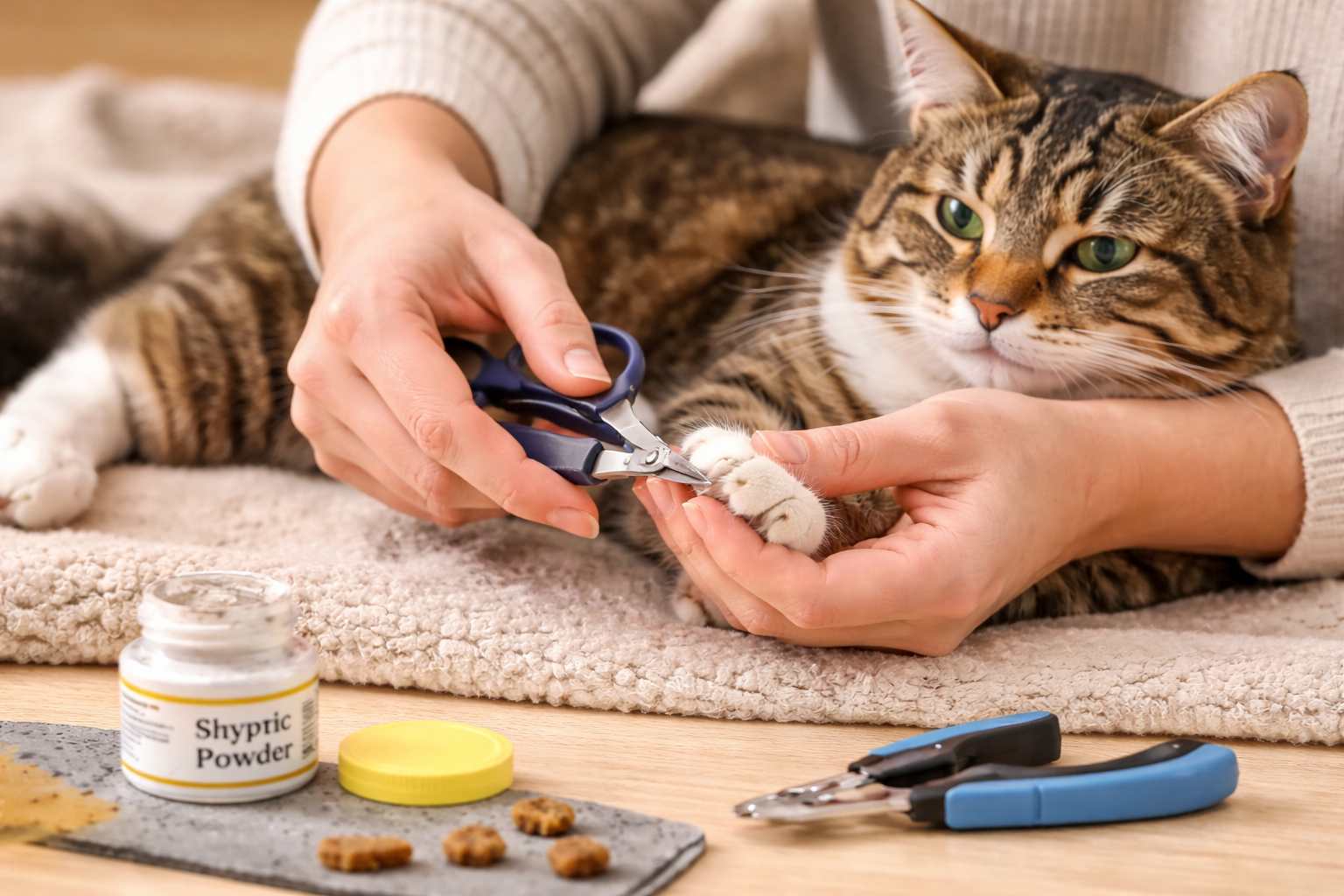
You’ll need:
- Cat nail clippers
- Styptic powder (in case of bleeding)
- Towel (if needed)
- Treats for reward
Preparation reduces stress.
Step 3: Position Your Cat Comfortably
Options include:
- Sitting on your lap
- Wrapping gently in towel (“kitty burrito”)
- Having a helper hold the cat
Ensure good lighting.
Step 4: Expose the Nail
Gently press your cat’s paw pad to extend the claw.
You’ll see:
- Clear outer tip
- Pink quick inside
Only cut the sharp end.
Step 5: Trim Carefully
Cut:
- About 1–2 mm from tip
- At slight angle
- Avoid cutting too deep
Trim one paw at a time.
Step 6: Reward Immediately
Give treats and praise after trimming.
Positive reinforcement builds trust.
What If You Cut the Quick?
Accidents happen.
If bleeding occurs:
- Stay calm
- Apply styptic powder
- Apply gentle pressure
- Monitor for continued bleeding
Bleeding usually stops within minutes.
If bleeding persists, contact a vet.
How Many Nails Should You Trim at Once?
If your cat resists:
- Trim 1–2 nails per session
- Continue later
It’s better to go slowly than force the process.
Tips for Nervous or Aggressive Cats
- Start handling paws early (kitten stage)
- Use calming voice
- Keep sessions short
- Avoid punishment
- Use treats consistently
Patience is key.
Signs Nails Are Too Long
- Curling inward
- Snagging on carpets
- Clicking sound when walking
- Paw sensitivity
Severely overgrown nails may require vet assistance.
Should You Use Nail Grinders?
Pet nail grinders:
- Smooth rough edges
- Reduce splintering
However:
- Noise may scare cats
- Requires training
Clippers are usually simpler.
Indoor vs Outdoor Cats
Outdoor cats naturally wear down claws through climbing and scratching.
Indoor cats rely more on:
- Scratching posts
- Regular trimming
Even outdoor cats may need occasional trims.
Common Mistakes to Avoid
❌ Cutting too close to quick
❌ Forcing struggling cat
❌ Using dull clippers
❌ Skipping regular trimming
❌ Ignoring nail growth
Consistency prevents bigger issues.
When to See a Veterinarian
Consult a vet if:
- Nails are severely overgrown
- You’re unsure about trimming
- Cat has paw injury
- Nails are thick or brittle
Professional grooming is always an option.
Training Your Cat to Accept Nail Trimming
Start gradually:
- Touch paws daily
- Extend claws gently
- Introduce clippers without cutting
- Reward calm behavior
Desensitization builds comfort.
Benefits of Regular Nail Care
- Reduces accidental scratches
- Protects furniture
- Improves comfort
- Prevents painful ingrown claws
- Keeps paws healthy
Short nails benefit both cat and owner.
Final Thoughts
Trimming your cat’s nails may seem intimidating at first, but with the right clippers, proper technique, and patience, it becomes a simple part of routine care.
The key is understanding nail anatomy, cutting only the sharp tips, and keeping sessions calm and positive.
Regular trimming keeps your cat comfortable, protects your home, and prevents painful nail issues in the future.
When done safely and gently, nail care strengthens trust and makes grooming a stress-free experience for both you and your feline companion.


 Accessories & Others
 Apparel
 Beds & Furniture
 Cages & Accessories
 Carriers & Strollers
 Doors, Gates & Ramps
 Flea & Tick Control
 Grooming
 Litter & Housebreaking
 Memorials & Funerary
 Accessories & Others
 Apparel
 Beds & Furniture
 Cages & Accessories
 Carriers & Strollers
 Cat Doors,Steps, Nets.
 Collars, Harnesses & leashes
 Flea & Tick Control
 Grooming
 Cages& Accessories
 Cow Mastitis Detectors
 Ear Tags
 Aquarium Accessories
 Aquarium Cleaners
 Aquarium Decor
 Aquarium Lights
 Aquarium Pumps & Filter
 Aquariums & Fish Bowls
 Automatic Feeders