Living with multiple cats can be incredibly rewarding—but it also requires thoughtful planning. Unlike dogs, cats are territorial by nature. When more than one cat shares a space, competition for resources can lead to stress, tension, and behavioral problems.
The key to harmony in a multi-cat home is proper setup. With the right accessories and environment, you can prevent conflict, reduce stress, and ensure every cat feels secure.
In this complete guide, we’ll explore the must-have accessories every multi-cat household needs.
Understanding Multi-Cat Dynamics
Cats establish social hierarchies, even in friendly households. Problems arise when:
- Resources are limited
- Cats compete for territory
- Litter boxes are shared improperly
- Hiding spaces are unavailable
Providing sufficient resources prevents most conflicts.
The Golden Rule: One Per Cat + One Extra
For many essentials, follow this formula:
Number of Cats + 1
This applies to:
- Litter boxes
- Food stations
- Water bowls
- Scratching posts
More resources mean less competition.
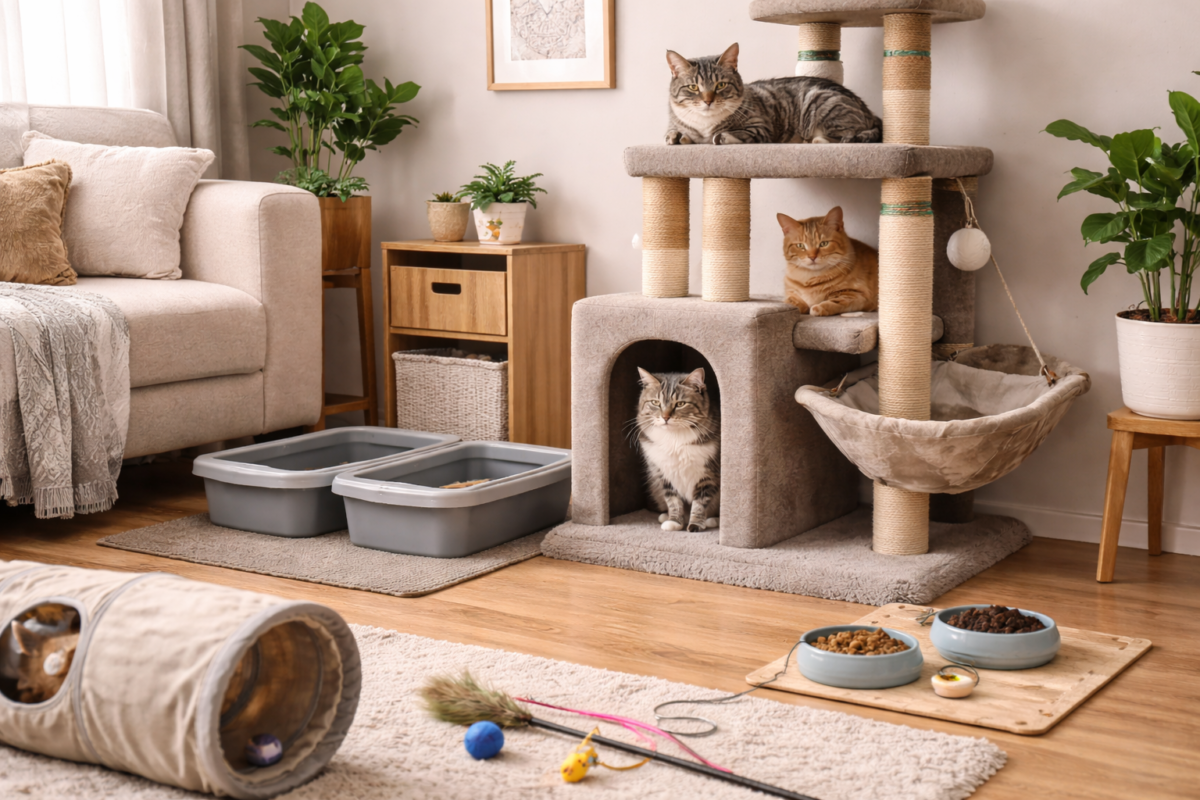
1. Multiple Litter Boxes
Litter box issues are the number one cause of stress in multi-cat homes.
Best Practices:
- One box per cat + one extra
- Place boxes in different locations
- Avoid lining them side by side
- Scoop daily
Avoid forcing cats to share a single box.
2. Separate Feeding Stations
Competition over food can create tension.
Tips:
- Feed in different rooms if possible
- Use elevated bowls for shy cats
- Monitor meal times
- Avoid forcing cats to eat side by side
Slow feeder bowls can also reduce food aggression.
3. Multiple Water Sources
Cats may avoid shared water bowls.
Provide:
- Several bowls
- Water fountains
- Different locations
Hydration improves health and reduces conflict.
4. Vertical Spaces & Cat Trees
Vertical territory reduces tension.
Cats feel safer when elevated.
Must-haves:
- Multi-level cat trees
- Wall-mounted shelves
- Window perches
Vertical space allows cats to:
- Escape tension
- Observe safely
- Claim territory
5. Multiple Scratching Posts
Scratching relieves stress and marks territory.
Provide:
- Vertical posts
- Horizontal scratch pads
- Sisal and cardboard options
Place near:
- Sleeping areas
- Entryways
- High-traffic zones
6. Separate Resting Spots
Cats need private sleeping areas.
Offer:
- Multiple beds
- Covered hideouts
- Quiet corners
Avoid forcing cats to share beds.
7. Interactive Toys & Enrichment
Mental stimulation reduces aggression.
Provide:
- Wand toys
- Puzzle feeders
- Tunnels
- Ball tracks
Rotate toys weekly to prevent boredom.
8. Calming Accessories
For homes with tension, consider:
- Pheromone diffusers
- Calming collars
- Soft background music
These help reduce anxiety and territorial stress.
9. Multiple Hideouts
Shy cats need safe retreats.
Include:
- Cat caves
- Covered beds
- Closet access (safe & supervised)
Providing escape options prevents confrontations.
10. Grooming Tools for Multiple Cats
Shedding increases with more cats.
Keep:
- Multiple brushes
- Nail clippers
- Lint rollers
Regular grooming reduces tension and fur buildup.
Signs Your Multi-Cat Setup Needs Improvement
Watch for:
- Hissing
- Blocking access to litter box
- Food guarding
- Excessive hiding
- Over-grooming
- Urine marking
These indicate stress.
Room-by-Room Resource Distribution
Avoid clustering resources in one location.
Instead:
- Spread litter boxes
- Place food in separate zones
- Add vertical options in multiple rooms
Distribution reduces territorial control.
Introducing New Cats to the Household
If adding a new cat:
- Use gradual introduction
- Keep separate initially
- Swap scents
- Supervise early interactions
Proper introduction prevents long-term tension.
Importance of Playtime in Multi-Cat Homes
Schedule:
- Individual play sessions
- Group play sessions
- Interactive engagement
This prevents competition for attention.
How Big Should Your Home Be for Multiple Cats?
Space matters—but vertical space matters more.
Even smaller homes can work if you provide:
- Climbing areas
- Hiding spots
- Separate resource zones
It’s about smart design, not just square footage.
Budget vs Premium Accessories
You don’t need luxury products—but quality matters.
Invest in:
- Durable scratching posts
- Stable cat trees
- High-quality litter boxes
Cheap products wear out quickly in multi-cat homes.
Cleaning & Maintenance
More cats mean more cleaning.
Routine includes:
- Daily litter scooping
- Weekly deep cleaning
- Frequent vacuuming
- Regular bedding washes
Clean spaces reduce territorial stress.
Common Mistakes to Avoid
❌ One litter box for multiple cats
❌ Feeding from single bowl
❌ No vertical space
❌ Ignoring early tension signs
❌ Forcing cats to share beds
Prevention is easier than correction.
Ideal Multi-Cat Setup Summary
For 3 cats, ideal setup includes:
- 4 litter boxes
- 3–4 feeding stations
- 2+ cat trees
- Multiple scratchers
- Several resting areas
- Toys and enrichment
More resources equal less competition.
Final Thoughts
A multi-cat household can be peaceful, playful, and joyful—with the right preparation. By providing adequate resources, vertical territory, separate feeding areas, and enrichment tools, you create an environment where each cat feels secure.
The secret to harmony isn’t forcing cats to share—it’s giving them enough space and options so they don’t have to compete.
With thoughtful planning and the right must-have accessories, your multi-cat home can thrive with minimal stress and maximum happiness.
Happy cats make a happy home.


 Accessories & Others
 Apparel
 Beds & Furniture
 Cages & Accessories
 Carriers & Strollers
 Doors, Gates & Ramps
 Flea & Tick Control
 Grooming
 Litter & Housebreaking
 Memorials & Funerary
 Accessories & Others
 Apparel
 Beds & Furniture
 Cages & Accessories
 Carriers & Strollers
 Cat Doors,Steps, Nets.
 Collars, Harnesses & leashes
 Flea & Tick Control
 Grooming
 Cages& Accessories
 Cow Mastitis Detectors
 Ear Tags
 Aquarium Accessories
 Aquarium Cleaners
 Aquarium Decor
 Aquarium Lights
 Aquarium Pumps & Filter
 Aquariums & Fish Bowls
 Automatic Feeders