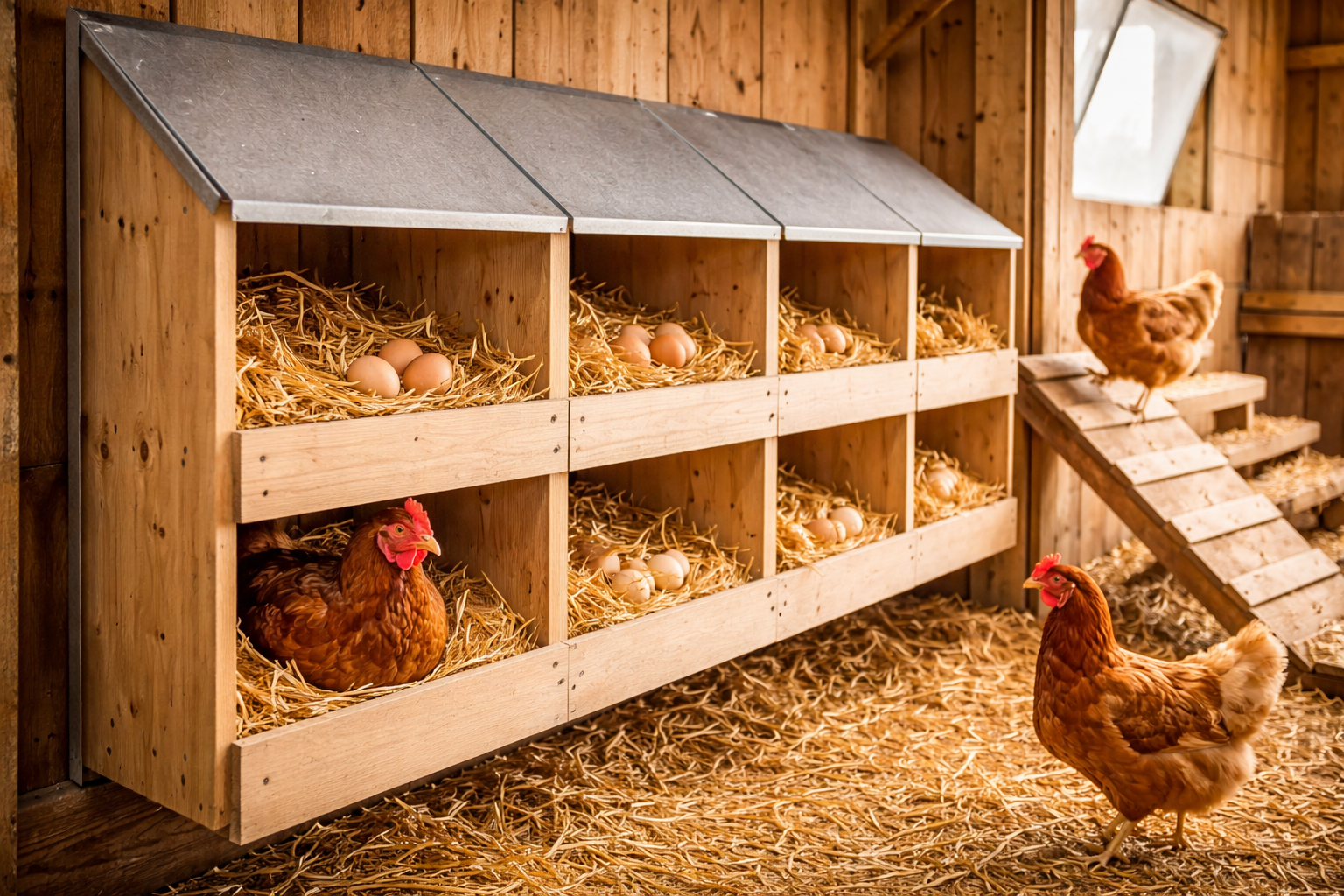
Providing the right nesting boxes is essential for maintaining clean eggs, reducing breakage, and encouraging consistent egg production. Whether you run a backyard flock or a small poultry farm, properly designed nesting boxes create a comfortable and secure environment for hens to lay eggs.
Poor nesting setups can lead to egg breakage, dirty eggs, stress, and even egg-eating behavior. In this complete guide, we’ll explore the best nesting box options for chickens, ideal sizing, materials, placement tips, and maintenance strategies.
Why Nesting Boxes Are Important
Hens instinctively look for quiet, secure places to lay eggs. A proper nesting box:
Encourages consistent egg laying
Keeps eggs clean
Reduces egg breakage
Minimizes stress
Prevents floor laying
Discourages egg eating
Comfortable hens are productive hens.
How Many Nesting Boxes Do You Need?
A common guideline is:
1 nesting box per 3–5 hens
Overcrowding nesting boxes can cause stress and broken eggs. However, hens often prefer sharing one box, so a few well-designed boxes are usually enough.
Ideal Nesting Box Size
Standard nesting box dimensions:
Width: 12 inches
Depth: 12–14 inches
Height: 12–14 inches
For larger breeds, increase size slightly. Proper sizing ensures hens can sit comfortably without crowding.
Types of Nesting Boxes for Chickens
Different farm setups require different nesting box designs.
1. Wooden Nesting Boxes
Wooden nesting boxes are popular for backyard coops.
Benefits:
Affordable
Easy to build
Customizable
Natural insulation
Considerations:
Requires regular cleaning
Can absorb moisture if untreated
Wooden boxes are ideal for small flocks.
2. Plastic Nesting Boxes
Plastic nesting boxes are easy to maintain.
Advantages:
Lightweight
Moisture-resistant
Easy to disinfect
Durable
They are ideal for humid climates and commercial setups.
3. Roll-Away Nesting Boxes
Roll-away nesting boxes are designed for cleaner egg collection.
How It Works:
Eggs gently roll into a covered tray after being laid.
Benefits:
Cleaner eggs
Reduced egg breakage
Prevents egg eating
Easier collection
These are excellent for farms focused on clean egg production.
4. Metal Nesting Boxes
Metal nesting boxes are durable and easy to clean.
Benefits:
Long-lasting
Pest-resistant
Suitable for large flocks
Easy sanitation
They are common in commercial poultry operations.
Best Bedding for Nesting Boxes
Proper bedding keeps eggs clean and comfortable.
Popular Options:
Straw
Pine shavings
Wood shavings
Nesting pads
Avoid slippery materials. Bedding should be soft and absorbent.
Where to Place Nesting Boxes
Placement affects egg-laying behavior.
Ideal Placement:
Quiet corner of coop
Slightly elevated from floor
Away from direct sunlight
Lower than roosting bars
Hens prefer dark, private areas.
Preventing Egg Eating
Egg-eating can become a serious problem.
Prevention Tips:
Use roll-away boxes
Collect eggs frequently
Provide proper nutrition
Avoid overcrowding
Ensure adequate calcium intake
Once hens develop egg-eating habits, it can be difficult to stop.
Roll-away systems are ideal for farms selling eggs commercially.
Common Nesting Box Mistakes
Too few nesting boxes
Placing boxes too high
Using inadequate bedding
Ignoring cleanliness
Placing near loud areas
Correct setup improves productivity.
Signs Your Nesting Boxes Need Improvement
Eggs laid on floor
Dirty eggs
Broken shells
Hens fighting for space
Increased egg eating
If these issues occur, reassess your nesting box design.
Cost Considerations
DIY wooden boxes: Budget-friendly
Plastic boxes: Moderate cost
Roll-away systems: Higher investment
Commercial metal systems: Long-term durability
Choose based on flock size and egg production goals.
Benefits of Quality Nesting Boxes
Investing in good nesting boxes results in:
Cleaner eggs
Higher egg yield
Reduced stress
Improved flock health
Better market value
Comfort directly impacts productivity.
Final Thoughts
Nesting boxes play a critical role in chicken egg production. Whether you choose wooden, plastic, metal, or roll-away nesting boxes, the goal is to provide a safe, comfortable, and hygienic laying environment.
Proper sizing, placement, bedding, and maintenance ensure consistent egg production and reduce common issues like egg breakage and egg eating.
By investing in the best nesting boxes for your flock, you support both hen welfare and farm profitability.


 Accessories & Others
 Apparel
 Beds & Furniture
 Cages & Accessories
 Carriers & Strollers
 Doors, Gates & Ramps
 Flea & Tick Control
 Grooming
 Litter & Housebreaking
 Memorials & Funerary
 Accessories & Others
 Apparel
 Beds & Furniture
 Cages & Accessories
 Carriers & Strollers
 Cat Doors,Steps, Nets.
 Collars, Harnesses & leashes
 Flea & Tick Control
 Grooming
 Cages& Accessories
 Cow Mastitis Detectors
 Ear Tags
 Aquarium Accessories
 Aquarium Cleaners
 Aquarium Decor
 Aquarium Lights
 Aquarium Pumps & Filter
 Aquariums & Fish Bowls
 Automatic Feeders