Proper ventilation is one of the most important yet often overlooked aspects of livestock management. Whether you operate a poultry house, cattle barn, goat shed, piggery, or mixed animal shelter, a well-designed ventilation system ensures fresh air circulation, temperature control, and moisture reduction.
Poor ventilation leads to ammonia buildup, respiratory issues, heat stress, and reduced productivity. In contrast, a properly ventilated animal shed improves livestock health, feed efficiency, and overall farm performance.
This complete guide covers different types of ventilation systems, key components, installation tips, and maintenance practices for animal sheds.
Why Ventilation Is Essential for Animal Sheds
Animals produce heat, moisture, dust, and gases such as ammonia and carbon dioxide. Without proper airflow, these pollutants accumulate and create unhealthy living conditions.
Effective ventilation helps to:
- Remove excess heat
- Reduce humidity
- Control ammonia levels
- Prevent respiratory diseases
- Improve feed intake
- Enhance growth and production
Clean air is just as important as clean water and feed.
Types of Ventilation Systems for Animal Sheds
Choosing the right system depends on farm size, climate, and livestock type.
1. Natural Ventilation Systems
Natural ventilation relies on wind and thermal air movement.
Key Features:
- Open sidewalls
- Ridge vents
- Adjustable curtains
- High ceilings
Benefits:
- Low installation cost
- Energy efficient
- Suitable for moderate climates
Natural systems work best in regions with consistent airflow.
2. Exhaust Fan Ventilation
Exhaust fans actively remove stale air from sheds.
Benefits:
- Controlled airflow
- Reduced humidity
- Improved temperature management
Common in poultry houses and enclosed barns.
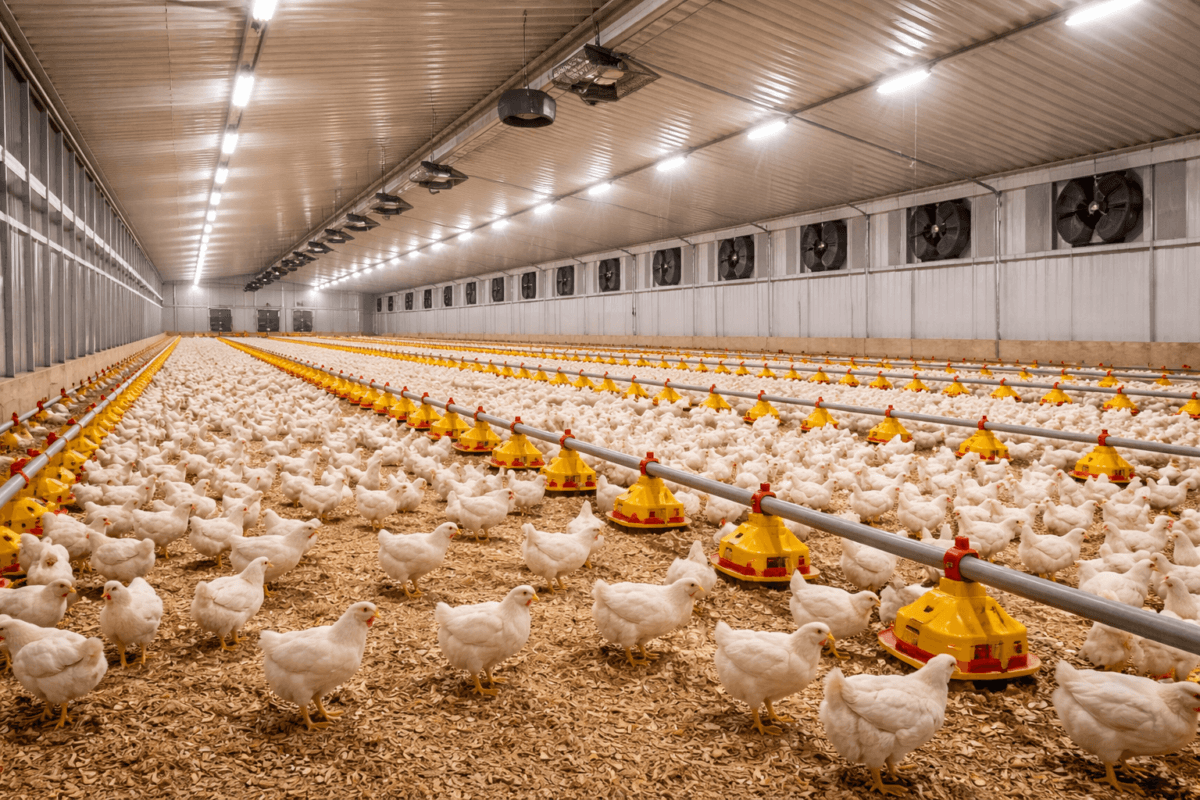
3. Tunnel Ventilation Systems
Tunnel ventilation is widely used in commercial poultry farms.
How It Works:
Air enters from one end and exits through high-powered fans at the opposite end.
Advantages:
- Strong cooling effect
- Ideal for hot climates
- Suitable for large sheds
This system ensures uniform airflow across the building.
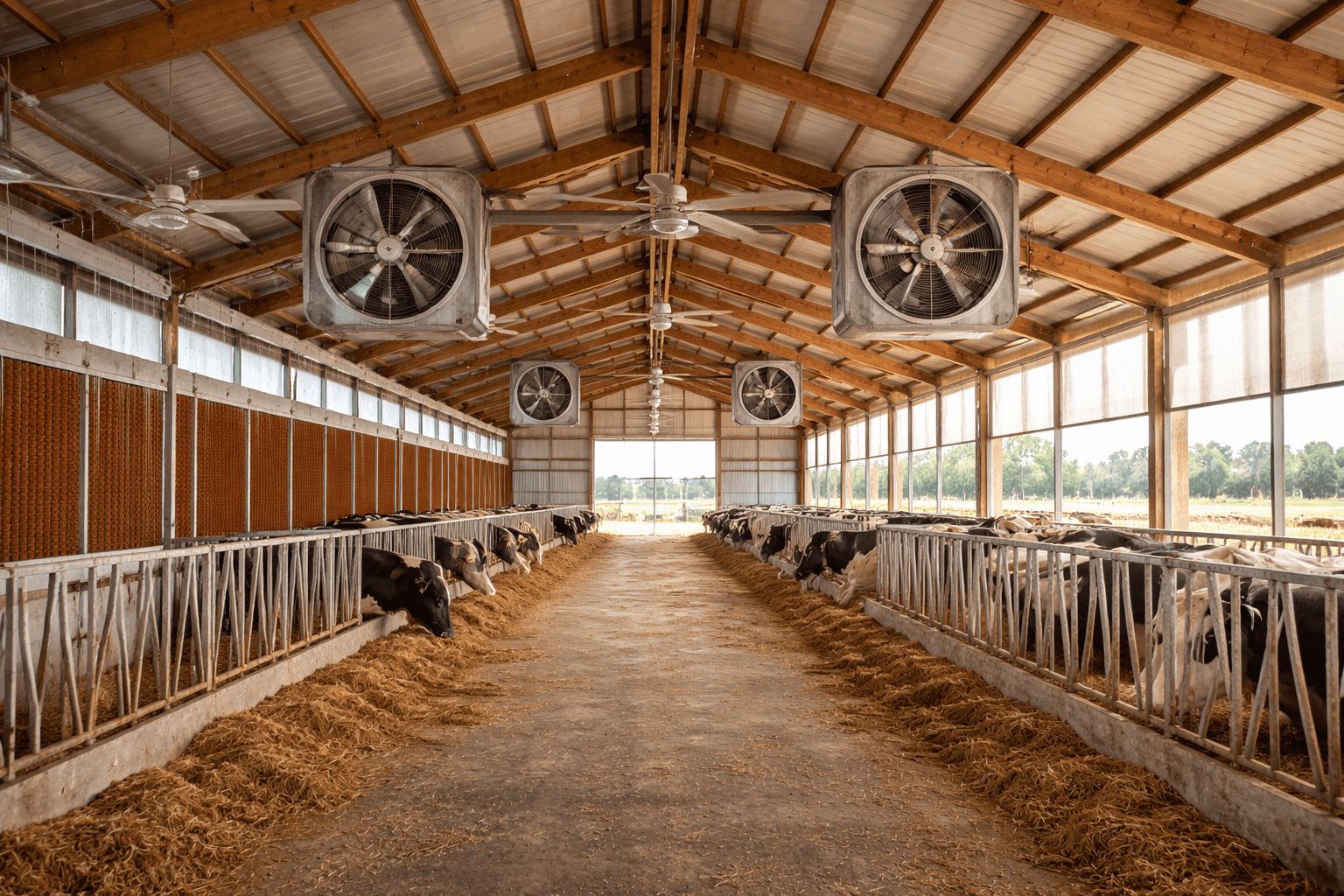
4. Evaporative Cooling & Ventilation
Evaporative cooling combines ventilation with water-based cooling pads or fogging systems.
Benefits:
- Reduces heat stress
- Maintains humidity balance
- Improves animal comfort
Ideal for high-temperature regions.
Key Components of a Good Ventilation System
A well-designed ventilation system includes:
- Air inlets
- Exhaust fans
- Adjustable curtains
- Cooling pads (if required)
- Temperature sensors
- Humidity monitors
Each component plays a role in maintaining optimal airflow.
Ventilation Requirements by Animal Type
Poultry:
- Sensitive to ammonia buildup
- Requires consistent airflow
- Ideal temperature: 16–24°C
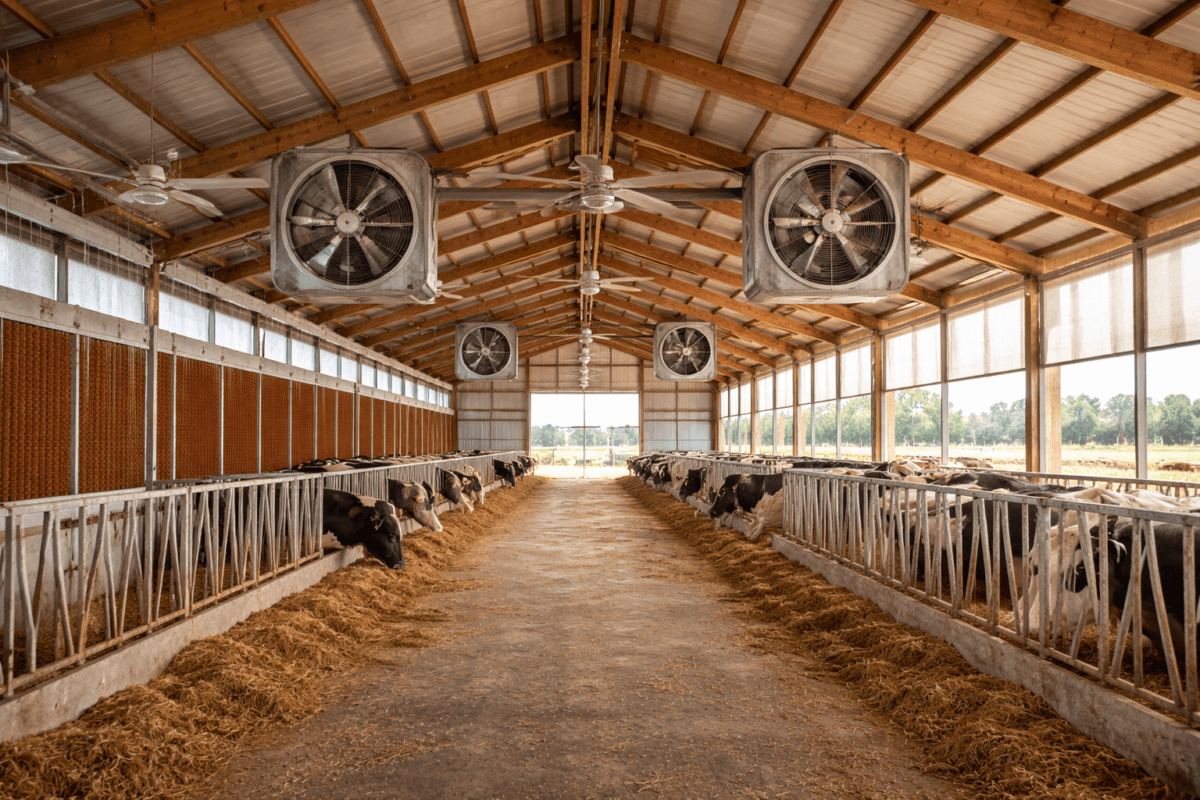
Dairy Cattle:
- Tolerate cooler temperatures
- Require moisture control
- Airspeed reduces heat stress
Goats & Sheep:
- Need dry conditions
- Avoid high humidity
Pigs:
- Require balanced ventilation
- Sensitive to temperature fluctuations
Each species has specific airflow needs.
Signs of Poor Ventilation
Watch for these warning signs:
- Strong ammonia smell
- Condensation on walls
- Wet bedding
- Coughing animals
- Reduced feed intake
- Increased mortality
If these occur, ventilation upgrades may be necessary.
Installation Tips
Proper installation ensures maximum efficiency.
1. Position Fans Correctly
Place exhaust fans opposite air inlets.
2. Ensure Even Air Distribution
Avoid dead air zones.
3. Protect Electrical Systems
Keep wiring safe from moisture.
4. Use Automated Controls
Temperature-controlled systems improve efficiency.
Professional installation is recommended for large systems.
Maintenance & Cleaning
Regular maintenance ensures consistent performance.
Weekly:
- Clean fan blades
- Check airflow
Monthly:
- Inspect electrical connections
- Clean cooling pads
Seasonal:
- Service motors
- Replace worn components
Dust buildup reduces efficiency.
Energy Efficiency Considerations
Modern ventilation systems can reduce operating costs.
Energy-Saving Tips:
- Use high-efficiency fans
- Install variable speed controllers
- Combine natural and mechanical ventilation
- Utilize solar-powered systems
Energy-efficient systems lower long-term expenses.
Common Ventilation Mistakes
- Undersized fans
- Poor inlet placement
- Ignoring humidity levels
- Blocking airflow with equipment
- Sealing sheds completely during winter
Balanced ventilation is essential year-round.
Cost Factors
Ventilation system costs depend on:
- Shed size
- Climate conditions
- Automation level
- Fan capacity
- Cooling additions
While advanced systems require higher investment, they provide long-term productivity benefits.
Benefits of Proper Ventilation
Investing in effective ventilation systems results in:
- Healthier livestock
- Lower disease incidence
- Improved feed conversion
- Increased egg and milk production
- Reduced stress
- Better air quality
Good ventilation directly impacts farm profitability.
Final Thoughts
Ventilation systems are a vital component of animal shed management. Whether using natural airflow, exhaust fans, tunnel ventilation, or evaporative cooling systems, maintaining fresh air circulation ensures healthier and more productive livestock.
Proper installation, routine maintenance, and climate-appropriate system selection protect your animals and maximize farm performance.
A well-ventilated shed is a foundation for successful livestock farming.


 Accessories & Others
 Apparel
 Beds & Furniture
 Cages & Accessories
 Carriers & Strollers
 Doors, Gates & Ramps
 Flea & Tick Control
 Grooming
 Litter & Housebreaking
 Memorials & Funerary
 Accessories & Others
 Apparel
 Beds & Furniture
 Cages & Accessories
 Carriers & Strollers
 Cat Doors,Steps, Nets.
 Collars, Harnesses & leashes
 Flea & Tick Control
 Grooming
 Cages& Accessories
 Cow Mastitis Detectors
 Ear Tags
 Aquarium Accessories
 Aquarium Cleaners
 Aquarium Decor
 Aquarium Lights
 Aquarium Pumps & Filter
 Aquariums & Fish Bowls
 Automatic Feeders