When you picture a beautiful aquarium, you probably imagine colorful fish, lush plants, and gentle streams of bubbles rising to the surface. Those tiny bubbles often come from a simple device called an air stone.
Many beginners think air stones are just decorative. In reality, they play an important role in oxygenation, water circulation, and overall fish health.
In this complete guide, we’ll explain what aquarium air stones are, how they work, their benefits, when you need them, and how to use them properly.
What Is an Aquarium Air Stone?
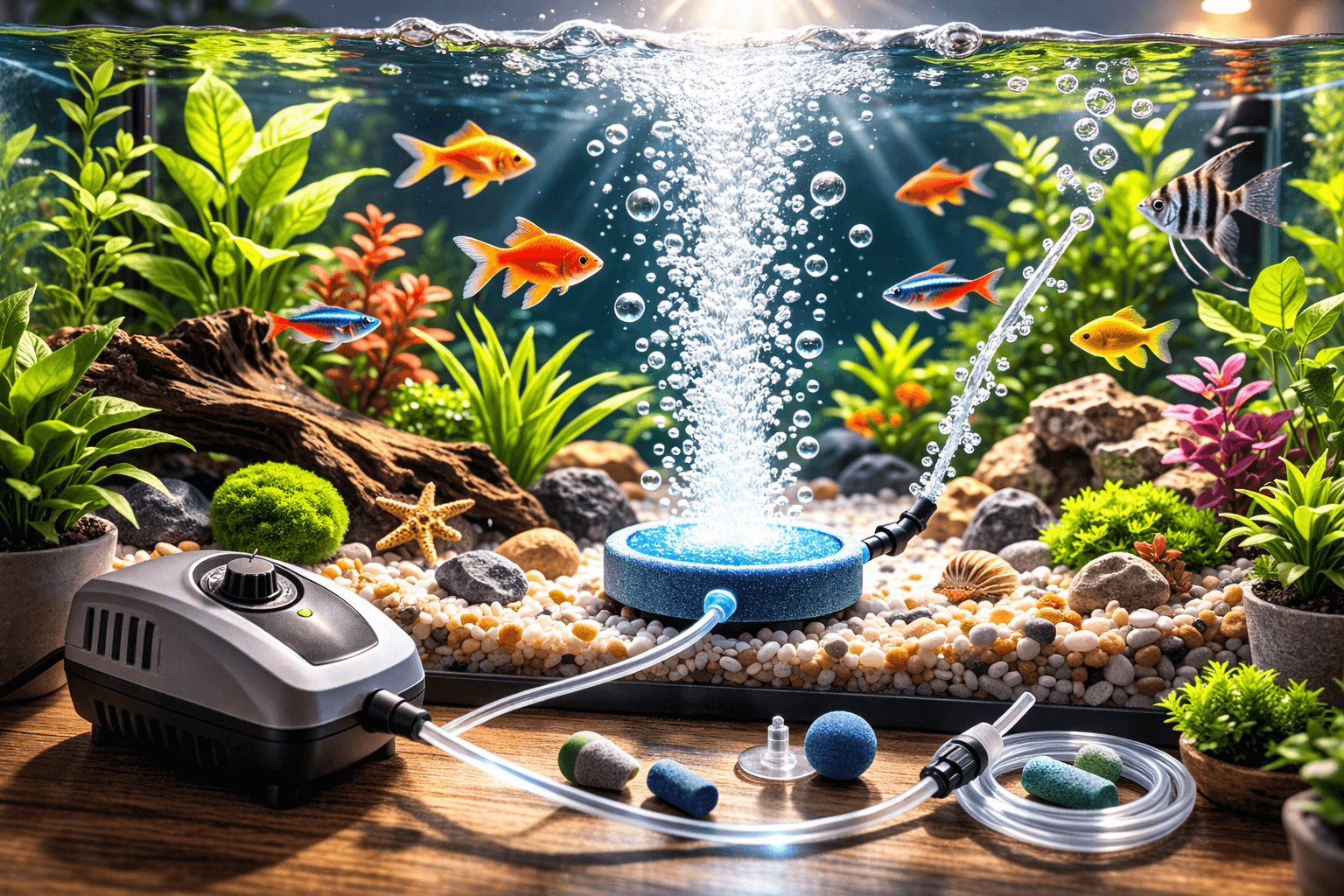
An aquarium air stone is a small, porous device connected to an air pump. It diffuses air into tiny bubbles that rise through the water column.
Air stones are usually made from:
- Porous stone
- Ceramic material
- Sintered glass
They connect to:
- An air pump
- Airline tubing
- Optional check valve
When air flows through the stone, it creates a curtain of fine bubbles.
How Do Air Stones Work?
Air stones themselves don’t directly “add oxygen” into the water in large amounts. Instead, they improve gas exchange.
Here’s how:
- The air pump pushes air through tubing.
- The air stone breaks the air into micro-bubbles.
- Bubbles rise to the surface.
- Surface agitation increases.
- Oxygen enters water, and carbon dioxide escapes.
The real oxygenation happens at the surface — and air stones enhance this process.
Why Aquarium Air Stones Matter
1. Improve Oxygen Levels
Fish breathe dissolved oxygen in water. Low oxygen levels can cause:
- Gasping at surface
- Lethargy
- Stress
- Increased disease risk
Air stones increase water movement and surface agitation, helping maintain stable oxygen levels — especially in:
- Warm water tanks
- Overstocked aquariums
- Tanks with limited filtration
2. Enhance Water Circulation
Dead zones in aquariums can trap debris and reduce oxygen flow.
Air stones:
- Promote water movement
- Prevent stagnant areas
- Distribute heat evenly
- Improve overall water quality
This is particularly helpful in larger aquariums.
3. Reduce Fish Stress
Many fish species prefer moving water. Gentle bubbles can create a more natural environment.
Some fish even enjoy playing in bubble streams!
Healthy oxygen levels also reduce stress — which directly improves immune health.
4. Support Beneficial Bacteria
Biological filtration relies on aerobic (oxygen-loving) bacteria.
By improving oxygen availability, air stones:
- Support beneficial bacteria colonies
- Enhance biological filtration
- Improve ammonia breakdown
This helps maintain a stable nitrogen cycle.
5. Improve Aesthetic Appeal
Let’s be honest — bubble streams look beautiful.
Air stones add:
- Visual movement
- Relaxing ambiance
- Professional aquarium appearance
They’re often used in decorative displays and aquascapes.
When Do You Really Need an Air Stone?
Not every tank requires one. Let’s break it down.
Tanks That Benefit Most:
✔ Heavily Stocked Aquariums
More fish = higher oxygen demand.
✔ Warm Water Tanks
Warm water holds less dissolved oxygen.
✔ Goldfish Tanks
Goldfish produce heavy waste and require high oxygen.
✔ Tanks Without Surface Agitation
If your filter doesn’t disturb the surface much, oxygen exchange may be limited.
✔ Power Outages (Emergency Use)
Air pumps with battery backup can save fish during outages.
Tanks That May Not Need One:
- Lightly stocked tanks
- Strong hang-on-back filters
- Well-circulated planted aquariums
However, adding an air stone rarely harms a tank if used properly.
Types of Aquarium Air Stones
1. Standard Air Stone
Small round or cylindrical stone for basic bubble streams.
2. Air Stone Bars
Long strips that create a curtain effect.
3. Flexible Bubble Walls
Bendable tubing for creative designs.
4. LED Bubble Decorations
Air stones combined with colored lighting for display tanks.
Choose based on tank size and aesthetic preference.
How to Set Up an Air Stone (Step-by-Step)
Setting up is simple:
Step 1: Buy an Air Pump
Match pump size to tank volume.
Step 2: Connect Airline Tubing
Attach tubing to pump outlet.
Step 3: Install a Check Valve
Prevents water from flowing backward into pump.
Step 4: Attach Air Stone
Connect tubing to air stone.
Step 5: Place in Tank
Position near bottom for best bubble distribution.
Step 6: Plug in Pump
Adjust airflow if necessary.
You’ll instantly see fine bubbles rising.
Do Air Stones Increase Oxygen Directly?
This is a common misconception.
Air stones don’t significantly dissolve oxygen from bubbles directly. Instead, they:
- Increase surface agitation
- Improve gas exchange
- Enhance circulation
It’s the movement that matters more than the bubbles themselves.
Air Stones in Planted Aquariums
Be cautious in planted tanks.
Too much aeration can:
- Reduce CO₂ levels
- Impact plant growth
If using CO₂ injection systems, excessive bubbling may counteract CO₂ supplementation.
In planted tanks, moderate use is recommended.
Common Problems and Solutions
1. Large Bubbles Instead of Fine Mist
Cause: Clogged air stone
Solution: Soak in vinegar and rinse thoroughly.
2. Weak Bubble Flow
Cause: Weak air pump
Solution: Upgrade pump or shorten tubing.
3. Loud Air Pump Noise
Cause: Vibration
Solution: Place pump on soft surface or sponge pad.
4. Backflow Water Damage
Cause: No check valve
Solution: Always install a check valve.
How Often Should You Replace Air Stones?
Air stones clog over time due to:
- Mineral buildup
- Algae
- Debris
Typically replace every 3–6 months depending on usage.
Regular cleaning can extend lifespan.
Are Air Stones Safe for Fish?
Yes — when properly installed.
However:
- Avoid extremely strong airflow in small tanks
- Do not place directly under delicate plants
- Ensure bubbles don’t cause excessive stress
Most fish enjoy moderate aeration.
Air Stone vs Sponge Filter
Many beginners confuse these two.
Air Stone
- Provides aeration
- Decorative
- Minimal filtration
Sponge Filter
- Uses air pump
- Provides biological filtration
- Suitable for fry and shrimp tanks
Both can be used together.
Final Thoughts: Do Air Stones Really Matter?
Yes — especially in the right situations.
Air stones:
✔ Improve oxygen exchange
✔ Enhance circulation
✔ Support biological filtration
✔ Reduce fish stress
✔ Add visual appeal
While not mandatory for every aquarium, they are a low-cost tool that can significantly improve tank health and stability.
If you’re unsure whether your tank needs one, consider:
- Fish behavior
- Stocking levels
- Water temperature
- Surface movement
In most cases, adding an air stone is a simple upgrade that benefits both fish and overall aquarium health.
Conclusion
Aquarium air stones may look small, but their impact can be significant. From improving oxygen levels to enhancing aesthetics, they are one of the easiest ways to upgrade your fish tank.
If you want healthier fish, better circulation, and a more dynamic display, an air stone is absolutely worth considering.


 Accessories & Others
 Apparel
 Beds & Furniture
 Cages & Accessories
 Carriers & Strollers
 Doors, Gates & Ramps
 Flea & Tick Control
 Grooming
 Litter & Housebreaking
 Memorials & Funerary
 Accessories & Others
 Apparel
 Beds & Furniture
 Cages & Accessories
 Carriers & Strollers
 Cat Doors,Steps, Nets.
 Collars, Harnesses & leashes
 Flea & Tick Control
 Grooming
 Cages& Accessories
 Cow Mastitis Detectors
 Ear Tags
 Aquarium Accessories
 Aquarium Cleaners
 Aquarium Decor
 Aquarium Lights
 Aquarium Pumps & Filter
 Aquariums & Fish Bowls
 Automatic Feeders