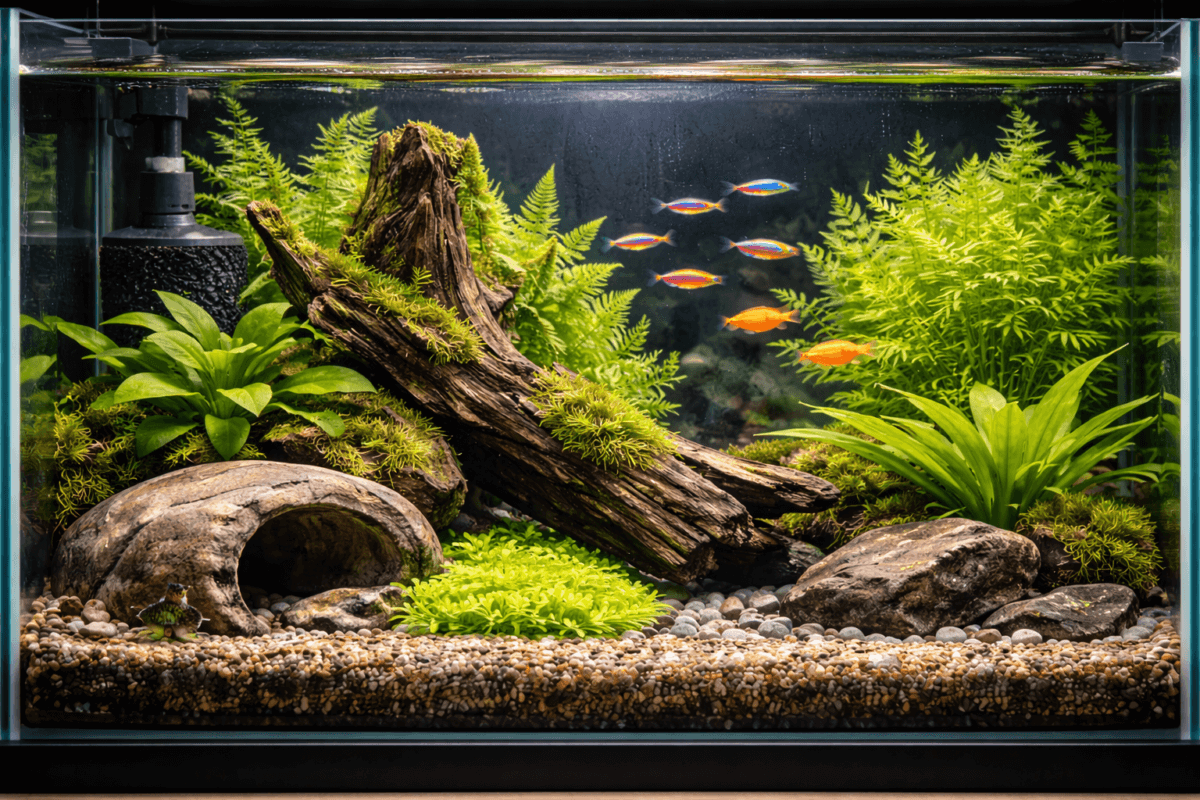
A clean aquarium is the foundation of healthy fish, clear water, and a stress-free aquatic environment. Whether you own a small freshwater tank or a large planted setup, following a proper cleaning schedule prevents algae growth, ammonia spikes, and fish disease.
In this complete guide, you’ll learn exactly what to clean daily, weekly, and monthly — without overcleaning or harming beneficial bacteria.
Why a Cleaning Schedule Is Important
Aquariums are closed ecosystems. Waste from fish like Goldfish and Betta fish builds up quickly.
Without routine maintenance, you may face:
- Cloudy water
- Algae blooms
- High ammonia and nitrite levels
- Stressed or sick fish
A structured cleaning routine keeps water chemistry stable and your tank thriving.
Daily Aquarium Maintenance (5–10 Minutes)
Daily tasks are simple but essential.
1. Check Fish Behavior
Healthy fish should:
- Swim normally
- Respond to food
- Show no white spots or torn fins
Sudden behavior changes can indicate water issues.
2. Remove Uneaten Food
Leftover food decomposes and causes ammonia spikes.
If you use an automatic feeder, double-check portion size regularly.
3. Inspect Equipment
Ensure:
- Filter is running
- Heater is maintaining temperature
- Lights are functioning properly
Temperature swings stress tropical fish.
Weekly Aquarium Cleaning Routine
Weekly maintenance keeps water parameters stable.
1. Partial Water Change (25–30%)
Replace 25–30% of tank water weekly.
Steps:
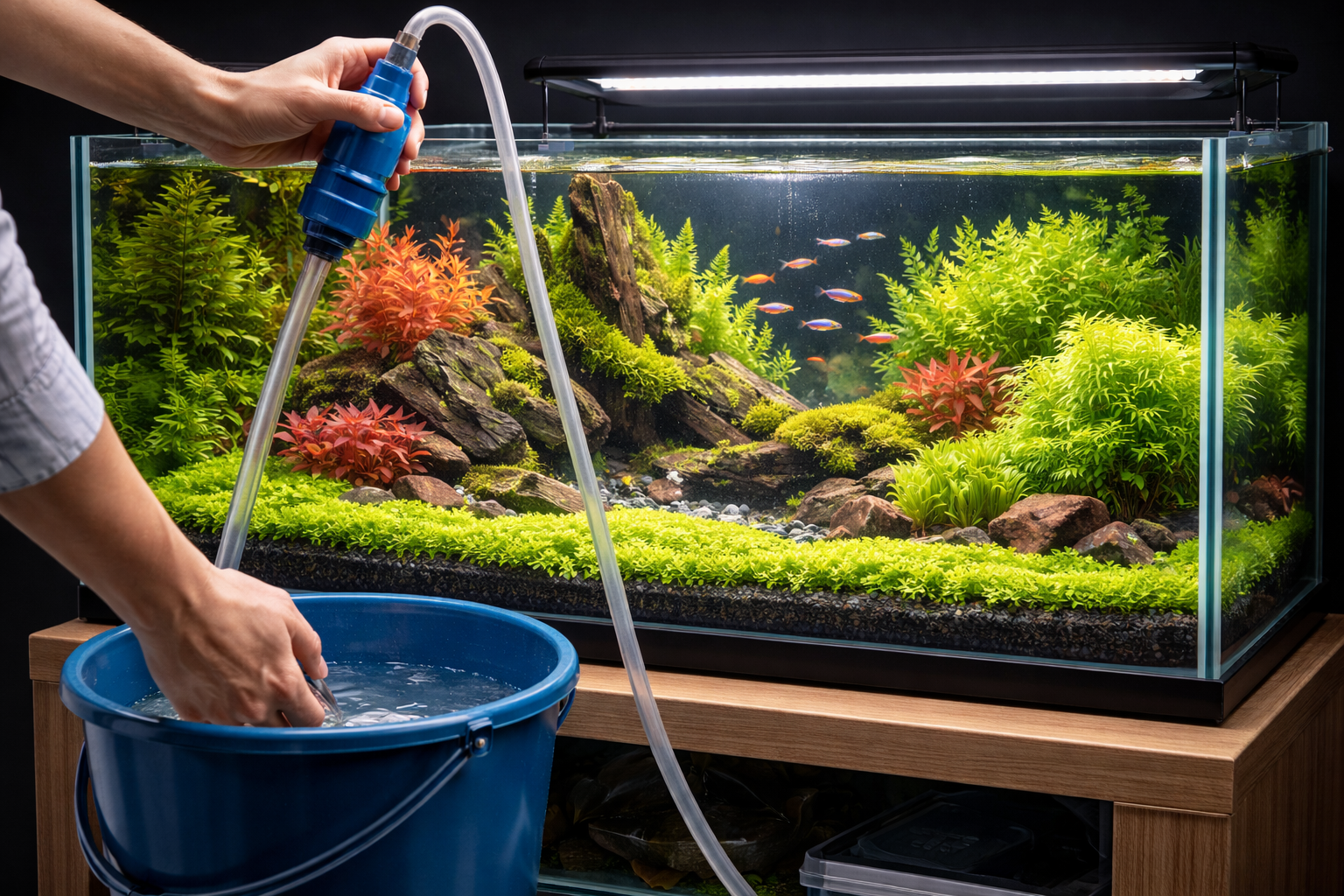
- Use a gravel vacuum to siphon debris
- Remove waste from substrate
- Refill with dechlorinated water
- Match temperature to avoid shock
Never replace 100% of the water — it destroys beneficial bacteria.
2. Clean Aquarium Glass
Use:
- Magnetic algae scraper
- Soft sponge (aquarium-safe only)
Avoid soap or household chemicals.
3. Trim Dead Plant Leaves (For Planted Tanks)
In planted tanks, remove:
- Yellowing leaves
- Decaying stems
- Floating debris
This prevents nutrient imbalance and algae growth.
Bi-Weekly Maintenance (Every 2 Weeks)
1. Clean Filter Media (Lightly)
Rinse filter sponge in tank water only (never tap water).
This preserves beneficial bacteria.
2. Test Water Parameters
Use a test kit to check:
- Ammonia
- Nitrite
- Nitrate
- pH
High nitrates (>40 ppm) signal the need for larger water changes.
Monthly Deep Cleaning Tasks
1. Inspect and Clean Filter Components
- Rinse sponges gently
- Replace carbon if needed
- Clean intake tubes
Do not replace all media at once.
2. Check Heater & Thermometer Accuracy
Faulty heaters cause major fish stress.
3. Clean Decorations (If Needed)
If algae buildup is heavy:
- Remove decorations
- Scrub gently with aquarium-safe brush
- Rinse in tank water
Avoid deep scrubbing too frequently.
Cleaning Schedule Based on Tank Type
Small Tanks (Under 10 Gallons)
- 30–40% weekly water change
- More frequent testing
- Careful feeding
Small tanks accumulate waste faster.
Large Tanks (40+ Gallons)
- 20–25% weekly water change
- Monthly filter inspection
- Stable parameters
Larger tanks are more forgiving.
Goldfish Tanks
Goldfish produce heavy waste.
Expect:
- Larger weekly water changes
- More frequent gravel vacuuming
Planted Aquariums
- Trim weekly
- Remove dying plant matter
- Maintain balanced lighting
Overcleaning planted tanks can disrupt nutrient balance.
Common Cleaning Mistakes to Avoid
❌ Overcleaning
Too much cleaning removes beneficial bacteria.
❌ Using Soap
Even small residues harm fish.
❌ Replacing All Filter Media
Always stagger replacements.
❌ Skipping Water Changes
Topping off evaporated water is not the same as changing water.
Sample Aquarium Cleaning Schedule Table
Daily
- Observe fish
- Remove uneaten food
- Check equipment
Weekly
- 25% water change
- Clean glass
- Vacuum substrate
Bi-Weekly
- Rinse filter sponge
- Test water
Monthly
- Inspect filter system
- Clean decorations if needed
- Check heater accuracy
How Long Does Aquarium Cleaning Take?
- Daily: 5 minutes
- Weekly: 20–30 minutes
- Monthly: 45–60 minutes
Consistency matters more than intensity.
Signs Your Tank Needs Immediate Cleaning
- Cloudy water
- Strong odor
- Fish gasping at surface
- Rapid algae growth
- High ammonia reading
Never ignore these signs.
Final Thoughts
A structured aquarium cleaning schedule keeps your tank:
- Clear
- Stable
- Healthy
- Stress-free
The key is balance — clean enough to maintain water quality, but not so aggressively that you disrupt the biological cycle.
When you follow a daily, weekly, and monthly plan, your fish will thrive and your aquarium will stay crystal clear year-round.


 Accessories & Others
 Apparel
 Beds & Furniture
 Cages & Accessories
 Carriers & Strollers
 Doors, Gates & Ramps
 Flea & Tick Control
 Grooming
 Litter & Housebreaking
 Memorials & Funerary
 Accessories & Others
 Apparel
 Beds & Furniture
 Cages & Accessories
 Carriers & Strollers
 Cat Doors,Steps, Nets.
 Collars, Harnesses & leashes
 Flea & Tick Control
 Grooming
 Cages& Accessories
 Cow Mastitis Detectors
 Ear Tags
 Aquarium Accessories
 Aquarium Cleaners
 Aquarium Decor
 Aquarium Lights
 Aquarium Pumps & Filter
 Aquariums & Fish Bowls
 Automatic Feeders