Feeding your fish may seem simple — a quick sprinkle of flakes or pellets once or twice a day. But what happens when you’re traveling, working late, or simply forget? That’s where automatic fish feeders come in.
But do you really need one?
In this complete guide, we’ll break down when an automatic fish feeder makes sense, its benefits and drawbacks, and how to choose the right one for your aquarium.
What Is an Automatic Fish Feeder?
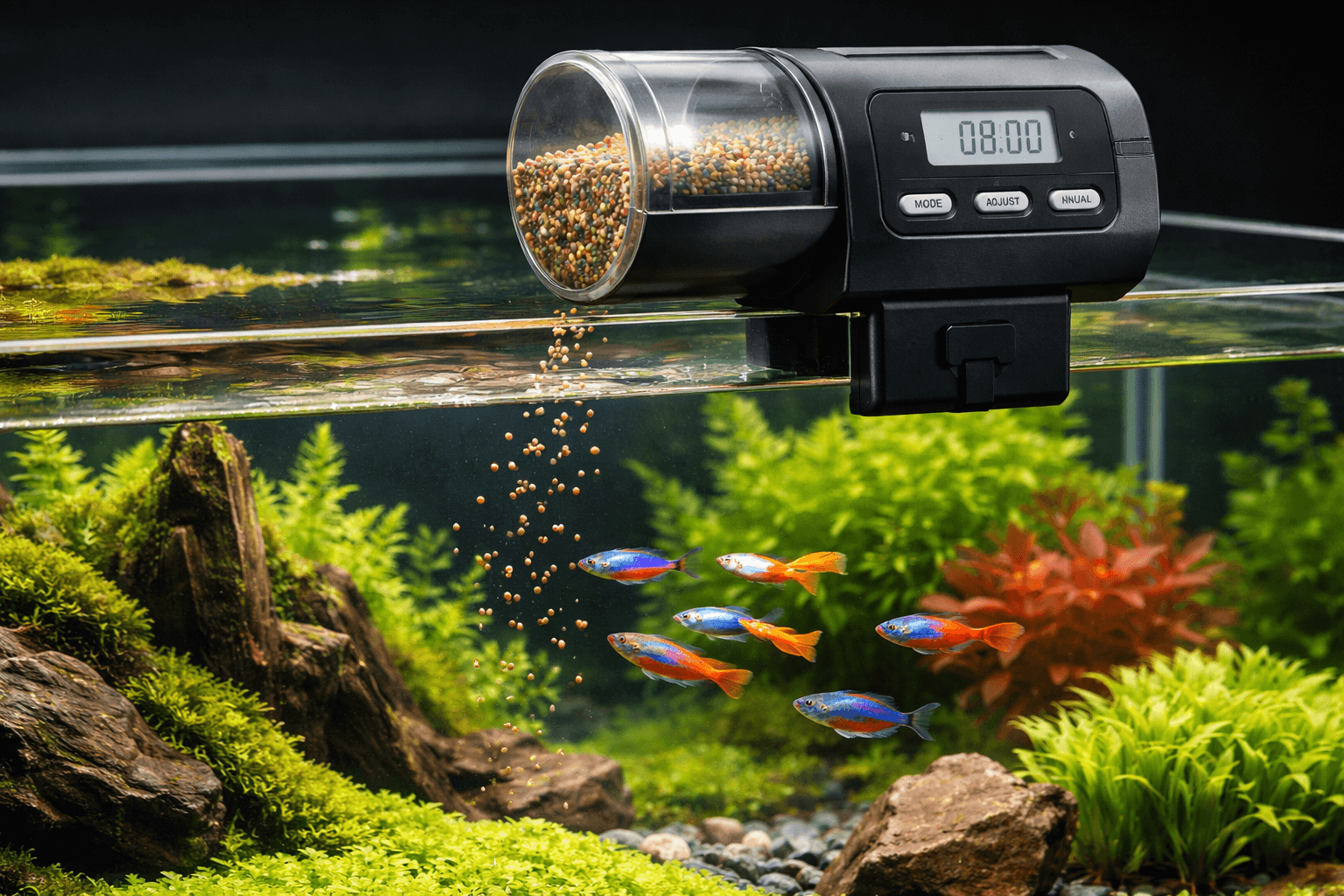
An automatic fish feeder is a device that dispenses a measured amount of fish food at scheduled times. Most modern feeders are battery-powered and programmable, allowing you to set feeding times and portion sizes.
They typically work with:
- Dry flakes
- Pellets
- Granules
Some advanced models even connect via smartphone apps.
Why Aquarium Owners Consider Automatic Feeders
1. Vacation & Travel Convenience
If you’re away for a few days or weeks, an automatic feeder ensures your fish stay fed without relying on neighbors or family members.
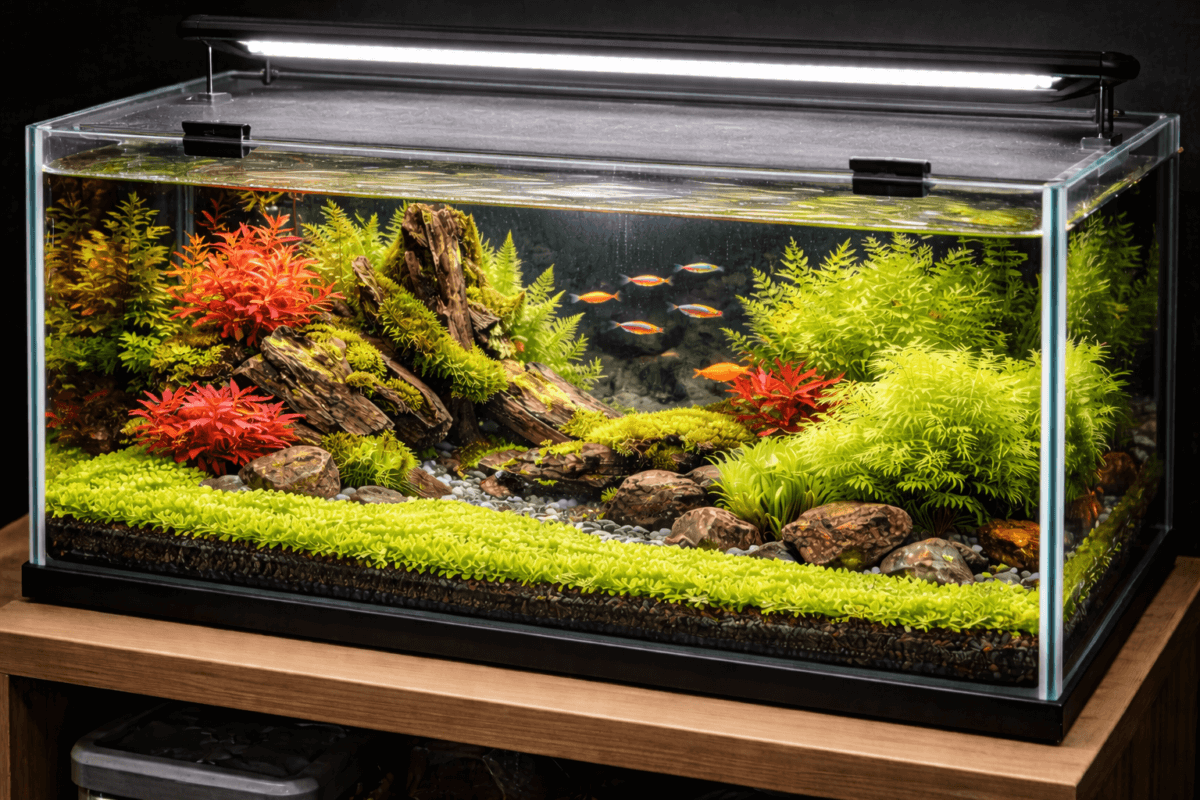
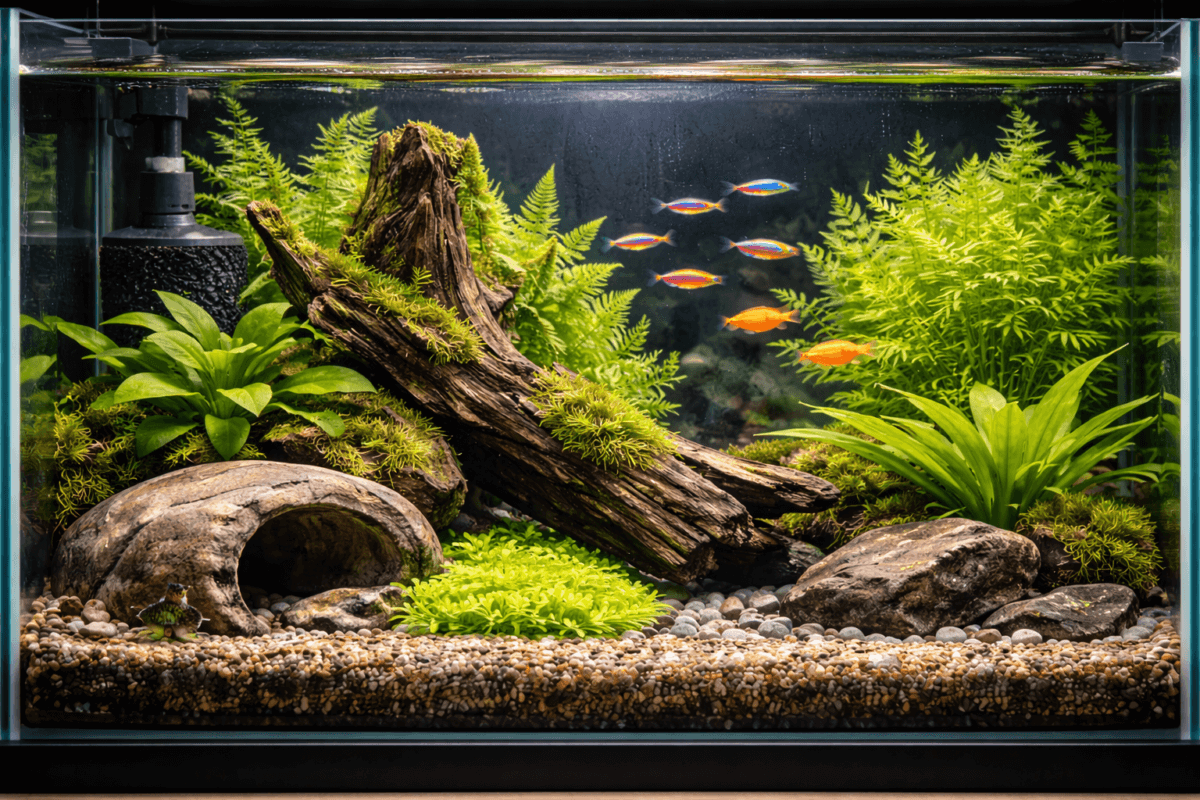
For tanks with species like Betta fish or Neon tetra, consistent feeding schedules help reduce stress.
2. Consistent Feeding Schedule
Fish thrive on routine. Feeding at the same time daily improves:
- Digestion
- Activity levels
- Growth
- Water stability
An automatic feeder eliminates human inconsistency.
3. Portion Control
Overfeeding is one of the biggest causes of aquarium problems.
Excess food leads to:
- Ammonia spikes
- Algae blooms
- Poor water quality
A properly set feeder reduces overfeeding risks.
When You Don’t Need an Automatic Feeder
Not every tank requires one.
You may not need an automatic feeder if:
- You’re home daily
- You feed manually with precision
- You have only a few hardy fish
- You rarely travel
For short trips (1–2 days), most healthy adult fish can safely go without food.
Types of Automatic Fish Feeders
1. Drum-Style Feeders
These are the most common. A rotating drum releases food at scheduled intervals.
Best for: Most freshwater aquariums
Pros: Affordable, reliable
Cons: Can clog in humid environments
2. Programmable Smart Feeders
These connect via WiFi or Bluetooth and allow remote control.
Best for: Tech-savvy aquarium owners
Pros: Custom schedules, notifications
Cons: More expensive
3. Vacation Feed Blocks (Not Recommended Long-Term)
These dissolve slowly in water.
Pros: Cheap
Cons: Often cloud water and raise ammonia
For planted tanks or delicate species, blocks are risky.
Benefits of Using an Automatic Fish Feeder
✔ Reliable Feeding
Fish eat on schedule — even when you forget.
✔ Reduces Stress
Fish dislike sudden routine changes.
✔ Great for Community Tanks
Tanks with species like Guppy or Angelfish benefit from consistent portions.
✔ Supports Growth
Juvenile fish need multiple daily feedings. A feeder makes this manageable.
Downsides of Automatic Fish Feeders
✖ Mechanical Failure
Low-quality feeders may jam.
✖ Humidity Issues
Aquarium moisture can clump flakes.
✖ Battery Dependency
Dead batteries = missed feedings.
✖ Limited to Dry Food
They don’t work with frozen or live food.
How to Choose the Right Automatic Fish Feeder
1. Tank Size
Larger tanks need feeders with bigger food compartments.
2. Food Type
Pellets work better than flakes because they resist moisture.
3. Mounting Style
Check if it attaches to:
- Tank rim
- Lid opening
- Stand-alone bracket
4. Timer Flexibility
Choose a feeder that allows:
- 1–4 feedings daily
- Adjustable portion size
- Manual feed option
Are Automatic Feeders Safe for Planted Tanks?
Yes — if properly set.
In planted aquariums, overfeeding causes algae problems. Automatic feeders actually help by controlling portions.
However, always test the feeder for a few days before leaving for vacation.
Best Situations to Use an Automatic Feeder
You should consider one if:
- You travel frequently
- You have a busy schedule
- You maintain multiple tanks
- You raise fry or juvenile fish
- You want precise feeding control
How to Set Up an Automatic Fish Feeder Properly
- Fill with dry pellets
- Install fresh batteries
- Program feeding schedule
- Test for 3–5 days
- Monitor portion accuracy
Never install and leave immediately without testing.
Pro Tips for Using Automatic Feeders
- Store food in airtight containers
- Keep feeder lid tightly closed
- Replace batteries every 2–3 months
- Clean feeder monthly
- Avoid placing directly over high evaporation areas
Final Verdict: Do You Need One?
An automatic fish feeder isn’t essential — but it can be extremely helpful.
You need one if:
- You travel often
- You want consistent feeding
- You manage multiple aquariums
You may skip it if:
- You’re home daily
- Your tank is small and stable
- You prefer manual control
For most serious aquarium hobbyists, an automatic fish feeder adds convenience, reliability, and peace of mind.


 Accessories & Others
 Apparel
 Beds & Furniture
 Cages & Accessories
 Carriers & Strollers
 Doors, Gates & Ramps
 Flea & Tick Control
 Grooming
 Litter & Housebreaking
 Memorials & Funerary
 Accessories & Others
 Apparel
 Beds & Furniture
 Cages & Accessories
 Carriers & Strollers
 Cat Doors,Steps, Nets.
 Collars, Harnesses & leashes
 Flea & Tick Control
 Grooming
 Cages& Accessories
 Cow Mastitis Detectors
 Ear Tags
 Aquarium Accessories
 Aquarium Cleaners
 Aquarium Decor
 Aquarium Lights
 Aquarium Pumps & Filter
 Aquariums & Fish Bowls
 Automatic Feeders