Water is one of the most critical resources in agriculture. Efficient irrigation directly impacts crop yield, plant health, and overall farm profitability. Traditional irrigation methods often lead to water waste, uneven distribution, and high labor costs. This is where automatic watering systems for farms play a transformative role.
Automatic watering systems use technology to deliver the right amount of water at the right time without constant manual intervention. From small vegetable farms to large commercial agricultural operations, these systems improve efficiency, conserve water, and increase productivity.
What Is an Automatic Watering System?
An automatic watering system is an irrigation setup that distributes water to crops using timers, sensors, and control units. Instead of manually opening and closing valves or moving sprinklers, farmers can automate the process based on time schedules or soil moisture levels.
These systems can be simple (timer-based drip irrigation) or advanced (sensor-based smart irrigation connected to mobile apps).
Types of Automatic Watering Systems
1. Drip Irrigation Systems
Drip irrigation delivers water directly to the root zone of plants through pipes and emitters. It is highly efficient and reduces evaporation loss.
Best for:
- Vegetable farms
- Orchards
- Greenhouses
- Row crops
Benefits:
- Minimal water waste
- Reduced weed growth
- Lower disease risk
- Improved fertilizer efficiency (fertigation)
2. Sprinkler Irrigation Systems
Sprinkler systems spray water over crops, simulating rainfall. They are ideal for large fields and certain crop types.
Best for:
- Grain crops
- Pasture land
- Large open farms
Benefits:
- Covers large areas
- Easy installation
- Suitable for various soil types
3. Center Pivot Irrigation
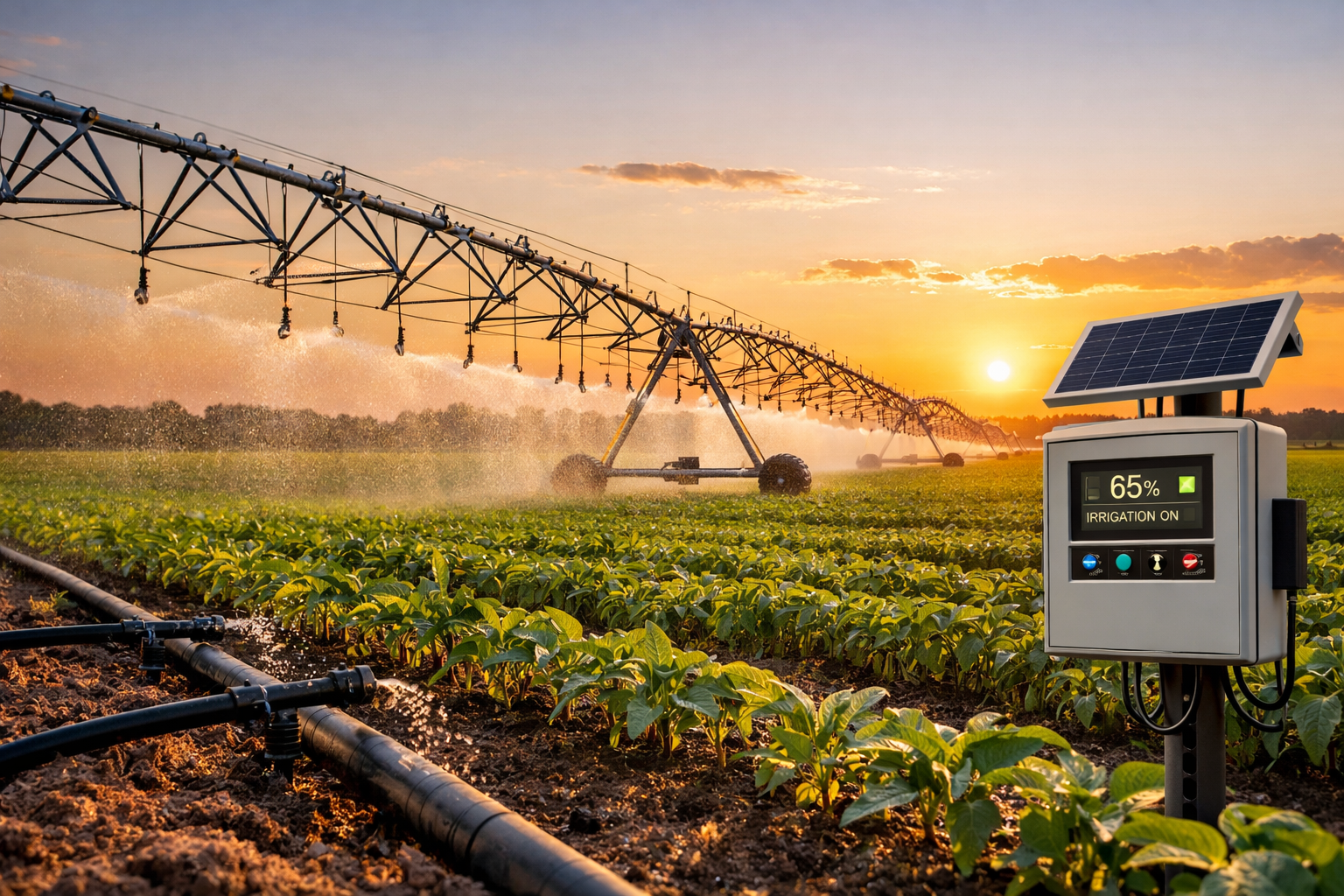
Center pivot systems rotate around a central point, watering crops in circular patterns. They are common in large-scale farming.
Best for:
- Large commercial farms
- Corn, wheat, and soybean fields
Benefits:
- Fully automated
- Efficient large-scale watering
- Reduced labor requirements
4. Sensor-Based Smart Irrigation
Smart irrigation systems use soil moisture sensors, weather data, and automated controllers to determine when irrigation is needed.
Best for:
- Precision farming
- High-value crops
- Water-scarce regions
Benefits:
- Real-time monitoring
- Water savings up to 30–50%
- Mobile app control
- Data-driven decision making
Key Components of an Automatic Watering System
To understand how these systems work, let’s break down the main components:
- Water Source – Well, reservoir, canal, or municipal supply
- Pump System – Ensures proper water pressure
- Pipes & Tubing – Distribute water across the field
- Valves – Control water flow
- Timers/Controllers – Schedule irrigation cycles
- Sensors (Optional) – Soil moisture, rainfall, temperature
- Filters – Prevent clogging in drip systems
Each component works together to ensure consistent and efficient irrigation.
Benefits of Automatic Watering Systems for Farms
1. Water Conservation
Automated systems reduce overwatering by delivering precise amounts of water. This is especially important in regions facing water scarcity.
2. Labor Cost Reduction
Manual irrigation requires constant monitoring. Automation reduces manpower needs and saves operational costs.
3. Improved Crop Health
Consistent watering prevents plant stress caused by irregular irrigation. Healthy plants produce higher yields.
4. Increased Productivity
Farmers can focus on other farm management tasks instead of manually watering fields.
5. Fertilizer Efficiency
Many automated systems allow fertigation, meaning fertilizers can be delivered directly through irrigation lines.
How Automatic Systems Improve Yield
Proper irrigation impacts:
- Root development
- Nutrient absorption
- Flowering and fruit formation
- Disease prevention
Underwatering reduces growth, while overwatering can cause root rot and nutrient leaching. Automated systems maintain optimal soil moisture levels, directly improving crop performance.
Choosing the Right System for Your Farm
When selecting an automatic watering system, consider:
Farm Size
- Small farms → Drip or sprinkler systems
- Large farms → Center pivot or advanced automated systems
Crop Type
- Vegetables → Drip irrigation
- Grains → Sprinkler or pivot
- Orchards → Drip or micro-sprinklers
Water Availability
Limited water supply requires high-efficiency systems like drip irrigation.
Budget
Basic timer systems are affordable. Smart irrigation systems require higher investment but offer long-term savings.
Installation and Maintenance Tips
Installation Tips
- Conduct soil testing before setup
- Ensure proper pressure regulation
- Install filtration systems
- Plan layout carefully for uniform coverage
Maintenance Tips
- Clean filters regularly
- Check for pipe leaks
- Inspect emitters for clogging
- Test sensors periodically
Proper maintenance ensures system longevity and consistent performance.
Cost of Automatic Watering Systems
Costs vary depending on farm size and system type:
- Small drip system: Low to moderate cost
- Sprinkler system: Moderate cost
- Center pivot: High initial investment
- Smart irrigation: Moderate to high depending on technology
Although initial installation can be expensive, long-term water savings, improved yield, and reduced labor costs often provide strong ROI.
Future of Farm Irrigation
Modern agriculture is moving toward precision farming. Integration with:
- Weather forecasting systems
- AI-based irrigation scheduling
- Remote monitoring apps
- Solar-powered pump systems
These advancements are making farming more sustainable and profitable.
With increasing climate challenges and water shortages, automatic watering systems are becoming essential rather than optional.
Conclusion
Automatic watering systems for farms are a smart investment for modern agriculture. They conserve water, reduce labor costs, improve crop health, and increase yields. Whether you operate a small vegetable farm or manage large commercial fields, adopting automated irrigation technology can significantly enhance efficiency and profitability.
As farming evolves toward data-driven and sustainable practices, automated irrigation systems will play a crucial role in shaping the future of agriculture.


 Accessories & Others
 Apparel
 Beds & Furniture
 Cages & Accessories
 Carriers & Strollers
 Doors, Gates & Ramps
 Flea & Tick Control
 Grooming
 Litter & Housebreaking
 Memorials & Funerary
 Accessories & Others
 Apparel
 Beds & Furniture
 Cages & Accessories
 Carriers & Strollers
 Cat Doors,Steps, Nets.
 Collars, Harnesses & leashes
 Flea & Tick Control
 Grooming
 Cages& Accessories
 Cow Mastitis Detectors
 Ear Tags
 Aquarium Accessories
 Aquarium Cleaners
 Aquarium Decor
 Aquarium Lights
 Aquarium Pumps & Filter
 Aquariums & Fish Bowls
 Automatic Feeders