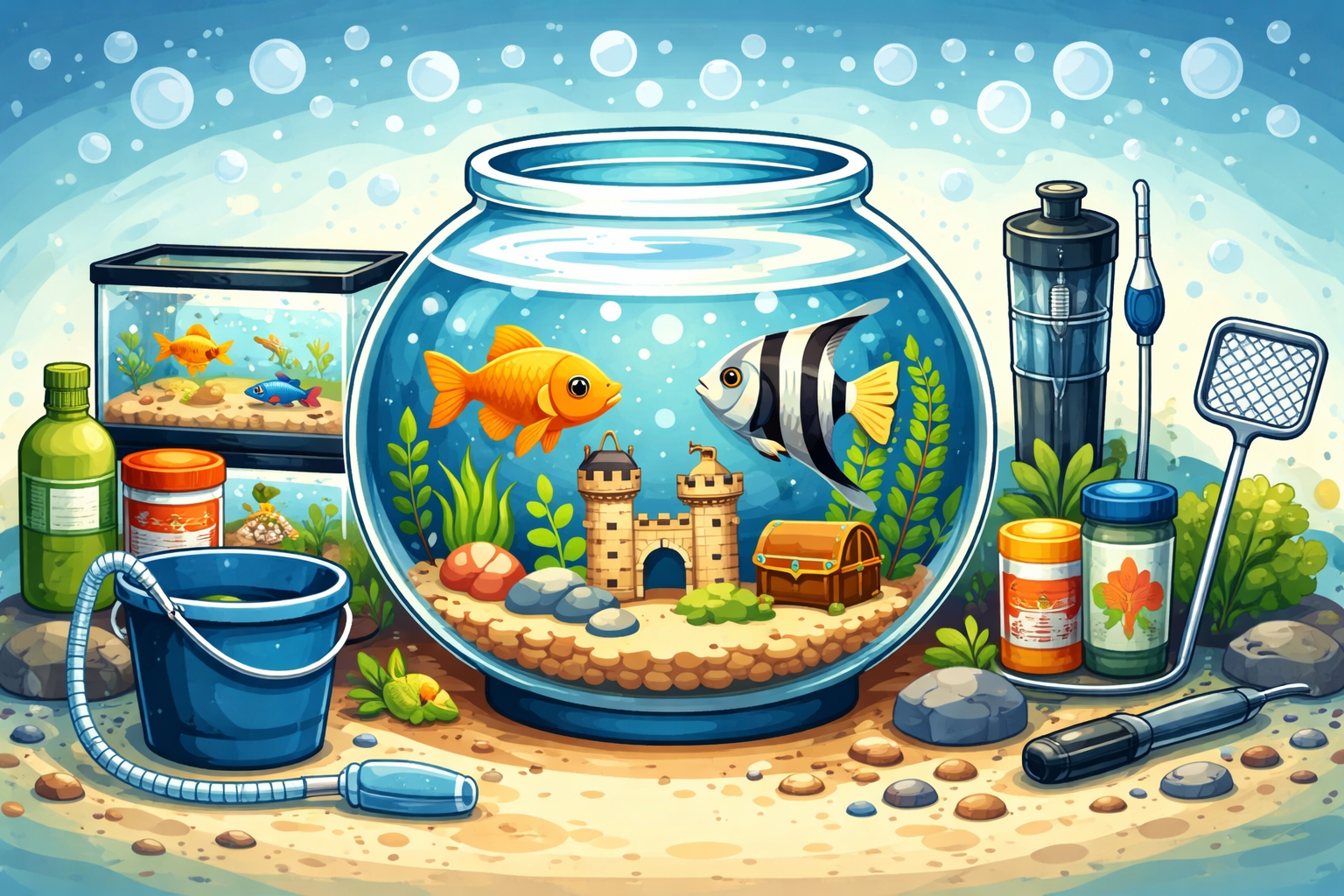
Keeping fish at home is one of the most relaxing and visually rewarding hobbies you can start. A well-maintained aquarium adds beauty to your living space while offering a fascinating glimpse into an underwater world. However, many beginners assume fish are “low-effort” pets—and that misconception often leads to poor water quality, stressed fish, and early losses.
This beginner’s guide covers everything you need to know to keep fish healthy and thriving at home, from choosing the right tank to daily care and long-term maintenance.
Why Fish Make Great Beginner Pets
Fish are ideal for many first-time pet owners because they:
- Don’t require daily physical interaction
- Are quiet and space-efficient
- Reduce stress and promote relaxation
- Come in a wide variety of colors and behaviors
That said, fish rely entirely on water quality and environment, which means proper setup is essential.
Step 1: Choosing the Right Aquarium Tank
Tank Size Matters More Than You Think
One of the biggest beginner mistakes is choosing a tank that’s too small.
- Larger tanks are more stable and easier to maintain
- Small tanks experience rapid water quality changes
- A 20–30 gallon tank is ideal for beginners
Bigger tanks dilute waste better, giving you more room for error.
Tank Placement Tips
- Keep away from direct sunlight
- Avoid high-traffic or noisy areas
- Place on a sturdy, level surface
Stable placement prevents algae problems and stress.
Step 2: Essential Aquarium Equipment
Every beginner aquarium needs a few core components.
Filtration System
Filters:
- Remove waste
- Maintain water clarity
- Support beneficial bacteria
Choose a filter rated for more than your tank size for better performance.
Heater (For Tropical Fish)
Most tropical fish require:
- Water temperatures between 75–80°F (24–27°C)
An adjustable heater with a thermometer ensures consistency.
Lighting
Aquarium lighting:
- Supports fish activity cycles
- Promotes plant growth (if planted)
- Enhances tank appearance
Avoid leaving lights on more than 8–10 hours per day to prevent algae.
Step 3: Understanding the Nitrogen Cycle
Before adding fish, your tank must be cycled.
What Is Cycling?
The nitrogen cycle establishes beneficial bacteria that convert:
- Fish waste → ammonia
- Ammonia → nitrite
- Nitrite → nitrate (less harmful)
Skipping this step is one of the most common causes of fish loss.
Cycling Tips for Beginners
- Cycle the tank for 2–4 weeks before adding fish
- Use water testing kits
- Be patient—this step saves lives
A stable cycle is the foundation of fish health.
Step 4: Choosing Beginner-Friendly Fish
Not all fish are suitable for beginners.
Good Beginner Fish Traits
- Hardy and adaptable
- Peaceful temperament
- Easy feeding requirements
Avoid aggressive or delicate species when starting out.
Stocking Rules
- Don’t overcrowd
- Add fish gradually
- Research compatibility
Overstocking leads to stress and poor water quality.
Step 5: Substrate and Décor
Your aquarium’s layout affects both aesthetics and fish comfort.
Substrate Options
- Gravel (easy to clean)
- Sand (natural look)
Choose smooth substrates to avoid injury.
Décor and Plants
- Provide hiding spaces
- Reduce stress
- Encourage natural behavior
Live plants improve water quality, but artificial plants are fine for beginners too.
Step 6: Feeding Your Fish Properly
Overfeeding is the #1 feeding mistake.
Feeding Guidelines
- Feed once or twice daily
- Only what fish eat in 2–3 minutes
- Remove uneaten food
Excess food pollutes water and causes disease.
Types of Fish Food
- Flakes (surface feeders)
- Pellets (mid-water)
- Frozen or live foods (occasional treats)
Always match food to fish species.
Step 7: Routine Tank Maintenance
Clean tanks mean healthy fish.
Weekly Maintenance
- Change 20–30% of the water
- Clean algae from glass
- Rinse filter media in tank water (never tap water)
Never perform full water changes—this removes beneficial bacteria.
Daily Checks
- Observe fish behavior
- Check temperature
- Ensure equipment is working
Early observation prevents major problems.
Step 8: Common Beginner Mistakes to Avoid
Avoid these common errors:
- Overcrowding the tank
- Skipping the cycling process
- Overfeeding
- Cleaning the tank too aggressively
- Mixing incompatible fish
Most fish problems stem from water quality issues—not disease.
Signs of a Healthy Aquarium
A thriving tank shows:
- Clear water
- Active, alert fish
- Consistent feeding behavior
- Minimal algae growth
If fish are active and eating well, you’re on the right track.
Freshwater vs Saltwater: Which Is Better for Beginners?
Freshwater Aquariums
- Easier maintenance
- Lower cost
- More forgiving
Saltwater Aquariums
- Stunning visuals
- Higher complexity
- More expensive equipment
Most beginners should start with freshwater tanks.
Long-Term Commitment and Growth
Fishkeeping is a long-term hobby.
Expect to:
- Learn continuously
- Upgrade equipment over time
- Improve aquascaping skills
- Understand fish behavior better
With experience, fishkeeping becomes deeply rewarding.
Beginner Aquarium Checklist
✔ Tank (20–30 gallons recommended)
✔ Filter and heater
✔ Thermometer
✔ Water conditioner
✔ Test kit
✔ Substrate and décor
✔ Quality fish food
Preparation makes success far easier.
Final Thoughts
Keeping fish at home is more than decoration—it’s creating a balanced, living ecosystem. While fish may seem simple, their health depends entirely on your care and consistency. By choosing the right tank, cycling properly, feeding responsibly, and maintaining water quality, you set the stage for a vibrant, stress-free aquarium.
Start slow, stay patient, and enjoy the process. A well-kept aquarium doesn’t just look beautiful—it becomes a peaceful centerpiece that rewards you every day.