Providing clean feed and fresh water is the foundation of healthy chicken farming. Whether you raise backyard hens or manage a commercial poultry operation, choosing the right feeders and drinkers directly affects growth rate, egg production, hygiene, and overall flock health.
Poor feeding systems lead to wasted feed, contaminated water, disease spread, and higher operating costs. The right equipment improves efficiency and reduces daily maintenance.
This guide explains the best types of feeders and drinkers for chickens and how to choose the ideal setup.
Best Feeders for Chickens
1. Tube Feeders
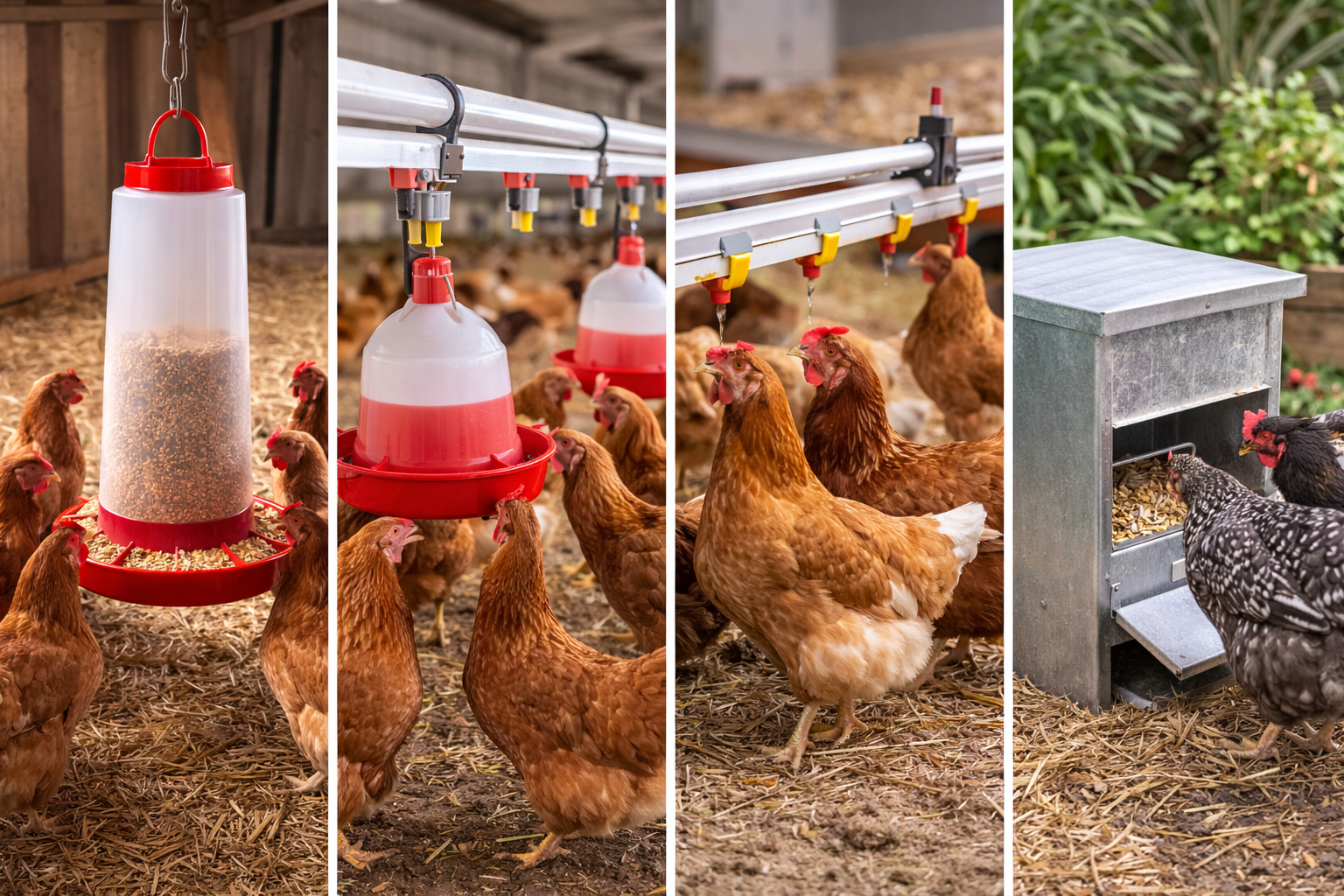
Tube feeders are one of the most popular choices for backyard poultry keepers.
Features
- Vertical storage column
- Circular feeding tray
- Hanging or standing design
Advantages
- Reduces feed waste
- Easy to refill
- Affordable
- Suitable for small to medium flocks
For best results, hang tube feeders at the chickens’ back height to prevent scratching feed out.
2. Trough Feeders
Trough feeders are long, open containers that allow multiple birds to eat at once.
Best For
- Medium to large flocks
- Controlled feeding areas
Pros
- Allows simultaneous feeding
- Durable construction
- Ideal for dry mash or crumble
Cons
- Higher chance of contamination
- Birds may scratch feed
Using grill tops can reduce waste.
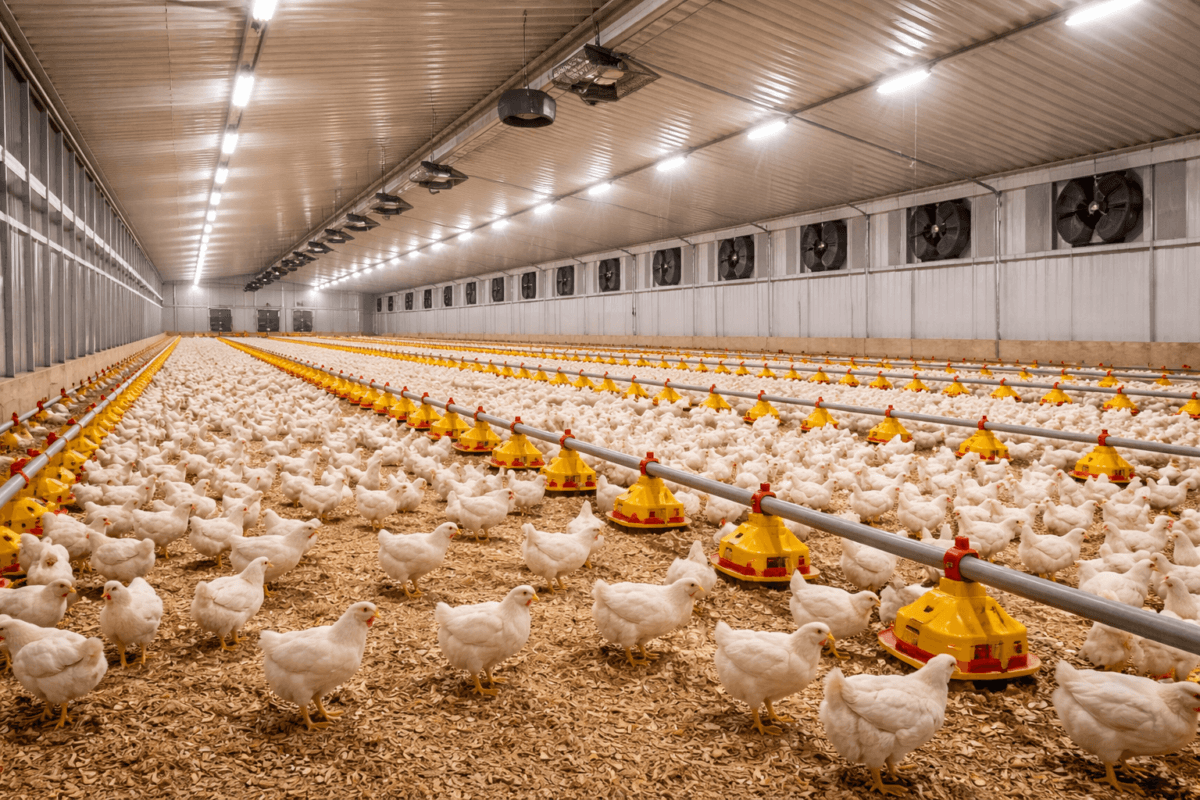
3. Automatic Feeders
Automatic systems are commonly used in commercial poultry farms.
Benefits
- Saves labor
- Provides consistent feed supply
- Reduces spillage
- Supports large-scale production
These feeders can be gravity-fed or connected to feed silos.
Ideal for farms with dozens or hundreds of birds.
4. Treadle Feeders
Treadle feeders open only when a chicken steps on a platform.
Advantages
- Prevents rodent access
- Minimizes feed waste
- Keeps feed dry
Best for backyard setups in areas with pest problems.
5. DIY Feeders
Some poultry keepers use PVC pipe feeders or bucket systems.
Ensure they:
- Are stable
- Protect feed from rain
- Prevent excessive scratching
DIY options can reduce cost but must be carefully designed.
Best Drinkers for Chickens
Water is even more critical than feed. Chickens cannot survive long without clean hydration.
1. Bell Drinkers
Bell drinkers are widely used in poultry farming.
Features
- Suspended water container
- Circular drinking area
- Automatic refill from tank
Benefits
- Easy access for multiple birds
- Reduced contamination
- Suitable for large flocks
Keep bell drinkers slightly elevated to maintain cleanliness.
2. Nipple Drinkers
Nipple systems are considered the most hygienic option.
Advantages
- Prevents water contamination
- Reduces wet litter
- Controls water flow
- Ideal for commercial farms
Birds peck the nipple to release water.
These systems significantly reduce disease spread.
3. Cup Drinkers
Cup drinkers automatically refill small water cups.
Benefits
- Cleaner than open bowls
- Moderate water control
- Suitable for small farms
They require occasional inspection for blockages.
4. Traditional Poultry Waterers
Common in backyard flocks.
Features
- Plastic or metal reservoir
- Base tray for drinking
Pros
- Affordable
- Easy to clean
- Simple setup
However, they require frequent cleaning to avoid contamination.
How to Choose the Right System
Consider Flock Size
Small backyard flock:
- Tube feeders
- Traditional drinkers
Medium flock:
- Hanging feeders
- Bell drinkers
Large commercial farm:
- Automatic feeders
- Nipple drinker systems
Consider Hygiene
Wet litter leads to:
- Ammonia buildup
- Footpad dermatitis
- Bacterial growth
Nipple drinkers reduce moisture compared to open waterers.
Prevent Feed Waste
Feed waste increases costs.
Choose feeders that:
- Minimize scratching
- Protect feed from rain
- Keep rodents away
Treadle feeders are effective against pests.
Ease of Cleaning
Select equipment that:
- Disassembles easily
- Has smooth surfaces
- Is rust-resistant
Cleaning should be done regularly to maintain flock health.
Placement Tips
Feeder Height
- Position at back height of chickens
- Prevents scratching
- Reduces spillage
Drinker Height
- Keep slightly above ground
- Avoid bedding contamination
Common Mistakes to Avoid
❌ Overcrowding feeders
❌ Placing drinkers directly on litter
❌ Ignoring algae buildup
❌ Allowing rodents access
❌ Using cracked or damaged equipment
Routine inspection prevents major problems.
How Many Feeders & Drinkers Do You Need?
General guideline:
- 1 feeder per 10–15 chickens
- 1 drinker per 10 chickens
Commercial setups may vary depending on system design.
Seasonal Considerations
Hot Weather
- Provide additional drinkers
- Ensure cool, clean water
- Increase ventilation
Cold Weather
- Use heated drinkers
- Prevent freezing
- Monitor water flow
Benefits of Proper Feeding & Water Systems
- Higher egg production
- Better weight gain
- Lower feed conversion ratio
- Reduced disease risk
- Improved litter condition
- Increased farm efficiency
Well-designed systems pay off long-term.
Final Thoughts
Choosing the best feeders and drinkers for chickens depends on flock size, farm type, and management style.
Top recommendations:
- Tube feeders for backyard flocks
- Treadle feeders for rodent control
- Bell drinkers for medium farms
- Nipple drinker systems for commercial setups
Investing in quality feeding and watering equipment improves bird health, reduces waste, and increases productivity.
Efficient systems are the backbone of successful poultry farming.


 Accessories & Others
 Apparel
 Beds & Furniture
 Cages & Accessories
 Carriers & Strollers
 Doors, Gates & Ramps
 Flea & Tick Control
 Grooming
 Litter & Housebreaking
 Memorials & Funerary
 Accessories & Others
 Apparel
 Beds & Furniture
 Cages & Accessories
 Carriers & Strollers
 Cat Doors,Steps, Nets.
 Collars, Harnesses & leashes
 Flea & Tick Control
 Grooming
 Cages& Accessories
 Cow Mastitis Detectors
 Ear Tags
 Aquarium Accessories
 Aquarium Cleaners
 Aquarium Decor
 Aquarium Lights
 Aquarium Pumps & Filter
 Aquariums & Fish Bowls
 Automatic Feeders