Maintaining a healthy flock starts with proper feeding and hydration. For farm owners, selecting the right feeders and drinkers is more than just convenience—it impacts your chickens’ health, growth, and egg production. Poor quality or inappropriate feeders and drinkers can lead to feed wastage, contamination, and disease outbreaks.
This guide will cover the best types of feeders and drinkers, their features, sizing recommendations, and maintenance tips to ensure your chickens thrive.
Why Choosing the Right Feeder and Drinker Matters
Chickens are messy eaters. Feed spilled on the floor attracts pests, while stagnant water can breed bacteria. The right feeders and drinkers:
- Reduce feed wastage
- Provide clean, accessible food and water
- Prevent overcrowding and competition
- Promote flock health and growth
Investing in quality equipment saves money and improves flock productivity in the long term.
Types of Chicken Feeders
Chicken feeders come in various designs, each suitable for different flock sizes and farm setups.
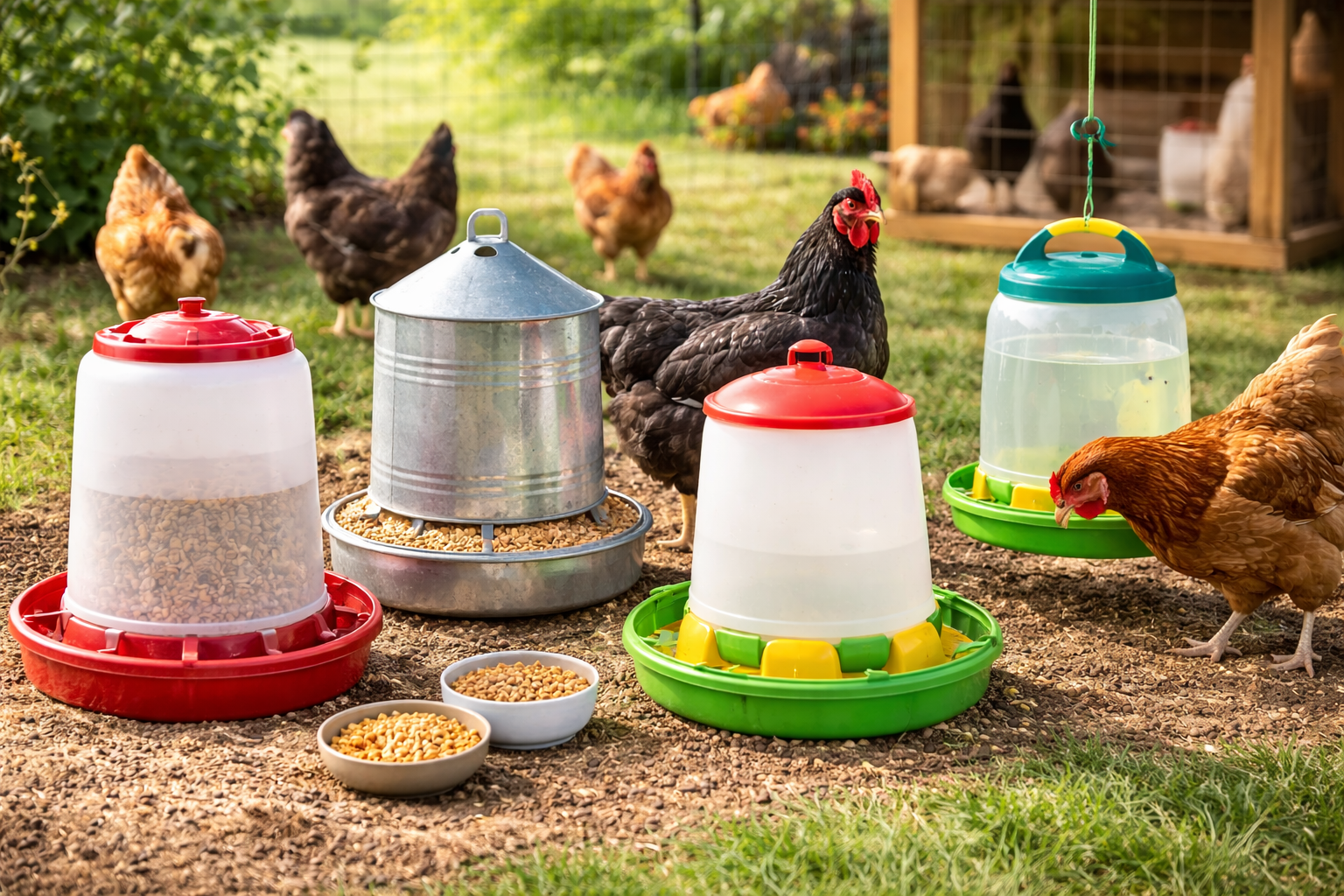
1. Tray Feeders
Description: Simple shallow trays made of plastic or metal. Feed is placed directly in the tray.
Pros:
- Inexpensive and easy to clean
- Suitable for small flocks or starter chicks
Cons:
- Feed spills easily
- Attracts pests if not monitored
Best For: Small backyard flocks or temporary feeding setups.
2. Gravity Feeders
Description: Feed is stored in a hopper and dispensed automatically as chickens eat.
Pros:
- Keeps feed dry and clean
- Reduces spillage
- Low-maintenance
Cons:
- Must refill hopper regularly
- Not suitable for very large flocks
Best For: Medium-sized flocks needing consistent feed availability.
3. Tube Feeders
Description: Long cylindrical feeders with multiple feeding ports along the tube.
Pros:
- Can feed many chickens simultaneously
- Reduces competition and bullying
- Minimizes feed waste
Cons:
- Must be elevated for proper use
- Cleaning can be slightly harder than trays
Best For: Flocks of 10–50 chickens.
4. Automatic or Electronic Feeders
Description: Feeders that release portions of feed at scheduled intervals.
Pros:
- Time-saving for busy farm owners
- Prevents overeating
- Reduces manual labor
Cons:
- Higher upfront cost
- Requires electricity or batteries
Best For: Large flocks or farms with limited staffing.
Types of Chicken Drinkers
Fresh, clean water is crucial for flock health. Different drinkers suit different farm conditions.
1. Nipple Drinkers
Description: Chickens peck at nipples to release water.
Pros:
- Keeps water clean and reduces spillage
- Minimizes algae growth
- Easy to connect to larger water systems
Cons:
- Requires proper installation height
- Chicks may need training to use
Best For: Medium to large flocks, especially in confined spaces.
2. Cup Drinkers
Description: Small cups that collect water when attached to a pipe or nipple system.
Pros:
- Easy for chicks to access
- Water stays cleaner than open troughs
- Reduces spillage
Cons:
- Must be monitored and refilled regularly
- Can get contaminated if too small
Best For: Chicks and small flocks.
3. Trough or Pan Drinkers
Description: Open containers or troughs that hold water.
Pros:
- Easy to fill and clean
- Provides multiple access points for large flocks
Cons:
- Water gets dirty quickly
- Higher risk of contamination
- Requires daily cleaning
Best For: Large outdoor flocks with constant monitoring.
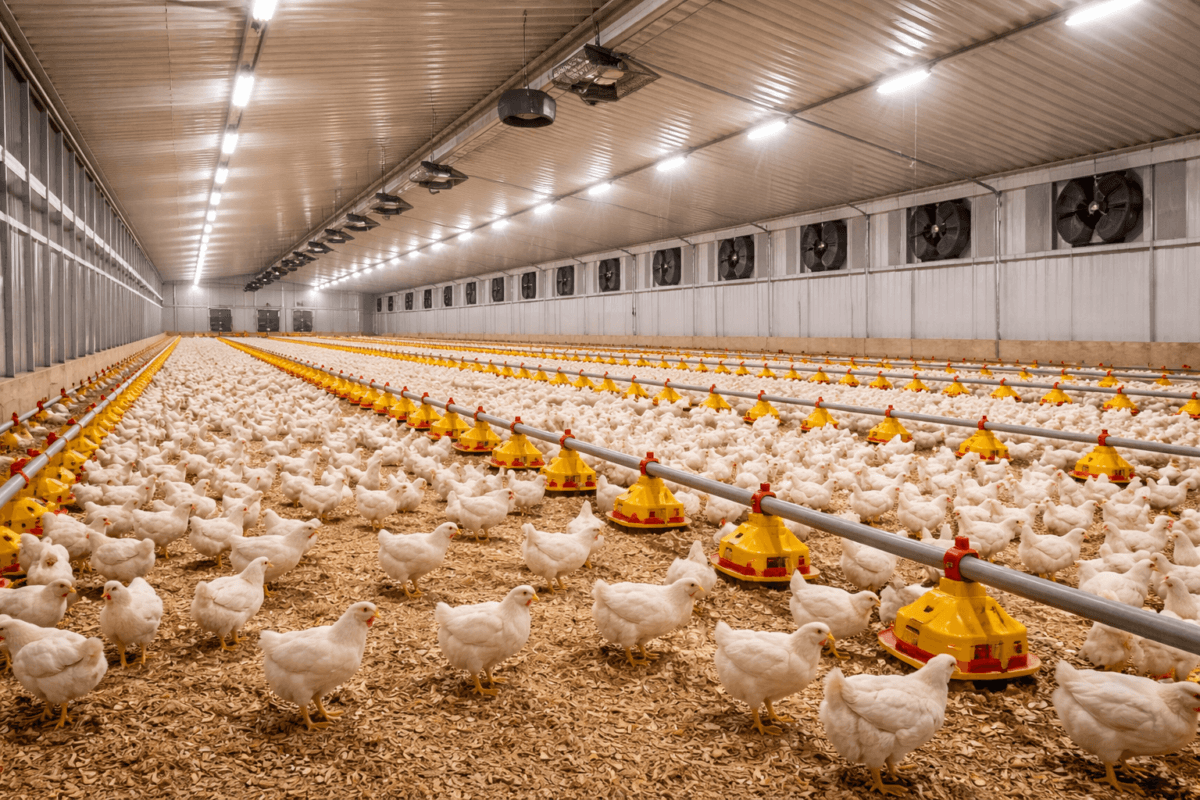
4. Automatic Watering Systems
Description: Water is supplied continuously through pipes connected to drinkers.
Pros:
- Ensures constant clean water supply
- Reduces labor for large farms
- Minimizes spillage and waste
Cons:
- Higher cost and more setup required
- Regular maintenance needed to prevent clogging
Best For: Commercial farms or large backyard operations.
Choosing the Right Size
Feeders
- Allow at least 6–10 inches of feeder space per chicken.
- For tube feeders, consider the number of ports based on flock size.
Drinkers
- Provide 1 inch of water per bird for nipple or cup systems.
- Troughs should be long enough so all chickens can access simultaneously.
Tip: Avoid overcrowding to reduce stress and prevent aggressive behavior.
Materials and Durability
- Plastic: Lightweight, easy to clean, resistant to rust
- Metal: Durable, withstands outdoor exposure, more expensive
- Galvanized Steel: Rust-resistant and long-lasting
Choose materials based on your climate, flock size, and budget.
Maintenance Tips
- Clean feeders and drinkers daily or weekly, depending on flock size
- Check for signs of mold, algae, or contamination
- Keep equipment elevated to prevent dirt and droppings
- Rotate or replace worn-out feeders to maintain hygiene
Proper maintenance ensures healthier chickens and reduces the risk of diseases.
Additional Accessories to Consider
- Feed hoppers with covers: Keeps feed dry and prevents pests
- Water filters: Prevent debris and improve water quality
- Height-adjustable stands: Allows drinkers and feeders to grow with your chickens
- Anti-spill mats: Reduces mess around feeding areas
These small investments make feeding management easier and more efficient.
Final Thoughts
Proper feeders and drinkers are essential for a healthy and productive flock. Choosing the right type, size, and material ensures your chickens have consistent access to clean food and water, reduces wastage, and promotes overall flock well-being.


 Accessories & Others
 Apparel
 Beds & Furniture
 Cages & Accessories
 Carriers & Strollers
 Doors, Gates & Ramps
 Flea & Tick Control
 Grooming
 Litter & Housebreaking
 Memorials & Funerary
 Accessories & Others
 Apparel
 Beds & Furniture
 Cages & Accessories
 Carriers & Strollers
 Cat Doors,Steps, Nets.
 Collars, Harnesses & leashes
 Flea & Tick Control
 Grooming
 Cages& Accessories
 Cow Mastitis Detectors
 Ear Tags
 Aquarium Accessories
 Aquarium Cleaners
 Aquarium Decor
 Aquarium Lights
 Aquarium Pumps & Filter
 Aquariums & Fish Bowls
 Automatic Feeders