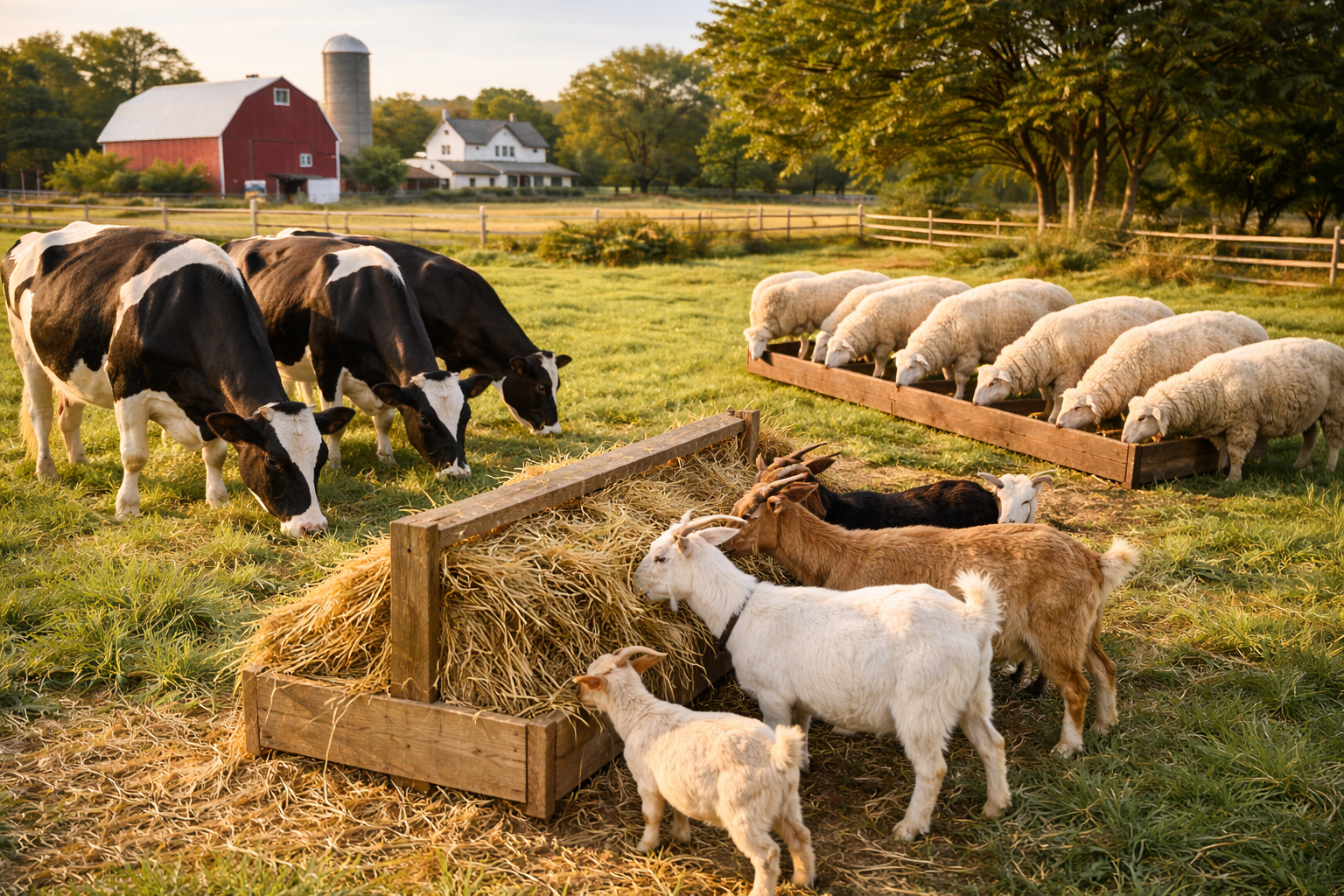
Proper feeding is the foundation of healthy, productive livestock. Cows, goats, and sheep may differ in size and behavior, but all three are ruminants that rely on balanced diets to maintain good digestion, strong immunity, and consistent production of milk, meat, or wool. Poor feeding practices can lead to weight loss, disease, reduced fertility, and lower farm profits.
In this guide, we’ll explore the best feeding practices for cows, goats, and sheep, helping you provide the right nutrition at every stage of life and throughout the year.
1. Understand the Nutritional Needs of Ruminants
Cows, goats, and sheep have multi-chambered stomachs designed to digest fibrous plant material. Their diets should focus primarily on forage, supported by supplements when necessary.
Key Nutrients They Need:
- Energy: Provided mainly by grasses, hay, and grains
- Protein: Essential for growth, milk production, and reproduction
- Minerals: Calcium, phosphorus, salt, and trace minerals
- Vitamins: Especially vitamins A, D, and E
- Clean water: Critical for digestion and overall health
Balancing these nutrients helps animals maintain body condition and resist disease.
2. Prioritize High-Quality Forage
Forage should make up the largest portion of the diet for cows, goats, and sheep.
Best Forage Options:
- Fresh pasture grass
- Legumes such as alfalfa and clover
- High-quality hay during dry or cold seasons
Feeding Tips:
- Rotate pastures to prevent overgrazing
- Avoid moldy or dusty hay, which can cause respiratory issues
- Provide free access to forage whenever possible
Healthy forage supports rumen function and reduces reliance on expensive concentrates.
3. Species-Specific Feeding Considerations
Although they share similarities, cows, goats, and sheep have different feeding behaviors.
Feeding Cows
- Require large quantities of forage due to their size
- Benefit from energy-rich feed during lactation
- Should have constant access to roughage to prevent digestive issues
Feeding Goats
- Prefer browsing shrubs, leaves, and weeds rather than grazing grass
- Require higher protein levels than sheep
- Do best with varied diets and elevated feeders to reduce waste
Feeding Sheep
- Thrive mainly on grasses and pasture
- Are sensitive to excess copper, so mineral mixes must be sheep-safe
- Require careful feeding during pregnancy and lambing periods
Understanding these differences prevents nutritional imbalances.
4. Use Concentrates Wisely
Concentrates such as grains and commercial feeds provide additional energy and protein but should be used carefully.
When to Use Concentrates:
- During late pregnancy and lactation
- For growing young animals
- During winter or pasture shortages
Best Practices:
- Introduce concentrates gradually to avoid digestive upset
- Avoid overfeeding, which can cause bloat or acidosis
- Adjust amounts based on body condition and production level
Forage should always remain the primary feed source.
5. Provide Proper Mineral and Salt Supplements
Mineral deficiencies can lead to poor growth, weak bones, infertility, and low milk yield.
Supplement Guidelines:
- Offer free-choice salt blocks or loose minerals
- Use species-specific mineral mixes
- Place minerals in dry, accessible locations
Never feed cattle minerals to sheep due to copper toxicity risks.
6. Ensure Constant Access to Clean Water
Water is often overlooked but is essential for digestion and nutrient absorption.
- Animals should always have access to fresh, clean water
- Increase water availability during hot weather and lactation
- Clean troughs regularly to prevent algae and bacteria buildup
Reduced water intake can quickly decrease feed intake and productivity.
7. Adjust Feeding Practices by Season
Seasonal changes affect forage quality and animal nutritional needs.
Summer Feeding:
- Ensure shade and adequate water
- Monitor pasture quality during drought
- Supplement with hay if grass becomes scarce
Winter Feeding:
- Increase energy intake to maintain body heat
- Provide good-quality hay or silage
- Check animals regularly for weight loss
Seasonal planning prevents stress and nutritional gaps.
8. Avoid Common Feeding Mistakes
Many health issues stem from simple feeding errors.
Common Mistakes to Avoid:
- Sudden changes in diet
- Feeding spoiled or moldy feed
- Overfeeding grains
- Ignoring mineral imbalances
Gradual transitions and regular observation reduce feeding-related problems.
9. Monitor Body Condition and Adjust Diets
Body condition scoring is an effective way to evaluate feeding success.
- Animals should not appear overly thin or excessively fat
- Adjust feed based on age, pregnancy, and production stage
- Keep simple feeding records to track changes
Healthy body condition reflects proper nutrition.
Final Thoughts
Best feeding practices for cows, goats, and sheep are built on quality forage, balanced nutrition, clean water, and thoughtful seasonal management. While each species has unique needs, all thrive when their diets support healthy digestion and strong immunity.
By understanding feeding behavior, avoiding common mistakes, and adjusting diets throughout the year, you can improve animal health, boost productivity, and create a more sustainable farming operation. Well-fed animals are healthier, happier, and far more rewarding to raise. 🐄🐐🐑