Dogs are intelligent, social animals that thrive on mental stimulation and physical play. Without enough engagement, boredom can lead to unwanted behaviors such as chewing furniture, excessive barking, digging, or pacing. One of the most effective ways to prevent boredom is with interactive dog toys—toys that challenge your pup’s brain, reward good behavior, and keep them happily occupied for longer.
In this guide, we’ll explore the best interactive dog toys available today, how they help reduce boredom, and how to choose the right ones for your dog’s age, size, and play style. Whether you have a curious puppy, a high-energy adult dog, or a senior looking for gentle enrichment, interactive toys can be a game-changer.
Why Interactive Toys Matter
Just like humans, dogs need mental exercise as much as physical activity. Regular walks and playtime are great, but interactive toys offer unique benefits:
- Mental stimulation: Encourages problem-solving and reduces stress
- Slower eating: Puzzle feeders slow down fast eaters
- Energy release: Keeps high-energy dogs engaged even indoors
- Alone-time enrichment: Helps reduce anxiety when you’re away
- Bonding: You can join in and play together
Many behavioral issues stem from lack of stimulation. Interactive toys help fill that gap with fun and challenge.
Types of Interactive Dog Toys
Interactive toys come in various styles. Here are some of the most popular and effective categories:
1. Puzzle Feeders & Treat Dispensers
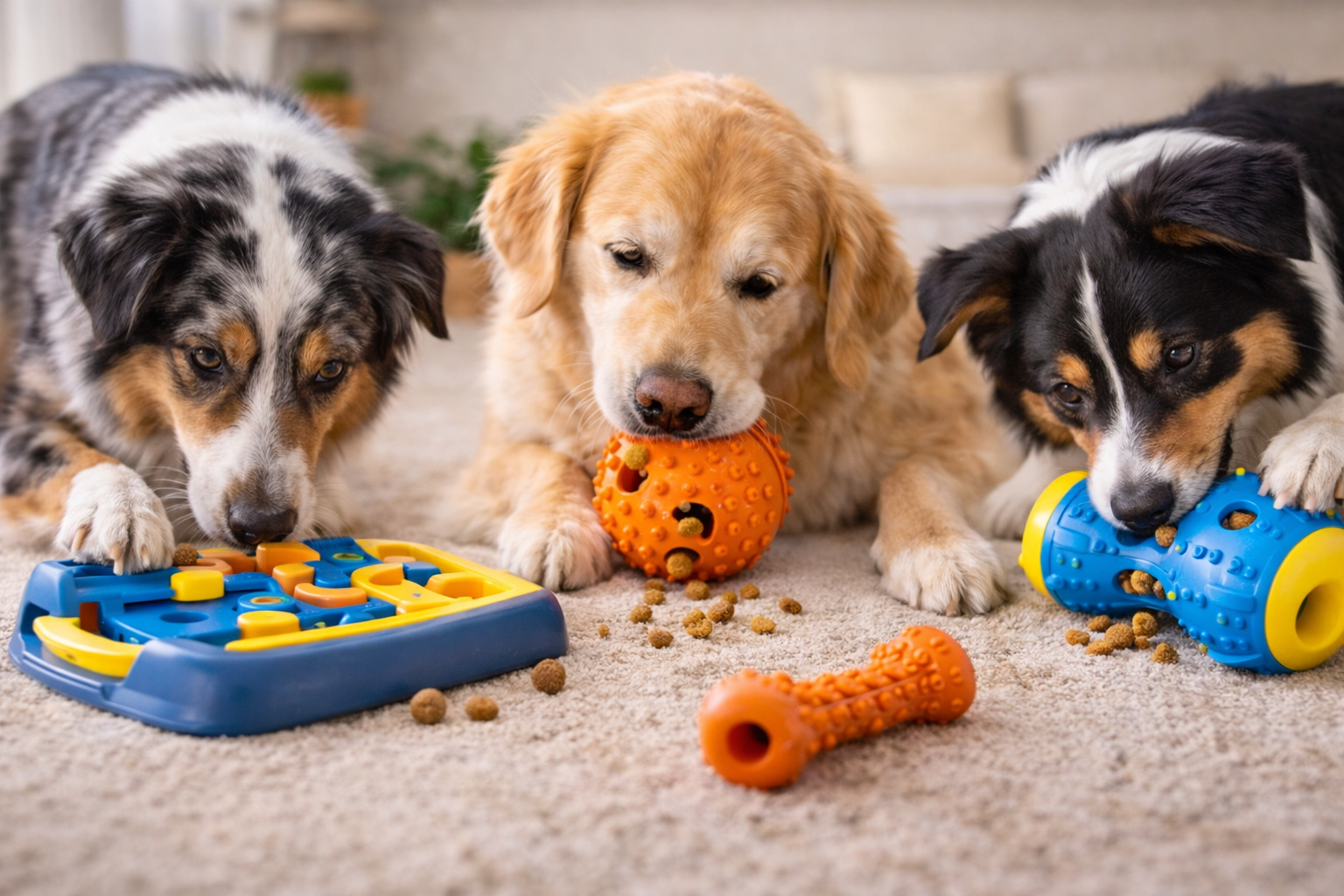
These toys hide treats or kibble inside puzzles that your dog must manipulate to release the food. They reward problem-solving and slow down eating.
Examples:
- Treat-dispensing balls
- Puzzle boards
- Rotating maze feeders
Best for: Dogs who love food rewards and problem solving.
Benefits:
- Mental workout with tasty motivation
- Slows down fast eaters
- Ideal for meal enrichment
2. Interactive Plush Toys
Plush toys with hidden squeakers, pockets, or Velcro flaps can be surprisingly engaging for dogs that enjoy sniffing and searching.
Examples:
- Toys with hidden squeakers
- Toys with pockets for treats
- Plush puzzles with layers to lift
Best for: Dogs who enjoy cozy play and scent games.
Benefits:
- Gentle on teeth and gums
- Great for light mental engagement
- Perfect for smaller breeds
3. Rolling & Motion Toys
These are toys that move unpredictably or roll in unexpected ways, encouraging dogs to chase and interact with them.
Examples:
- Treat-dispensing rolling toys
- Motorized moving toys
- “Wobble” balls
Best for: Energetic dogs who enjoy chasing and movement.
Benefits:
- Physical and mental engagement
- Great for indoor play
- Keeps curious dogs entertained longer
4. Chew & Tug Interactive Toys
Designed with durability in mind, these toys provide engagement through chewing and interactive play with you.
Examples:
- Rope tug toys with treat pockets
- Tough rubber chew puzzles
- Interactive tug-and-respond toys
Best for: Strong chewers and dogs who love engagement with owners.
Benefits:
- Encourages healthy chewing behavior
- Great for social play
- Helps relieve stress
Top Picks: Interactive Dog Toys That Really Work
Here are some of the most popular and highly rated interactive toys that help reduce boredom:
A. Treat-Dispensing Puzzle Balls
These balls roll and randomly dispense treats as your dog plays. They’re excellent for mental stimulation and slow feeding.
Why dogs love them: It feels like play and reward at the same time.
B. Multi-Puzzle Feeders
These boards or containers have multiple puzzles inside. Your dog has to slide, flip, or push pieces to reveal treats.
Why they work: They offer layered challenges, keeping dogs engaged longer.
C. Motorized Moving Toys
These powered toys move unpredictably or flutter, triggering a dog’s instinct to chase and investigate.
Why they work: Dogs stay curious and active even when alone.
D. Scent-Work Mats
Made with fabric strips or layers, these mats encourage your dog to sniff and dig for hidden treats.
Why they work: Engages the brain through scent and discovery.
E. Heavy-Duty Chew Puzzles
Designed for strong chewers, these puzzles combine chewing and problem-solving.
Why they work: Perfect for dogs who solve puzzles fast and need durable options.
How to Introduce Interactive Toys to Your Dog
Starting with interactive toys may feel unfamiliar to your dog at first. Here’s how to make the experience positive:
- Start simple: Begin with easy puzzles your dog can quickly solve.
- Use high-value treats: Small, tasty treats make engagement more rewarding.
- Play together: Sit with your dog and show how the toy works.
- Gradually increase challenge: Move to more complex toys as your dog improves.
Patience is key—some dogs catch on quickly, while others take a few sessions to understand the challenge.
Safety Tips for Interactive Play
- Choose the right size: Toys that are too small can be a choking risk.
- Avoid toxic materials: Look for non-toxic, pet-safe construction.
- Supervise at first: Especially with puzzles and moving parts.
- Check wear and tear: Replace toys that are broken or frayed.
Interactive toys are meant to enrich, not frustrate. Adjust difficulty and monitor your dog’s comfort level.
Daily Play Routine: Boredom Busters
Here’s a simple weekly routine to keep your dog mentally and physically stimulated:
- Daily: 10–15 minutes with treat dispensers or puzzle toys
- 3–4 times/week: Motion toys play session
- Weekends: Longer scent-work or multi-puzzle challenges
- Evenings: Calm interactive games or plush toy sessions
This variety keeps play exciting and avoids predictability.
Benefits Beyond Boredom Reduction
Interactive toys do more than pass the time—they support overall well-being.
- Reduces anxiety and destructive behaviors
- Encourages natural instincts like foraging and problem-solving
- Improves focus and listening skills
- Strengthens bond between you and your dog
Investing in good interactive toys is investing in your dog’s happiness.


 Accessories & Others
 Apparel
 Beds & Furniture
 Cages & Accessories
 Carriers & Strollers
 Doors, Gates & Ramps
 Flea & Tick Control
 Grooming
 Litter & Housebreaking
 Memorials & Funerary
 Accessories & Others
 Apparel
 Beds & Furniture
 Cages & Accessories
 Carriers & Strollers
 Cat Doors,Steps, Nets.
 Collars, Harnesses & leashes
 Flea & Tick Control
 Grooming
 Cages& Accessories
 Cow Mastitis Detectors
 Ear Tags
 Aquarium Accessories
 Aquarium Cleaners
 Aquarium Decor
 Aquarium Lights
 Aquarium Pumps & Filter
 Aquariums & Fish Bowls
 Automatic Feeders