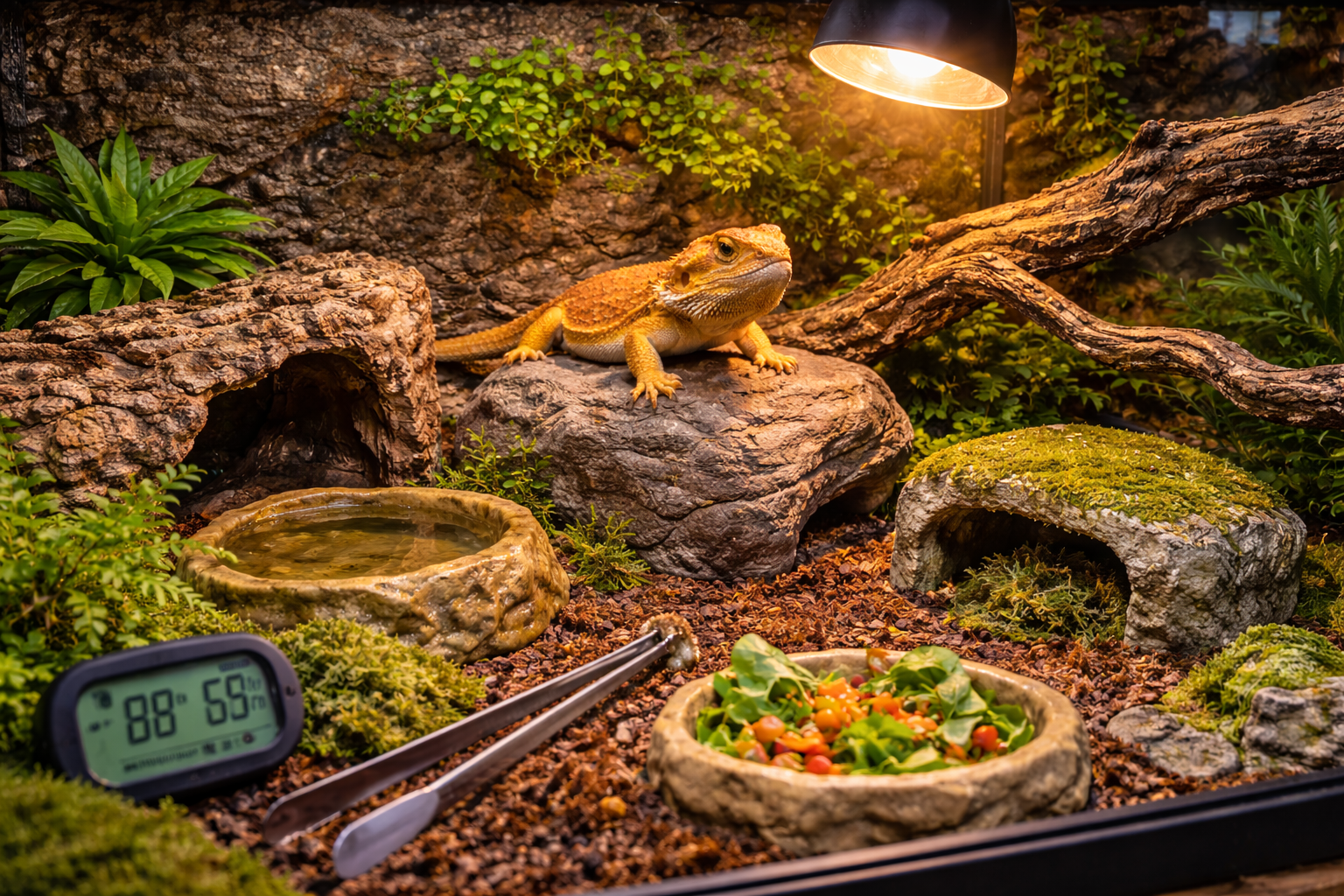
Creating a healthy reptile habitat goes far beyond choosing the right enclosure and lighting. Accessories play a crucial role in your reptile’s physical health, mental stimulation, and overall well-being. The right accessories reduce stress, encourage natural behaviors, and help maintain stable environmental conditions.
This guide explores the best reptile accessories for a healthy habitat, explaining why each one matters and how to choose safe, species-appropriate options.
Why Reptile Accessories Matter
In the wild, reptiles interact constantly with their environment—climbing, hiding, basking, and exploring. A bare enclosure may be easy to clean, but it often leads to:
- Chronic stress
- Reduced activity
- Poor appetite
- Behavioral issues
Proper accessories transform an enclosure into a functional ecosystem, not just a display box.
1. Hides: Essential for Security and Stress Reduction
Hides are one of the most important accessories in any reptile enclosure.
Why Hides Are Critical
- Provide a sense of safety
- Reduce stress and defensive behavior
- Help regulate body temperature
Every enclosure should include at least two hides:
- One on the warm side
- One on the cool side
This allows reptiles to thermoregulate without feeling exposed.
Choosing the Right Hide
- Snug fit (not oversized)
- Smooth edges to prevent injury
- Easy to clean
Natural-looking hides also improve enclosure aesthetics.
2. Basking Platforms and Rocks
Basking accessories support digestion, metabolism, and UVB exposure.
Benefits
- Encourage proper basking behavior
- Help reptiles regulate body temperature
- Provide exercise through climbing
Basking platforms should be:
- Stable and non-slip
- Positioned directly under heat and UVB
- Sized appropriately for the reptile
Never use unstable or sharp rocks.
3. Climbing Branches and Logs
For arboreal and semi-arboreal species, climbing accessories are essential.
Why They Matter
- Promote muscle strength
- Encourage natural movement
- Reduce boredom
Branches should be:
- Securely anchored
- Free of sharp points
- Made from reptile-safe wood
Even ground-dwelling reptiles benefit from mild climbing opportunities.
4. Substrate-Appropriate Décor
Décor works together with substrate to support natural behaviors.
Examples include:
- Cork bark tunnels
- Leaf litter
- Half logs
These accessories:
- Provide additional hiding areas
- Improve humidity retention
- Create visual barriers
Avoid overcrowding—leave open areas for movement.
5. Water Bowls and Hydration Accessories
Clean water access is non-negotiable.
Water Bowl Tips
- Use heavy, tip-resistant bowls
- Choose shallow designs to prevent drowning
- Clean and refill daily
Some species benefit from:
- Drip systems
- Waterfalls (advanced setups only)
Water accessories also help regulate humidity.
6. Humidity Accessories
Maintaining proper humidity often requires additional tools.
Helpful accessories include:
- Humidity hides
- Moss boxes
- Automatic misting systems
These accessories are especially important for:
- Shedding reptiles
- Tropical species
- Amphibians
Always pair humidity tools with a hygrometer.
7. Thermometers and Hygrometers (Monitoring Tools)
Monitoring accessories are just as important as décor.
Every enclosure should include:
- At least two thermometers (warm and cool side)
- One reliable hygrometer
Digital models with probes offer the most accuracy. Guessing environmental conditions is risky and often leads to illness.
8. Enrichment Accessories for Mental Stimulation
Reptiles may not play like mammals, but they still need stimulation.
Enrichment ideas:
- Rearranging décor occasionally
- Adding new textures or hides
- Varying climbing paths
Environmental enrichment encourages:
- Natural exploration
- Reduced stress
- Healthier behavior patterns
Small changes can make a big difference.
9. Feeding Accessories
Proper feeding tools improve hygiene and safety.
Recommended accessories:
- Feeding dishes
- Insect escape-proof bowls
- Feeding tongs
Using feeding tools helps:
- Prevent substrate ingestion
- Reduce stress during feeding
- Improve feeding accuracy
Never leave live prey unattended.
10. Backgrounds and Visual Barriers
Enclosure backgrounds are often overlooked but very beneficial.
Benefits
- Reduce reflection stress
- Make reptiles feel less exposed
- Improve enclosure appearance
Backgrounds can be:
- Foam rock panels
- Cork bark
- Printed terrarium backgrounds
They add depth without reducing usable space.
Accessories to Avoid
Some accessories look appealing but can be dangerous.
Avoid:
- Sharp décor
- Unsecured heavy objects
- Painted or chemically treated items
- Heat rocks
Safety should always outweigh aesthetics.
Matching Accessories to Species
Accessories should reflect natural habitats.
- Desert species: rocks, open basking areas, minimal clutter
- Tropical species: branches, plants, humidity hides
- Burrowing species: tunnels, deep substrate support
One-size-fits-all setups rarely work well.
Cleaning and Maintenance of Accessories
Accessories must be kept clean to prevent disease.
Maintenance tips:
- Spot-clean daily
- Disinfect monthly
- Replace damaged items
Dirty décor can harbor bacteria just like dirty substrate.
Final Thoughts
The best reptile accessories do more than decorate—they support physical health, reduce stress, and encourage natural behavior. When chosen carefully, accessories transform an enclosure into a safe, enriching environment where reptiles can thrive.
A healthy habitat includes:
- Secure hiding spaces
- Proper basking and climbing areas
- Clean water access
- Accurate monitoring tools
By investing in the right accessories and maintaining them properly, you give your reptile the comfort and stability it needs for a long, healthy life.