Does your dog inhale food in seconds? Fast eating may seem harmless, but it can lead to serious health problems like choking, vomiting, indigestion, and even dangerous conditions like bloat (gastric dilatation-volvulus).
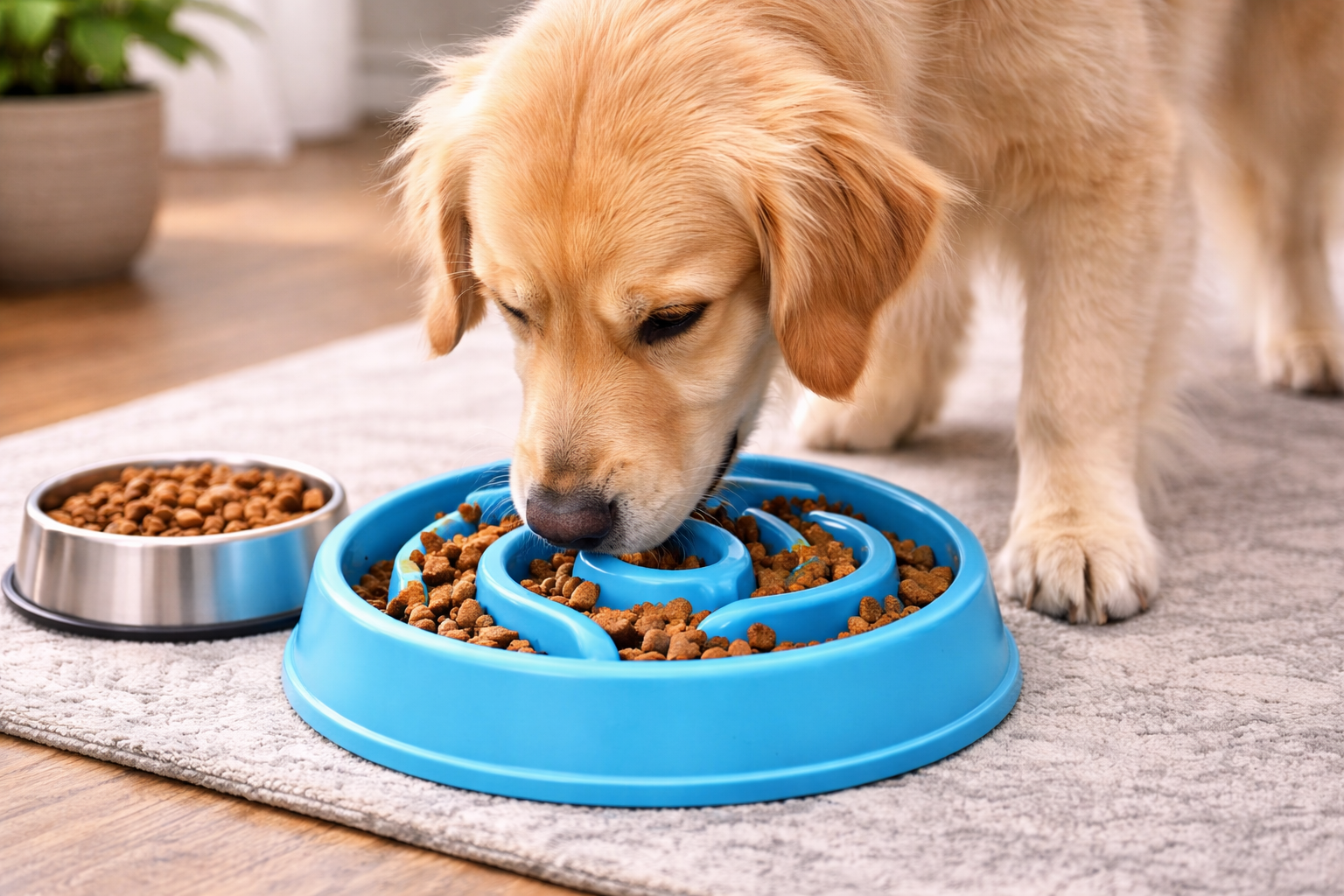
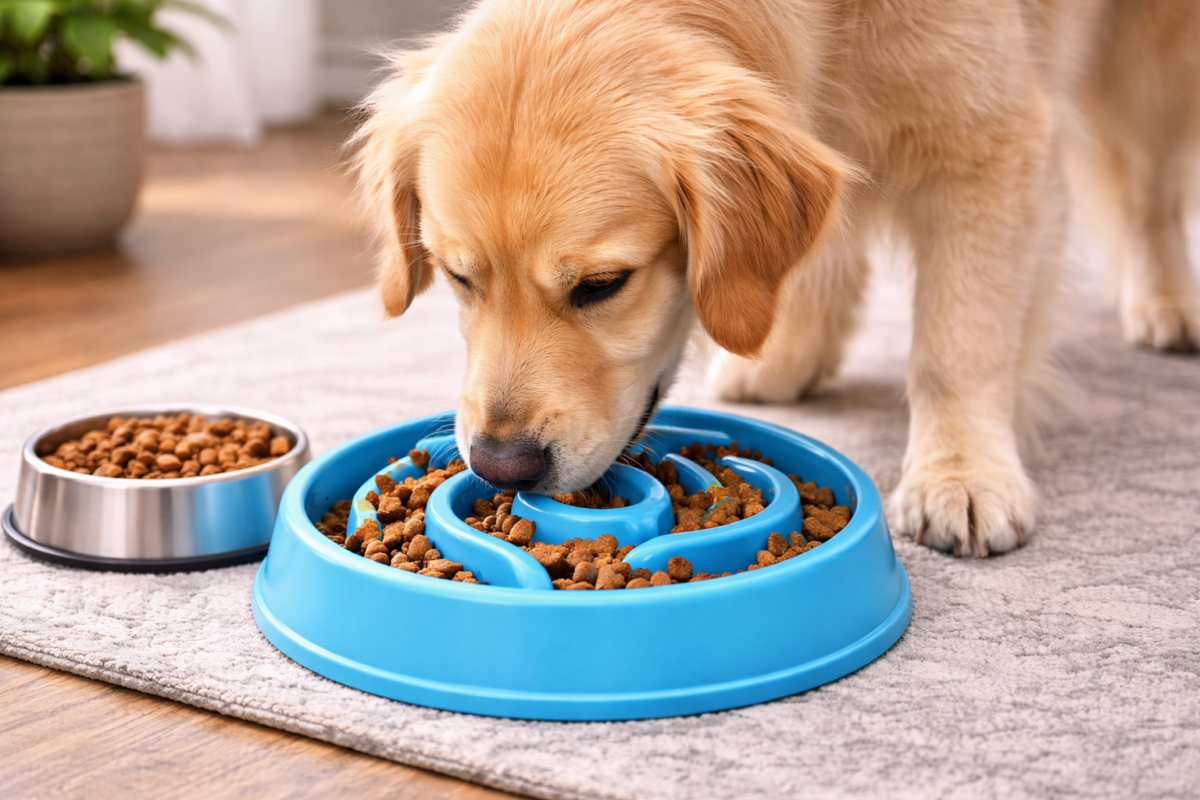
Slow feeder bowls are specifically designed to prevent dogs from eating too quickly. These bowls make mealtime safer, healthier, and more mentally stimulating.
In this complete guide, we’ll explain how slow feeder bowls work, their benefits, types available, and how to choose the best one for your dog.
Why Fast Eating Is Dangerous
When dogs eat too quickly, they:
- Swallow excess air
- Fail to chew properly
- Overload their stomach
- Risk choking
- Experience vomiting or regurgitation
Large and deep-chested breeds are particularly at risk of bloating, which can be life-threatening.
What Is a Slow Feeder Bowl?
A slow feeder bowl has built-in obstacles like:
- Ridges
- Spirals
- Maze patterns
- Raised sections
These designs force your dog to work around barriers to access food, slowing down consumption significantly.
Benefits of Slow Feeder Bowls
1. Prevents Choking
By slowing down eating speed, your dog chews more thoroughly and swallows smaller portions.
2. Reduces Bloat Risk
Eating slowly minimizes air intake and reduces pressure on the stomach.
3. Improves Digestion
Proper chewing improves nutrient absorption and reduces vomiting.
4. Provides Mental Stimulation
Maze-like patterns engage your dog’s brain during mealtime.
5. Promotes Portion Control
Slow feeders prevent overeating and help maintain a healthy weight.
Types of Slow Feeder Bowls
1. Maze-Style Slow Feeders
These are the most common.
Features:
- Raised ridges
- Spiral patterns
- Various difficulty levels
Great for dry kibble.
2. Silicone Slow Feeder Mats
Flat mats with grooves.
Best for:
- Wet food
- Raw food
- Spreads like peanut butter
Easy to clean and portable.
3. Stainless Steel Slow Feeders
More durable and hygienic option.
Benefits:
- Rust-resistant
- Scratch-resistant
- Long-lasting
Ideal for heavy chewers.
4. Elevated Slow Feeder Bowls
Raised design improves posture during eating.
Best for:
- Large breeds
- Senior dogs
- Dogs with joint issues
How to Choose the Best Slow Feeder Bowl
1. Consider Your Dog’s Size
Small dogs:
- Smaller maze patterns
- Lightweight bowls
Large dogs:
- Wider base
- Deeper patterns
- Heavy-duty construction
2. Match Difficulty Level
If your dog is new to slow feeders, start with moderate difficulty.
Advanced eaters may need complex maze designs.
3. Material Safety
Choose:
- BPA-free plastic
- Food-grade silicone
- Stainless steel
Avoid low-quality plastics that scratch easily.
4. Non-Slip Base
Prevents sliding during eating.
Look for rubber grips or suction bottoms.
5. Easy Cleaning
Bowls should be:
- Dishwasher safe
- Easy to scrub
- Resistant to food buildup
Do Slow Feeder Bowls Work for Wet Food?
Yes.
Silicone mats and wide-groove slow feeders work well for wet food.
For messy eaters, choose bowls with higher walls.
Are Slow Feeder Bowls Suitable for Puppies?
Yes, especially for puppies that:
- Compete with littermates
- Eat too fast
- Show signs of indigestion
Start with simpler patterns.
Common Mistakes When Using Slow Feeders
❌ Choosing too difficult a design initially
❌ Not cleaning thoroughly
❌ Using bowl that’s too small
❌ Ignoring signs of frustration
Monitor your dog during early use.
How Much Slower Do Dogs Eat with Slow Feeders?
Most slow feeder bowls extend mealtime by:
- 2–5 times longer than regular bowls
Instead of finishing in 30 seconds, your dog may take 3–5 minutes.
When to Replace a Slow Feeder Bowl
Replace if you notice:
- Deep scratches
- Cracks
- Chewing damage
- Loose non-slip base
Damaged bowls can harbor bacteria.
Are Slow Feeder Bowls Worth It?
Absolutely.
Compared to regular bowls, slow feeders:
- Improve health
- Reduce vet visits
- Enhance digestion
- Provide enrichment
The investment is small compared to the health benefits.
Additional Tips to Slow Down Eating
Besides slow feeder bowls, you can:
- Split meals into smaller portions
- Spread kibble on a mat
- Use food puzzle toys
- Feed in smaller batches
Variety keeps dogs mentally engaged.
Which Dogs Need Slow Feeder Bowls Most?
- Labradors
- Golden Retrievers
- Beagles
- Bulldogs
- Deep-chested breeds
- Food-obsessed dogs
Any dog that finishes meals too quickly can benefit.
Final Thoughts
Fast eating may look harmless, but it can cause serious digestive issues and health risks. Slow feeder bowls provide a simple, effective solution to protect your dog’s health while making mealtime more engaging.
By choosing the right size, material, and difficulty level, you can transform chaotic feeding into a calm, safe, and mentally stimulating routine.
If your dog eats too fast, switching to a slow feeder bowl is one of the easiest and most impactful upgrades you can make for their long-term well-being.
 Accessories & Others
 Apparel
 Beds & Furniture
 Cages & Accessories
 Carriers & Strollers
 Doors, Gates & Ramps
 Flea & Tick Control
 Grooming
 Litter & Housebreaking
 Memorials & Funerary
 Accessories & Others
 Apparel
 Beds & Furniture
 Cages & Accessories
 Carriers & Strollers
 Cat Doors,Steps, Nets.
 Collars, Harnesses & leashes
 Flea & Tick Control
 Grooming
 Cages& Accessories
 Cow Mastitis Detectors
 Ear Tags
 Aquarium Accessories
 Aquarium Cleaners
 Aquarium Decor
 Aquarium Lights
 Aquarium Pumps & Filter
 Aquariums & Fish Bowls
 Automatic Feeders