Blog
Best Substrate for Freshwater Fish Tanks
When setting up a freshwater aquarium, most beginners focus on fish, filters, and lighting. But one critical element often overlooked is the substrate — the material that covers the bottom of your tank.
Substrate isn’t just decorative. It affects water chemistry, plant growth, beneficial bacteria, and even fish health.
In this complete guide, you’ll learn:
- The different types of freshwater substrates
- Their pros and cons
- Which substrate works best for different fish
- How to choose the right one for your tank
What Is Aquarium Substrate?
Substrate is the material placed at the bottom of your aquarium. It serves multiple purposes:
- Anchors plants
- Houses beneficial bacteria
- Influences water chemistry
- Enhances aesthetics
- Supports natural fish behavior
Choosing the right substrate helps create a stable and healthy ecosystem.
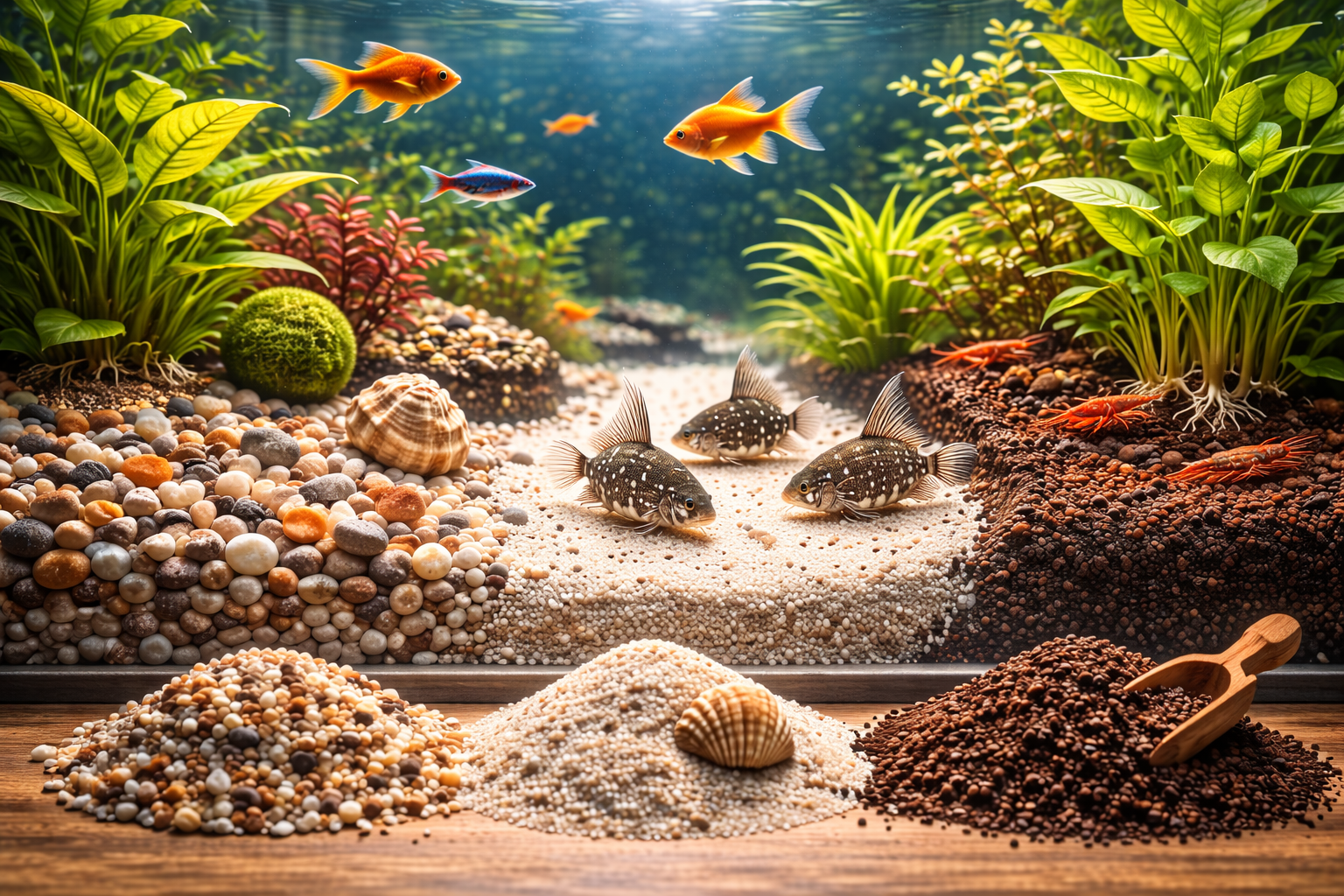
Main Types of Freshwater Aquarium Substrate
There are four primary substrate types used in freshwater tanks:
- Gravel
- Sand
- Planted (nutrient-rich) substrate
- Specialty substrates
Let’s break them down.
1. Gravel Substrate
Gravel is one of the most popular and beginner-friendly options.
Features:
- Small pebbles (2–5mm)
- Available in natural and colored varieties
- Affordable and widely available
Pros:
✔ Easy to clean with gravel vacuum
✔ Good water circulation through gaps
✔ Supports beneficial bacteria
✔ Ideal for beginners
Cons:
✘ Can trap debris
✘ Not ideal for delicate bottom-dwelling fish
✘ Limited nutrients for live plants
Best For:
- Community tanks
- Goldfish
- Beginners
- Tanks without heavy plant growth
Gravel is a safe, versatile choice for most freshwater setups.
2. Sand Substrate
Sand creates a smooth, natural look and is excellent for certain fish species.
Features:
- Fine particles
- Compact surface
- Available in natural or decorative colors
Pros:
✔ Natural appearance
✔ Safe for bottom-dwelling fish
✔ Prevents food from sinking deep
✔ Ideal for burrowing fish
Cons:
✘ Can compact over time
✘ May develop anaerobic pockets
✘ Requires careful cleaning
Best For:
- Corydoras catfish
- Loaches
- Shrimp tanks
- Natural aquascapes
If you keep bottom-feeders, sand is often the better choice.
3. Planted Aquarium Substrate
Planted substrates are specially designed for live plants.

Features:
- Nutrient-rich
- Promotes root growth
- Often dark in color
Pros:
✔ Supports plant health
✔ Enhances plant coloration
✔ Provides long-term nutrients
✔ Improves aquascaping results
Cons:
✘ More expensive
✘ May alter water parameters
✘ Not necessary for artificial plants
Best For:
- Heavily planted aquariums
- Aquascaping enthusiasts
- Advanced hobbyists
If you want lush plant growth, this substrate is worth the investment.
4. Specialty Substrates
Some substrates are designed to modify water chemistry.
Examples:
- Crushed coral (raises pH)
- Aragonite (marine use but sometimes used for cichlids)
- Black diamond blasting sand (popular budget option)
Best For:
- African cichlid tanks
- Hard water setups
- Specific pH requirements
Always test water parameters when using specialty substrates.
Gravel vs Sand: Which Is Better?
This is one of the most common debates.
| Feature | Gravel | Sand |
| Ease of Cleaning | Easy | Moderate |
| Fish Safety | Good | Excellent for bottom feeders |
| Plant Support | Moderate | Moderate |
| Appearance | Natural | Smooth & clean |
| Beginner Friendly | Yes | Yes (with care) |
For most beginners, gravel is easier.
For natural-looking tanks and bottom fish, sand wins.
Substrate and Fish Compatibility
Choosing substrate based on fish type is important.
Best Substrate for:
Betta Fish
- Fine gravel or sand
- Smooth surfaces prevent injury
Goldfish
- Medium gravel (large enough not to swallow)
Corydoras Catfish
- Soft sand to protect barbels
African Cichlids
- Crushed coral or aragonite
Shrimp Tanks
- Fine sand or planted substrate
Match substrate to natural fish habitat for best results.
How Much Substrate Do You Need?
General rule:
- 1–2 inches for basic tanks
- 2–3 inches for planted tanks
Formula estimate:
1 pound of substrate per gallon of tank water.
Example:
20-gallon tank → 20–25 pounds of substrate.
Substrate and Beneficial Bacteria
Substrate provides surface area for beneficial bacteria that break down:
- Ammonia
- Nitrites
- Waste
While filters house most bacteria, substrate contributes significantly to biological filtration.
A well-maintained substrate supports a healthy nitrogen cycle.
Cleaning and Maintenance Tips
Proper maintenance prevents problems.
For Gravel:
- Use a gravel vacuum weekly
- Avoid removing all substrate at once
For Sand:
- Lightly hover vacuum above surface
- Stir occasionally to prevent compacting
For Planted Tanks:
- Avoid deep vacuuming
- Trim plants regularly
Never wash substrate with soap. Rinse thoroughly before initial use.
Common Substrate Mistakes to Avoid
- Using sharp gravel with delicate fish
- Adding substrate without rinsing
- Mixing too many substrate types
- Ignoring water parameter changes
- Making substrate layer too thin
Planning ahead saves time and money.
Aesthetic Considerations
Substrate dramatically impacts the look of your tank.
- Black substrate makes fish colors pop
- Natural brown creates realistic river look
- White sand gives modern appearance
Choose a color that complements your fish and décor.
Do You Need Substrate at All?
Technically, no. Bare-bottom tanks exist.
They are used for:
- Breeding tanks
- Quarantine tanks
- Hospital setups
However, for display aquariums, substrate improves:
- Stability
- Appearance
- Fish comfort
Most freshwater tanks benefit from having substrate.
Final Thoughts: What’s the Best Substrate?
There isn’t one “best” substrate — only the best for your specific setup.
Choose gravel if:
- You’re a beginner
- You want easy maintenance
- You have a community tank
Choose sand if:
- You keep bottom-dwellers
- You want a natural look
- You prefer smooth surfaces
Choose planted substrate if:
- You want thriving live plants
- You enjoy aquascaping
- You aim for long-term growth
The right substrate supports fish health, plant success, and overall aquarium stability.
Conclusion
Substrate is more than decoration — it’s the foundation of your freshwater aquarium.
By choosing the right type based on your fish, plants, and maintenance level, you create a balanced and beautiful ecosystem.
Take time to plan your substrate carefully. It’s one of the most important decisions you’ll make when setting up a freshwater fish tank.
Accessories & Others
Apparel
Beds & Furniture
Cages & Accessories
Carriers & Strollers
Doors, Gates & Ramps
Flea & Tick Control
Grooming
Litter & Housebreaking
Memorials & Funerary
Accessories & Others
Apparel
Beds & Furniture
Cages & Accessories
Carriers & Strollers
Cat Doors,Steps, Nets.
Collars, Harnesses & leashes
Flea & Tick Control
Grooming
Cages& Accessories
Cow Mastitis Detectors
Ear Tags
Aquarium Accessories
Aquarium Cleaners
Aquarium Decor
Aquarium Lights
Aquarium Pumps & Filter
Aquariums & Fish Bowls
Automatic Feeders