Choosing the right substrate is one of the most important decisions you’ll make when setting up a reptile or amphibian enclosure. Substrate affects humidity, hygiene, comfort, safety, and natural behavior—yet it’s often treated as a purely aesthetic choice.
In reality, the wrong substrate can lead to impaction, respiratory problems, skin infections, and chronic stress. This guide explores the best substrates for reptile and amphibian enclosures, explains when to use each type, and helps you avoid common mistakes.
What Is Substrate and Why Does It Matter?
Substrate is the material that lines the bottom of an enclosure. In the wild, reptiles and amphibians live on soil, sand, leaf litter, or forest floors—not bare glass.
A good substrate should:
- Support natural behaviors (digging, burrowing, hunting)
- Help regulate humidity
- Be easy to clean and replace
- Reduce stress by mimicking natural environments
- Be safe if accidentally ingested
No single substrate works for every species, which is why proper selection is critical.
Factors to Consider When Choosing a Substrate
Before selecting a substrate, consider the following:
- Species’ natural habitat (desert, tropical, forest, aquatic)
- Humidity requirements
- Burrowing or climbing behavior
- Feeding habits (ground vs bowl feeding)
- Age and size of the animal
- Your experience level as a keeper
Beginners should prioritize safety and ease of maintenance over appearance.
Best Substrates for Reptiles
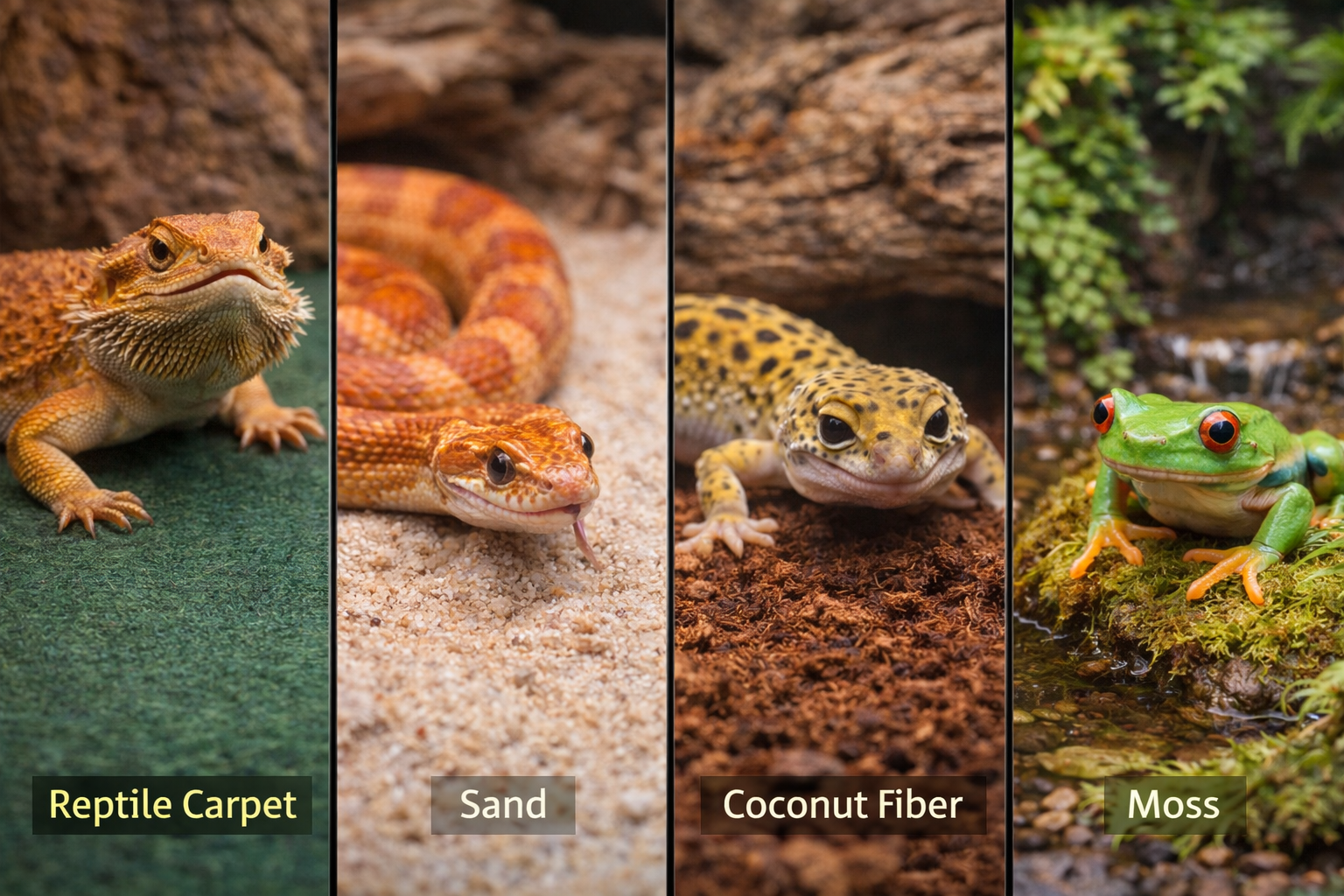
1. Coconut Fiber (Coco Coir)
Best for: Tropical reptiles, moderate humidity species
Pros:
- Excellent moisture retention
- Natural appearance
- Soft and diggable
Cons:
- Can be dusty when dry
- Risk of impaction if swallowed in large amounts
Coconut fiber is one of the most versatile and beginner-friendly substrates when used correctly.
2. Reptile Carpet
Best for: Juveniles, quarantine setups, beginners
Pros:
- Reusable and easy to clean
- No impaction risk
- Affordable
Cons:
- Does not support natural digging
- Can harbor bacteria if not cleaned regularly
Reptile carpet is ideal for temporary or controlled setups but less naturalistic.
3. Paper Towels or Newspaper
Best for: Hatchlings, sick reptiles, quarantine
Pros:
- Extremely hygienic
- Easy to replace
- Allows close health monitoring
Cons:
- No natural appearance
- No enrichment value
While not attractive, paper substrates are excellent for safety and observation.
4. Cypress Mulch
Best for: Snakes, humidity-loving reptiles
Pros:
- Retains moisture well
- Natural texture
- Low dust
Cons:
- Can mold if overwatered
- Needs regular spot cleaning
Cypress mulch works well for species that require higher humidity levels.
5. Sand (Use With Caution)
Best for: Specific desert species (advanced keepers only)
Pros:
- Natural desert appearance
- Allows digging
Cons:
- High impaction risk
- Poor choice for most beginners
Loose sand should only be used with experienced husbandry and proper feeding techniques.
Best Substrates for Amphibians
Amphibians are far more sensitive due to their permeable skin.
1. Sphagnum Moss
Best for: Frogs, salamanders
Pros:
- Excellent moisture retention
- Soft and skin-safe
- Helps maintain humidity
Cons:
- Requires frequent replacement
- Can be messy
Sphagnum moss is ideal for maintaining high humidity environments.
2. Organic Soil Mixes
Best for: Bioactive amphibian enclosures
Pros:
- Supports plants and microfauna
- Natural look and feel
- Excellent moisture balance
Cons:
- Requires setup knowledge
- Not ideal for beginners
Organic, fertilizer-free soil is essential for amphibian safety.
3. Leaf Litter
Best for: Tropical and forest species
Pros:
- Mimics natural forest floor
- Encourages natural behaviors
- Helps regulate moisture
Cons:
- Must be cleaned or replaced regularly
Leaf litter is often used as a top layer rather than the main substrate.
Bioactive Substrates: Advanced but Natural
Bioactive substrates combine soil layers, drainage systems, live plants, and cleanup crews like isopods and springtails.
Benefits:
- Natural waste breakdown
- Reduced odor
- Stunning aesthetics
Challenges:
- Complex setup
- Requires monitoring and balance
Bioactive setups are rewarding but best for keepers with experience.
Substrates to Avoid
Some substrates are widely sold but unsafe.
Avoid:
- Wood shavings (pine, cedar)
- Calcium sand
- Gravel or pebbles
- Artificial dyed substrates
- Corn cob bedding
These materials can cause toxicity, impaction, or injury.
Matching Substrate to Habitat Type
Desert habitats:
- Tile, paper towels, packed soil mixes
Tropical habitats:
- Coconut fiber, moss, soil blends
Forest habitats:
Quarantine setups:
- Paper towels or reptile carpet
Always replicate the natural environment, not what looks best on a shelf.
Maintenance and Cleaning Tips
Regardless of substrate choice:
- Spot-clean daily
- Replace wet or soiled areas promptly
- Deep-clean regularly
- Monitor for mold or odor
A clean substrate supports a healthy immune system.
Final Thoughts
The best substrate is one that supports your animal’s health, behavior, and environment, not just visual appeal. By choosing substrates that match natural habitats and species-specific needs, you create a safer, more enriching enclosure.
Whether you’re using simple paper towels or building a lush bioactive setup, the goal remains the same: a clean, stable foundation that allows reptiles and amphibians to thrive.
When in doubt, choose safety first—and upgrade as your experience grows.


 Accessories & Others
 Apparel
 Beds & Furniture
 Cages & Accessories
 Carriers & Strollers
 Doors, Gates & Ramps
 Flea & Tick Control
 Grooming
 Litter & Housebreaking
 Memorials & Funerary
 Accessories & Others
 Apparel
 Beds & Furniture
 Cages & Accessories
 Carriers & Strollers
 Cat Doors,Steps, Nets.
 Collars, Harnesses & leashes
 Flea & Tick Control
 Grooming
 Cages& Accessories
 Cow Mastitis Detectors
 Ear Tags
 Aquarium Accessories
 Aquarium Cleaners
 Aquarium Decor
 Aquarium Lights
 Aquarium Pumps & Filter
 Aquariums & Fish Bowls
 Automatic Feeders