Running a small farm successfully requires more than hard work—it requires the right tools. Whether you manage livestock, grow crops, or do a bit of both, having reliable, well-chosen farm tools can save time, reduce physical strain, and improve productivity. The right equipment doesn’t have to be expensive or complex; practical, durable tools often make the biggest difference.
In this guide, we’ll cover the best tools every small farm should have, focusing on versatility, affordability, and everyday usefulness.
Why the Right Farm Tools Matter
Small farms rely heavily on manual labor and efficiency. Without proper tools, even simple tasks can become exhausting and time-consuming. The right tools help:
- Increase productivity
- Reduce physical fatigue
- Improve animal care and crop management
- Save time and long-term costs
- Enhance safety on the farm
Investing in quality tools early helps build a more sustainable and enjoyable farming operation.
1. Basic Hand Tools for Everyday Farm Work
Hand tools are the backbone of every small farm.
Essential Hand Tools:
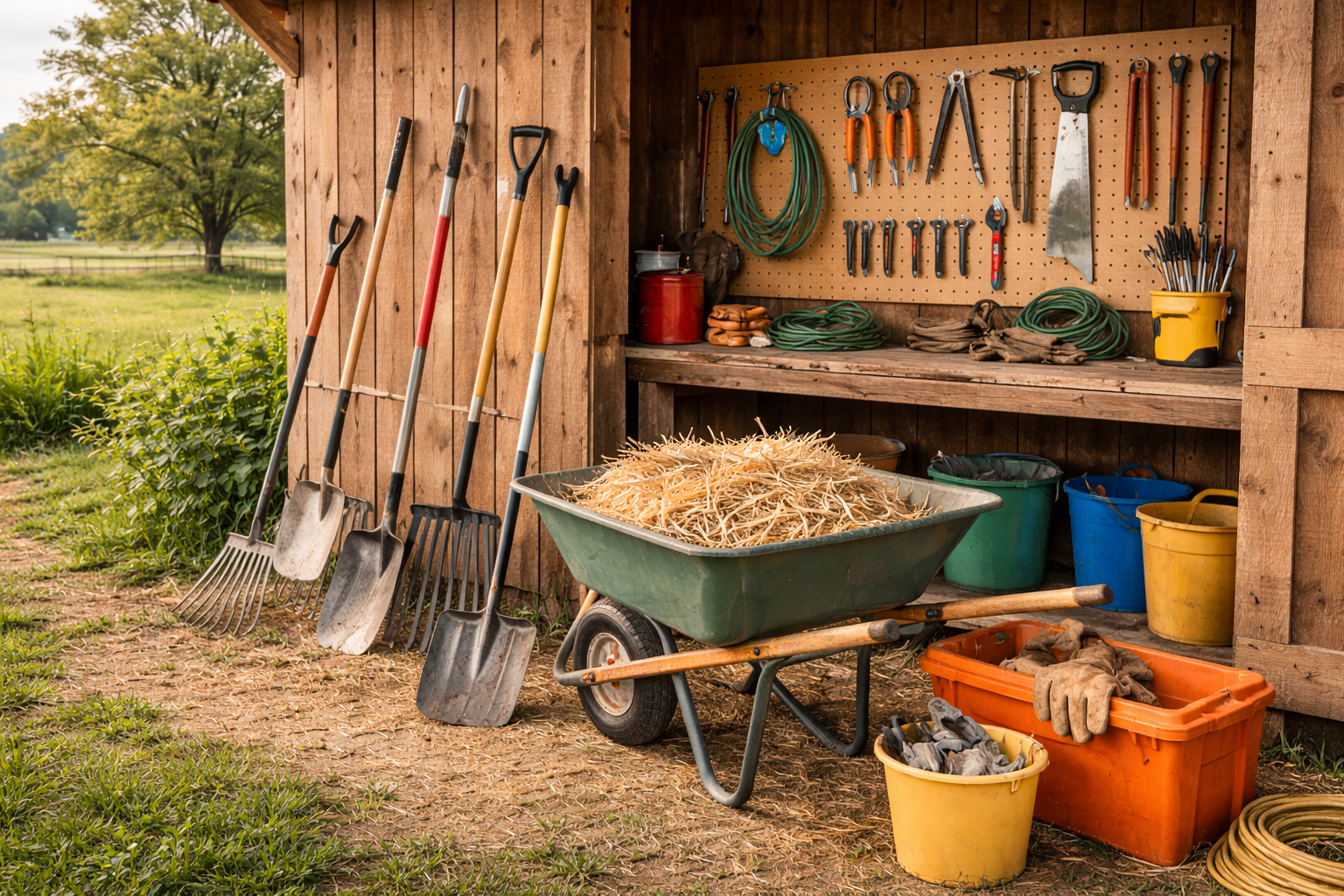
- Shovel: For digging, manure removal, compost turning, and landscaping
- Spade: Ideal for precise digging and planting
- Rake: Useful for soil leveling, leaf collection, and cleaning barns
- Hoe: Essential for weed control and garden maintenance
- Hand trowel: Perfect for planting, transplanting, and small repairs
Choose tools with strong handles and rust-resistant metal to ensure long-term durability.
2. Wheelbarrow or Garden Cart
A wheelbarrow is one of the most valuable tools on a small farm.
Why It’s Essential:
- Transport feed, manure, soil, and harvests
- Reduce lifting and back strain
- Save time during daily chores
For larger farms or heavier loads, a sturdy garden cart may be even more practical.
3. Livestock Handling and Care Tools
If you raise animals, proper livestock tools are a must.
Key Livestock Tools:
- Feed scoops and buckets: Ensure accurate and clean feeding
- Water troughs: Durable, easy-to-clean containers
- Grooming brushes: Improve animal health and comfort
- Hoof trimmers: Essential for goats, sheep, and cattle
- Halters and leads: For safe handling and movement
Good animal care tools improve welfare and reduce stress for both animals and farmers.
4. Fencing and Repair Tools
Secure fencing keeps animals safe and protects crops.
Must-Have Fencing Tools:
- Fence post driver: Makes installation faster and easier
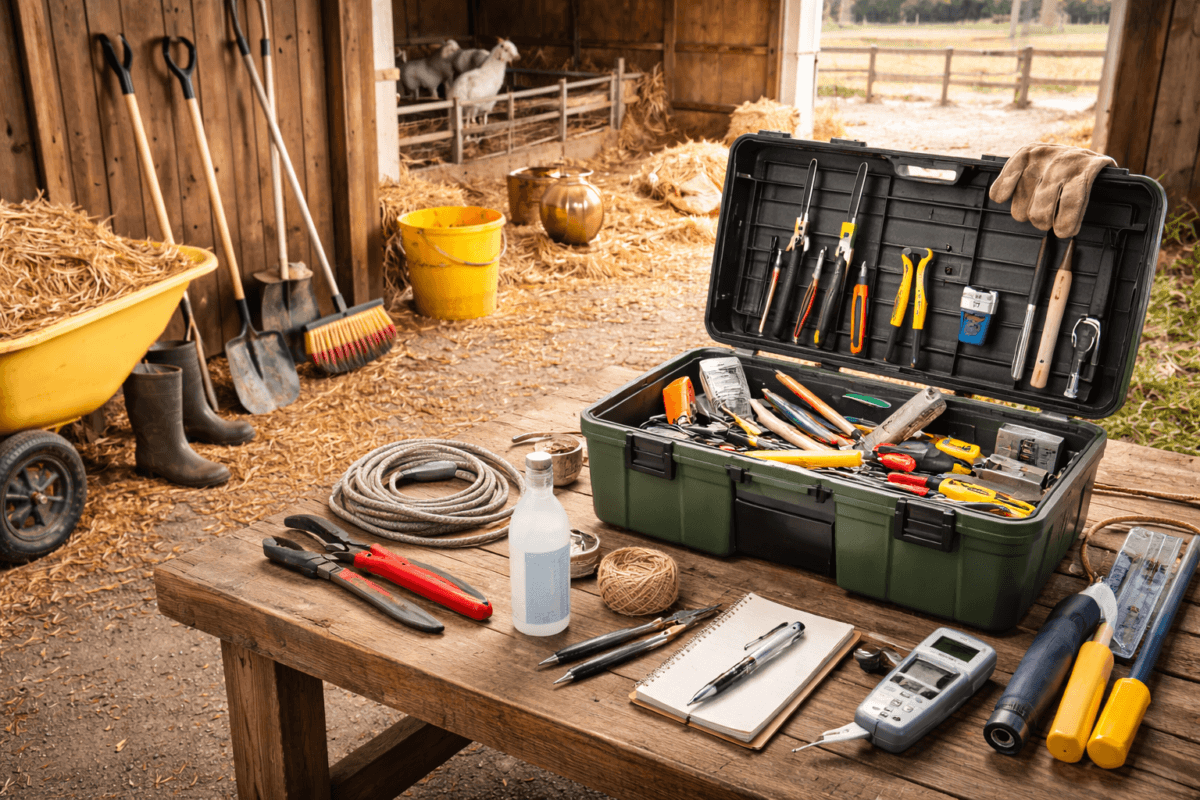
- Wire cutters and pliers: Essential for repairs
- Hammer and nails: For quick fixes around the farm
- Measuring tape and level: Ensure proper fence alignment
Regular fence maintenance prevents escapes and injuries.
5. Gardening and Crop Production Tools
For farms that grow fruits, vegetables, or grains, gardening tools are essential.
Recommended Tools:
- Pruning shears: For trimming plants, trees, and shrubs
- Loppers: Handle thicker branches
- Watering cans or hoses: Controlled irrigation
- Soil fork: Loosens soil without damaging roots
High-quality cutting tools make planting and harvesting easier and cleaner.
6. Power Tools for Efficiency
While small farms often rely on hand tools, a few power tools can significantly reduce labor.
Useful Power Tools:
- Electric or gas trimmer: Manages weeds and edges
- Chainsaw: Essential for firewood, tree removal, and storm cleanup
- Drill: Useful for building and repairing structures
Always prioritize safety equipment when using power tools.
7. Tool Storage and Organization
Organized tools save time and extend tool life.
Storage Essentials:
- Tool shed or cabinet: Protects tools from weather
- Wall hooks and racks: Keep tools accessible
- Labeling system: Improves efficiency
A tidy workspace reduces accidents and lost equipment.
8. Safety and Maintenance Tools
Safety should never be overlooked on a farm.
Important Safety Tools:
- Work gloves: Protect hands from injury
- Protective eyewear: Especially for cutting and power tools
- First aid kit: For minor injuries
- Fire extinguisher: Essential for barns and workshops
Routine tool maintenance—cleaning, sharpening, and oiling—keeps equipment reliable and safe.
9. Seasonal and Specialized Tools
Some tools are especially useful during certain seasons.
- Snow shovel or scraper: Winter farm access
- Sprayers: For natural pest control or cleaning
- Compost thermometer: For soil and waste management
Choose tools based on your farm’s specific needs and climate.
10. Buying Tips for Small Farmers
When purchasing tools:
- Prioritize quality over quantity
- Choose multi-purpose tools
- Buy gradually as needs grow
- Maintain tools regularly to extend lifespan
Well-maintained tools can last for decades.
Final Thoughts
The best tools every small farm should have are those that simplify daily tasks, improve efficiency, and support animal and crop care. From basic hand tools and wheelbarrows to livestock equipment and power tools, each item plays a role in building a productive and sustainable farm.
You don’t need every tool at once—start with the essentials and expand as your farm grows. With the right tools in hand, small-scale farming becomes more efficient, safer, and far more rewarding. 🌾🚜


 Accessories & Others
 Apparel
 Beds & Furniture
 Cages & Accessories
 Carriers & Strollers
 Doors, Gates & Ramps
 Flea & Tick Control
 Grooming
 Litter & Housebreaking
 Memorials & Funerary
 Accessories & Others
 Apparel
 Beds & Furniture
 Cages & Accessories
 Carriers & Strollers
 Cat Doors,Steps, Nets.
 Collars, Harnesses & leashes
 Flea & Tick Control
 Grooming
 Cages& Accessories
 Cow Mastitis Detectors
 Ear Tags
 Aquarium Accessories
 Aquarium Cleaners
 Aquarium Decor
 Aquarium Lights
 Aquarium Pumps & Filter
 Aquariums & Fish Bowls
 Automatic Feeders