Kittens are bundles of energy, curiosity, and playful chaos. Between 0 and 6 months, they go through rapid physical and mental development. Playtime isn’t just fun—it’s essential for building coordination, confidence, and healthy behavior.
Choosing the right toys during this stage helps your kitten:
- Develop hunting skills
- Improve motor coordination
- Reduce destructive behavior
- Build confidence
- Strengthen bonding with you
In this complete guide, we’ll explore the best toys for kittens (0–6 months), what to look for, and how to ensure safe playtime.
Why Play Is Essential for Kittens
Kittens learn through play. It mimics hunting behaviors such as:
- Stalking
- Pouncing
- Swatting
- Chasing
- Biting
Without proper stimulation, kittens may:
- Scratch furniture
- Bite hands
- Develop boredom
- Show hyperactive behavior
Interactive toys redirect natural instincts into positive outlets.
Development Stages (0–6 Months)
Understanding your kitten’s stage helps you choose suitable toys.
0–2 Months
- Learning coordination
- Exploring environment
- Developing social skills
Toys should be soft and lightweight.
2–4 Months
- High energy bursts
- Teething begins
- Increased curiosity
More interactive and chew-friendly toys are ideal.
4–6 Months
- Stronger hunting instincts
- Improved jumping and climbing
- Greater independence
More challenging and active toys work best.
Best Types of Toys for Kittens
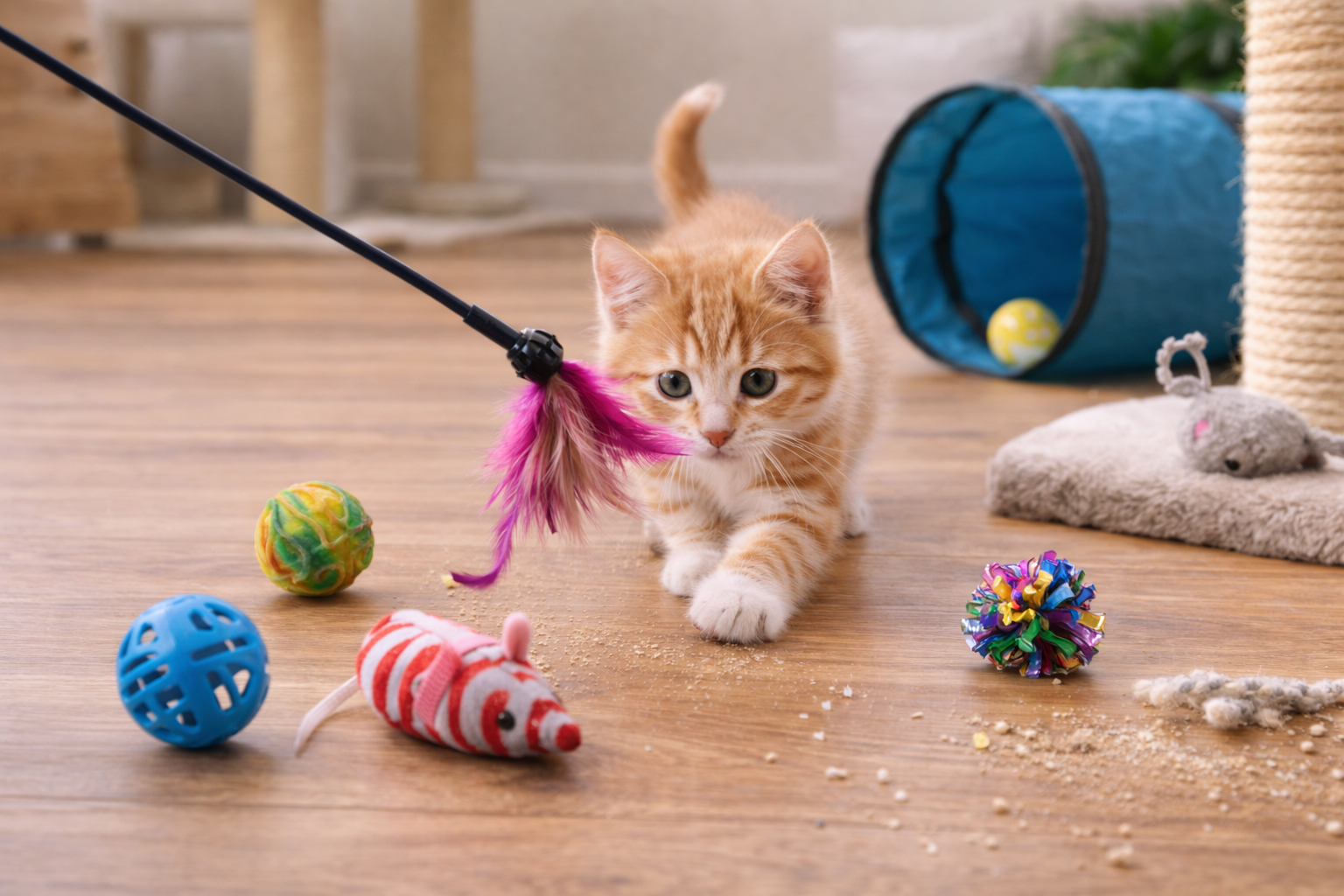
1. Wand & Feather Teasers
One of the best interactive toys for kittens.
Benefits:
- Encourages jumping and chasing
- Builds coordination
- Strengthens bond
- Burns energy safely
Always supervise during use.
2. Small Lightweight Balls
Perfect for solo play.
Look for:
- Soft foam balls
- Jingle balls
- Crinkle balls
They promote:
- Paw coordination
- Speed development
- Independent play
Avoid small balls that could be swallowed.
3. Soft Plush Toys
Ideal for comfort and light wrestling.
Benefits:
- Safe biting outlet
- Reduces hand-biting
- Comfort for shy kittens
Choose stitched designs with no loose parts.
4. Teething Toys
Kittens begin teething around 3–4 months.
Look for:
- Soft rubber toys
- Fabric chew toys
- Freezable teething rings
These soothe sore gums and prevent chewing on wires or furniture.
5. Tunnel Toys
Kittens love hiding and ambushing.
Benefits:
- Encourages exercise
- Provides safe hiding spot
- Stimulates hunting behavior
Great for multiple kittens.
6. Scratch Pads & Mini Posts
Even young kittens need scratching outlets.
Benefits:
- Protects furniture
- Strengthens claws
- Reduces stress
Place near sleeping area or play zone.
7. Treat Puzzle Toys (For 4–6 Months)
Introduce simple puzzle toys gradually.
Benefits:
- Mental stimulation
- Slows eating
- Encourages problem-solving
Start with beginner-level puzzles.
Safe Toy Materials to Choose
Always select:
- Non-toxic materials
- Durable stitching
- No small detachable parts
- Size-appropriate toys
Avoid toys with:
- Loose strings
- Small bells
- Easily detachable feathers
- Sharp edges
Safety should always come first.
How Many Toys Does a Kitten Need?
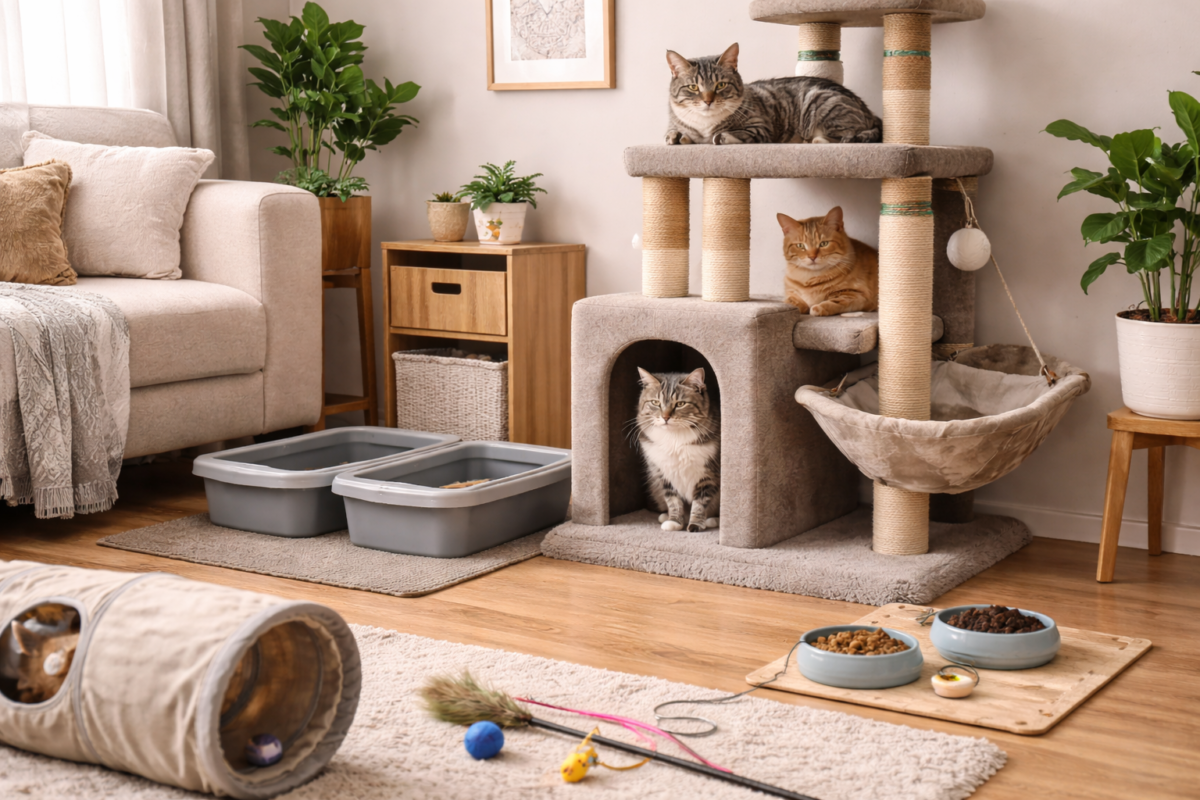
A good starter collection includes:
- 1–2 wand toys
- 2–3 small balls
- 1 plush toy
- 1 tunnel
- 1 scratch pad
Rotate toys weekly to prevent boredom.
How Often Should Kittens Play?
Kittens need:
- 2–4 play sessions daily
- 10–15 minutes per session
- High-energy interactive play
Regular play reduces nighttime zoomies.
Interactive vs Solo Toys
Both are important.
Interactive Toys:
- Wand toys
- Laser toys (carefully supervised)
- Feather teasers
Solo Toys:
- Balls
- Soft plush
- Small crinkle toys
Balance both types for well-rounded development.
When to Supervise Play
Always supervise:
- String toys
- Wand toys
- Small accessories
- New toys
Remove damaged toys immediately.
Signs Your Kitten Needs More Stimulation
- Excessive biting
- Furniture scratching
- Night hyperactivity
- Chasing ankles
- Vocal restlessness
Increase play frequency and variety.
Common Toy Mistakes to Avoid
❌ Using hands as toys
❌ Buying oversized toys
❌ Leaving string toys unattended
❌ Ignoring wear and tear
❌ Overstimulating tired kitten
Structured play prevents bad habits.
Budget vs Premium Kitten Toys
Budget toys can work well if:
- Properly sized
- Safe materials
- Frequently inspected
Premium toys often:
- Last longer
- Offer better durability
- Provide more stimulation
Investing in quality can save money over time.
Creating a Safe Play Environment
- Remove breakable objects
- Secure loose wires
- Provide climbing options
- Keep small objects out of reach
A safe space encourages confident exploration.
Final Thoughts
The first six months of your kitten’s life are critical for development. Choosing the right toys helps build coordination, confidence, and healthy habits that last into adulthood.
Interactive wand toys, lightweight balls, tunnels, plush toys, and safe teething options provide the best balance of stimulation and safety.
By offering a variety of age-appropriate toys and scheduling regular play sessions, you’ll raise a happy, active, and well-adjusted cat.
Playtime isn’t just entertainment—it’s the foundation of a healthy and confident feline companion.


 Accessories & Others
 Apparel
 Beds & Furniture
 Cages & Accessories
 Carriers & Strollers
 Doors, Gates & Ramps
 Flea & Tick Control
 Grooming
 Litter & Housebreaking
 Memorials & Funerary
 Accessories & Others
 Apparel
 Beds & Furniture
 Cages & Accessories
 Carriers & Strollers
 Cat Doors,Steps, Nets.
 Collars, Harnesses & leashes
 Flea & Tick Control
 Grooming
 Cages& Accessories
 Cow Mastitis Detectors
 Ear Tags
 Aquarium Accessories
 Aquarium Cleaners
 Aquarium Decor
 Aquarium Lights
 Aquarium Pumps & Filter
 Aquariums & Fish Bowls
 Automatic Feeders