Keeping your cat properly hydrated is one of the most important aspects of feline health. Yet many cats don’t drink enough water—especially those on dry food diets. Dehydration in cats can lead to urinary tract problems, kidney disease, and other serious health issues.
That’s why cat water fountains have become increasingly popular. But are they really better than traditional water bowls?
In this complete guide, we’ll compare cat water fountains and bowls, explore their pros and cons, and help you decide which option is best for your feline companion.
Why Hydration Is Critical for Cats
Cats naturally have a low thirst drive. In the wild, they get most of their moisture from prey. Domestic cats, especially those eating dry kibble, may not drink enough water voluntarily.
Proper hydration supports:
Kidney function
Urinary tract health
Digestion
Temperature regulation
Overall vitality
Encouraging water intake is essential.
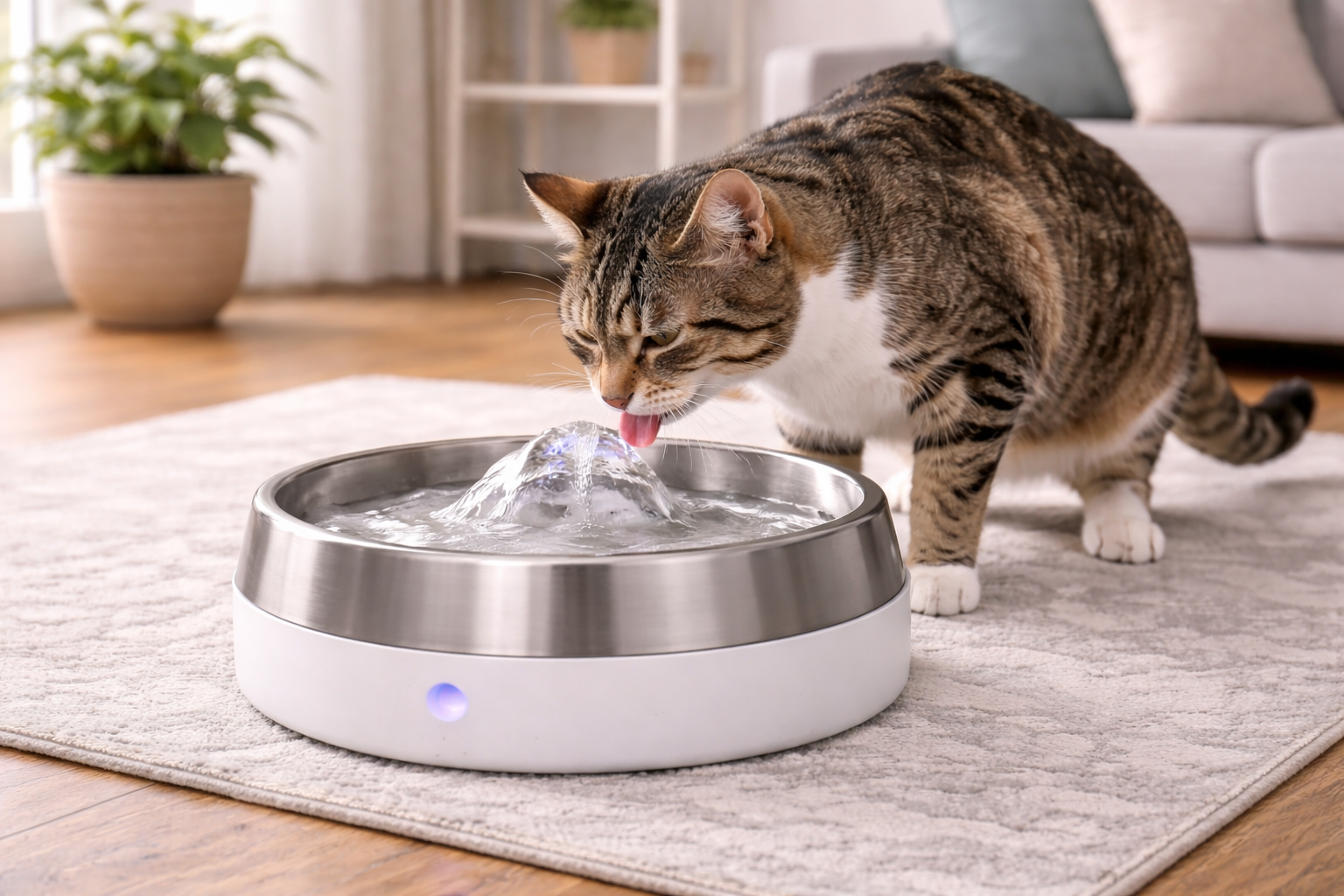
What Is a Cat Water Fountain?
A cat water fountain is a circulating water system that continuously filters and moves water. It typically includes:
Water reservoir
Pump
Replaceable filter
Flowing stream or bubbling design
The movement keeps water fresh and appealing.
Traditional Cat Water Bowls
Water bowls are simple, affordable containers that hold still water. They can be made from:
Stainless steel
Ceramic
Plastic
They require daily cleaning and refilling.
Why Cats Prefer Running Water
Cats instinctively prefer moving water because:
It signals freshness
It’s less likely to be contaminated
It contains more oxygen
It mimics natural water sources
Still water may seem stagnant to a cat.
Pros of Cat Water Fountains
1. Encourages Increased Water Intake
Flowing water attracts cats. Many owners notice their cats drink more frequently when using a fountain.
This is especially beneficial for cats prone to urinary issues.
2. Keeps Water Fresher
Circulation prevents stagnation and:
Reduces bacterial growth
Minimizes debris
Improves taste
Filters remove hair and impurities.
3. Supports Urinary Health
Increased hydration lowers the risk of:
Urinary tract infections
Kidney disease
Bladder stones
For male cats, this can be particularly important.
4. Reduces Whisker Fatigue
Many fountains have wide drinking surfaces, reducing discomfort caused by narrow bowls touching whiskers.
5. Convenient for Owners
Larger reservoirs mean:
Less frequent refilling
Cleaner water longer
Reduced daily maintenance
Cons of Cat Water Fountains
1. Requires Electricity
Most fountains need power to run continuously.
Power outages can stop circulation.
2. Higher Cost
Compared to bowls, fountains:
Cost more upfront
Require filter replacements
May need pump replacements
3. Regular Cleaning Required
Despite filtration, fountains must be cleaned thoroughly at least once per week.
Failure to clean can cause mold buildup.
4. Some Cats May Be Afraid
Shy or nervous cats may initially fear:
Pump noise
Water movement
Gradual introduction helps.
Pros of Traditional Water Bowls
1. Affordable
Bowls are inexpensive and widely available.
2. No Electricity Needed
They work anywhere without power.
3. Easy to Clean
Simple structure makes daily cleaning quick.
4. Portable
Perfect for travel or multiple-room placement.
Cons of Traditional Bowls
1. Water Becomes Stale Quickly
Still water collects:
Dust
Hair
Debris
It may discourage drinking.
2. Requires Frequent Refilling
Especially in multi-cat households.
3. Some Cats Avoid Still Water
Certain cats naturally prefer moving water.
Fountain vs Bowl: Side-by-Side Comparison
Feature
Water Fountain
Water Bowl
Encourages drinking
High
Moderate
Freshness
Continuous circulation
Stagnant
Cost
Higher
Low
Maintenance
Weekly deep clean
Daily rinse
Power required
Yes
No
Best for urinary health
Excellent
Good
Which Cats Benefit Most from Water Fountains?
Cats with kidney disease
Cats prone to UTIs
Male cats
Cats eating dry food
Multi-cat households
For these cats, increased hydration is critical.
Types of Cat Water Fountains
1. Plastic Fountains
Affordable but may scratch easily.
Choose BPA-free options.
2. Stainless Steel Fountains
More hygienic
Durable
Scratch-resistant
Great for long-term use.
3. Ceramic Fountains
Stylish
Heavy and stable
Easy to clean
May chip if dropped.
How to Introduce a Water Fountain
Place near current water bowl
Keep both available initially
Let your cat explore
Clean regularly
Monitor usage
Most cats adjust quickly.
Cleaning Tips for Water Fountains
Change water daily
Clean weekly
Replace filters monthly
Disassemble pump for cleaning
Proper hygiene prevents bacteria buildup.
When a Bowl May Be Enough
If your cat:
Already drinks sufficient water
Eats mostly wet food
Shows no urinary issues
A bowl may be adequate.
However, multiple water sources are always beneficial.
Final Verdict: Are Cat Water Fountains Better Than Bowls?
For many cats—yes.
Water fountains often increase hydration, improve water freshness, and support urinary health. While they cost more and require maintenance, the health benefits can outweigh the drawbacks.
However, not every cat needs a fountain. The best choice depends on your cat’s health, behavior, and preferences.
If your goal is to encourage better hydration and reduce the risk of urinary problems, a high-quality cat water fountain is a worthwhile investment.
Fresh, clean water is one of the simplest ways to protect your cat’s long-term health—and whether through a fountain or bowl, ensuring proper hydration should always be a priority.


 Accessories & Others
 Apparel
 Beds & Furniture
 Cages & Accessories
 Carriers & Strollers
 Doors, Gates & Ramps
 Flea & Tick Control
 Grooming
 Litter & Housebreaking
 Memorials & Funerary
 Accessories & Others
 Apparel
 Beds & Furniture
 Cages & Accessories
 Carriers & Strollers
 Cat Doors,Steps, Nets.
 Collars, Harnesses & leashes
 Flea & Tick Control
 Grooming
 Cages& Accessories
 Cow Mastitis Detectors
 Ear Tags
 Aquarium Accessories
 Aquarium Cleaners
 Aquarium Decor
 Aquarium Lights
 Aquarium Pumps & Filter
 Aquariums & Fish Bowls
 Automatic Feeders