Aquarium fish are generally hardy when kept in the right conditions, but poor water quality, stress, or improper care can quickly lead to disease. Many fish illnesses are preventable, especially when detected early. Understanding common aquarium fish diseases and how to prevent them is essential for maintaining a healthy and thriving tank.
In this guide, we’ll explore the most common aquarium fish diseases, their symptoms, causes, and effective prevention strategies every fish keeper should know.
Why Aquarium Fish Get Sick
Fish diseases usually don’t appear randomly. Most outbreaks are caused by stress or environmental issues.
Common Causes:
- Poor water quality
- Sudden temperature changes
- Overcrowding
- Incompatible tank mates
- Introducing sick fish
- Weak immune systems
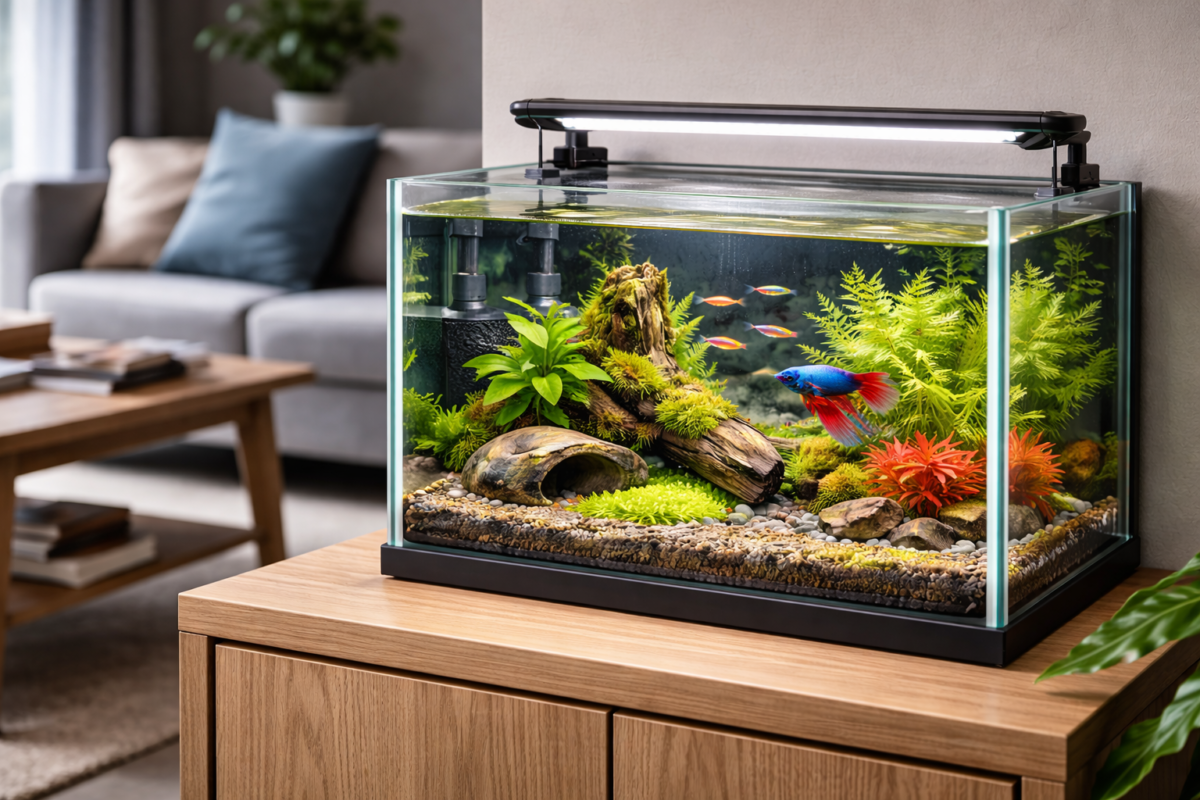
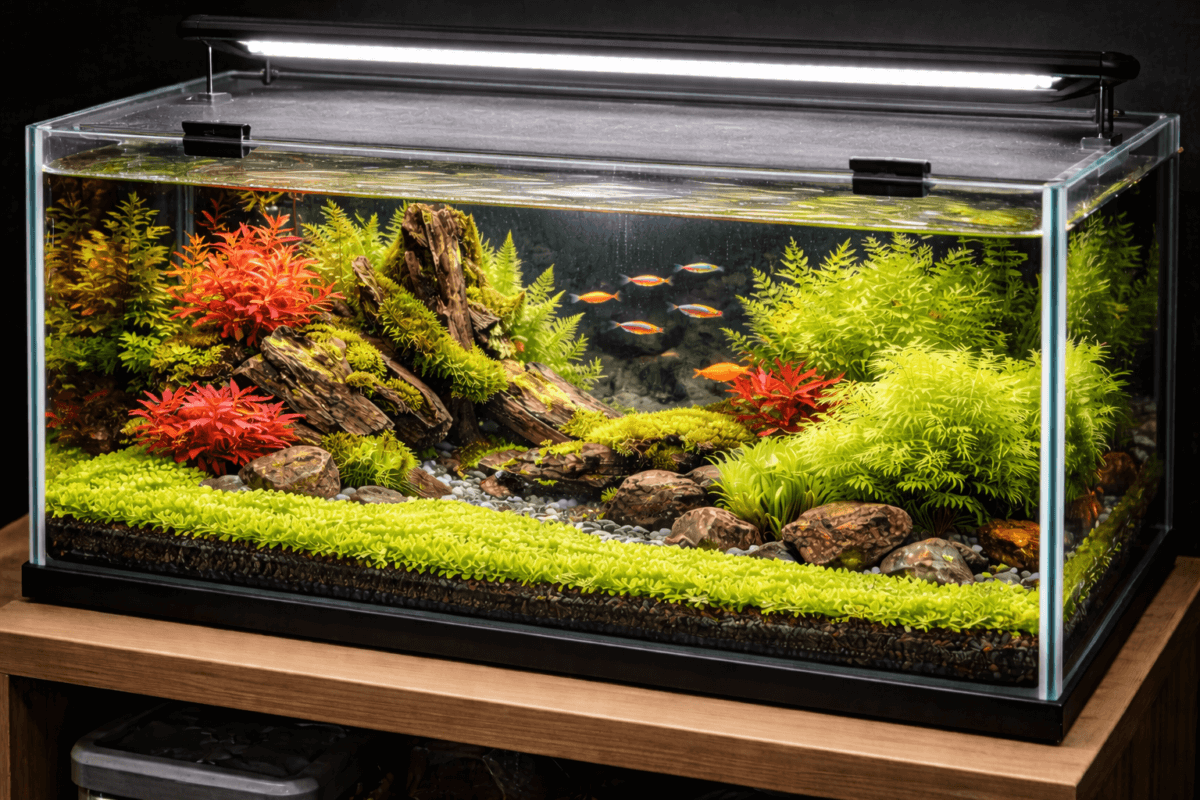
A healthy environment is your fish’s first line of defense against disease.
1. Ich (White Spot Disease)
Ich is one of the most common and recognizable aquarium fish diseases.
Symptoms:
- Small white spots on body and fins
- Scratching against tank surfaces
- Rapid breathing
- Lethargy
Causes:
- Stress
- Sudden temperature changes
- Introduction of infected fish
Prevention:
- Quarantine new fish for 2–4 weeks
- Maintain stable water temperature
- Avoid sudden environmental changes
Early treatment is highly effective if caught quickly.
2. Fin Rot
Fin rot is a bacterial infection that damages fins and tails.
Symptoms:
- Frayed or ragged fins
- Discoloration on fin edges
- Reduced activity
Causes:
- Poor water quality
- Stress or injury
- Aggressive tank mates
Prevention:
- Perform regular water changes
- Avoid overcrowding
- Remove aggressive fish
Clean water is the best cure and prevention.
3. Fungal Infections
Fungal infections often appear as cotton-like growths on fish.
Symptoms:
- White or gray fuzzy patches
- Slow movement
- Loss of appetite
Causes:
- Injuries
- Poor water conditions
- Weakened immune systems
Prevention:
- Maintain excellent water quality
- Remove sharp decorations
- Treat injuries early
Fungal infections often occur alongside other illnesses.
4. Columnaris (Cotton Mouth Disease)
Despite its name, Columnaris is a bacterial infection.
Symptoms:
- White or gray patches around mouth
- Ulcers on body
- Rapid progression
Causes:
- High stress
- Warm water with poor quality
- Overcrowded tanks
Prevention:
- Keep tanks clean
- Avoid temperature spikes
- Quarantine new fish
Prompt treatment is critical due to its fast spread.
5. Swim Bladder Disease
Swim bladder issues affect a fish’s ability to swim properly.
Symptoms:
- Floating sideways or upside down
- Difficulty staying upright
- Loss of balance
Causes:
- Overfeeding
- Poor diet
- Bacterial infection
Prevention:
- Feed small, high-quality meals
- Avoid overfeeding
- Provide a varied diet
Many swim bladder cases are diet-related and reversible.
6. Velvet Disease
Velvet disease is caused by parasites and can be deadly if untreated.
Symptoms:
- Gold or rust-colored dust on skin
- Clamped fins
Loss of appetite
- Lethargy
Causes:
- Poor water quality
- Stress
- Infected new fish
Prevention:
- Quarantine new fish
- Maintain stable water conditions
- Reduce stress
Velvet progresses quickly and requires immediate action.
7. Popeye Disease
Popeye causes one or both eyes to bulge outward.
Symptoms:
- Swollen or cloudy eyes
- Eye protrusion
- Lethargy
Causes:
- Poor water quality
- Injury
- Bacterial infection
Prevention:
- Regular tank maintenance
- Avoid sharp tank décor
- Monitor aggressive behavior
Improving water quality often resolves mild cases.
The Importance of Quarantine Tanks
A quarantine tank is one of the most effective disease-prevention tools.
Benefits:
- Prevents disease spread
- Allows close observation
- Reduces stress for sick fish
Always quarantine new fish for at least 2–4 weeks before adding them to your main tank.
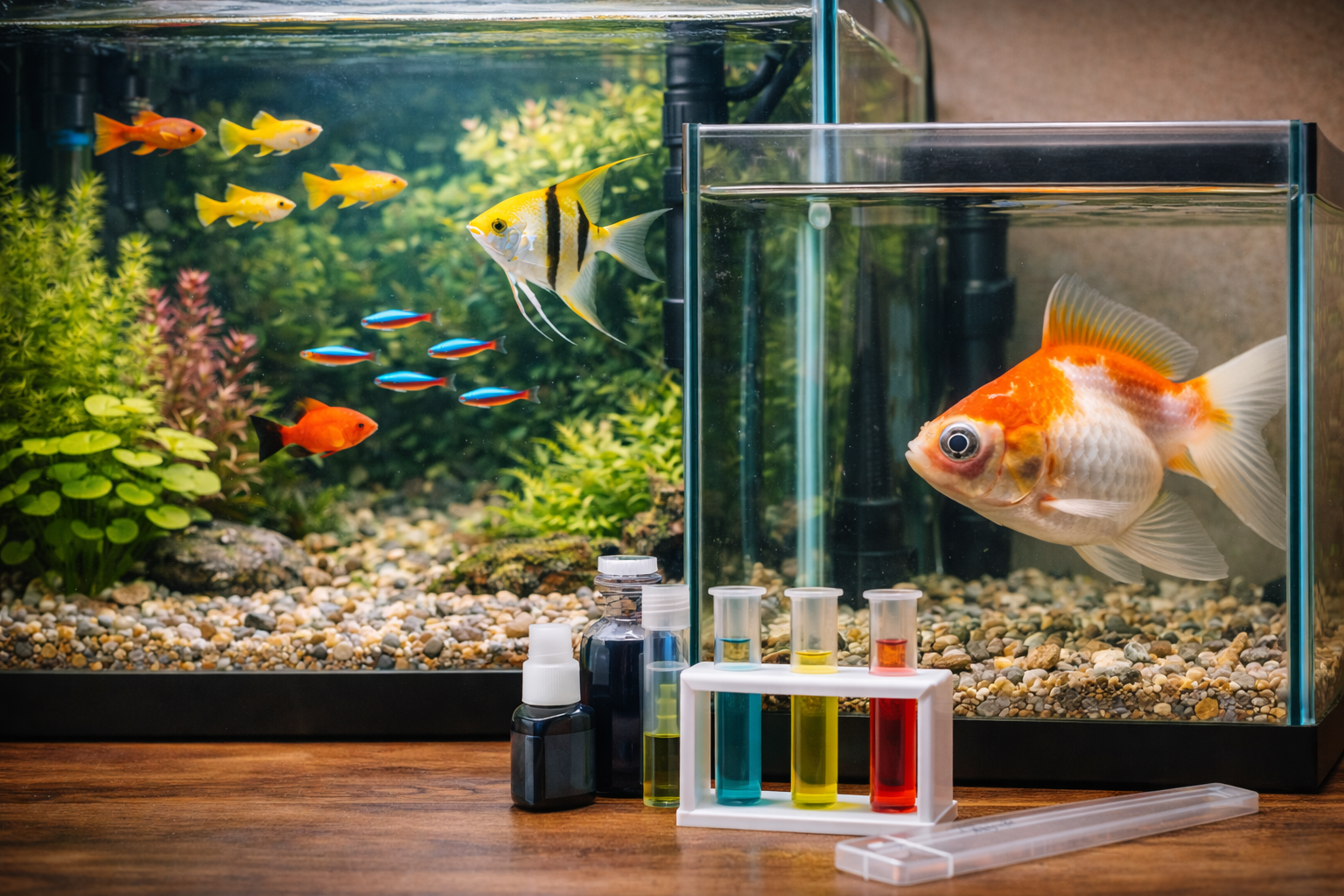
How Water Quality Prevents Disease
Clean, stable water keeps fish immune systems strong.
Key Parameters:
- Ammonia: 0 ppm
- Nitrite: 0 ppm
- Nitrate: Below 20–40 ppm
- Stable pH and temperature
Test water weekly and after adding new fish.
Stress and Fish Health
Stress weakens fish immunity and makes disease more likely.
Common Stress Factors:
- Overcrowding
- Aggressive tank mates
- Sudden changes
- Poor water quality
Reducing stress dramatically lowers disease risk.
General Fish Disease Prevention Tips
- Perform regular water changes
- Avoid overfeeding
- Don’t overcrowd tanks
- Quarantine new fish
- Use quality filtration
- Maintain stable temperature
- Observe fish daily
Prevention is always easier than treatment.
When to Treat vs. When to Improve Conditions
Not every issue requires medication.
- Mild symptoms → Improve water quality first
- Rapid or spreading symptoms → Begin treatment
- Unknown illness → Quarantine immediately
Overmedicating can harm fish and beneficial bacteria.
Signs of a Healthy Fish
Healthy fish are your best indicator of good care.
Healthy Fish Behaviors:
- Active swimming
- Strong appetite
- Bright coloration
- Clear eyes and fins
- Normal breathing
Daily observation helps catch problems early.
Final Thoughts
Understanding common aquarium fish diseases and prevention methods is essential for every fish keeper. Most diseases stem from poor water quality or stress, meaning they are largely preventable with proper care. By maintaining a clean environment, quarantining new fish, and observing your aquarium daily, you can prevent most health issues before they start.


 Accessories & Others
 Apparel
 Beds & Furniture
 Cages & Accessories
 Carriers & Strollers
 Doors, Gates & Ramps
 Flea & Tick Control
 Grooming
 Litter & Housebreaking
 Memorials & Funerary
 Accessories & Others
 Apparel
 Beds & Furniture
 Cages & Accessories
 Carriers & Strollers
 Cat Doors,Steps, Nets.
 Collars, Harnesses & leashes
 Flea & Tick Control
 Grooming
 Cages& Accessories
 Cow Mastitis Detectors
 Ear Tags
 Aquarium Accessories
 Aquarium Cleaners
 Aquarium Decor
 Aquarium Lights
 Aquarium Pumps & Filter
 Aquariums & Fish Bowls
 Automatic Feeders