Reptiles are captivating pets—quiet, unique, and endlessly fascinating to observe. However, many first-time reptile owners underestimate the level of precision required to care for these cold-blooded animals. Unlike traditional pets, reptiles rely entirely on their environment for survival, and small mistakes can quickly lead to serious health problems.
Understanding the most common mistakes new reptile owners make can save you money, stress, and heartbreak—while giving your reptile the healthy life it deserves.
1. Not Researching the Species Thoroughly
One of the biggest beginner mistakes is choosing a reptile based on appearance rather than care requirements.
Different reptiles have vastly different needs when it comes to:
- Temperature and humidity
- Diet and feeding frequency
- Enclosure size
- Lifespan and adult size
Many new owners are surprised to learn their reptile may live 15–30 years or grow much larger than expected. Research should always come before purchase, not after.
2. Improper Enclosure Size
Buying an enclosure that is too small is extremely common—and harmful.
Small enclosures can:
- Cause chronic stress
- Prevent natural movement
- Create uneven temperature zones
- Increase aggression or lethargy
Reptiles need space to thermoregulate, hide, climb, or burrow depending on the species. When in doubt, bigger is always better.
3. Incorrect Temperature and Heating
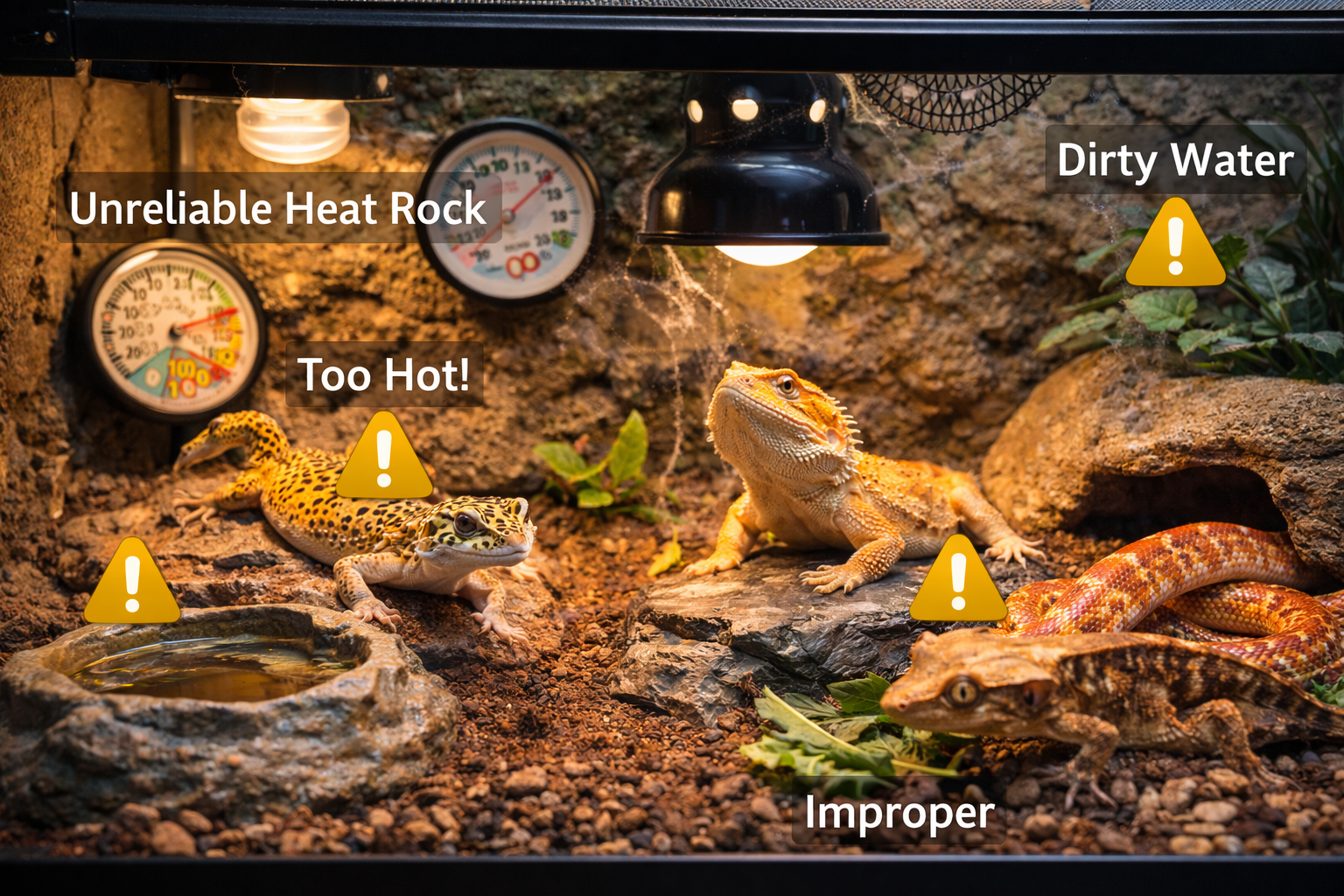
Reptiles are ectothermic, meaning they depend on external heat sources to regulate their body temperature.
Common heating mistakes include:
- No temperature gradient
- Overheating due to lack of thermostat
- Using heat rocks (which can cause burns)
- Guessing temperatures instead of measuring
Every enclosure should have reliable thermometers and a thermostat to maintain safe, stable temperatures.
4. Ignoring UVB Lighting Needs
UVB lighting is essential for many reptiles, yet it’s often overlooked or misunderstood by beginners.
Without proper UVB exposure, reptiles may develop:
- Metabolic bone disease
- Weak immune systems
- Poor appetite
- Deformities
Even if a bulb still produces visible light, UVB output weakens over time and must be replaced regularly.
5. Poor Humidity Control
Humidity plays a major role in reptile health, especially for shedding and respiratory function.
Mistakes include:
- Overly dry or overly wet environments
- No hygrometer to track humidity
- Infrequent misting or poor ventilation
Improper humidity can lead to stuck sheds, dehydration, respiratory infections, and skin issues.
6. Feeding the Wrong Diet
Dietary mistakes are one of the fastest ways to harm a reptile.
Common feeding errors:
- Feeding the wrong prey size
- Offering foods not suited to the species
- Skipping calcium and vitamin supplements
- Overfeeding due to begging behavior
Each reptile has species-specific nutritional needs. What works for one reptile may be dangerous for another.
7. Excessive or Improper Handling
Many new owners want to bond quickly with their reptile—but too much handling too soon can be stressful.
Handling mistakes include:
- Handling immediately after purchase
- Picking up improperly or too frequently
- Handling during shedding or digestion
Reptiles need time to acclimate. Gentle, minimal handling builds trust over time and reduces stress-related illness.
8. Using Unsafe Substrates
Substrate choice affects cleanliness, comfort, and safety.
Common substrate mistakes:
- Using loose substrates that cause impaction
- Choosing sharp or dusty materials
- Prioritizing appearance over safety
For beginners, simple and safe substrates are often the best option until experience grows.
9. Skipping Regular Health Checks
Reptiles are masters at hiding illness, which makes early detection critical.
New owners often miss:
- Subtle weight loss
- Changes in behavior
- Abnormal droppings
- Skin or eye issues
Regular observation is essential, and locating an exotic veterinarian before emergencies arise is strongly recommended.
10. Poor Enclosure Hygiene
Dirty enclosures lead to bacteria buildup, parasites, and illness.
Common cleaning mistakes:
- Infrequent spot cleaning
- Rare water changes
- Using harsh household cleaners
A clean enclosure supports better digestion, healthier skin, and stronger immune systems.
11. Buying Wild-Caught Reptiles
Wild-caught reptiles may seem cheaper, but they often come with hidden problems.
Risks include:
- Pzrasites and disease
- High stress levels
- Difficulty adapting to captivity
Captive-bred reptiles are healthier, easier to care for, and more ethically sourced.
12. Expecting a “Low-Maintenance” Pet
Reptiles are often marketed as easy pets, which leads to unrealistic expectations.
While they don’t require daily walks or constant attention, reptiles need:
- Daily environmental checks
- Regular feeding schedules
- Equipment maintenance
- Ongoing learning
They are low-interaction, not low-responsibility.
Final Thoughts
Most mistakes new reptile owners make come from a lack of preparation—not bad intentions. Reptile care is highly rewarding when done correctly, but it demands consistency, attention to detail, and ongoing education.
By avoiding these common pitfalls and prioritizing your reptile’s environmental and nutritional needs, you set the foundation for a long, healthy, and stress-free life together. Responsible reptile ownership isn’t about perfection—it’s about learning, adapting, and always putting the animal first.


 Accessories & Others
 Apparel
 Beds & Furniture
 Cages & Accessories
 Carriers & Strollers
 Doors, Gates & Ramps
 Flea & Tick Control
 Grooming
 Litter & Housebreaking
 Memorials & Funerary
 Accessories & Others
 Apparel
 Beds & Furniture
 Cages & Accessories
 Carriers & Strollers
 Cat Doors,Steps, Nets.
 Collars, Harnesses & leashes
 Flea & Tick Control
 Grooming
 Cages& Accessories
 Cow Mastitis Detectors
 Ear Tags
 Aquarium Accessories
 Aquarium Cleaners
 Aquarium Decor
 Aquarium Lights
 Aquarium Pumps & Filter
 Aquariums & Fish Bowls
 Automatic Feeders