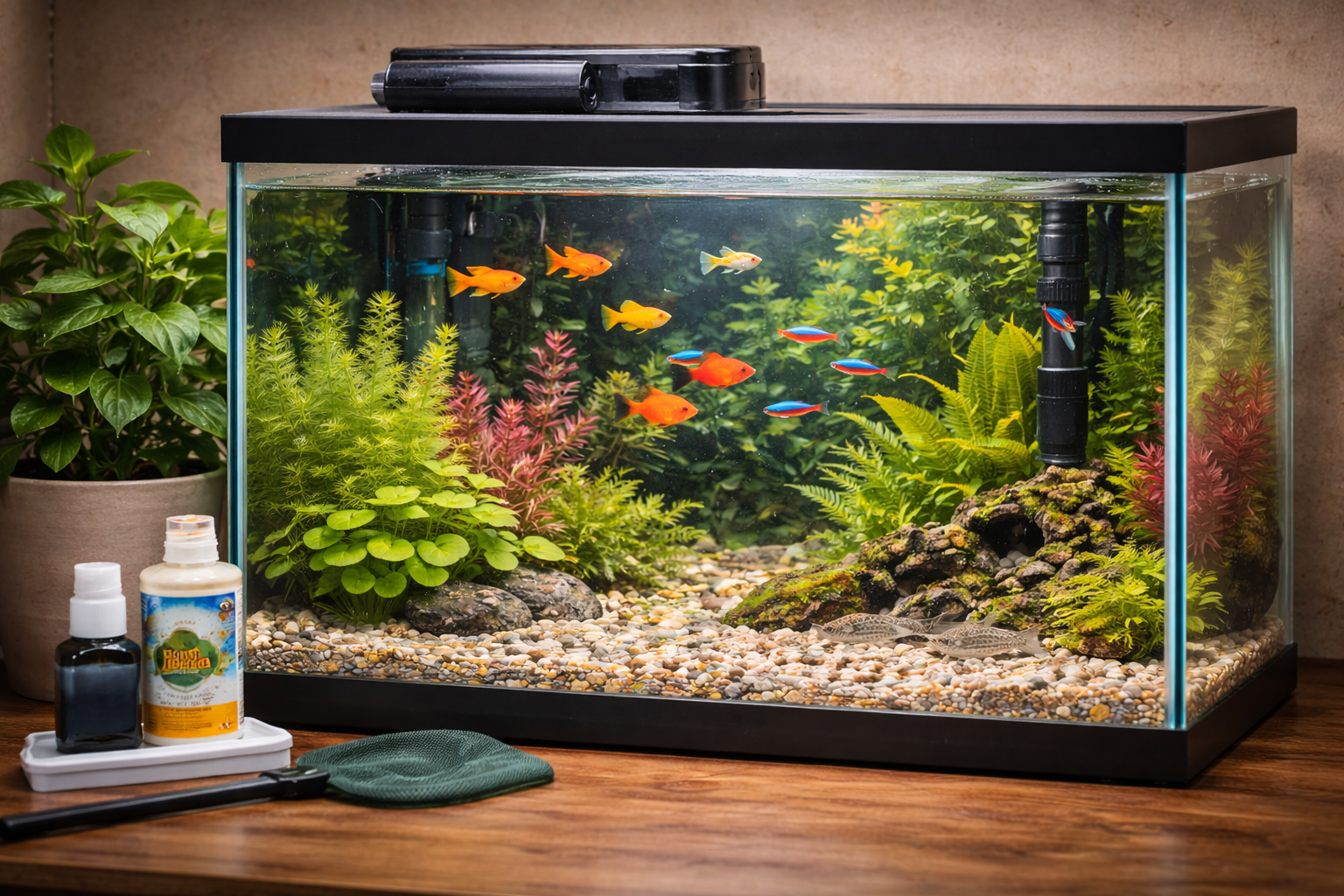
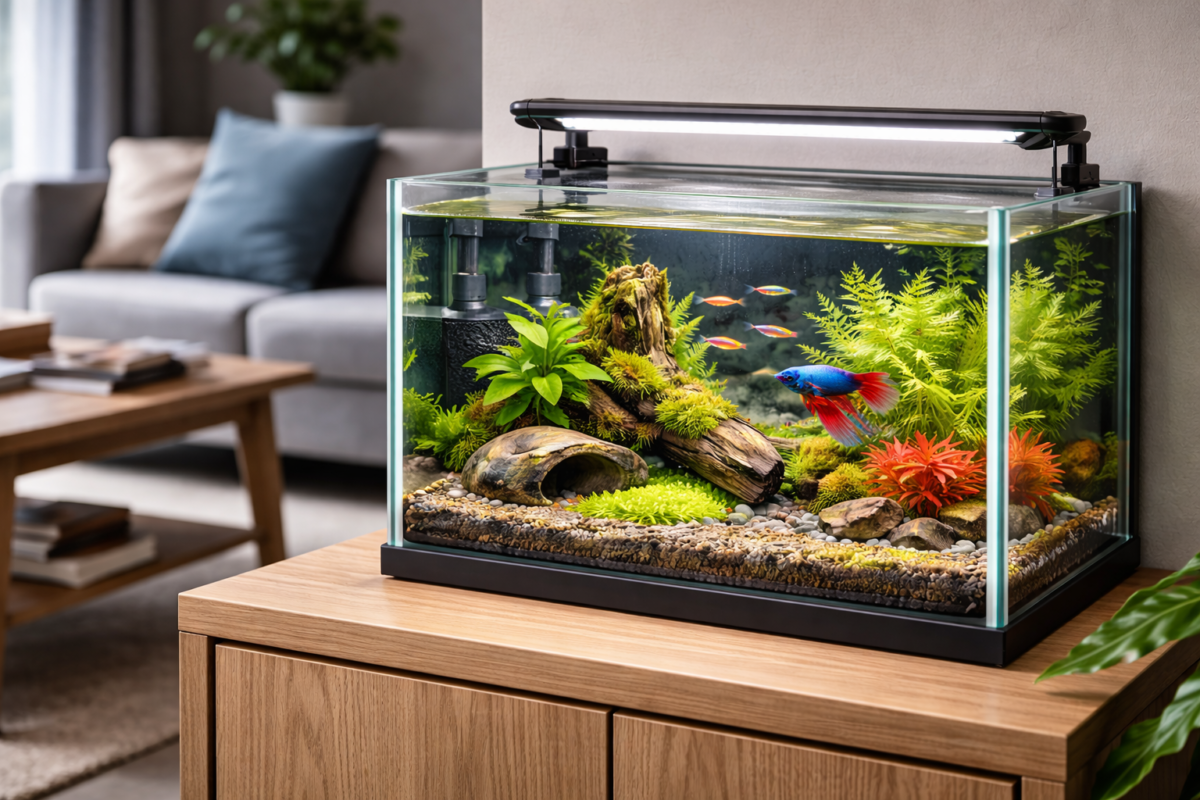
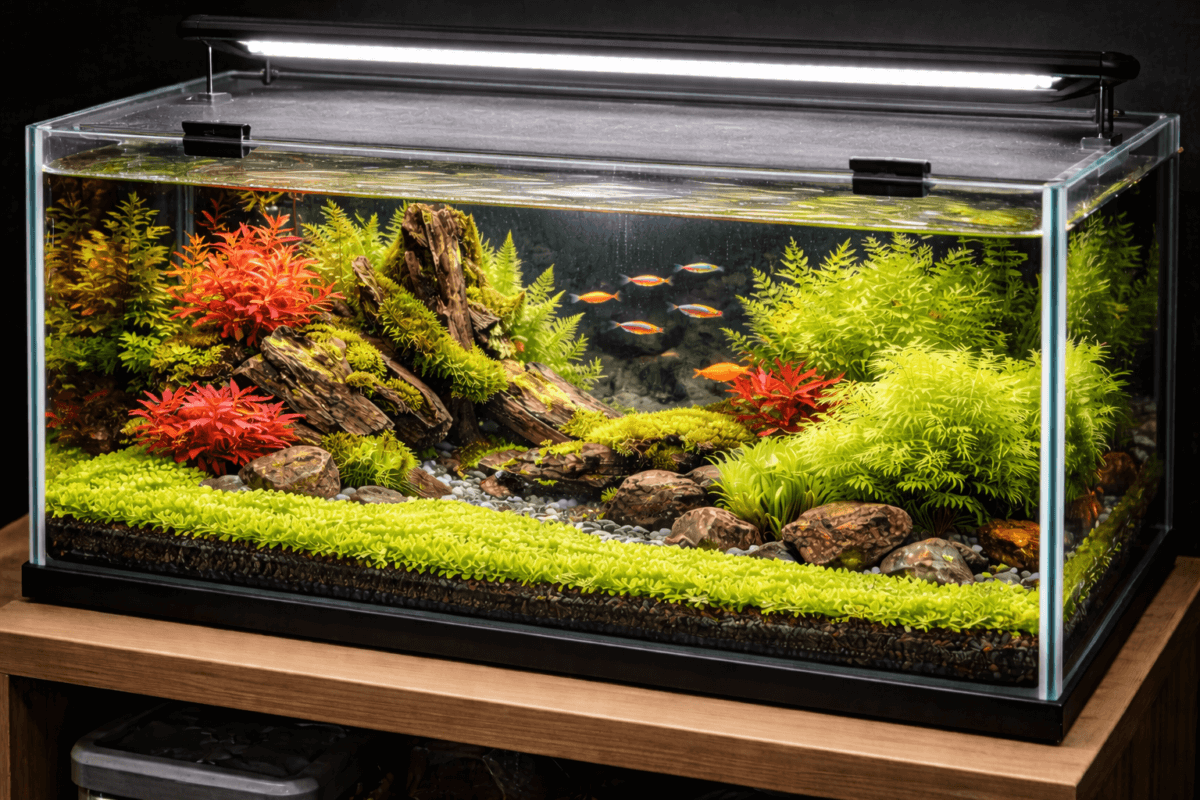
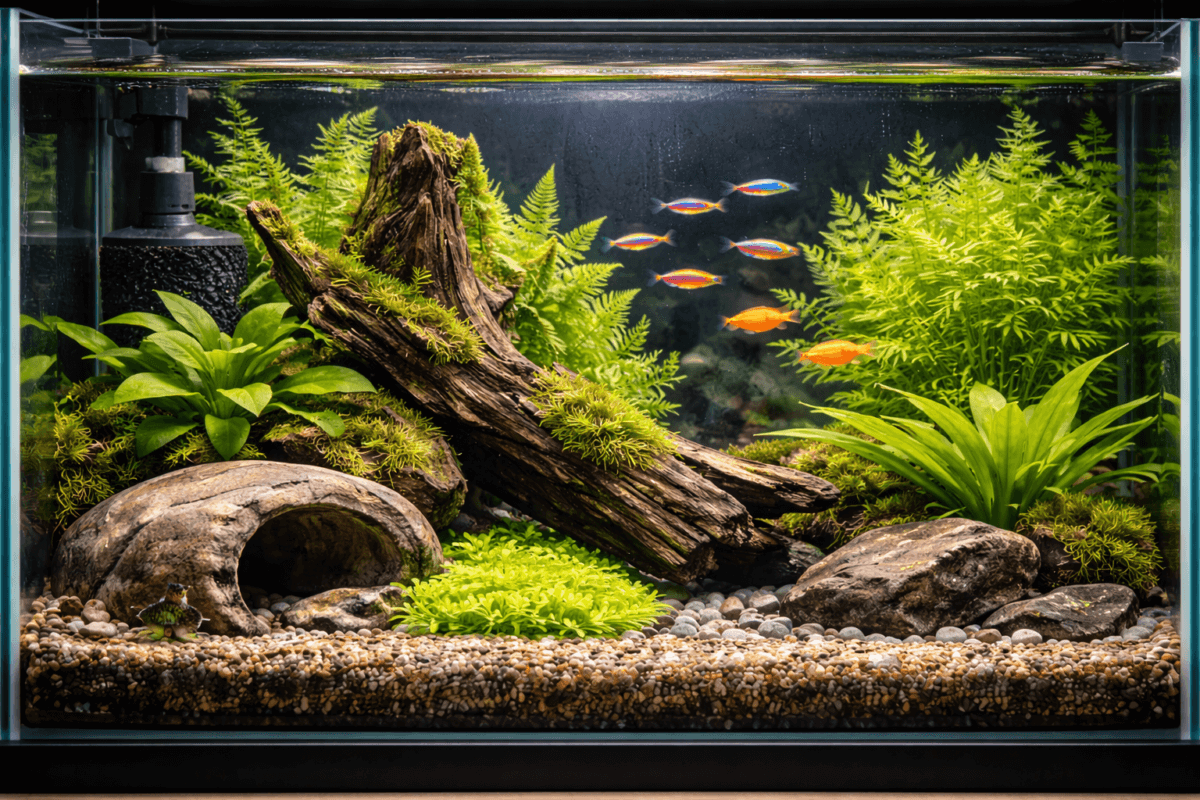
Many people love the idea of keeping an aquarium but worry about constant cleaning, water changes, and complicated care routines. The good news is that with the right planning, you can create a low-maintenance aquarium setup that stays clean, stable, and healthy with minimal effort.
A low-maintenance tank doesn’t mean neglect—it means designing your aquarium in a way that naturally reduces problems. This guide will walk you step by step through everything you need to know to build an easy, beginner-friendly aquarium that practically takes care of itself.
What Is a Low-Maintenance Aquarium?
A low-maintenance aquarium is designed to:
- Stay stable for long periods
- Produce less waste
- Require fewer water changes
- Avoid frequent algae problems
This is achieved through smart choices in tank size, fish selection, filtration, and aquascaping.
1. Choose the Right Tank Size
One of the biggest secrets to low maintenance is starting with the right tank size.
Best Choice:
- 20–30 gallons for beginners
Why Bigger Is Better:
- Water parameters change more slowly
- Waste is diluted more easily
- Fish experience less stress
Small tanks require more frequent attention, not less.
2. Pick Hardy, Low-Maintenance Fish
Not all fish are created equal. Some species are far more forgiving and adaptable.
Best Low-Maintenance Fish:
- Guppies
- Platies
- Mollies
- Zebra danios
- Corydoras catfish
These fish are hardy, peaceful, and tolerant of small water fluctuations.
3. Avoid Overstocking the Tank
Overcrowding is the fastest way to turn a low-maintenance tank into a high-maintenance nightmare.
Stocking Tips:
- Add fish gradually
- Follow stocking guidelines
- Consider adult fish size
Fewer fish = less waste = less cleaning.
4. Use a Reliable Aquarium Filter
A good filter does most of the work for you.
Filter Features to Look For:
- Rated for your tank size (or slightly larger)
- Quiet operation
- Easy-to-clean filter media
Hang-on-back or sponge filters are excellent low-maintenance options.
5. Add Live Plants (Low-Tech Only)
Live plants are a game-changer for low-maintenance aquariums.
Benefits:
- Absorb nitrates
- Compete with algae
- Improve water clarity
- Create a natural look
Easy, Low-Light Plants:
- Anubias
- Java fern
- Amazon sword
- Java moss
Avoid high-tech plants that require CO₂ or intense lighting.
6. Choose the Right Substrate
Your substrate plays a role in waste management.
Best Options:
- Gravel for community tanks
- Sand for bottom-dwellers
Gravel allows debris to settle where it can be easily removed during water changes.
7. Keep Lighting Simple and Controlled
Too much light causes algae and extra maintenance.
Lighting Tips:
- Use LED aquarium lights
- Limit lighting to 8–10 hours per day
- Use a timer for consistency
Stable lighting reduces algae and keeps fish stress-free.
8. Perform Small, Consistent Water Changes
Low-maintenance doesn’t mean no maintenance.
Ideal Routine:
- 10–15% water change weekly or biweekly
- Use a gravel vacuum
- Match water temperature
Small, regular changes prevent big problems.
9. Feed Sparingly and Consistently
Overfeeding is one of the biggest causes of tank problems.
Feeding Rules:
- Feed once daily
- Only what fish can eat in 2–3 minutes
- Skip feeding one day per week
Less food = cleaner water.
10. Use Algae Control Naturally
Instead of chemicals, rely on balance.
Natural Algae Control:
- Live plants
- Proper lighting
- Algae-eating species like snails or Corydoras
- Regular glass cleaning
A balanced tank rarely suffers from algae outbreaks.
11. Maintain Stable Temperature
Temperature stability reduces stress and disease.
Tips:
- Use a quality adjustable heater
- Add a thermometer
- Avoid placing tanks near windows or vents
Stable fish are healthier and easier to care for.
12. Skip Complicated Equipment
More gadgets don’t always mean better results.
Avoid:
- Overpowered lighting
- Complex dosing systems
- Frequent chemical additives
Simplicity is the foundation of low maintenance.
Common Mistakes That Increase Maintenance
- Choosing a tank that’s too small
- Overstocking fish
- Overfeeding
- Excessive lighting
- Skipping water changes
Avoiding these mistakes saves time and effort.
Signs Your Aquarium Is Truly Low-Maintenance
- Clear water with minimal algae
- Fish are active and healthy
- No foul odors
- Stable water test results
- Minimal weekly upkeep
These signs show your system is working naturally.
Sample Low-Maintenance Setup
Tank Size: 25 gallons
Fish: Guppies, Corydoras catfish
Plants: Java fern, Anubias
Filter: Hang-on-back filter
Lighting: LED with timer
Maintenance: 10% weekly water change
Simple, stable, and beginner-friendly.
Final Thoughts
Creating a low-maintenance aquarium setup is all about smart choices and balance. By selecting hardy fish, using reliable equipment, adding easy live plants, and keeping routines simple, you can enjoy a beautiful aquarium without constant work.


 Accessories & Others
 Apparel
 Beds & Furniture
 Cages & Accessories
 Carriers & Strollers
 Doors, Gates & Ramps
 Flea & Tick Control
 Grooming
 Litter & Housebreaking
 Memorials & Funerary
 Accessories & Others
 Apparel
 Beds & Furniture
 Cages & Accessories
 Carriers & Strollers
 Cat Doors,Steps, Nets.
 Collars, Harnesses & leashes
 Flea & Tick Control
 Grooming
 Cages& Accessories
 Cow Mastitis Detectors
 Ear Tags
 Aquarium Accessories
 Aquarium Cleaners
 Aquarium Decor
 Aquarium Lights
 Aquarium Pumps & Filter
 Aquariums & Fish Bowls
 Automatic Feeders