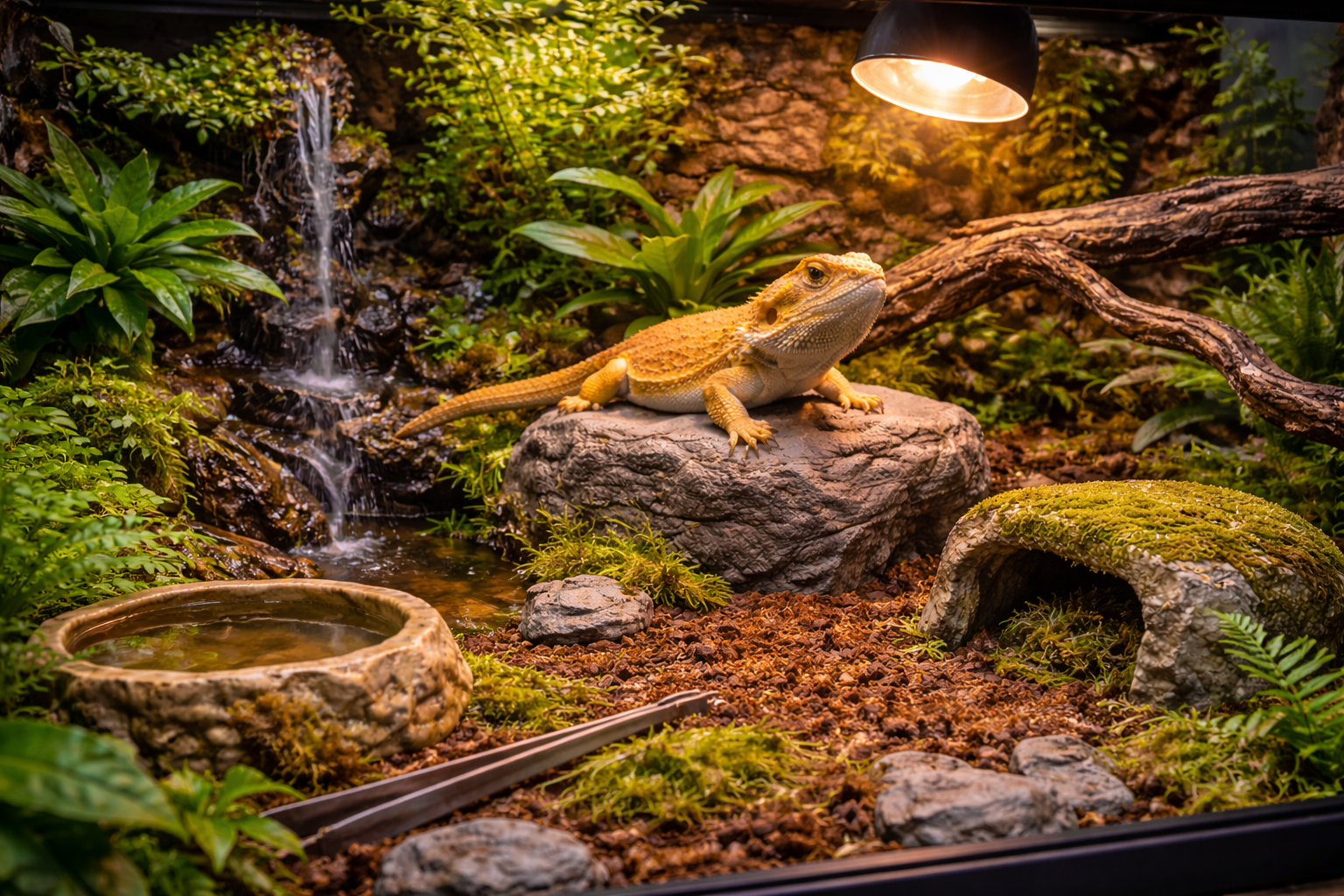
Reptiles thrive best when their environment closely resembles the one they evolved in. While basic enclosures can keep reptiles alive, naturalistic habitats help them truly flourish—supporting better health, reduced stress, and more natural behaviors.
Creating a natural habitat for reptiles at home doesn’t mean building a jungle overnight. It means thoughtfully combining lighting, temperature, humidity, substrate, and décor to replicate nature in a safe and controlled way. This guide walks you through how to design a natural, enriching reptile habitat step by step, whether you’re a beginner or upgrading an existing setup.
Why Natural Habitats Matter for Reptiles
In the wild, reptiles interact constantly with their surroundings—basking, hiding, climbing, burrowing, and exploring. Sterile or overly minimal enclosures can lead to:
- Chronic stress
- Reduced activity
- Poor appetite
- Abnormal behaviors
A natural habitat encourages:
- Healthy movement and exercise
- Proper thermoregulation
- Mental stimulation
- Strong immune function
Simply put, naturalistic setups support both physical and psychological health.
Step 1: Research Your Reptile’s Natural Environment
Before buying décor or substrate, research where your reptile comes from.
Key questions to ask:
- Is it desert, tropical, forest, or grassland species?
- Does it climb, burrow, or stay ground-dwelling?
- What are its natural temperature and humidity ranges?
A bearded dragon’s habitat will look very different from a crested gecko’s—and that’s exactly how it should be.
Step 2: Choose the Right Enclosure
A natural habitat starts with the right enclosure size and orientation.
Enclosure Guidelines
- Larger enclosures allow better temperature gradients
- Arboreal species need vertical space
- Ground-dwelling species need floor space
- Front-opening enclosures reduce stress
More space means more freedom to recreate nature accurately.
Step 3: Create Proper Temperature Zones
Temperature is the backbone of any reptile habitat.
Natural Heat Simulation
- Use basking lamps to mimic the sun
- Create a warm side and cool side
- Allow reptiles to choose their comfort zone
Avoid evenly heating the entire enclosure—natural environments always offer variation.
Step 4: Provide Correct Lighting and UVB
Lighting plays a major role in natural habitat design.
Why UVB Is Essential
- Supports calcium absorption
- Prevents metabolic bone disease
- Encourages natural basking behavior
Use linear UVB lighting that overlaps basking areas and replace bulbs regularly. A natural habitat always includes a “sun.”
Step 5: Select a Natural, Safe Substrate
Substrate forms the foundation of the habitat.
Naturalistic Substrate Options
- Coconut fiber for tropical species
- Soil-based mixes for forest reptiles
- Packed earth or tile for desert species
The best substrate:
- Supports digging or burrowing
- Helps regulate humidity
- Is safe if accidentally ingested
Avoid artificial or dyed substrates.
Step 6: Add Natural Hides and Shelter
In nature, reptiles are rarely exposed.
Essential Shelter Types
- Rock hides
- Cork bark tunnels
- Hollow logs
- Leaf litter cover
Include at least:
- One warm-side hide
- One cool-side hide
Hiding spots reduce stress and allow reptiles to feel secure.
Step 7: Incorporate Natural Climbing and Basking Structures
Branches, rocks, and ledges recreate the physical complexity of wild habitats.
Benefits
- Encourages muscle development
- Supports basking and exploration
- Adds visual depth to the enclosure
Secure all heavy items firmly to prevent collapse or injury.
Step 8: Use Live or Naturalistic Plants
Plants play both functional and visual roles.
Benefits of Plants
- Improve humidity regulation
- Provide visual barriers
- Reduce stress
- Create realistic environments
Live plants are ideal, but high-quality artificial plants also work if lighting or maintenance is a concern. Always choose non-toxic options.
Step 9: Maintain Natural Humidity Levels
Humidity should match the reptile’s native habitat.
Natural Humidity Tools
- Moist substrates
- Live plants
- Misting systems
- Water features (advanced setups)
Use a hygrometer to monitor levels. Natural habitats are balanced, not soaked.
Step 10: Encourage Natural Behavior Through Enrichment
Natural habitats should evolve over time.
Simple Enrichment Ideas
- Rearranging décor occasionally
- Adding new textures or hides
- Creating new climbing paths
Small changes encourage exploration and prevent boredom without causing stress.
Bioactive Setups: The Ultimate Natural Habitat (Optional)
Bioactive enclosures include:
- Soil layers
- Live plants
- Cleanup crews (isopods, springtails)
Benefits
- Natural waste breakdown
- Reduced odor
- Stunning realism
Bioactive setups require planning and experience but offer the most natural environment possible.
Common Mistakes to Avoid
When creating natural habitats, avoid:
- Prioritizing looks over safety
- Overcrowding décor
- Ignoring temperature and UVB
- Using unsafe woods or plants
- Making frequent, drastic changes
Nature is complex—but stable.
Signs Your Reptile Is Thriving in a Natural Habitat
A successful setup results in:
- Regular basking and movement
- Healthy appetite
- Normal shedding
- Reduced hiding due to stress
- Curious, alert behavior
Behavior is the best indicator of success.
Final Thoughts
Creating a natural habitat for reptiles at home is one of the most rewarding parts of reptile care. When done correctly, it transforms an enclosure into a living ecosystem that supports health, reduces stress, and allows reptiles to behave as nature intended.
You don’t need perfection—you need thoughtful design, consistency, and respect for the animal’s natural needs. Start simple, observe your reptile closely, and improve the habitat over time. A natural environment isn’t just beautiful—it’s essential for a long, healthy life.