Creating a peaceful aquarium isn’t just about choosing beautiful fish—it’s about choosing compatible fish. Mixing the wrong species can lead to stress, aggression, illness, or even death. That’s why understanding fish compatibility is one of the most important skills for aquarium beginners and hobbyists alike.
In this fish compatibility guide, you’ll learn which fish live well together, how to avoid common pairing mistakes, and how to build a calm, thriving community aquarium.
Why Fish Compatibility Matters
Fish share limited space, and not all species behave the same way. Some fish are peaceful and social, while others are territorial or aggressive.
Poor compatibility can result in:
- Constant chasing or fin nipping
- Stress-related illness
- Fish hiding and refusing to eat
- Injuries or fatalities
Choosing compatible fish leads to a healthier tank and happier fish.
Key Factors That Affect Fish Compatibility
Before mixing fish, consider these important factors:
1. Temperament
Fish are generally classified as:
- Peaceful
- Semi-aggressive
- Aggressive
Never mix aggressive fish with peaceful species.
2. Tank Size
A tank that’s too small increases aggression—even among peaceful fish.
- Larger tanks reduce territorial disputes
- Overcrowding increases stress
Always match fish quantity to tank size.
3. Swimming Level
Fish occupy different levels of the aquarium:
- Top dwellers
- Mid-level swimmers
- Bottom dwellers
Choosing fish from different levels reduces competition and conflict.
4. Water Parameters
Fish must share similar needs for:
- Temperature
- pH level
- Water hardness
If water requirements don’t match, fish will struggle to survive.
Best Peaceful Community Fish That Live Well Together
These fish are ideal for beginner-friendly community aquariums.
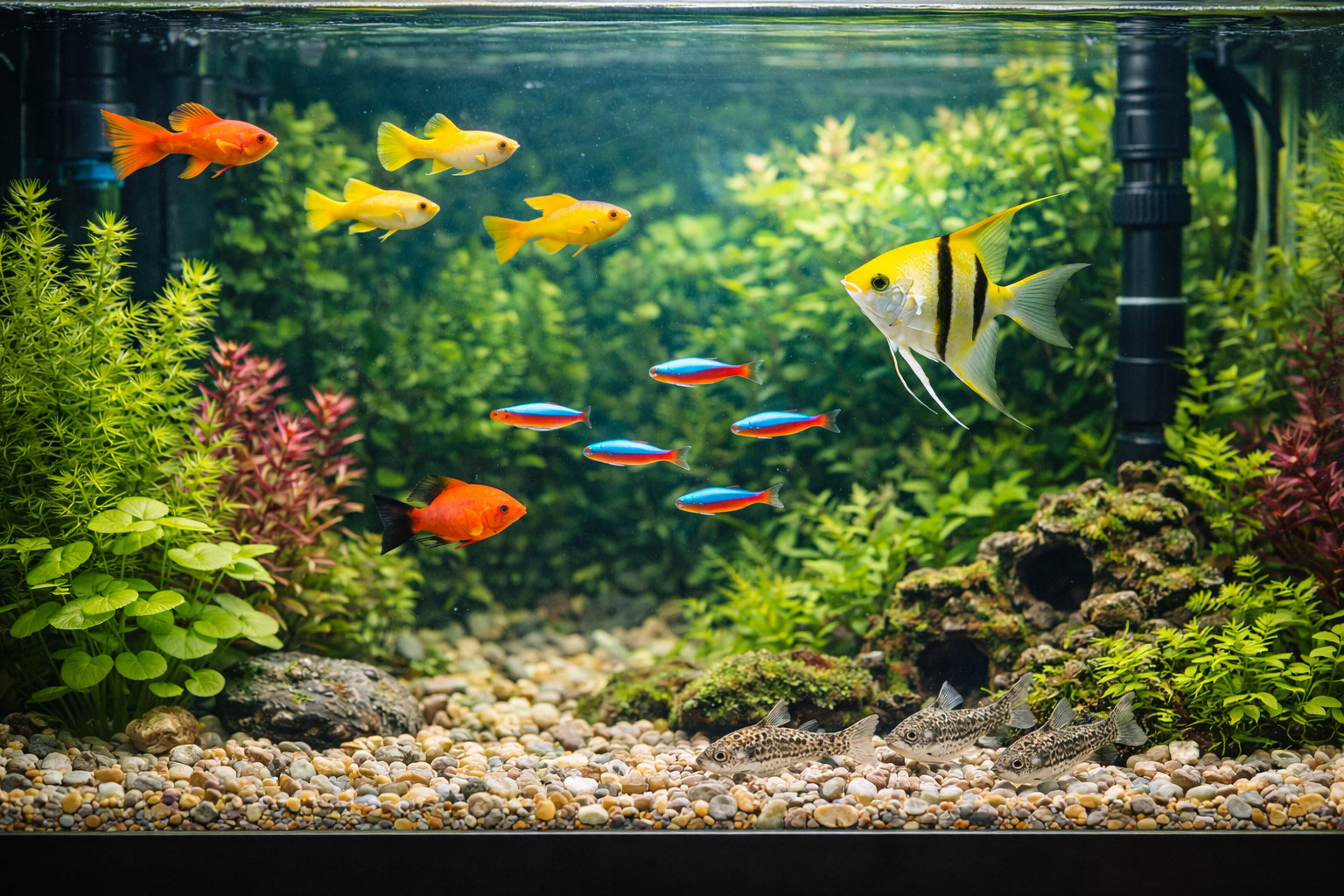
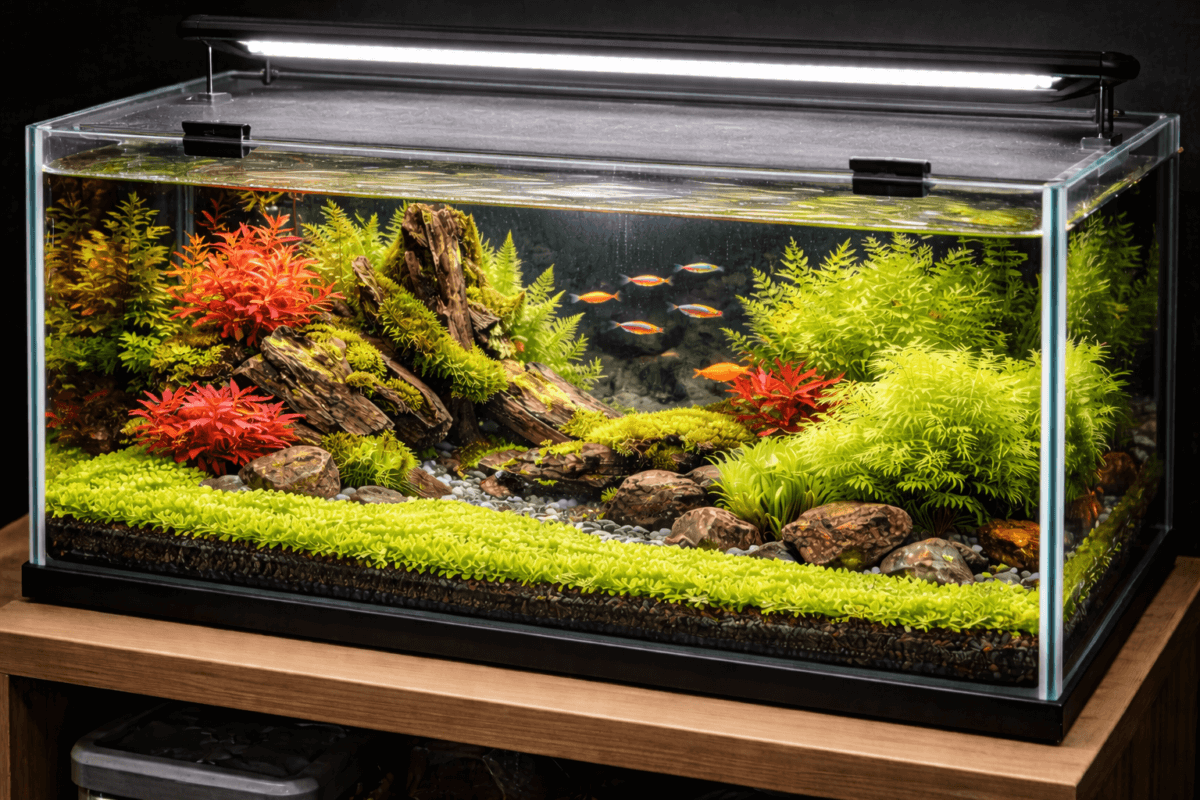
1. Tetras
Popular varieties include neon tetras and cardinal tetras.
Why they work well:
- Peaceful schooling fish
- Bright colors
- Thrive in groups of 6 or more
Best paired with other calm species.
2. Guppies
Guppies are hardy and colorful.
Compatibility traits:
- Peaceful
- Active swimmers
- Easy for beginners
Avoid mixing with fin-nipping species.
3. Platies and Mollies
These livebearers are excellent community fish.
Why they’re compatible:
- Friendly temperament
- Similar care requirements
- Adapt well to community tanks
They pair well with guppies and tetras.
4. Corydoras Catfish
Bottom-dwelling cleaners that love company.
Benefits:
- Extremely peaceful
- Help clean leftover food
- Thrive in groups
They rarely bother other fish.
5. Zebra Danios
Energetic but generally peaceful fish.
Good to know:
- Best kept in schools
- Active swimmers
- Need space to move
Great for larger community tanks.
Fish That Require Careful Pairing
Some fish aren’t aggressive but need thoughtful tank mates.
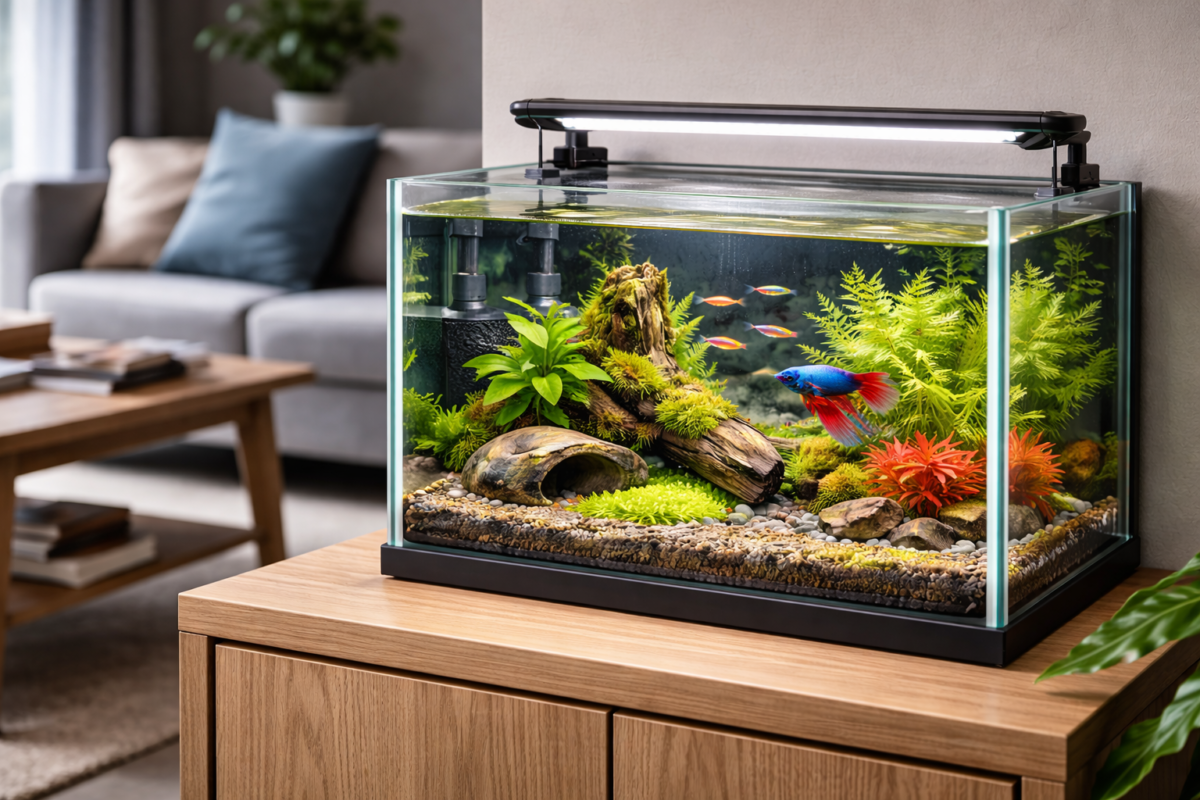
Betta Fish
Male bettas are territorial.
Compatible with:
- Peaceful bottom dwellers
- Non-fin-nipping species
Avoid:
- Other male bettas
- Bright, flashy fish
Angelfish
Beautiful but semi-aggressive as adults.
Compatible with:
- Larger tetras
- Corydoras catfish
Avoid:
- Small fish they can eat
- Fin nippers
Tank size matters greatly with angelfish.
Fish You Should NOT Mix in Community Tanks
Some fish are better kept alone or with their own species.
Aggressive Fish to Avoid Mixing:
- Cichlids (most species)
- Oscars
- Jack Dempseys
- Red-tailed sharks
These fish often require species-only tanks.
Ideal Community Fish Combinations
Here are some proven, beginner-friendly combinations:
Combo 1: Peaceful Community Tank
- Neon tetras
- Guppies
- Corydoras catfish
- Platies
Combo 2: Active Community Tank
- Zebra danios
- Mollies
- Corydoras catfish
Combo 3: Semi-Aggressive Community (Larger Tank)
- Angelfish
- Larger tetras
- Bottom-dwelling catfish
Always introduce fish slowly and monitor behavior.
Tips for Successfully Mixing Fish
- Add peaceful fish first
- Introduce aggressive fish last (if any)
- Rearrange decorations to reduce territorial behavior
- Provide hiding spots and plants
- Quarantine new fish before adding
Patience prevents problems.
Signs Your Fish Are Compatible
- Fish swim calmly without chasing
- No torn fins or injuries
- Fish eat regularly
- Minimal hiding
- Normal breathing and behavior
These signs indicate a balanced aquarium.
Common Fish Compatibility Mistakes
- Mixing aggressive and peaceful fish
- Overcrowding the tank
- Ignoring adult fish size
- Skipping research
- Adding too many fish at once
Avoiding these mistakes saves fish lives.
Final Thoughts
Understanding fish compatibility is the foundation of a successful aquarium. By choosing fish with similar temperaments, water needs, and space requirements, you can create a peaceful and visually stunning community tank.
Take your time, research before buying, and remember: compatible fish live longer, healthier, and happier lives.


 Accessories & Others
 Apparel
 Beds & Furniture
 Cages & Accessories
 Carriers & Strollers
 Doors, Gates & Ramps
 Flea & Tick Control
 Grooming
 Litter & Housebreaking
 Memorials & Funerary
 Accessories & Others
 Apparel
 Beds & Furniture
 Cages & Accessories
 Carriers & Strollers
 Cat Doors,Steps, Nets.
 Collars, Harnesses & leashes
 Flea & Tick Control
 Grooming
 Cages& Accessories
 Cow Mastitis Detectors
 Ear Tags
 Aquarium Accessories
 Aquarium Cleaners
 Aquarium Decor
 Aquarium Lights
 Aquarium Pumps & Filter
 Aquariums & Fish Bowls
 Automatic Feeders