Blog
Frogs vs Lizards: Which Is Easier to Care For?
Choosing your first exotic pet can feel overwhelming, especially when deciding between frogs and lizards. Both are fascinating, quiet, and visually stunning animals—but their care requirements are very different. What seems “easy” on the surface may actually require precision, consistency, and experience.
In this guide, we’ll compare frogs vs lizards across key care factors like habitat setup, feeding, handling, health, and daily maintenance to help you decide which is truly easier to care for—especially for beginners.
Understanding the Core Difference
At the most basic level, frogs and lizards differ in how they interact with their environment.
Frogs (Amphibians):
- Moist, permeable skin
- Highly sensitive to water quality and chemicals
- Absorb moisture through skin
- Usually minimal handling
Lizards (Reptiles):
- Dry, scaly skin
- Depend on heat and UVB lighting
- More tolerant of handling (species-dependent)
- Wider range of care difficulty
This difference affects every aspect of care.
Habitat Setup: Which Is Easier?
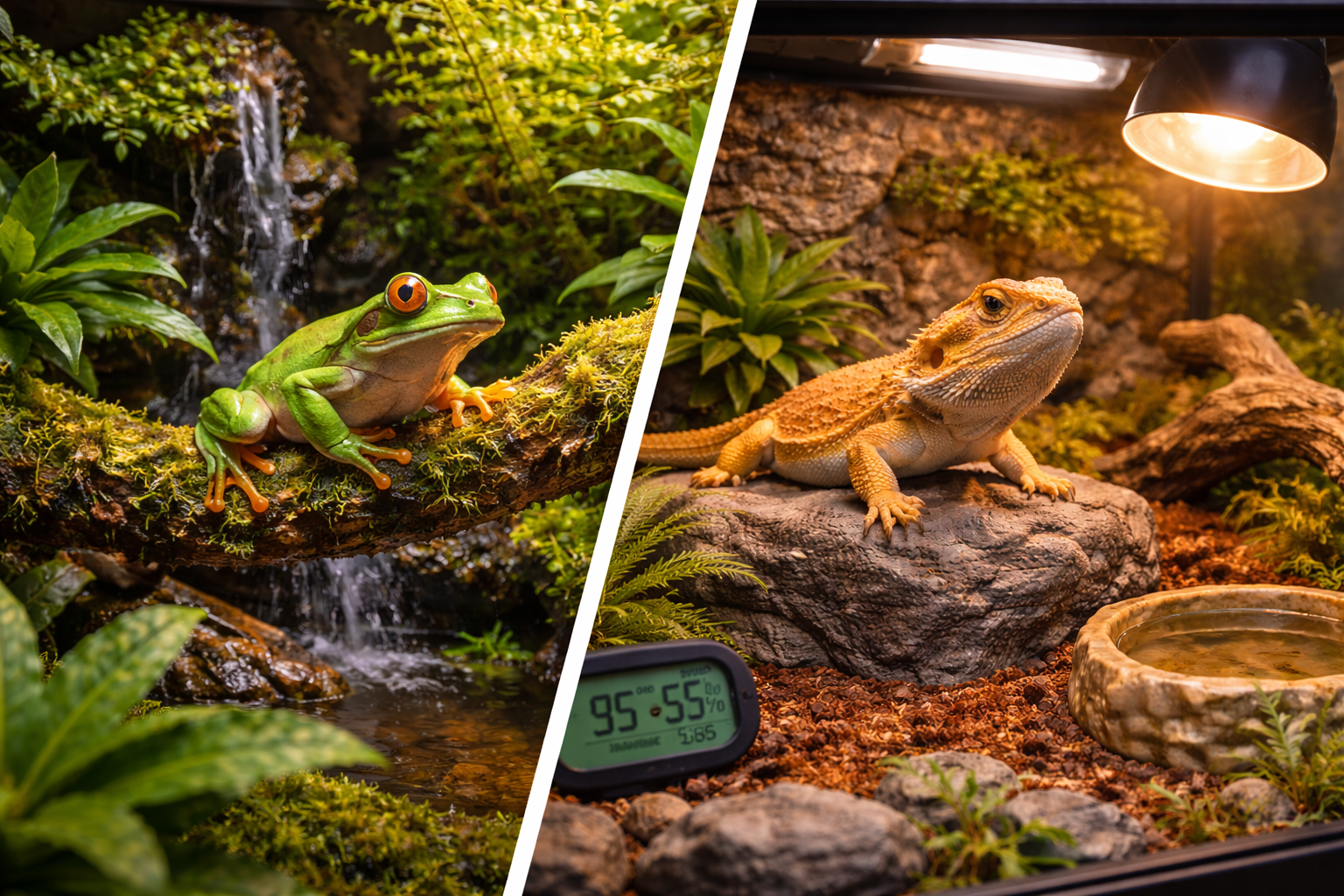
Frog Habitat Requirements
Frogs typically require:
- High humidity (often 60–90%)
- Clean, dechlorinated water
- Consistent moisture levels
- Live plants and natural décor
Small changes in humidity or water quality can quickly stress frogs. Tropical frogs, in particular, need precise environmental control.
Difficulty level: Moderate to high for beginners
Lizard Habitat Requirements
Lizard enclosures usually require:
- Temperature gradients (warm and cool zones)
- Heat lamps and UVB lighting
- Controlled humidity (species-specific)
- Basking areas and hides
While lighting and heating require setup knowledge, once dialed in, lizard environments tend to be more stable and forgiving.

Difficulty level: Beginner-friendly (species-dependent)
✅ Winner: Lizards (more predictable and adjustable environments)
Feeding and Diet Comparison
Feeding Frogs
Most frogs are strict insectivores and require:
- Live insects only
- Frequent feeding schedules
- Strict prey size control
They can be picky eaters, and uneaten insects must be removed quickly to prevent stress or injury.
Feeding Lizards
Lizard diets vary by species:
- Insects
- Vegetables and greens
- Fruits (limited)
- Rodents (for some species)
Many beginner lizards are omnivores, making feeding more flexible and forgiving.
✅ Winner: Lizards (greater dietary flexibility)
Handling and Interaction
Frogs and Handling
Frogs generally should not be handled.
- Skin absorbs oils, chemicals, and bacteria
- Handling causes stress and dehydration
- Gloves or wet hands are required when necessary
Frogs are best observed, not interacted with.
Lizards and Handling
Many beginner lizards:
- Tolerate gentle handling
- Can become accustomed to routine interaction
- Are less fragile than frogs
While not “cuddly,” lizards offer more interaction potential.
✅ Winner: Lizards (more handling-friendly)
Maintenance and Cleaning
Frog Enclosure Maintenance
Frog setups require:
- Frequent misting
- Careful water changes
- Mold and bacteria monitoring
- High humidity balance
Mistakes can lead to skin infections or respiratory issues.
Lizard Enclosure Maintenance
Lizard tanks require:
- Daily spot cleaning
- Regular water changes
- Monthly deep cleaning
Dryer environments mean fewer mold issues and easier sanitation.
✅ Winner: Lizards (lower moisture-related risks)
Health and Disease Risk
Frogs
Frogs are extremely sensitive to:
- Poor water quality
- Chemical exposure
- Temperature changes
They often decline rapidly when stressed or ill.
Lizards
Lizards are generally:
- More resilient
- Easier to monitor visually
- Slower to decline if husbandry issues arise
Health problems are usually preventable with correct setup.
✅ Winner: Lizards (greater resilience)
Cost and Equipment
Frog Setup Costs
- Specialized misting systems
- Live plants
- High-quality water treatment
Lizard Setup Costs
- Heat lamps
- UVB lighting
- Thermostats
Initial costs may be similar, but ongoing maintenance is often cheaper for lizards.
Beginner Mistakes: Which Forgives More?
Frogs:
- Low tolerance for mistakes
- Sensitive to minor errors
- Quick health decline
Lizards:
- More forgiving of small errors
- Easier to correct husbandry mistakes
- Better for learning
✅ Winner: Lizards
When Frogs Might Be Easier
Frogs may be a better choice if you:
- Prefer observation-only pets
- Enjoy planted, bioactive setups
- Are comfortable managing humidity precisely
- Want minimal interaction
Certain hardy frog species can work for dedicated beginners—but they still demand consistency.
When Lizards Are Easier
Lizards are ideal if you:
- Want a more interactive pet
- Prefer stable, measurable environments
- Are new to exotic animal care
- Want clear behavioral feedback
Many beginner lizards are specifically bred for captivity and adapt well.
Quick Comparison Table
| Care Factor | Frogs | Lizards |
| Handling | ❌ Very limited | ✅ Moderate |
| Feeding | ❌ Strict | ✅ Flexible |
| Habitat Stability | ❌ Sensitive | ✅ Stable |
| Beginner-Friendly | ❌ Challenging | ✅ Yes |
| Interaction | ❌ Low | ✅ Moderate |
Final Verdict: Which Is Easier to Care For?
For most beginners, lizards are easier to care for than frogs.
Lizards offer:
- More forgiving environments
- Easier feeding routines
- Better handling tolerance
- Greater resilience to small mistakes
Frogs are beautiful, fascinating animals—but they require precision and consistency that can be challenging for first-time keepers.
If you’re just starting your reptile or amphibian journey, a beginner-friendly lizard is usually the safer, more rewarding choice.