Regular grooming isn’t just about keeping your dog looking good—it plays a vital role in skin health, shedding control, and overall comfort. But not all dogs need the same type of brush. A tool that works perfectly for a short-haired breed may be completely ineffective—or even uncomfortable—for a long-haired or curly-coated dog.
Choosing the right grooming brush for your dog’s specific coat type ensures better results and a happier grooming experience.
In this complete guide, we’ll break down the best grooming brushes for different dog coat types and explain how to choose the right one for your furry companion.
Why the Right Grooming Brush Matters
Using the wrong brush can lead to:
Skin irritation
Incomplete shedding removal
Painful pulling
Matting issues
Frustration for your dog
The right brush helps:
Remove loose fur
Prevent tangles
Distribute natural oils
Improve blood circulation
Reduce shedding
Understanding Different Dog Coat Types
Before choosing a brush, identify your dog’s coat type:
Short coat
Long coat
Double coat
Curly coat
Wire coat
Smooth coat
Each requires a different grooming approach.
1. Best Brushes for Short-Coated Dogs
Examples: Beagle, Boxer, Dalmatian
Short-coated dogs shed regularly but rarely develop mats.
Recommended Brushes:
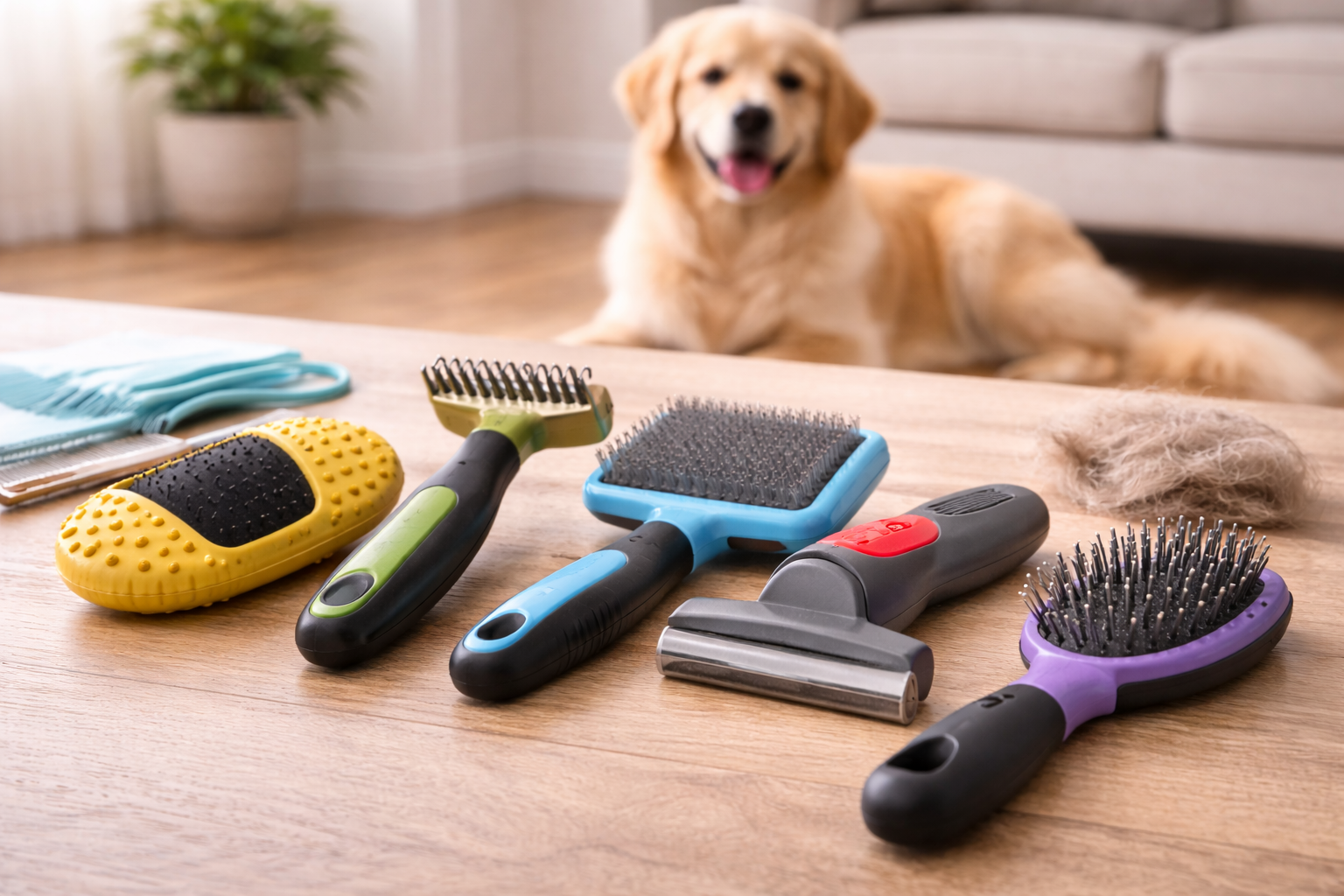
✔ Bristle Brush
Soft bristles
Removes loose hair
Gentle on skin
Adds shine
✔ Rubber Grooming Mitt
Easy to use
Great for bathing
Removes surface shedding
Short coats require brushing 1–2 times per week.
2. Best Brushes for Long-Coated Dogs
Examples: Golden Retriever, Shih Tzu, Afghan Hound
Long coats tangle easily and require consistent maintenance.
Recommended Brushes:
✔ Slicker Brush
Fine wire bristles
Removes tangles
Prevents matting
Excellent for daily use
✔ Pin Brush
Gentle on long hair
Helps detangle
Ideal for finishing touch
Brush long-haired dogs at least 3–4 times per week.
3. Best Brushes for Double-Coated Dogs
Examples: German Shepherd, Husky, Labrador
Double-coated dogs have:
Soft undercoat
Coarser topcoat
They shed heavily, especially seasonally.
Recommended Brushes:
✔ Undercoat Rake
Reaches deep undercoat
Removes excess shedding
Reduces fur buildup
✔ Deshedding Tool
Removes loose undercoat
Minimizes seasonal shedding
Brush double-coated breeds 2–3 times per week, daily during shedding season.
4. Best Brushes for Curly-Coated Dogs
Examples: Poodle, Bichon Frise, Labradoodle
Curly coats trap loose fur, causing mats.
Recommended Brushes:
✔ Slicker Brush
Essential for preventing mats
Penetrates dense curls
✔ Metal Comb
Finishing tool
Checks for hidden tangles
Curly coats require brushing at least every other day.
5. Best Brushes for Wire-Coated Dogs
Examples: Schnauzer, Wire Fox Terrier
Wire coats require specialized care.
Recommended Tools:
✔ Stripping Comb
Removes dead outer coat
Maintains texture
✔ Slicker Brush
Removes debris
Maintains cleanliness
Professional hand-stripping may be required periodically.
❌ Brushing too hard ❌ Ignoring undercoat ❌ Skipping regular grooming ❌ Using human brushes ❌ Brushing wet tangled fur
Gentle and consistent grooming is key.
Are Expensive Brushes Worth It?
Higher-quality brushes:
Last longer
Are more durable
Reduce pulling
Improve comfort
Cheap brushes may bend, break, or irritate skin.
Investing in quality tools saves money long term.
Benefits Beyond Appearance
Proper brushing:
Reduces shedding in home
Prevents skin infections
Detects parasites early
Strengthens bond with your dog
Grooming time is bonding time.
Final Thoughts
Choosing the right grooming brush depends entirely on your dog’s coat type. Short coats need simple bristle or rubber brushes, while long, curly, and double coats require specialized tools like slicker brushes and undercoat rakes.
Using the proper grooming brush not only keeps your dog’s coat healthy and beautiful but also prevents discomfort and long-term skin issues.
Regular grooming is one of the easiest ways to maintain your dog’s overall health—and with the right brush, it becomes an enjoyable routine for both of you.


 Accessories & Others
 Apparel
 Beds & Furniture
 Cages & Accessories
 Carriers & Strollers
 Doors, Gates & Ramps
 Flea & Tick Control
 Grooming
 Litter & Housebreaking
 Memorials & Funerary
 Accessories & Others
 Apparel
 Beds & Furniture
 Cages & Accessories
 Carriers & Strollers
 Cat Doors,Steps, Nets.
 Collars, Harnesses & leashes
 Flea & Tick Control
 Grooming
 Cages& Accessories
 Cow Mastitis Detectors
 Ear Tags
 Aquarium Accessories
 Aquarium Cleaners
 Aquarium Decor
 Aquarium Lights
 Aquarium Pumps & Filter
 Aquariums & Fish Bowls
 Automatic Feeders