Proper heating and lighting are the foundation of reptile and amphibian care. Unlike mammals, these animals cannot regulate their body temperature internally. Every biological process—digestion, immunity, growth, and activity—depends on external heat and light sources.
This guide breaks down everything beginners and intermediate keepers need to know about heating and lighting for reptiles and amphibians, helping you create a safe, natural, and effective setup.
Why Heating and Lighting Matter
In the wild, reptiles and amphibians rely on sunlight and environmental warmth to survive. In captivity, it’s your responsibility to recreate these conditions.
Correct heating and lighting:
- Support digestion and metabolism
- Prevent metabolic bone disease
- Regulate sleep and activity cycles
- Strengthen immune systems
- Reduce stress and illness
Improper setups are one of the leading causes of preventable reptile deaths.
Understanding Ectothermic Animals
Reptiles and amphibians are ectothermic (cold-blooded), meaning they rely on environmental temperatures to control body heat.
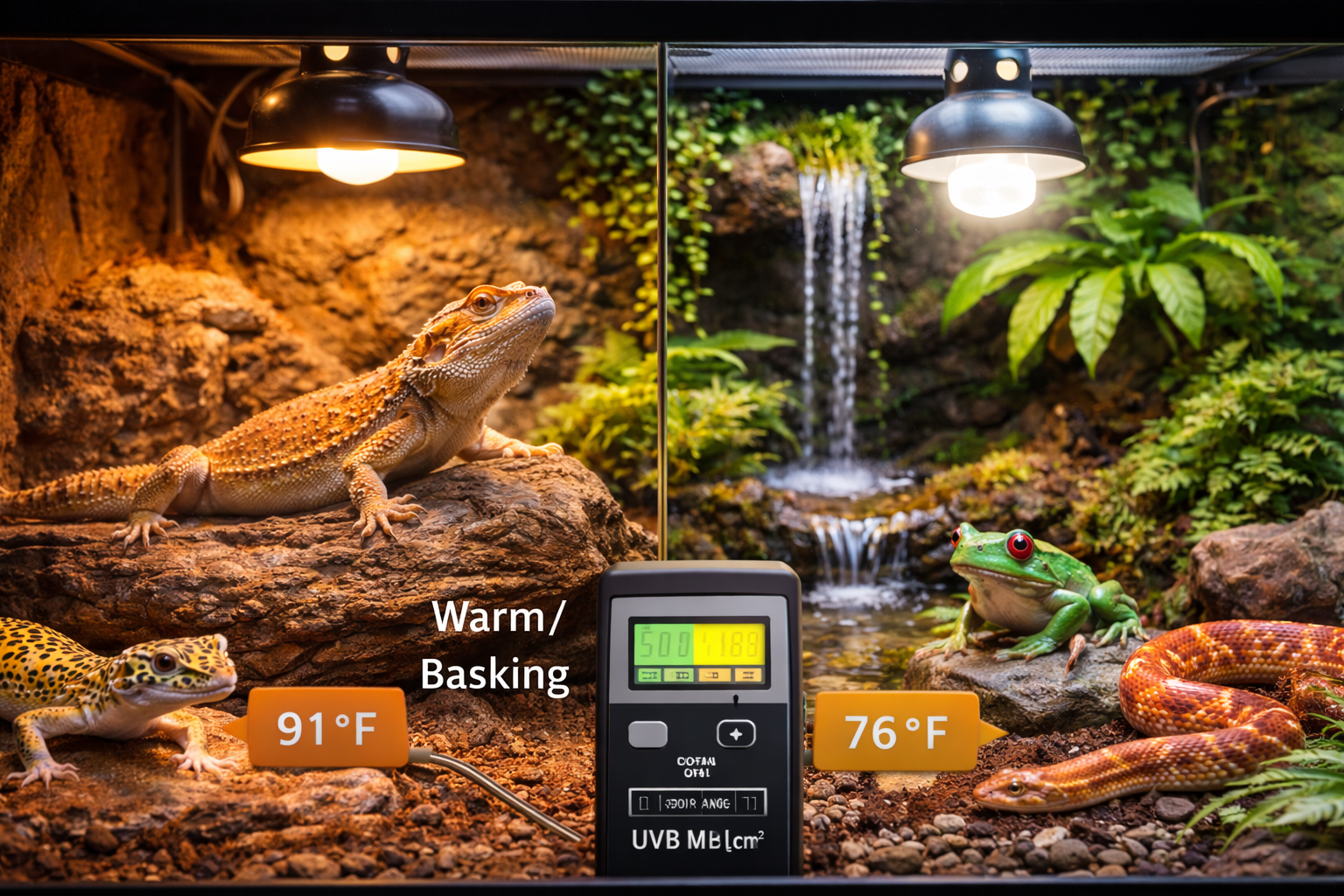
This makes temperature gradients essential. Animals must be able to move between warmer and cooler areas to self-regulate—just as they would in nature.
Heating Essentials for Reptiles and Amphibians
Creating a Temperature Gradient
Every enclosure should have:
- A warm side (basking or primary heat zone)
- A cool side (resting and recovery zone)
This allows animals to adjust their body temperature naturally throughout the day.
Never heat the entire enclosure evenly—this removes the animal’s ability to regulate itself.
Common Heating Options
Heat Lamps
- Provide overhead warmth similar to the sun
- Ideal for basking species
- Best paired with thermostats
Ceramic Heat Emitters
- Produce heat without light
- Ideal for nighttime heating
- Long-lasting and efficient
Under-Tank Heating Pads
- Provide gentle belly heat
- Useful for some reptiles like snakes
- Must always be regulated with a thermostat
🚫 Avoid heat rocks. They are a major cause of burns and injuries.
Temperature Monitoring
Guessing temperatures is dangerous.
Every enclosure should include:
- At least two thermometers (warm and cool side)
- A thermostat to control heat output
- Regular checks throughout the day
Digital thermometers with probes provide the most accurate readings.
Lighting Basics Explained
Lighting does more than illuminate the enclosure—it regulates biological rhythms and vitamin absorption.
Day and Night Cycles
Most reptiles require:
- 10–14 hours of light per day
- Complete darkness at night
Using timers ensures consistency and reduces stress.
UVB Lighting: What You Must Know
UVB lighting allows reptiles to synthesize vitamin D3, which is essential for calcium absorption.
Without UVB:
- Bones weaken
- Growth becomes stunted
- Appetite decreases
- Deformities may develop
Many reptiles cannot survive long-term without UVB.
Choosing the Right UVB Strength
UVB needs vary by species:
- Desert reptiles require stronger UVB
- Tropical species need moderate UVB
- Some amphibians need minimal or indirect UVB
Bulb strength, distance, and enclosure height all matter. Always follow species-specific recommendations.
UVB Bulb Replacement
UVB output degrades over time—even if the bulb still shines.
- Replace UVB bulbs every 6–12 months
- Track installation dates
- Clean fixtures regularly to prevent dust blockage
Expired UVB bulbs are a silent danger.
Lighting for Amphibians: Special Considerations
Amphibians have delicate, permeable skin and different needs.
Key considerations:
- Lower light intensity
- Higher humidity compatibility
- Avoid excessive heat and dryness
Many amphibians benefit from ambient lighting rather than direct basking lights.
Combining Heat and Light Safely
A balanced setup often includes:
- One heat source for warmth
- One UVB source for vitamin synthesis
- Timers for consistency
- Thermostats for safety
Overheating is just as dangerous as underheating.
Nighttime Heating: Do You Need It?
Night heat depends on species and room temperature.
- Many reptiles tolerate nighttime temperature drops
- Tropical species may require gentle overnight heat
- Use ceramic heaters or heat mats (no light at night)
Never use bright lights overnight—they disrupt sleep cycles.
Common Heating and Lighting Mistakes
New keepers often make these errors:
- No thermostat on heat sources
- Incorrect UVB strength or distance
- Old UVB bulbs
- Heating the entire enclosure evenly
- Relying on pet store advice without research
Avoiding these mistakes dramatically improves animal health.
Signs of Improper Heating or Lighting
Watch for warning signs:
- Lethargy or inactivity
- Poor appetite
- Weak limbs or tremors
- Abnormal basking behavior
- Frequent hiding
Behavioral changes are often the first indicator of environmental issues.
Final Thoughts
Heating and lighting are not optional extras—they are life-support systems for reptiles and amphibians. A well-designed setup mimics the sun’s role in nature, allowing animals to regulate themselves, stay active, and remain healthy.
Investing in proper equipment, monitoring conditions closely, and understanding your species’ needs will prevent most health problems before they start. When heat and light are done right, everything else—feeding, growth, behavior—falls into place.


 Accessories & Others
 Apparel
 Beds & Furniture
 Cages & Accessories
 Carriers & Strollers
 Doors, Gates & Ramps
 Flea & Tick Control
 Grooming
 Litter & Housebreaking
 Memorials & Funerary
 Accessories & Others
 Apparel
 Beds & Furniture
 Cages & Accessories
 Carriers & Strollers
 Cat Doors,Steps, Nets.
 Collars, Harnesses & leashes
 Flea & Tick Control
 Grooming
 Cages& Accessories
 Cow Mastitis Detectors
 Ear Tags
 Aquarium Accessories
 Aquarium Cleaners
 Aquarium Decor
 Aquarium Lights
 Aquarium Pumps & Filter
 Aquariums & Fish Bowls
 Automatic Feeders