Keeping a reptile tank clean is one of the most important responsibilities of reptile ownership. Unlike wild environments where waste naturally breaks down, a captive enclosure is a closed system. Without regular cleaning, harmful bacteria, mold, and parasites can quickly build up—putting your reptile’s health at risk.
So how often should you clean a reptile tank? The answer depends on daily habits, enclosure type, and species, but every setup follows the same core principles. This guide breaks down a clear, realistic cleaning schedule and explains why consistency matters more than deep scrubbing alone.
Why Regular Tank Cleaning Is Essential
A dirty enclosure can cause serious health problems, including:
- Respiratory infections
- Skin and scale issues
- Parasites
- Digestive illness
- Stress-related behavior
Reptiles often hide illness until it becomes severe, so prevention through cleanliness is far easier than treatment.
Daily Cleaning Tasks (Every Day)
Daily cleaning is quick but critical. These small tasks prevent major problems later.
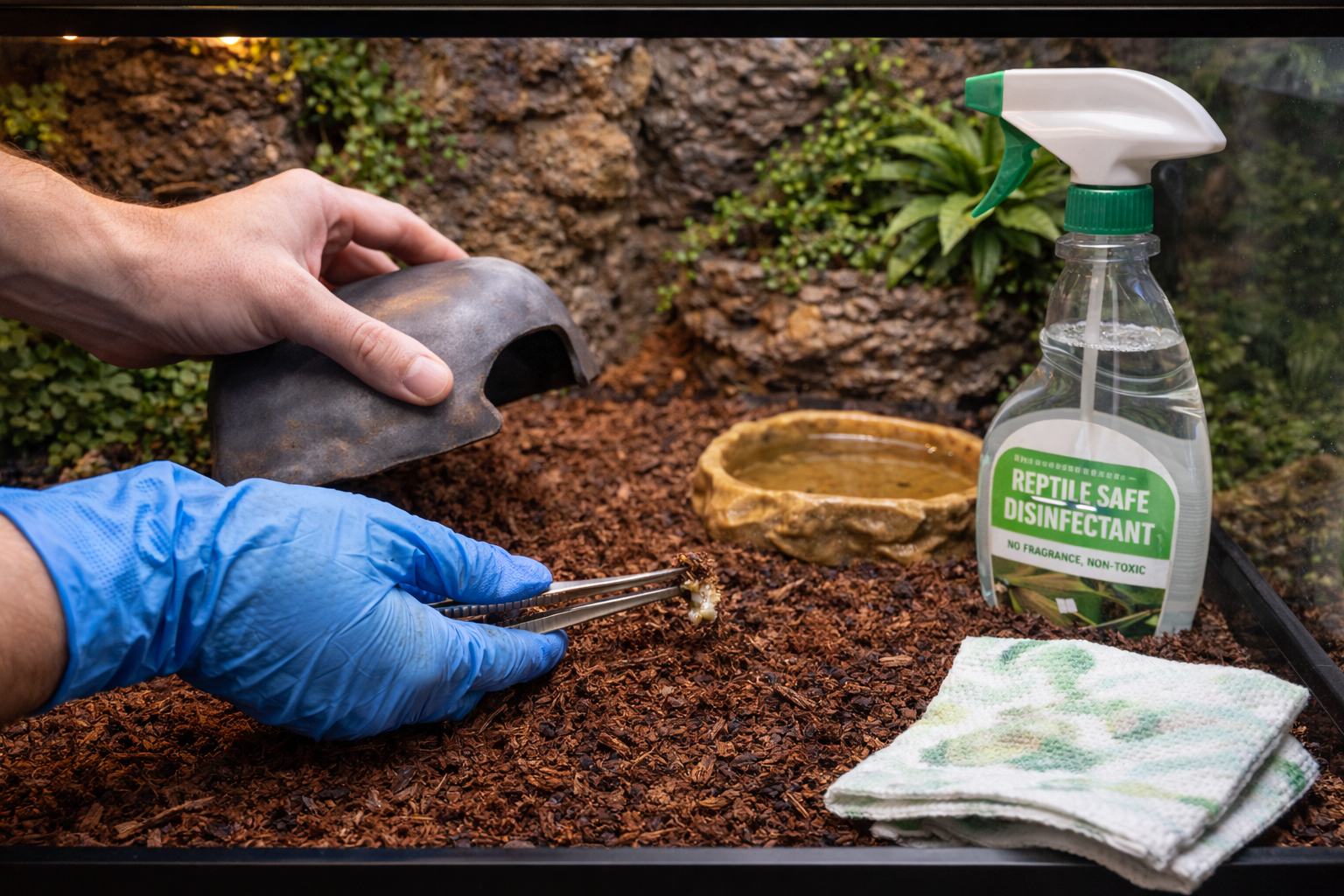
1. Spot-Clean Waste
Remove:
- Feces
- Urates
- Shed skin
- Uneaten food
Leaving waste behind allows bacteria to multiply rapidly.
2. Refresh Water Bowls
Water should be:
- Changed daily
- Washed with hot water
- Free of substrate and waste
Dirty water is one of the most common sources of bacterial infection.
3. Quick Visual Check
Daily observation helps catch issues early:
- Mold growth
- Excess moisture
- Foul odors
- Abnormal behavior
If something looks or smells wrong, investigate immediately.
Weekly Cleaning Tasks (1–2 Times Per Week)
Weekly cleaning keeps the enclosure stable and hygienic.
4. Clean Surfaces and Décor
Wipe down:
- Feeding dishes
- Water bowls
- Visible décor
Use reptile-safe cleaners or hot water—never harsh household chemicals.
5. Stir or Replace Soiled Substrate
Depending on substrate type:
- Remove wet or soiled patches
- Replace sections as needed
- Prevent compacted or moldy areas
Loose substrates require closer attention than solid liners.
6. Glass and Ventilation Cleaning
Clean:
- Interior glass panels
- Vent screens
This improves airflow and visibility while reducing bacterial buildup.
Monthly Deep Cleaning (Every 3–6 Weeks)
Deep cleaning frequency depends on enclosure size, substrate, and species.
7. Full Substrate Replacement
Most non-bioactive enclosures require:
- Complete substrate removal
- Fresh, clean replacement
This prevents long-term bacterial accumulation.
8. Disinfect Décor and Accessories
Rocks, hides, and branches should be:
- Scrubbed
- Rinsed thoroughly
- Fully dried before reuse
Natural décor can trap moisture and bacteria if ignored.
9. Clean the Enclosure Itself
Steps:
- Remove your reptile safely
- Remove all décor and substrate
- Wash enclosure with reptile-safe disinfectant
- Rinse thoroughly
- Dry completely
Never place your reptile back into a damp enclosure.
Cleaning Schedule by Enclosure Type
Desert Reptile Enclosures
- Spot-clean daily
- Deep-clean every 4–6 weeks
Dry environments reduce mold but still require regular hygiene.
Tropical Reptile & Amphibian Enclosures
- Spot-clean daily
- Partial cleaning weekly
- Deep-clean every 3–4 weeks
High humidity increases mold and bacteria risk.
Bioactive Enclosures
- Spot-clean waste only
- Clean glass and water bowls regularly
- No full substrate replacement unless issues arise
Bioactive setups rely on cleanup crews but still require monitoring.
Special Situations That Require Extra Cleaning
You should clean more frequently if:
- Your reptile is sick
- You are quarantining a new animal
- There is a parasite issue
- Food is spilled regularly
In quarantine setups, daily full sanitation is often necessary.
What NOT to Do When Cleaning
Avoid these common mistakes:
- Using bleach or strong chemicals
- Leaving chemical residue behind
- Cleaning too aggressively (causes stress)
- Skipping drying time
- Cleaning only when it “looks dirty”
Overcleaning can also be stressful—balance is key.
Safe Cleaning Products for Reptile Tanks
Use:
- Reptile-safe disinfectants
- Diluted vinegar (for glass only)
- Hot water and scrubbing
Never use:
- Ammonia
- Bleach (unless extremely diluted and rinsed thoroughly)
- Scented cleaners
If you wouldn’t want residue on your hands, don’t use it in a reptile tank.
Signs Your Tank Is Not Being Cleaned Enough
Watch for:
- Persistent odors
- Mold growth
- Excessive flies or gnats
- Lethargy or appetite loss in your reptile
These are warning signs—not cosmetic issues.
How Cleaning Affects Stress Levels
Reptiles rely on scent and familiarity. Excessive deep cleaning can:
- Increase stress
- Cause hiding or aggression
- Disrupt feeding
That’s why spot-cleaning daily and deep-cleaning less often works best.
Simple Reptile Tank Cleaning Schedule
Daily
- Remove waste
- Change water
- Quick inspection
Weekly
- Clean bowls and décor
- Stir or replace soiled substrate
- Clean glass
Monthly
- Full substrate change
- Deep clean enclosure
- Disinfect accessories
Consistency beats intensity every time.
Final Thoughts
So, how often should you clean a reptile tank? A little every day, some every week, and a deep clean once a month. This routine keeps bacteria under control without disrupting your reptile’s sense of security.
A clean enclosure leads to:
- Stronger immunity
- Better appetite
- Healthier shedding
- Reduced stress
When cleaning becomes part of your regular routine, reptile care feels easier—and your pet stays healthier for years to come.