

Blog
How Often Should You Clean Your Aquarium?
Keeping an aquarium clean is essential for the health of your fish and the overall balance of your tank. However, many beginners either clean their aquarium too often or not enough—both of which can cause serious problems.
So, how often should you clean your aquarium?
The answer depends on tank size, fish type, and filtration, but there are clear guidelines you can follow to keep your tank healthy and crystal clear.
Let’s break it down step by step.
🐠 Why Aquarium Cleaning Is Important
Fish constantly produce waste, and leftover food decomposes in the water. Without regular maintenance, harmful toxins like ammonia, nitrites, and nitrates build up, leading to:
- Cloudy water
- Algae growth
- Fish stress or illness
- Bad odors
- Fish death
Cleaning your tank properly helps maintain a stable and healthy aquatic environment.
🗓️ How Often Should You Clean Your Aquarium?
✅ Daily Tasks
These take only a few minutes but make a big difference:
- Check fish behavior and health
- Remove uneaten food
- Check water temperature
- Ensure filter and heater are working
Daily observation helps catch problems early.
✅ Weekly Cleaning (Most Important)
This is the core of aquarium maintenance.
What to Do Weekly:
- Change 20–30% of the water
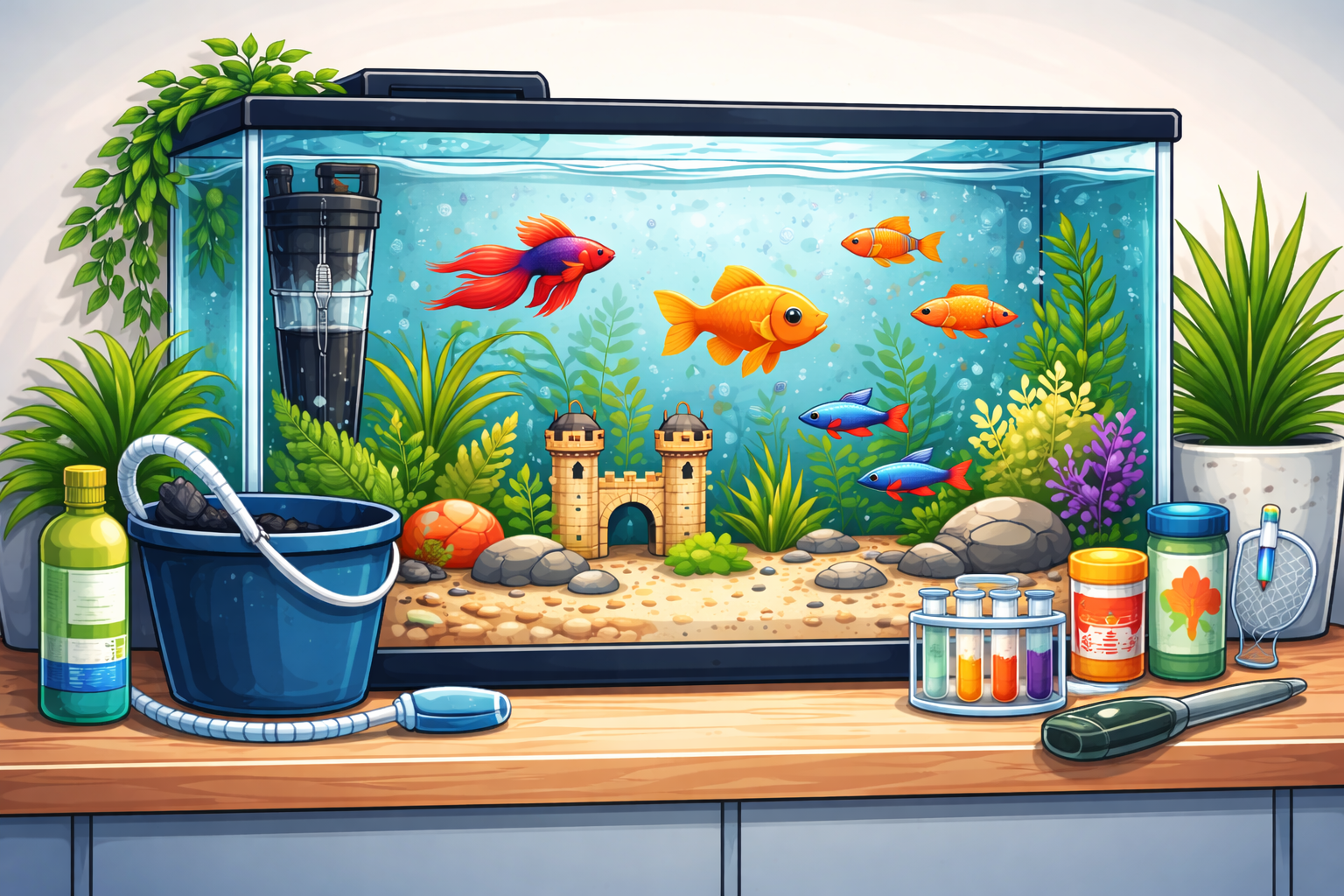
- Use a gravel vacuum to remove waste
- Clean algae from glass
- Test water parameters (ammonia, nitrite, nitrate)
✔ Weekly water changes keep toxins under control
✔ Prevent algae buildup
✔ Keep fish stress-free
✅ Monthly Cleaning
Once a month, perform deeper maintenance.
Monthly Tasks:
- Rinse filter media (in tank water, not tap water)
- Check hoses and equipment
- Trim live plants
- Inspect decorations for debris buildup
⚠️ Never clean everything at once — beneficial bacteria live on surfaces.
❌ What You Should NOT Do
Many beginners unknowingly harm their tanks by doing the following:
❌ Replacing all tank water
❌ Washing filter media with tap water
❌ Cleaning too often
❌ Removing all algae
❌ Scrubbing decorations aggressively
These actions remove beneficial bacteria and can cause sudden water chemistry changes.
🧪 How Tank Size Affects Cleaning Frequency
Small Tanks (5–10 gallons)
- Require more frequent cleaning
- Water parameters change quickly
- Weekly water changes are essential
Medium Tanks (10–30 gallons)
- Easier to maintain
- Weekly or bi-weekly water changes
Large Tanks (30+ gallons)
- More stable water chemistry
- Can go slightly longer between cleanings
👉 Bigger tanks = more stable environment.
🐟 Fish Load Matters
The number of fish directly affects how often you should clean your tank.
Light Stocking:
- Less waste
- Easier maintenance
- Less frequent water changes
Heavy Stocking:
- More waste
- More frequent cleaning required
- Higher risk of ammonia spikes
Always avoid overstocking your aquarium.
🌿 Planted Tanks vs Non-Planted Tanks
Planted Aquariums:
- Plants absorb nitrates
- Require fewer water changes
- More stable ecosystem
Non-Planted Aquariums:
- Waste builds up faster
- Need more frequent cleaning
- Higher algae growth
Live plants act as natural filters and improve water quality.
🧼 How to Clean Your Aquarium the Right Way
Step-by-Step:
- Turn off equipment
- Remove 20–30% water
- Vacuum gravel
- Clean algae gently
- Rinse filter media in tank water
- Refill with conditioned water
- Turn equipment back on
Never rush the process.
🐠 Signs Your Aquarium Needs Cleaning
Watch for these warning signs:
- Cloudy or green water
- Strong odor
- Fish gasping at surface
- Excess algae growth
- Uneaten food buildup
If you notice any of these, it’s time for maintenance.
✅ Final Thoughts
Cleaning your aquarium doesn’t have to be complicated. With a simple routine and consistent care, you can keep your tank clean, your fish healthy, and your water crystal clear.
Remember:
✔ Small weekly cleanings are better than big ones
✔ Never overclean
✔ Test water regularly
✔ Observe your fish daily
A clean aquarium means happy, stress-free fish—and a beautiful display for your home.