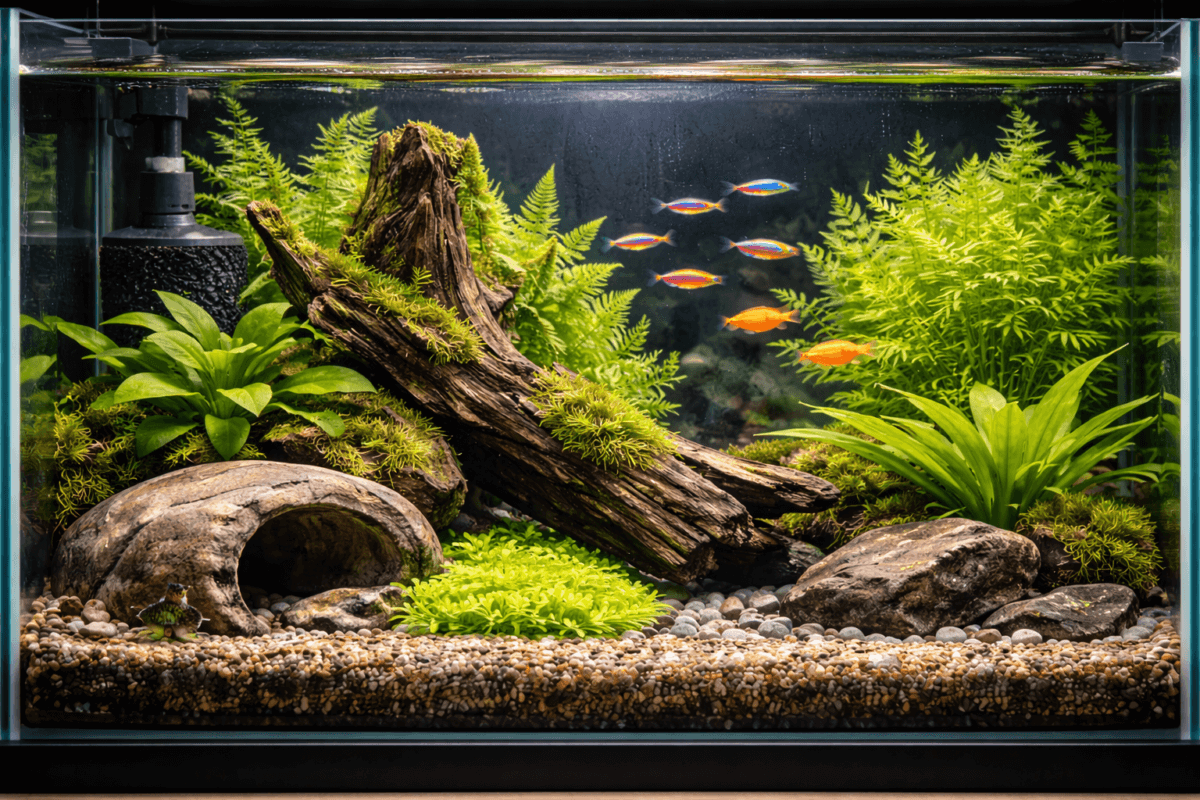
Water temperature is one of the most critical factors in aquarium care, yet it’s often overlooked by beginners. Fish are cold-blooded (ectothermic) animals, meaning their body temperature is directly controlled by their environment. Even small temperature changes can significantly impact their health, behavior, and survival.
In this guide, you’ll learn how temperature affects fish health, why stability matters more than exact numbers, and how to maintain the ideal conditions for a thriving aquarium.
Why Temperature Is So Important for Fish
Unlike mammals, fish cannot regulate their own body temperature. Every biological process—breathing, digestion, immunity, and movement—is influenced by the temperature of the water.
When temperature is:
- Too low: Fish become sluggish, stressed, and prone to disease
- Too high: Fish experience oxygen stress and faster metabolism
- Unstable: Fish suffer chronic stress that weakens immunity
Maintaining proper temperature is essential for long-term fish health.
Ideal Temperature Ranges for Common Fish Types
Different fish species have different temperature needs.
Tropical Fish
- Ideal range: 74°F–80°F (23°C–27°C)
- Examples: Guppies, tetras, angelfish, mollies
Tropical fish require heaters to maintain consistent warmth.
Coldwater Fish
- Ideal range: 60°F–72°F (16°C–22°C)
- Examples: Goldfish, white cloud minnows
Coldwater fish do not need heaters but still require stability.
Temperate Fish
- Ideal range: 68°F–75°F (20°C–24°C)
- Examples: Some barbs and danios
Always research your fish species before setting temperature.
How Low Temperatures Affect Fish Health
When water temperature drops below a fish’s comfort range, several problems occur.
Negative Effects of Cold Water:
- Slowed metabolism and digestion
- Reduced immune response
- Lethargy and inactivity
- Increased risk of fungal and bacterial infections
Prolonged exposure to cold water can be fatal, especially for tropical fish.
How High Temperatures Affect Fish Health
High temperatures are just as dangerous—sometimes more so.
Risks of Warm Water:
- Reduced oxygen levels
- Faster metabolism leading to exhaustion
- Increased aggression
- Shortened lifespan
Warm water holds less dissolved oxygen, making it harder for fish to breathe.
The Danger of Sudden Temperature Changes
Sudden temperature swings are one of the leading causes of fish stress.
Causes of Temperature Fluctuations:
- Water changes with unconditioned water
- Heater malfunction
- Power outages
- Direct sunlight hitting the tank
Even a 2–3°F sudden change can shock sensitive fish.
Signs of Temperature Stress in Fish
Fish often show warning signs when temperature is wrong.
Common Symptoms:
- Rapid or labored breathing
- Lethargy or erratic swimming
- Loss of appetite
- Hiding constantly
- Clamped fins
If you notice these signs, check your aquarium temperature immediately.
How Temperature Affects Fish Immunity
Temperature plays a direct role in immune system function.
- Stable temperature = strong immune response
- Fluctuating temperature = weakened defenses
- Stress + poor immunity = disease outbreaks
Many common aquarium diseases thrive when fish are temperature-stressed.
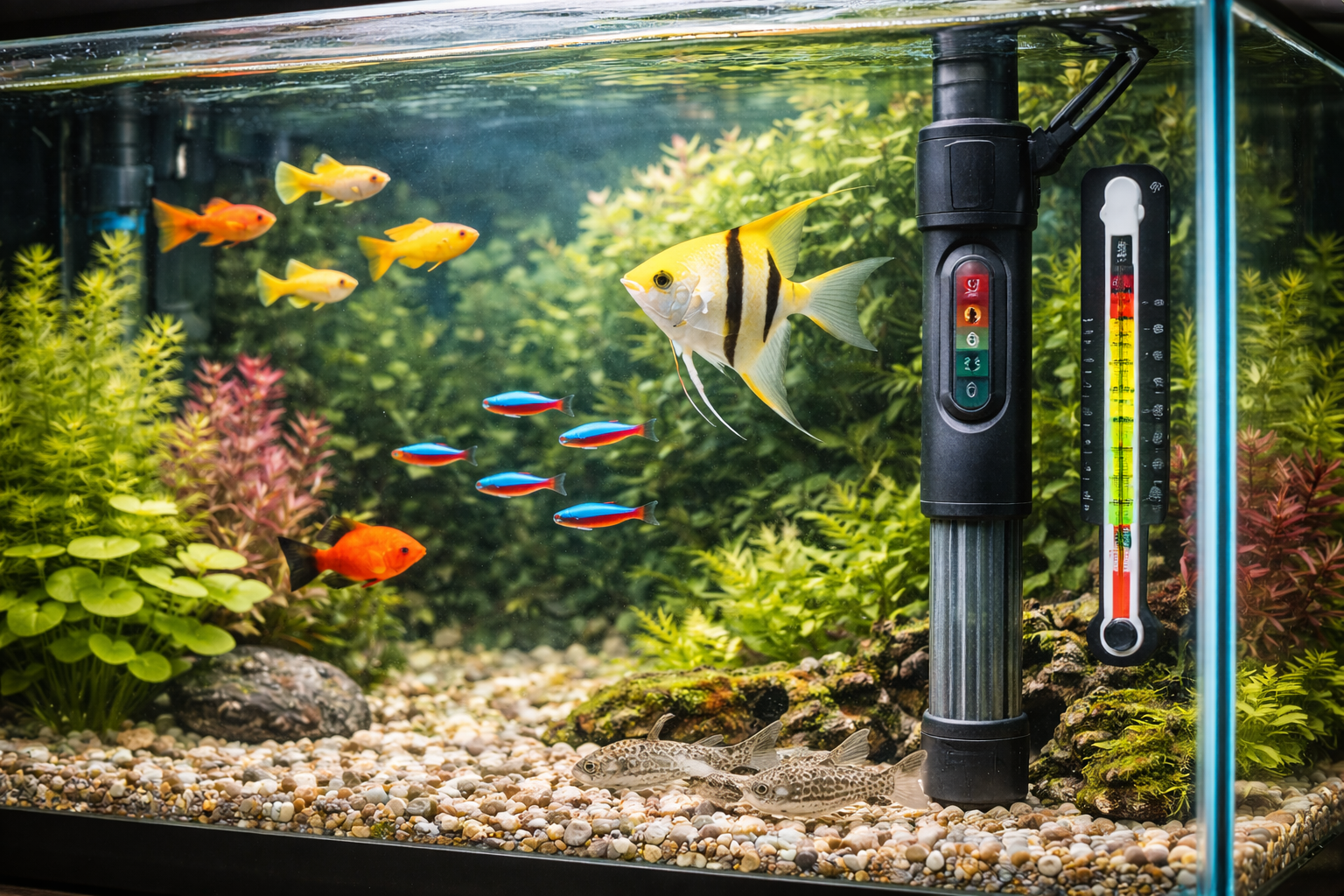
Role of Aquarium Heaters and Thermometers
Proper equipment is essential for temperature control.
Aquarium Heaters:
- Maintain consistent temperature
- Should match tank size
- Adjustable heaters offer better control
Thermometers:
- Allow constant monitoring
- Digital or alcohol-based types are best
- Place away from the heater for accuracy
Never rely on “feeling” the water—always use a thermometer.
Temperature and Fish Behavior
Temperature influences how fish act and interact.
At Ideal Temperatures:
- Active swimming
- Healthy appetite
- Natural coloration
- Normal social behavior
At Poor Temperatures:
- Aggression or lethargy
- Loss of color
- Reduced activity
- Increased hiding
Behavior is often the first indicator of temperature problems.
Temperature During Water Changes
Water changes are a common cause of accidental temperature shock.
Best Practices:
- Match new water temperature to tank water
- Add water slowly
- Use a thermometer during changes
Never add cold or hot water directly to the tank.
Seasonal Temperature Challenges
Room temperature changes affect aquarium water.
Common Issues:
- Cold rooms in winter
- Overheating in summer
- Sunlight exposure
Solutions include reliable heaters, cooling fans, and stable tank placement.
Common Temperature Mistakes to Avoid
- Using the wrong heater size
- Not using a thermometer
- Sudden large water changes
- Mixing fish with different temperature needs
- Placing tanks near windows or vents
Avoiding these mistakes protects your fish from unnecessary stress.
Tips for Maintaining Stable Aquarium Temperature
- Use a high-quality adjustable heater
- Monitor temperature daily
- Keep the tank away from direct sunlight
- Perform gradual water changes
- Have a backup plan for power outages
Consistency matters more than perfection.
Final Thoughts
Understanding how temperature affects fish health is essential for anyone keeping an aquarium. Stable, species-appropriate temperatures support digestion, immunity, behavior, and overall longevity. While fish can tolerate small variations, sudden or extreme changes can quickly lead to illness or death.
By using the right equipment and developing good maintenance habits, you can provide a stable, comfortable environment where your fish truly thrive.


 Accessories & Others
 Apparel
 Beds & Furniture
 Cages & Accessories
 Carriers & Strollers
 Doors, Gates & Ramps
 Flea & Tick Control
 Grooming
 Litter & Housebreaking
 Memorials & Funerary
 Accessories & Others
 Apparel
 Beds & Furniture
 Cages & Accessories
 Carriers & Strollers
 Cat Doors,Steps, Nets.
 Collars, Harnesses & leashes
 Flea & Tick Control
 Grooming
 Cages& Accessories
 Cow Mastitis Detectors
 Ear Tags
 Aquarium Accessories
 Aquarium Cleaners
 Aquarium Decor
 Aquarium Lights
 Aquarium Pumps & Filter
 Aquariums & Fish Bowls
 Automatic Feeders