Choosing the right aquarium filter is one of the most important decisions you’ll make as a fish owner. A high-quality filter keeps the water clean, removes harmful toxins, and creates a healthy environment for your fish to thrive.
Whether you’re setting up your first aquarium or upgrading an existing one, this complete guide will help you understand filter types, filtration systems, sizing requirements, and how to pick the best option for your tank.
Why an Aquarium Filter Is Essential
Fish produce waste constantly. Uneaten food, plant debris, and fish waste break down into harmful substances like ammonia. Without proper filtration, these toxins can quickly build up and harm your fish.
A good aquarium filter helps:
- Remove solid waste and debris
- Break down harmful chemicals
- Improve water clarity
- Increase oxygen levels
- Maintain stable water conditions
In short, a filter is the heart of your aquarium system.
Understanding the Three Types of Filtration
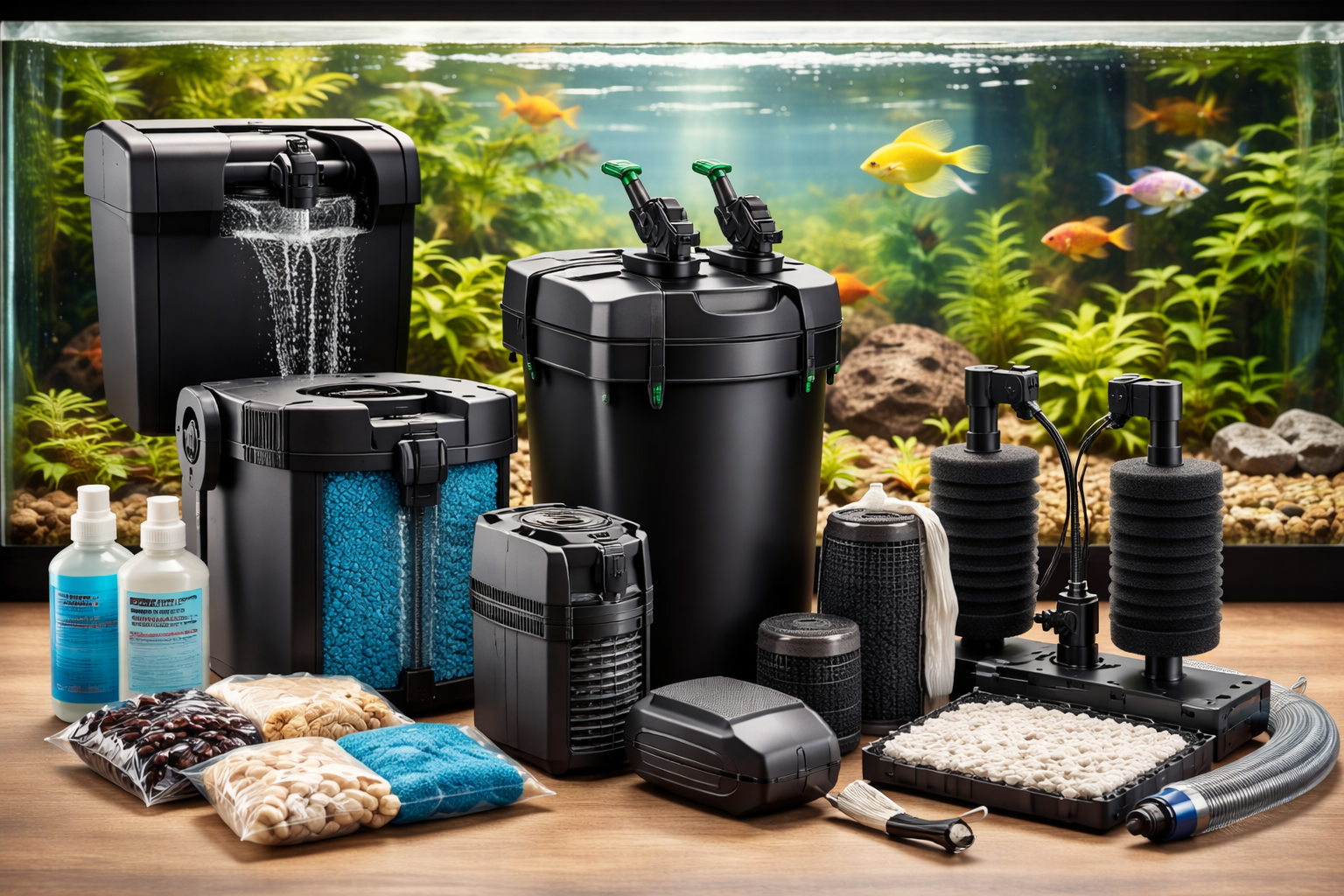
Before choosing a filter, it’s important to understand how filtration works. Most aquarium filters use three main types of filtration:
1. Mechanical Filtration
This removes physical debris from the water, such as fish waste and leftover food.
It typically uses:
- Filter pads
- Sponges
- Foam inserts
Mechanical filtration keeps your tank looking clear and clean.
2. Biological Filtration
Biological filtration is the most critical part of any aquarium system.
Beneficial bacteria grow inside the filter media and break down toxic ammonia and nitrite into less harmful nitrate. This process is known as the nitrogen cycle.
Without biological filtration, fish cannot survive long-term in an enclosed tank.
3. Chemical Filtration
Chemical filtration removes dissolved impurities using media such as:
- Activated carbon
- Zeolite
- Specialized resins
While not always required, chemical filtration helps remove odors, discoloration, and certain toxins.
Types of Aquarium Filters
There are several types of filters available. Each has its advantages and is suitable for different tank sizes and setups.
1. Hang-On-Back (HOB) Filters
These filters hang on the back of the aquarium and draw water up through a filter cartridge.
Best for: Small to medium tanks
Pros:
- Easy to install
- Affordable
- Good all-around performance
Cons:
- Visible from outside
- Can be noisy in some models
HOB filters are popular among beginners because they are simple and effective.
2. Internal Filters
Internal filters sit inside the aquarium and are fully submerged.
Best for: Small tanks or quarantine tanks
Pros:
- Compact
- Easy to maintain
- Budget-friendly
Cons:
- Takes up tank space
- Less powerful than larger systems
They are ideal for tanks under 20 gallons.
3. Canister Filters
Canister filters are external systems placed below the aquarium. Water flows through multiple filtration stages inside a sealed container.
Best for: Medium to large tanks
Pros:
- Powerful filtration
- Customizable media
- Excellent for heavily stocked tanks
Cons:
- More expensive
- Slightly complex setup
For serious aquarium hobbyists, canister filters offer superior performance.
4. Sponge Filters
Sponge filters use air pumps to draw water through a sponge, providing mechanical and biological filtration.
Best for: Fry tanks, shrimp tanks, and breeding setups
Pros:
- Gentle water flow
- Safe for small fish
- Affordable
Cons:
- Limited chemical filtration
- Less powerful for large tanks
5. Undergravel Filters
Installed beneath the substrate, these filters pull water down through gravel.
Best for: Simple freshwater setups
Pros:
- Hidden design
- Promotes biological filtration
Cons:
- Hard to clean
- Less popular in modern setups
Choosing the Right Filter Size
Filter size matters just as much as filter type.
Follow the Gallon Rule
Most manufacturers recommend that your filter can process the entire tank volume at least 4–5 times per hour.
For example:
- 20-gallon tank → Filter rated for 80–100 gallons per hour (GPH)
- 50-gallon tank → Filter rated for 200–250 GPH
When in doubt, slightly oversizing your filter is usually better than undersizing.
Consider Your Fish Type
Different fish have different filtration needs.
For Goldfish
Goldfish produce a lot of waste. Choose a strong filter with high capacity.
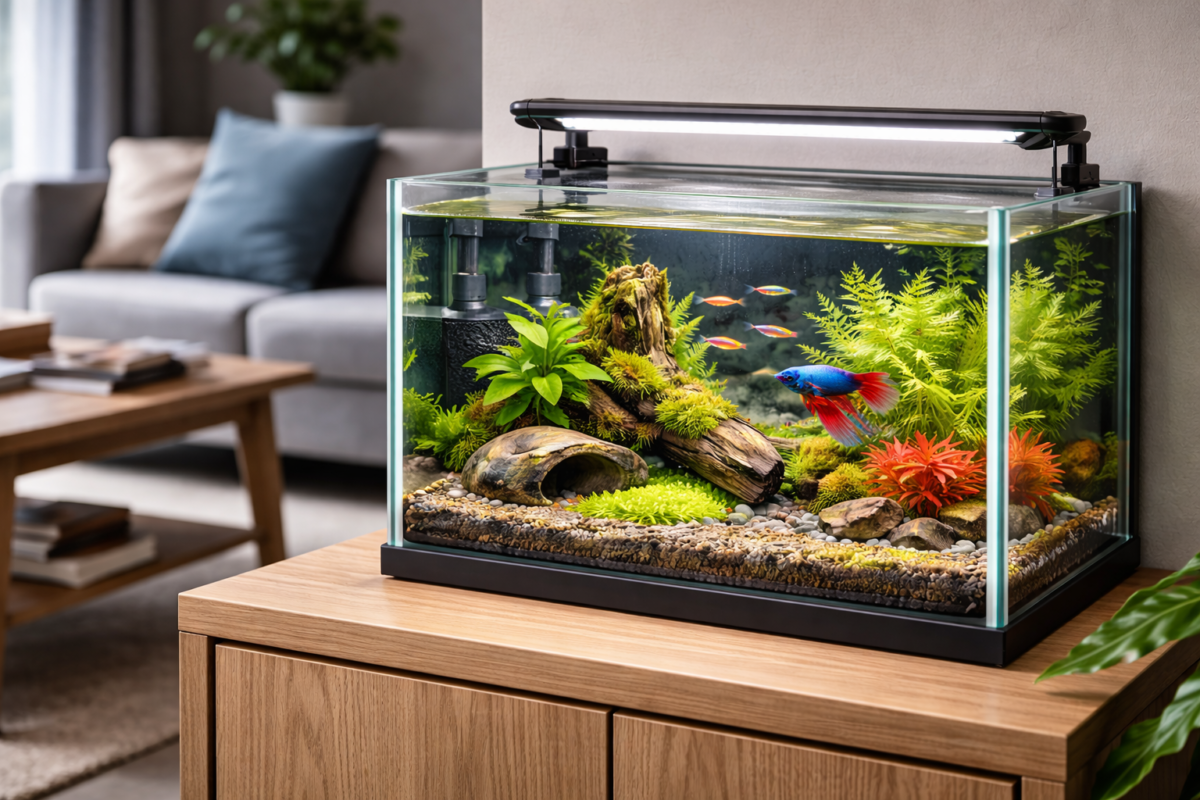
For Betta Fish
Bettas prefer gentle water flow. Sponge filters or adjustable HOB filters work best.
For Cichlids
Cichlids need powerful filtration due to heavy waste production.
For Planted Tanks
Look for filters that provide stable flow without uprooting plants.
Noise Level
If your aquarium is in a bedroom or office, noise can be a concern.
- Canister filters are typically quieter
- Some HOB filters can produce splashing sounds
- Sponge filters create soft bubbling noise
Always check reviews for noise feedback before purchasing.
Ease of Maintenance
Choose a filter that’s easy to clean and maintain.
Ask yourself:
- Is the media easy to replace?
- Can I access it quickly?
- Does it require frequent cleaning?
Complicated maintenance often leads to neglect, which harms water quality.
Budget Considerations
Aquarium filters range from budget-friendly to premium systems.
- Small internal filters are affordable
- HOB filters offer good value
- Canister filters cost more but last longer
Investing in a reliable filter can save money in the long run by preventing fish illness and tank crashes.
Common Mistakes to Avoid
- Choosing a filter too small for the tank
- Cleaning biological media with tap water (kills beneficial bacteria)
- Replacing all filter media at once
- Ignoring flow strength for delicate fish
Always rinse filter media in tank water, not chlorinated tap water.
When to Upgrade Your Filter
Consider upgrading if:
- Water stays cloudy
- Ammonia levels rise frequently
- Fish show signs of stress
- You increase tank size or fish stock
Proper filtration ensures long-term success in fish keeping.
Final Thoughts
Choosing the right aquarium filter is crucial for maintaining a clean and healthy environment for your fish. Understanding filtration types, selecting the correct size, and considering your fish species will help you make the best decision.


 Accessories & Others
 Apparel
 Beds & Furniture
 Cages & Accessories
 Carriers & Strollers
 Doors, Gates & Ramps
 Flea & Tick Control
 Grooming
 Litter & Housebreaking
 Memorials & Funerary
 Accessories & Others
 Apparel
 Beds & Furniture
 Cages & Accessories
 Carriers & Strollers
 Cat Doors,Steps, Nets.
 Collars, Harnesses & leashes
 Flea & Tick Control
 Grooming
 Cages& Accessories
 Cow Mastitis Detectors
 Ear Tags
 Aquarium Accessories
 Aquarium Cleaners
 Aquarium Decor
 Aquarium Lights
 Aquarium Pumps & Filter
 Aquariums & Fish Bowls
 Automatic Feeders